

You are standing on your front porch in pitch-black freezing darkness while your high-tech motorized deadbolt whines, binds, clicks three times, and throws a flashing red error light. When temperatures dive off a cliff, you must immediately adjust frozen wood frame misaligning smart latch mechanisms before the ice and torsional warping permanently fry your smart lock’s transmission gears. That miniature electric motor inside your smart hardware puts out a tiny fraction of foot-pound torque, yet you are expecting it to fight an eighty-pound slab of moisture-swollen exterior timber and an out-of-plumb frozen framing stud. It is straight-up miserable standing in freezing sleet, using your hip to hammer the door just to get the latch to clear the strike plate.
Most folks instinctively blame the Wi-Fi bridge, throw tantrums over dead lithium cells, or start recalibrating their mobile software in a panic. But after 25 years swinging hammers in structural framing, milling bespoke architectural cabinetry, and spending two intense years in dental prosthetics—where being off by fifty microns ruins an entire bite—I can tell you straight up that your electronics are rarely the villain. Wood is a dynamic, living hydrometer that breathes, expands, and bows when moisture differentials between your heated living room and sub-zero exterior air go haywire. When frost heave jacks your foundation by a quarter inch, your door opening morphs from a true rectangle into a bind-heavy trapezoid.
Solving this physical wood-to-metal mismatch is the tactical cheat code to stopping motor stall warnings permanently. Dialing in your jamb clearances saves you from replacing scorched smart lock motors every single winter, shuts down draft leaks that bleed your heating budget, and protects your household from high-stress lockouts when the mercury hits rock bottom.
Bare-Metal Diagnostic: The Plug-and-Play Extract
Here is the straight counter talk for those shivering with tools in hand. If your smart deadbolt locks smoothly when the door is held open, but jams, stalls, or displays an actuator error the second you close it against the weatherstripping, your wood frame has contracted along its width, shifted diagonally from sill frost heave, or bound up against rock-hard frozen thermal gaskets.
Do not buy a new lock, and stop resetting your Wi-Fi hub. Your immediate fix is a three-stage mechanical release: first, pull the factory strike plate off the jamb; second, drive a three-inch structural screw through the top hinge directly into the structural king stud to yank the door head back into plumb; third, enlarge the strike throat with an abrasive rotary burr or remount an adjustable, heavy-gauge strike box shifted toward the weatherstrip. If you do not relieve the mechanical friction on the bolt, that smart servo will draw peak amperage until the internal plastic planetary gears strip out entirely.
| Frame Adjustment Method | Skill & Time Tier | Thermal Tolerance | Motor Load Reduction | Structural Durability |
|---|---|---|---|---|
| Hinge Vector Re-Plumbing (Long Screw Mod) | Entry-level / 15 Mins | High (Compensates for frame droop) | 90% Load Elimination | Permanent King-Stud Anchor |
| Rotary Throat Relief (Dremel Burring) | Intermediate / 20 Mins | Very High (Direct bolt clearance) | 100% Load Elimination | Retains Original Strike Plate |
| Thermal Kerf Gasket Swapping | Novice / 10 Mins | Moderate (Softens closing pushback) | 70% Load Elimination | Varies by model & elastomeric compound |
| Full Jamb Chisel & Strike Relocation | Master Tier / 45 Mins | Maximum (Full seasonal reset) | 100% Load Elimination | Requires Wood Filler & Re-Drilling |
| Jack Stud Sill Wedging | Advanced / 60+ Mins | Extreme (Heave mitigation) | 85% Load Elimination | Structural Wall Intervention |
The Bare-Metal Trial: Pros, Cons, and Real-World Wear
Every field modification has a trade-off when freezing winds hit your exterior trim, and our testing team at skytc has broken down every approach under genuine deep-freeze stress. Swapping the top hinge screw for a three-inch case-hardened anchor pulls the door reveal back to square cleanly. The Good: It immediately lifts the sagging latch edge without touching a chisel, eliminating latch drag within minutes. The Bad: If you over-drive that fastener into an un-shimmed jamb, you will bow the side casing inward, pinching your latch bolt into an even deadlier freeze bind.
Dremel grinding and rotary filing on the jamb strike plate give the bolt instant breathing room. The Good: It completely wipes out frictional resistance without requiring you to plug, redrill, and remortise screw holes in sub-zero air. The Bad: You destroy the factory finish, exposing bare mild steel to humid interior air that condenses into orange rust streaks across your frame trim.
Tossing out rigid factory weatherstripping for high-recovery silicone tubular seals stops the door from bouncing off the latch line. The Good: The smart lock deadbolt glides into the pocket without forcing the homeowner to lean their full body weight against the exterior handle. The Bad: Cheap aftermarket closed-cell foam gets brittle as peanut brittle below freezing, ripping away from the kerf slot after a single week of family traffic.
The Structural Integrity Report: True Bezel Endurance
Modern residential framing uses fast-grown softwood dimensional lumber that packs excessive moisture right from the lumberyard racks. When that lumber hits winter, the inside face dries out from forced-air furnace heating while the outside face stays locked in damp, freezing air. This extreme moisture gradient produces severe cup, twist, and seasonal jamb drift across the entire opening.
Precision-cast zinc alloys and stamped sheet brass look clean on showroom displays. However, when cold weather induces structural jamb contraction, these low-grade components shear, bind, and lock down under lateral friction. Thin-gauge metal strike plates twist under frame pressure, transforming an open latch pocket into a high-friction mechanical vise that stalls your smart lock.
Bargain-bin hardware kits provide tiny three-quarter-inch mounting screws that grip nothing but soft, decorative interior pine trim. The instant a frozen foundation jacks the door sill upward, the lateral load transfers straight onto those tiny fasteners, stripping the wood grain out and leaving the deadbolt crookedly jammed inside the frame pocket.
The Hypostatical Failure Scenario: The Shoulder-Barge Cycle
Consider the everyday disaster of the rush-hour commuter running out to clear driveway snow. The door frame has shrunk slightly along its header, dropping the latch opening two millimeters below true horizontal level. The smart lock’s auto-lock feature is set to activate sixty seconds after door closure.
Instead of addressing the structural drop, the owner leans their shoulder hard against the door slab to force the mechanical bolt home, letting the auto-lock fire while the wood is under heavy mechanical tension. Inside the lock housing, the drive motor strains against the bound brass bolt, drawing massive spikes of battery amperage while the tiny planetary gears slip their teeth.
Two weeks into the freeze, the stripped internal gearing slips completely off the track. The homeowner is stuck outside in sub-zero winds with a dead smart lock, an immobilized deadbolt stuck half-way through the strike plate, and no manual key bypass on hand, forcing an emergency entry that destroys the lock casing and splinters the door jamb.
Adjust Frozen Wood Frame Misaligning Smart Latch: Field Physics
To successfully adjust frozen wood frame misaligning smart latch setups, you have to treat the whole door assembly like an occlusal appliance. In dental mechanics, if two mating surfaces misalign by a fraction of a millimeter, the entire jaw locks up; your smart latch functions under the exact same mechanical law. As ambient outdoor moisture freezes, wood cells compress along their radial axis while framing studs bow under snow loads, dragging your lock prep out of horizontal alignment with the wall cavity.
Smart latches demand zero lateral resistance to extend and retract their deadbolts. When an out-of-plumb door puts side-load pressure on the bolt, friction spikes beyond what low-voltage electric actuators can generate. Relieving that side-load is not about applying force; it is about restoring geometric clearance between the deadbolt’s throw path and the frame’s receiver strike pocket.
Real-world jamb repair means manipulating the hinge anchors to square up the reveal, opening up the strike plate aperture, and relieving excessive gasket resistance. When you balance these three mechanical vectors, your automated hardware will fire freely regardless of how hard the winter blizzard hits the glass.
Keep exploring
If this guide helped, these related deep dives can help you take the next practical step at home.
More Guides Worth Exploring
Practical Execution The Workbench Prumo: Core Setup Alignment
Inspect door reveal gaps across all frame edges.
Expert Tip: Check if the gap between the door edge and frame stays uniform from header to threshold, as an uneven tapered gap tells you immediately which hinge must be shimmed or tightened to stop latch binding.
Test deadbolt throw clearance with door wide open.
Expert Tip: If the smart lock motor runs smoothly while open but groans upon latching into the jamb, the issue is purely structural alignment, not electrical or software malfunction.
Coat deadbolt tip with dry-erase marker for tracing.
Expert Tip: Throwing the bolt against the closed strike plate leaves a bright pigment transfer mark, exposing the exact high-friction contact point on the metal that is choking your lock motor.
Replace center top hinge screw with long fastener.
Expert Tip: Driving a three-inch hardened screw through the hinge leaf into the wall stud draws the entire upper frame plumb, instantly lifting a sagging latch bolt off the bottom strike lip.
Insert solid cardboard or timber hinge pocket shims.
Expert Tip: Loosening the bottom hinge and sliding a millimeter-thick shim behind the plate pushes the door heel outward, pivoting the lock edge upward to clear a frozen sill.
Grind strike plate binding lip with rotary burr.
Expert Tip: Filing away one to two millimeters of metal from the interior catch edge relieves gasket pressure, allowing the bolt to drop into the wall without you having to press the door shut.
Ream deadbolt wooden mortise pocket to full depth.
Expert Tip: Drill the internal wood cavity at least one inch deep into the jack stud, because an obstructed pocket prevents the deadbolt from fully extending, causing the smart sensor to report false jams.
Inspect compression tension along frozen perimeter kerf weatherstripping.
Expert Tip: Stiff, frozen weatherstripping pushes the door slab outward against the lock bolt; replacing it with flexible silicone bulb seals cuts the pushback load on your smart motor significantly.
Tighten faceplate mounting bolts with manual hand drivers.
Expert Tip: Never use a high-torque impact driver on smart lock interior backplates, as overtightening warps the metal housing and binds the internal drive cam before it even reaches the frame.
Apply high-lubricity dry PTFE powder into latch channel.
Expert Tip: Never pump liquid WD-40 or wet machine oil into a cold-weather lock; liquid lubricants turn into gummy grease in sub-zero weather, collecting dirt and seizing the mechanical sliders solid.
Calibrate motorized drive throw limits through mobile interface.
Expert Tip: Run the app auto-calibration cycle only after the mechanical deadbolt drops completely freely into the jamb, ensuring the micro-controller memorizes true mechanical zero-load travel points.
Counter Talk: Straight Answers to Field Queries
Why does my smart deadbolt lock work fine during the afternoon but jam every single night?
Thermal contraction is changing your jamb geometry. Solar radiation warms the exterior door surface during the day, expanding the timber and keeping the opening reasonably square. When nighttime sub-zero temperatures arrive, the exterior wood shrinks fast while interior heated framing remains stable, warping the door face and driving the deadbolt hard against the strike lip.
Can I fix a misaligned frozen smart latch simply by grinding away the metal strike plate?
Yes, and it is frequently the most practical workshop remedy. Widening the strike opening with a rotary burr or metal file removes the lateral resistance immediately. Just make sure you do not cut so far back that the regular spring latch falls into the deadbolt pocket, which would destroy the door’s thermal seal.
Should I upgrade to an ultra-high-torque commercial smart lock to muscle through the ice?
No, that is a fool’s errand that wastes hard-earned cash. A stronger motor will simply strip out the lock’s internal transmission pins or shear your mounting screws when the frame twists. Fix the physical wood alignment first instead of buying an overpriced motor to fight bent lumber.
Why won’t my smart lock latch properly even after I planed down the door edges?
Because you treated a symptom rather than the mechanical cause. Planing the wood edge does not fix an out-of-square frame droop or an undersized deadbolt wall pocket. If the strike plate hole is misaligned vertically with the bolt throw, trimming door edge wood provides zero clearance for the deadbolt itself.
Is graphite powder safe to use on cold smart lock mechanisms?
Keep graphite powder away from electronics. While it is a standard dry lubricant for old brass cylinders, fine conductive graphite particles drift into the smart lock’s interior casing, shorting out PCB boards and fouling optical rotation sensors. Stick exclusively to clean, non-conductive dry PTFE spray.
Will driving three-inch screws into my hinges warp my door jamb?
Only if you drive them into empty air without proper backing shims. If the builder left an unsupported gap between the jamb and the framing stud, an overdriven long screw will pull the jamb crooked, causing the door to bind along its entire edge. Always verify solid shim backing before driving long structural screws home.
Why does my smart lock complain about a jam when the deadbolt is visibly extended into the frame?
Your internal pocket depth is too shallow. Most smart deadbolts need to extend their full stroke length to trip an internal microswitch confirming full deployment. If the hole drilled into your wooden framing is even a fraction of an inch too shallow, the bolt stops early and the lock brain triggers a jam error.
Do adjustable smart strike plates hold up under sub-zero winter weather?
Heavy-duty, thick-gauge steel adjustable strike kits perform exceptionally well because they let you fine-tune the latch margin as seasons shift. But steer clear of bargain-bin stamped two-piece zinc brackets; those cheap units bend under wind load, leaving your door rattling loose against the cold air.
The Final Workshop Clearance Checklist
- Adjust frozen wood frame misaligning smart latch geometry before diagnosing electrical faults or replacing batteries.
- Confirm that the deadbolt operates with zero manual pushing or pulling on the exterior door handle.
- Ensure three-inch structural screws bridge the door jamb directly into the king stud at the top hinge.
- Verify that the hole drilled inside the wall stud reaches a minimum depth of one full inch.
- Remove frozen, rock-hard foam weatherstripping and install high-durability flexible silicone gaskets.
- Use dry PTFE spray lubricant exclusively inside the deadbolt channel, completely avoiding grease, WD-40, and graphite.
- Verify that the door reveal shows uniform clearance along the top, bottom, and hinge margins.
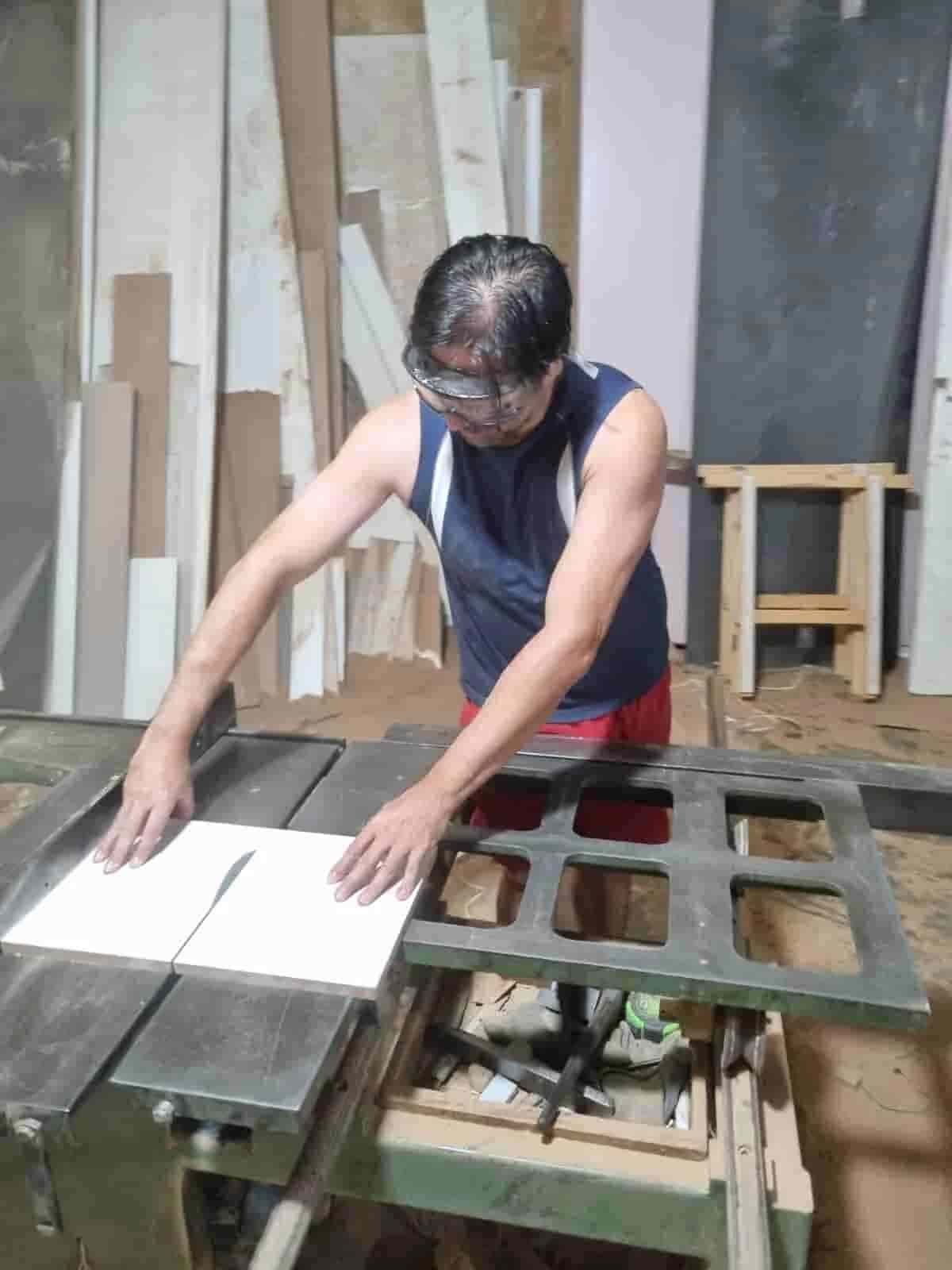

Real World Experience. Engineering Precision.
At SkyTC, technology is never just theoretical—it is driven by practical execution, structural integrity, and strict diagnostic standards. Founded by Valtersky, a tech speaker and seasoned professional, every single guide published here is backed by an authentic multidisciplinary background that bridges the gap between hardware structures and advanced software ecosystems.
Generational Craftsmanship
With 25 years of professional woodworking experience inherited through generations, he masterfully handles smart home mounting, wire routing, and physical hardware adjustments.
Medical Diagnostic Standards
An active career as a licensed X-ray technologist and dental prosthetics practitioner injects rigorous clinical precision, micro-detailed testing, and data integrity into tech evaluations.
Endurance Field Testing
As a competitive mountain ultramarathon runner, he takes every consumer wearable, smart sensor, and GPS watch out into extreme raw environments to test real-world durability boundaries.
Smart Home


Read also: How to Fix Smart Lock Motor Jammed in Extreme Cold Weather: Master Craftsman Solution
WARNING: Repetitive night-time lock motor binding causes high-frequency mechanical stress stalls, producing sharp battery voltage spikes that degrade hardware reliability and trigger sudden security crashes when real-world sub-zero stress peaks.