
If you own a Labrador Retriever, you already know they are a beautiful mix of endless energy, a nose that detects a crumb from a mile away, and a deep, biological urge to jump into every body of water they see. Finding the Best GPS Dog Trackers for Labradors is not just a tech luxury; it is a vital safety net for a breed that will happily chase a duck across three counties without looking back. When you live a busy city life and manage a packed routine, having a reliable way to monitor your dog’s location gives you your sanity back.
While I spend my days traveling with my small Maltese, Murphy, who is more interested in sleeping on my lap than escaping, our physical testing team at skytc has spent years testing real-world pet tech on active, heavy-duty breeds. We have strapped trackers to dogs that crash through thick brush, swim in muddy lakes, and roll in things we would rather not mention. We know exactly which devices can survive the chaotic lifestyle of an adventurous Labrador.
Let us get one thing straight: your Lab does not care about fancy, slim designs or gold-plated buckles. They care about chasing tennis balls, and you care about a tracking device that will actually work when they sneak out of the yard. Here is the honest, real-world advice on what keeps your dog safe and what is just a waste of your hard-earned money.
The Heart-Stopping Moment Your Lab Goes Missing
Every dog owner knows the ice-cold spike of panic that hits your chest when you look in the backyard and the gate is swinging open. You call their name, but the only response is silence. Labradors are friendly, highly social, and easily distracted by wildlife, which makes them incredibly prone to wandering off to make new friends or find some discarded food.
During those terrifying minutes when you are searching the neighborhood, every second feels like an eternity. A reliable GPS tracker turns that blind, panicked search into a direct, calm walk to your dog’s exact location. It replaces the worst-case scenarios running through your head with a simple dot on a map.
Why Cheap Trackers and Bluetooth Tags Fail Big Dogs
A very common mistake we see online is owners clipping cheap, coin-sized Bluetooth trackers to their Labrador’s collar. These tags are great for finding your car keys in your apartment, but they are completely useless for a running dog. They rely entirely on being within thirty feet of another person’s smartphone to update their location, which is a total disaster if your Lab is running through a quiet park or a wooded trail.
The Tuesday Afternoon Chase: A Cautionary Tale
Imagine it is a rainy Tuesday, and your dog spots a squirrel through the open garage door. They bolt. You open your app, but because your dog is running through a wooded creek behind your house where no one else is walking with a phone, the app simply tells you they were “Last seen near your garage.” You are left guessing which direction they ran, wasting precious hours while your dog heads closer to a busy main road. This is why active, heavy-duty cellular and satellite tracking is non-negotiable for large, fast breeds.
The Reality of the Battlefield: Marketing vs. Real Life
Let us look at how these devices actually hold up when they leave the clean testing labs and meet a real, mud-loving Labrador. The live cellular tracking on these devices is incredible because it gives you real-time coordinates every few seconds, but it drains the battery from several days down to just a few hours if you leave the active tracking mode on constantly. If you forget to turn off the “live” mode after a walk, you will wake up to a dead tracker the next morning.
The physical attachments are another major weak point. Many manufacturers design beautiful, sleek plastic clips that look great in product photos, but these clips easily snap when your Lab dives shoulders-first into thick briars or wrestles with another dog at the park. If the clip breaks, your expensive tracker is lying in the dirt while your dog keeps running.
Additionally, the waterproofing claims can be highly misleading. A device might be rated “waterproof,” but that often only covers a quick splash or a gentle rain. When a sixty-pound Labrador dives off a dock and hits the water at full speed, the sheer physical pressure of that impact can force water past cheap rubber seals, frying the internal electronics instantly. You need true, heavy-duty IP68-rated equipment to survive a Lab’s aquatic lifestyle.
Key Criteria: What Actually Matters for a Labrador Tracker
To save yourself from buying a device that fails when you need it most, focus on these critical hardware specifications.
Multi-Network Cellular Coverage
Most smart trackers use tiny internal SIM cards that connect to cellular towers. You want a device that can jump between multiple major networks (like LTE-M and NB-IoT) rather than being locked to a single carrier. If one network has a dead zone in your local valley, the tracker needs to automatically switch to another to keep sending coordinates.
Secure Collar Integration
Avoid trackers that dangle from the collar like a giant metal medal. Labradors will get these caught on branches, or they will shake their heads and send the device flying. Look for trackers that thread directly onto the collar strap itself or utilize reinforced, wrap-around rubber mounts.
Real-Time Update Speeds
When a Labrador is running at full tilt, they can cover a massive amount of ground in a minute. A tracker that only updates its location every five or ten minutes is useless. You need a device that offers a “live search” mode, updating the location every two to five seconds when you are actively trying to find them.
In 30 Seconds: The Rapid Verdict
Skip the cheap Bluetooth finders and the bulky, old-school radio systems that require you to carry a giant handheld antenna. For a Labrador, you need an integrated smart collar or a heavy-duty, IP68-rated cellular GPS tracker that slides directly onto their existing collar.
Make sure you choose a service that operates on multiple cellular bands and offers a secure, physical locking mechanism. Be prepared to pay a monthly subscription fee for the cellular data, because without it, you are just strapping a useless plastic brick to your dog’s neck.
👇 Looking for more performance cheats? Check out our field-tested tactical blueprints:
The Best GPS Dog Trackers with No Monthly Fees
Real battlefield testing: How to keep your dog 100% safe without getting trapped in expensive subscriptions.
Best Smart Litter Boxes: Honest Testing & Review
Say goodbye to the scoop. We test the internal mechanics, odor control, and safety of top smart litter boxes.
Best Smart Feeding & Interactive Toys for City Pets
How to keep your companion happy, engaged, and fed while managing a busy, away-from-home routine.
Comparing GPS Tracker Technologies
| Tracker Category | Cellular (LTE-M) Trackers | Bluetooth Tag Finders | Satellite/VHF Systems |
|---|---|---|---|
| Best For | Daily city/suburban safety | Finding keys in the house | Deep wilderness & hunting |
| Waterproofing | Good to Excellent (IP68) | Poor to Fair | Excellent |
| Battery Life | 2 to 10 days | Up to a year | 20 to 40 hours |
| Monthly Subscription | Required | None | None |
| Main Flaw | Needs cell signal | Extremely limited range | Very bulky and expensive |
The No-Nonsense Actionable Checklist
- Best GPS Dog Trackers for Labradors must have a solid IP68 waterproof rating to survive repeated diving and swimming in deep water. Pro-tip: After your dog swims in saltwater, always rinse the charging contacts with fresh water to prevent corrosion.
- Opt for trackers that slide flat against the collar rather than hanging down. Pro-tip: Hanging trackers act like a pendulum and are easily ripped off when your dog runs through dense brush.
- Set up your home Wi-Fi as a “Safe Zone” in the tracker’s app immediately. Pro-tip: This keeps the GPS turned off while your dog is at home, stretching the battery life from days to weeks.
- Always test the “Live Tracking” mode in your yard before you actually need to use it in an emergency. Pro-tip: Walk around the block and watch how quickly the dot updates on your phone screen to get used to the delay.
- Choose a subscription plan that supports multi-network roaming. Pro-tip: Don’t just buy the cheapest plan if it restricts the device to a single cellular carrier with poor coverage in your area.
- Keep a spare charging cable in your car’s glove compartment. Pro-tip: If you travel to a park and realize the tracker battery is low, you can top it off during the drive.
- Regularly check the plastic mounting brackets for hairline cracks. Pro-tip: Cold winter weather can make plastic clips brittle and prone to snapping during rough play.
- Customize the app notifications to send high-priority alerts to your lock screen. Pro-tip: You want your phone to buzz violently the second your dog leaves the virtual geofence, not just send a silent notification.
- Make sure the collar strap is snug enough that the tracker doesn’t slide under your dog’s neck. Pro-tip: Keep the GPS antenna facing up toward the sky for the fastest, most accurate satellite lock.
- Do not let the tracker battery drop below twenty percent. Pro-tip: Cold weather drains lithium-ion batteries much faster, causing sudden shutdowns when the temperature drops.
- Pair the tracker with an engraved metal ID tag containing your phone number. Pro-tip: If a neighbor finds your wandering Lab first, a physical tag is still the fastest way for them to contact you.
Frequently Asked Questions
Do these trackers work if there is no cell service in my area?
No, standard smart trackers will not work without a cell signal. They use GPS satellites to find your dog’s location, but they must use cellular networks to send that information back to your phone. If you live in a deep valley with zero cell service, you will need an expensive, specialized VHF radio system instead.
Can I use an AirTag to track my Labrador?
Only if you live in a highly populated city, and even then, it is a massive gamble. AirTags do not have GPS chips or cellular transmitters. If your Lab runs into a quiet park, wood, or a vacant field where there are no other iPhone users nearby, the AirTag will not update, leaving you completely blind.
How often do I need to charge the battery?
With normal use and a properly configured home Wi-Fi safe zone, you can expect to charge the battery every five to ten days. However, if your dog escapes and the device enters continuous live-tracking mode, the battery will drain in about ten to twenty hours due to constant satellite communication.
Will the tracker hurt my dog if they swim with it?
No, as long as the device is completely intact and rated for water submersion. The electrical currents running through these devices are extremely low voltage and present zero shock hazard to your dog, even when they are fully submerged in water.
Why is the tracker location sometimes a block off?
This is usually caused by “GPS drift,” which happens when satellite signals bounce off tall buildings, metal roofs, or heavy tree canopies. It is a limitation of the satellite technology itself, not necessarily a broken device. The accuracy will improve once the dog moves into a clearer, more open space.
Is there a monthly fee for every GPS tracker?
Yes, for almost all cellular-based trackers. You have to pay for the cellular data plan that allows the collar to send its location to your phone. If a brand claims to have “zero monthly fees” for a cellular tracker, they are usually hiding the cost in a very high upfront purchase price or limiting the feature set.
Can I share the tracker’s location with my dog walker?
Yes, almost every reputable tracker app allows you to invite family members, friends, or pet sitters to a shared account. They can download the app and view your dog’s live location and receive escape alerts on their own phones while walking your pet.
Will the tracker work if my dog goes inside a building?
GPS signals generally struggle to penetrate concrete walls and metal roofs. If your dog wanders inside a neighbor’s garage or a local shop, the tracker might lose its satellite lock. However, many modern trackers will attempt to use nearby Wi-Fi signals to approximate the location until they get a clear view of the sky again.
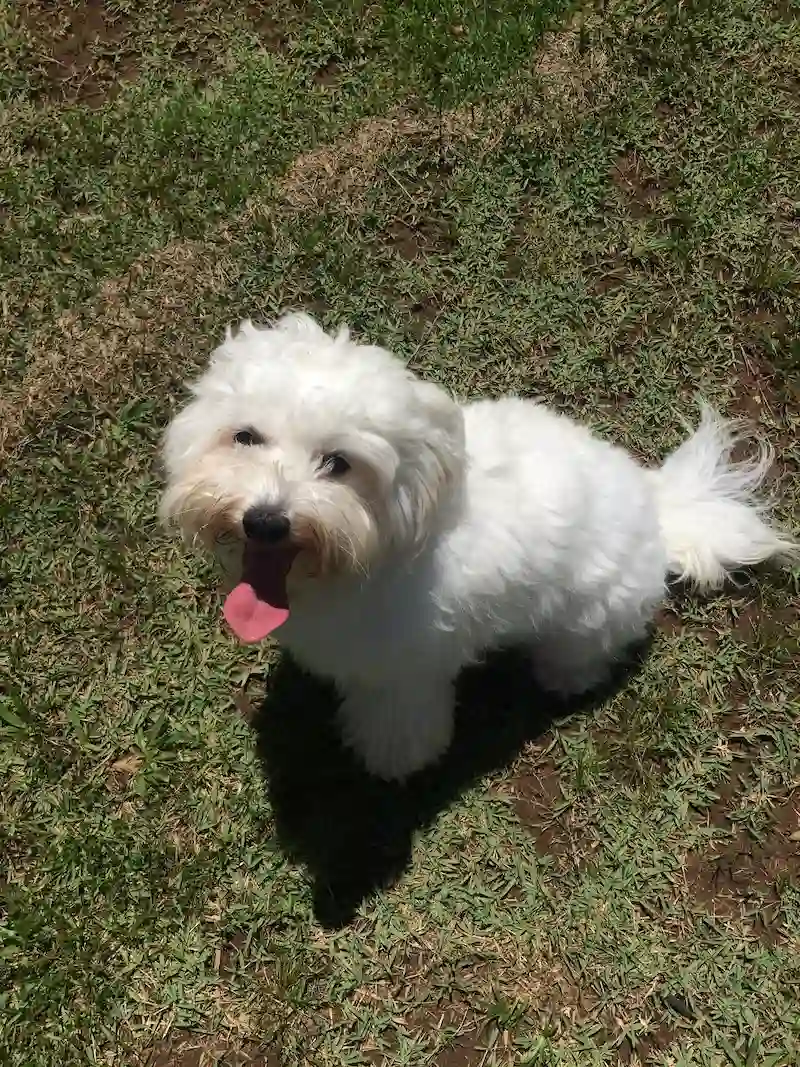 Murphy
 Valtersky
Meet Valtersky & Murphy
FOUNDER OF TEAM SKYTC
At SKYTC, Meet Valtersky & Murphy FOUNDER OF TEAM SKYTCAt SKYTC, cutting-edge pet technology meets real-world testing. We merge Murphy’s hands-on companion trials with Valtersky’s precise analysis—combining over 25 years of structural engineering background with health-tech experience.To guarantee reliability for all breeds, we collaborate with a trusted network of experienced large-breed tutors and active dog handlers who stress-test heavy-duty gear in rugged conditions. We raise the bar for review standards so your best friend gets only the safest, most functional, and highly reliable hardware on the market.
✨ Read also: Top GPS Trackers for Beagle Hunting
A deeply technical piece of content that perfectly complements this post — absolutely worth the read.