
If you are tired of watching your hard-earned corporate funds leak away into a black hole of cracked screens and shattered plastic, you need to understand how magnesium alloy laptops save business expenses before your next hardware refresh. Most office managers make the mistake of buying cheap plastic fleets to save a quick buck upfront, only to pay double when those machines start dying left and right in the field.
At our repair shop, Valtersky and our dedicated support team, alongside our resident laptop hardware specialist, see this cycle repeat itself constantly. We watch frustrated business owners drag in boxes of dead laptops with broken hinges, cracked mainboards, and crushed displays—most of which could have been avoided with better chassis materials.
A rugged, premium metal chassis is the key to escaping this expensive loop of despair. By choosing magnesium over flimsy plastics or heavy metals that bend easily, you protect your company from unexpected downtime and costly repair tickets.
This guide will give you the raw, unfiltered truth about laptop durability so you can make an informed choice. Our ultimate goal is to give you absolute peace of mind and save you from throwing cash down the drain on hardware that cannot handle real-world work.
In 30 Seconds: The Quick Verdict Here is the straight scoop from the repair bench: plastic laptops are a financial trap for any active team. While aluminum looks nice, it bends and transfers impact shock straight to your sensitive motherboard components. Magnesium alloy is the sweet spot—it is incredibly light, absorbs shock like a champ, and boasts a structural strength that keeps internal parts safe from flexing. If you want to cut your IT support tickets in half and make your hardware fleet last five years instead of two, invest in magnesium alloy. It is that simple.
The Costly Nightmare of Cheap Laptop Materials
Let’s talk about why standard office laptops fail so spectacularly. Many low-grade components are housed in cheap polycarbonate shells. This plastic is highly susceptible to heat degradation, meaning it becomes brittle over time; however, manufacturers still use it because it keeps production costs unbelievably low.
This brings us to a classic horror story we see all the time in the tech support world. Picture Dave from sales. Dave is running late for a flight, jams his plastic-chassis work laptop into an overstuffed messenger bag, and rushes through airport security. During the flight, the bag is squeezed into the overhead bin under heavy suitcases.
Because the cheap plastic chassis has zero structural rigidity, it bends under the pressure, pushing the keyboard directly into the delicate display screen. When Dave arrives at his hotel and opens his laptop to prepare for a major pitch, he is greeted by a bleeding spiderweb of dead pixels and a cracked panel.
Dave’s entire trip is ruined, the company loses the client contract, and the IT department has to rush-ship a replacement machine. This is a classic example of a “budget-friendly option” turning into a massive financial headache that drains your resources.
Why Magnesium Alloy is a Business Shield
Let’s get technical for a second, but without the boring textbook jargon. Magnesium is the lightest structural metal on the planet, meaning a magnesium alloy laptop is incredibly easy to carry; however, the material can feel less “metallic” to the touch than aluminum, sometimes tricking users into thinking it is plastic.
Do not let that fool you. Magnesium alloy has a strength-to-weight ratio that blows aluminum and plastic out of the water. When a technician talks about chassis flex, they are talking about how much a laptop bends when you pick it up by one corner.
Cheap laptops flex like wet cardboard, which tears the microscopic solder joints on the motherboard. Magnesium alloy resists this flexing entirely, acting as a rigid protective cage for the delicate silicon inside.
Furthermore, magnesium is excellent at dissipating heat. Better heat dissipation means your processor stays cool without thermal throttling, which keeps your employees working fast and prevents the internal battery from swelling up like a balloon.
The Reality of the Battlefield
Manufacturers love to praise the sleek, matte-finish coatings and military-grade durability certifications of their premium lines. But the hard truth is that many budget-friendly brands apply cheap, rubberized top-coats over the magnesium alloy that peel off like sunburned skin after six months of sweaty palm contact, leaving an otherwise solid machine looking completely battered.
Although a magnesium alloy laptop is highly resistant to structural cracking, the outer paint layer is notorious for scratching easily when rubbed against metal pens or keys in a bag.
Additionally, while the internal frame is tough as nails, some brands skimp on the screen hinges. A heavy-duty magnesium lid is only as good as the hinge holding it up, and if that hinge is made of cheap cast iron, it will eventually seize up and rip right out of its mounting points anyway.
You have to look at the entire build quality, not just the marketing buzzwords on the box. Our hardware specialist always checks the hinge design first, because a seized hinge will snap even the toughest alloy casing if you force it open.
How Magnesium Alloy Laptops Save Business Expenses Over Time
Let’s look at the actual long-term economics of your laptop fleet. When you buy a low-grade plastic laptop, you might think you are saving money upfront. However, the average lifespan of a plastic business laptop under daily road use is roughly two years before structural fatigue takes over.
With a premium tier investment in magnesium alloy laptops, that lifecycle easily stretches to five or six years. This instantly cuts your hardware procurement frequency in half, saving your business massive capital over a ten-year outlook.
There is also the hidden cost of employee downtime. When a laptop breaks, your employee is dead in the water. They cannot answer client emails, close deals, or run project management software.
By deploying highly durable machines, you minimize these sudden operational halts. Your IT department stops playing firefighter and can focus on actual strategic goals instead of swapping out cracked screens and dead keyboards all day long.
| Material | Structural Rigidity | Weight Impact | Thermal Performance | Realistic Lifespan | Primary Structural Risk |
|---|---|---|---|---|---|
| Polycarbonate Plastic | Low | Moderate | Poor | 1 to 2 Years | Brittle cracking, hinge separation |
| Anodized Aluminum | High | Heavy | Excellent | 3 to 4 Years | Permanent denting, heavy weight |
| Magnesium Alloy | Very High | Extremely Light | Excellent | 5 to 6 Years | Exterior paint scratching |
| Carbon Fiber | Very High | Light | Moderate | 4 to 5 Years | Micro-cracking under heavy torsion |
Actionable Checklist for Your Next Laptop Refresh
- Choose machines built with magnesium alloy chassis: This directly leverages how magnesium alloy laptops save business expenses by stopping drop damage in its tracks; however, you must accept that these systems have a more industrial, matte look compared to shiny consumer laptops.
Pro-tip: Look for laptops with MIL-STD-810H certifications to ensure the frame has been tested against real drops and vibration. - Inspect the hinge assembly on your demo unit: Durable hinges keep the lid secure; however, overly tight hinges can make opening the laptop with one hand impossible.
Pro-tip: Try to open the laptop with one finger. If the base lifts off the table, the hinge tension is too high and will wear out the mountings prematurely. - Avoid cheap glossy screens in high-glare environments: Matte screens prevent eye strain; however, they can slightly reduce overall color saturation.
Pro-tip: Always select anti-glare coatings for remote workers who frequent coffee shops or airports. - Prioritize models with user-serviceable RAM and storage: Easily upgradable parts extend the laptop’s usefulness; however, modern ultra-thin designs often solder these components directly to the mainboard.
Pro-tip: Check the spec sheets before buying. If the RAM is soldered, configure it with at least 16GB of RAM from day one. - Verify the thermal venting design: Good airflow prevents your processor from overheating; however, bottom-venting laptops will choke and run hot if used on soft surfaces like blankets or couches.
Pro-tip: Choose models with rear or side exhaust ports to keep the air flowing freely regardless of where your staff works. - Go for spill-resistant keyboards: This protects the motherboard from morning coffee accidents; however, the key travel might feel slightly stiff compared to standard keyboards.
Pro-tip: Look for keyboards with drainage holes on the bottom of the chassis so liquids pass right through without touching the electronics. - Evaluate port variety and build quality: Having native USB-A, HDMI, and USB-C ports prevents the need for fragile dongles; however, adding more ports can make the laptop chassis slightly thicker.
Pro-tip: Avoid laptops that rely entirely on a single USB-C port, as constant plugging and unplugging will wear out the port and require a full motherboard replacement. - Check battery replacement accessibility: Being able to swap a dead battery quickly saves a perfectly good laptop from the scrap heap; however, modern internal batteries require opening the chassis cover.
Pro-tip: Avoid brands that glue the battery to the palm rest, as removing a glued battery is a dangerous fire hazard and takes twice as long. - Look for robust power input jacks: A reinforced charging port prevents loose connection issues; however, proprietary barrel chargers can be difficult to replace when traveling.
Pro-tip: Select models that support USB-C Power Delivery (PD) through a reinforced port, so your team can share standard chargers. - Opt for fingerprint or IR camera security: Fast biometric logins save time; however, these sensors can fail to read sweaty or dirty fingers.
Pro-tip: Ensure your IT team configures a PIN backup that matches corporate security policies so employees don’t get locked out. - Choose business-class support packages: A rapid-response warranty minimizes downtime; however, accidental damage coverage often requires an extra upfront fee.
Pro-tip: Always opt for next-business-day on-site support to avoid shipping broken laptops back and forth across the country. - Inspect the lid rigidity under torsion: A rigid lid prevents pressure-spots on the LCD panel; however, ultra-thin metal lids will still flex if twisted from the corners.
Pro-tip: Test this by gently twisting the top screen corners. If you see distortion on the screen, reject that model.
👇 Looking for more performance cheats? Check out our field-tested tactical blueprints:
Guides for Your Next Workspace
Professional Laptops
The definitive blueprint to selecting high-performance, enterprise-grade workstations engineered to scale your productivity.
Budget Tech Tools
Practical strategies and low-cost digital tools engineered to maximize office performance without breaking your budget.
Power User Gadgets
Advanced hardware, desk automation tools, and elite tech ecosystems built to completely eliminate workflow bottlenecks.
FAQ Section
Are magnesium alloy laptops actually stronger than aluminum?
Yes, straight up. Aluminum bends and stays bent, which puts constant mechanical stress on the internal motherboard. Magnesium alloy is stiffer, absorbs impact shock better, and springs back into shape instead of denting. Aluminum is mostly for aesthetics; magnesium is for actual survival.
Isn’t magnesium highly flammable? Will my laptop catch fire?
Stop reading clickbait. Solid magnesium alloy does not catch fire unless you heat it past its melting point with a blowtorch. Your laptop’s battery is infinitely more likely to catch fire than the metal shell housing it. It is perfectly safe.
Why doesn’t every brand use magnesium alloy for all their models?
Because it is expensive to manufacture and mold into complex shapes. Plastic can be injection-molded in seconds for pennies. Magnesium alloy requires precision casting and specialized tooling. Brands would rather sell you cheap plastic trash that breaks so you are forced to buy another one in two years.
Is buying a plastic laptop ever worth it to save business capital?
Only if the laptop is going to sit on a desk and never, ever move. The moment that plastic machine enters a backpack, its lifespan starts ticking down fast. You are not saving money; you are just delaying a replacement purchase and adding extra IT headache down the line.
Do magnesium laptops feel cheap because they are so light?
Sometimes they do, and it drives me crazy when clients complain about this. Because magnesium is so light, people mistake it for plastic. But the moment you try to twist it, you realize it is rigid as hell. Do not fall for the “heavy equals premium” trap. Heavy just means tired shoulders.
Are ultra-thin consumer laptops good for business field work?
No, they are terrible. They sacrifice cooling fans, structural ports, and key travel just to look pretty. One drop on a concrete warehouse floor and those sleek consumer toys shatter into expensive garbage. Stick to dedicated business-class hardware.
Can my IT staff easily repair a damaged magnesium alloy laptop?
Usually yes, because business-class magnesium laptops are designed with maintenance in mind. Unlike glued-together consumer laptops, these models typically use standard screws and modular internal parts. You can swap a keyboard or screen in twenty minutes instead of throwing the whole machine away.
Is accidental damage protection warranty a total scam?
For cheap laptops, yes—it is a waste of money. But for premium tier investments, it is absolutely worth it. If an employee runs over a high-end magnesium laptop with their car, having a manufacturer swap it out for free pays for the entire warranty plan in one go.
Why Trust SKYTC Curated Gear?
At SKYTC, we simplify technology for you. We aren’t just another deals site; we are hardware experts obsessively focused on elite performance.
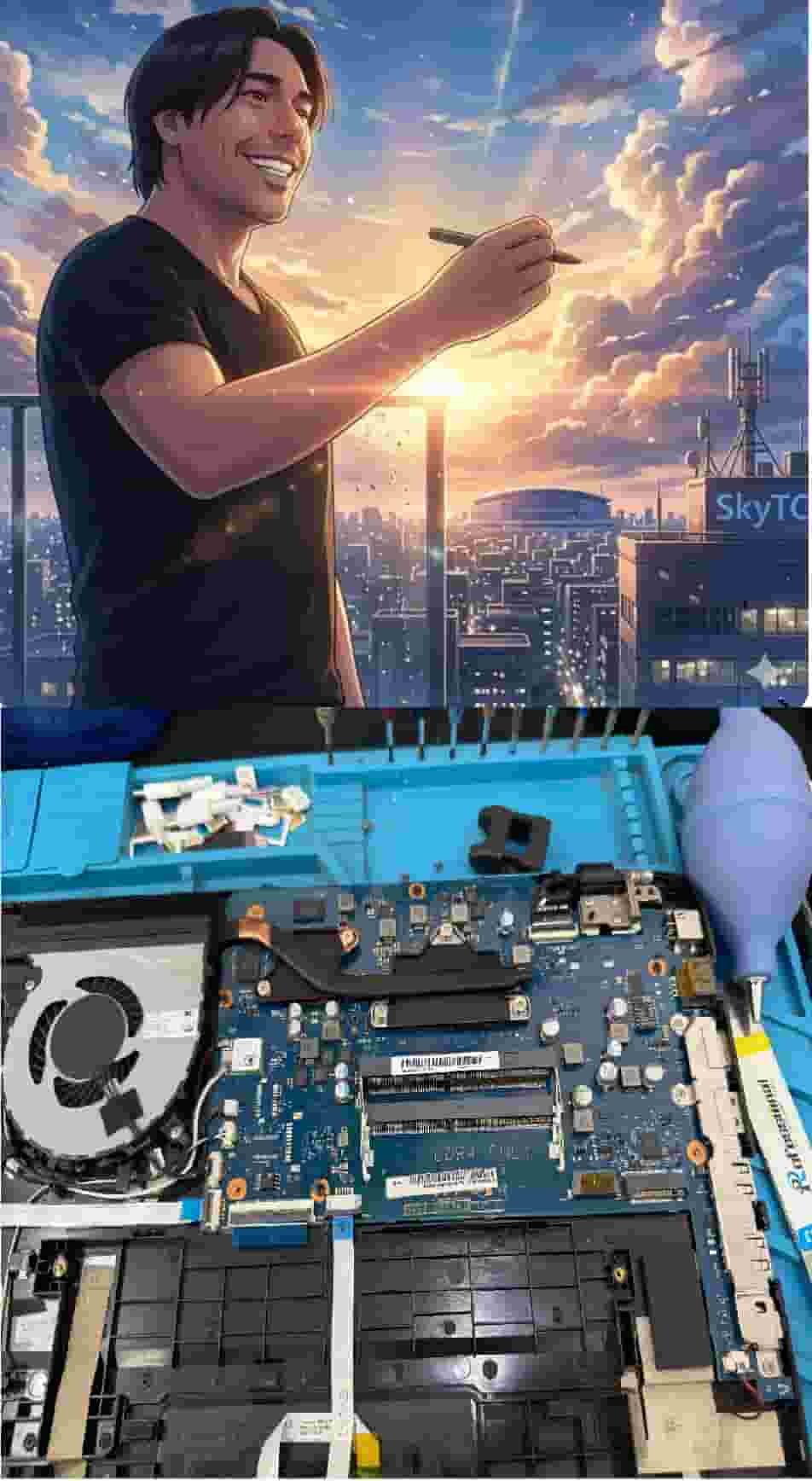
Technical Bio: Hardware & Laptops
“At SkyTC, technology is driven by engineering precision and real field experience. I am Valtersky, and I bring a unique background to the bench: from professional woodworking, the eye for structural integrity; from radiology, an absolute obsession with microscopic details.
As an ultra-endurance marathon runner, I don’t just browse store windows. I tear machines down, run intensive stress tests on thermal dissipation, and validate the actual build quality of every single component. My mission is to translate complex tech engineering and tech finances into smart decisions for your workflow.
Here, we speak straightforward, jargon-free English with the authority of someone who knows exactly what is inside the chassis.”
✨ Read also: Top Rugged Professional Laptops for Extreme Conditions
Content that perfectly complements this guide — highly recommended reading.