
If you have ever bought a high-end keyboard from a major brand, you know the instant frustration of being forced to install heavy, bloated background software just to remap a couple of keys. These proprietary apps hog system memory, demand account logins, crash after operating system updates, and forget your custom lighting profiles the second you unplug the cable. Understanding why open source keyboard firmware empowers power users is the ultimate escape hatch from buggy OEM software, handing you complete control over your hardware without forcing you to run background bloatware.
I am Valtersky, and here at our repair shop, WE HAVE A DEDICATED SUPPORT TEAM AND A LAPTOP HARDWARE SPECIALIST who routinely fix setups ruined by glitchy peripheral drivers. We see power users, software developers, and spreadsheet wizards struggle daily with keyboards that feel sluggish or lock custom layouts behind corporate software paywalls.
Taking control of your keyboard firmware shifts your typing experience from relying on fragile desktop software to enjoying pure hardware-level execution. This transition grants absolute peace of mind, speeds up daily productivity, and guarantees your personal shortcuts work instantly on any computer you plug into.
In 30 Seconds
Here is the raw truth straight from behind the bench:
Proprietary keyboard software is bloatware designed to track usage telemetry and tie you down to a single brand ecosystem.
Open source firmware like QMK, ZMK, and VIAL saves your custom macros, tap-dance keys, and multi-layer layouts directly onto the keyboard’s internal microcontroller memory.
Once flashed, your custom layout works natively on Windows, macOS, Linux, or iPadOS without installing a single background driver.
It takes a slight learning curve up front, but it completely eliminates background crashes and permanently frees up system RAM.
Consider a common scenario from our workbench. A software engineer named Marcus spends a solid budget on a flashy, brand-name gaming keyboard for his work-from-home setup. He configures complex macro shortcuts for coding inside the manufacturer’s desktop utility. Everything works smoothly until his company pushes a strict security policy on his work laptop, blocking unauthorized third-party background software. Instantly, his expensive keyboard reverts to a standard factory layout, wiping out his custom workflow because the board relies entirely on the host computer running active background software to process layer toggles.
I dealt with a similar headache on my own bench a few months back. A client brought in a custom split keyboard that he thought was totally dead after trying to flash a pre-compiled layout file. It turned out he had loaded a corrupted matrix file without mapping a physical hardware reset key. After five minutes of carefully jumping two boot pins on the microcontroller with a pair of tweezers and flashing a clean, lightweight layout via VIAL, the board sprang back to life. That quick fix proved once again that open source hardware recovery is always easier than fighting locked, proprietary firmware.
The Red Flags of Proprietary Keyboard Software
Major hardware brands want you locked into their desktop ecosystems. They market flashy software panels filled with bright RGB controls, but behind those sleek user interfaces lies inefficient code that slows down your system and causes unexpected input drops.
- Proprietary OEM driver suites provide colorful lighting customization; however, they consume massive background memory and often freeze during high-CPU workloads.
- Cloud-synced macro managers promise instant profile backups across devices; however, they demand mandatory account creation and stop functioning entirely when your internet connection drops.
- Factory macro recording tools allow quick shortcut creation; however, they introduce noticeable input latency because keypress signals must loop through software drivers before reaching the OS.
- Brand-exclusive layout configurators offer simple drag-and-drop key remapping; however, they lock your settings to a single computer and refuse to transfer layouts to mobile devices.
The Reality of the Battlefield
Custom mechanical keyboards running open source firmware earn huge technical praise for delivering zero-latency key execution and infinite layout layers. However, the hard truth is that compiling raw C code files through command-line tools can intimidate non-technical users, leading to temporary board lockouts if you forget to include a bootloader activation key in your custom layout.
Wireless split ergonomic boards utilizing open source Bluetooth stacks praise incredible battery life and total wireless freedom for desk setups. But the reality on the workbench is that configuring dual-board wireless sync requires flashing separate firmware binaries to left and right microcontrollers, which can cause annoying side-sync pairing drops during low-battery states.
Low-profile custom boards boast ultra-sleek aluminum cases and rapid key actuation speeds for digital nomads. However, the compact circuit board trace layout leaves fragile micro-USB or USB-C ports vulnerable to physical trace lifting if you unplug angled cables aggressively without internal strain relief.
Why Open Source Keyboard Firmware Empowers Power Users on Every Setup
The true power of open source firmware lies inside tiny onboard microcontrollers. Open source projects like QMK (Quantum Mechanical Keyboard), ZMK, and KMK store every single keymapping, layer toggle, and custom macro directly in the keyboard’s non-volatile EEPROM or flash memory. When you press a key, the internal microprocessor handles the logic instantly, sending standard USB HID or Bluetooth signals to the host system without waiting for software confirmation.
This hardware-level independence unlocks advanced typing features that proprietary brand software cannot match. Features like Tap-Dance allow a single key to perform one action when tapped once, a second action when double-tapped, and activate an entire function layer when held down. Auto-Shift automatically capitalizes letters when you hold a key slightly longer, completely removing the need to reach for the Shift key with your pinky finger during long writing sessions.
Configuring these advanced features used to require manually editing C code files and running compiler commands in a terminal terminal window. Today, graphical interfaces like VIA and VIAL allow power users to remap keys, build dynamic macros, and test key combinations visually in real time through any WebHID-compatible web browser. You get all the power of open source logic with the ease of instant drag-and-drop adjustments.
- Onboard function layers allow you to fit a full-sized key layout onto a compact 60% board; however, memorizing invisible key locations requires a dedicated adaptation period.
- Tap-Hold key combinations turn the Spacebar into a Navigation layer trigger when held down; however, setting the timing threshold too short can cause accidental spaces during rapid typing.
- Dynamic macro recording lets you store complex strings without opening desktop apps; however, storing dozens of long text blocks can exhaust small onboard microcontroller memory limits.
- Hardware-level mouse emulation controls cursor movement directly from home row keys; however, tracking speed feels stepped and lack the fine acceleration control of an actual optical sensor.
Comparative Table: Open Source Firmware vs. Proprietary OEM Software
To highlight why enthusiasts and professionals prefer open source control, here is how open source solutions stack up against traditional brand software across key performance areas:
| Performance Category | Open Source Firmware (QMK/ZMK/VIAL) | Proprietary OEM Software |
|---|---|---|
| Layout Storage Location | Onboard Microcontroller Memory (EEPROM) | Host Computer Hard Drive & Cloud Sync |
| System Background Memory Usage | Zero MB (No background processes) | Consumes significant system RAM |
| Cross-Platform Compatibility | Universal (Windows, macOS, Linux, iOS, Android) | Limited to supported desktop OS versions |
| Real-Time Onboard Remapping | Supported via VIAL/VIA without driver installs | Requires running native background apps |
| Custom Function Layers | Unlimited dynamic hardware layers | Restricted to 2 or 3 factory layers |
| Data Privacy & Telemetry | 100% Offline, zero data collection | Gathers app usage telemetry and analytics |
| Firmware Recovery Options | Hardware boot pin reset / ISP flashing | varies by model |
| Long-Term Driver Support | Community supported forever | not informed |
Actionable Pre-Purchase and Flashing Checklist
Ready to make the jump to custom firmware control? Use this practical checklist before purchasing or flashing your next board to ensure a smooth transition without headaches:
- 1. Choose hardware wisely, because open source keyboard firmware empowers power users best when paired with boards featuring open microcontrollers like the RP2040 or Pro Micro.
- 2. Verify that your target keyboard lists native QMK, ZMK, or VIAL compatibility out of the box to avoid tedious pin-mapping setups.
- 3. Always assign a dedicated Reset key combination or physical button combo on your primary base layer before flashing new layout files.
- 4. Download a clean copy of your keyboard’s default factory HEX or UF2 firmware binary file so you can easily revert changes if something goes wrong.
- 5. Test physical key matrix traces using a visual key tester app immediately after flashing to confirm every switch socket responds cleanly.
- 6. Ensure wireless open source keyboards utilize low-power ZMK firmware rather than QMK to maximize overall battery efficiency.
- 7. Keep macro string lengths reasonable on smaller microcontrollers to prevent hitting EEPROM memory size ceilings during layout compiles.
- 8. Verify that your USB cable supports high-speed data transfer rather than basic power charging before attempting firmware flashing procedures.
- 9. Use VIAL-compatible firmware builds whenever possible to enjoy instant, browser-based key remapping without compiling code manually.
- 10. Store backup copies of your custom layout JSON configuration files in a dedicated cloud folder for fast recovery across setups.
- 11. Calibrate tap-dance timing thresholds in small millisecond increments to find your natural typing cadence without accidental key triggers.
- 12. Avoid flashing firmware onto keyboards connected through unpowered USB hubs to prevent unexpected power drops mid-flash.
👇 Looking for more performance cheats? Check out our field-tested tactical blueprints:
Guides for Your Next Workspace
Professional Laptops
The definitive blueprint to selecting high-performance, enterprise-grade workstations engineered to scale your productivity.
Budget Tech Tools
Practical strategies and low-cost digital tools engineered to maximize office performance without breaking your budget.
Power User Gadgets
Advanced hardware, desk automation tools, and elite tech ecosystems built to completely eliminate workflow bottlenecks.
Frequently Asked Questions (FAQ)
Do I need to know programming languages like C to use open source keyboard firmware?
No, not at all. Modern tools like VIA and VIAL give you a visual drag-and-drop interface right inside your web browser. You simply click a key on screen, select what you want it to do, and the layout updates on your keyboard hardware instantly without writing a single line of code.
Can flashing QMK or ZMK firmware permanently brick my keyboard?
It is almost impossible to permanently brick a board with firmware alone. Microcontrollers have built-in bootloaders that exist separately from the active keyboard layout. Even if you flash a corrupt file, you can manually bridge two reset pins on the board or press the physical reset button to boot into recovery mode and re-flash clean firmware.
Why do major peripheral brands insist on using proprietary desktop utilities?
Brand-specific software keeps you trapped in their sales ecosystem while collecting user analytics telemetry. It allows companies to market flashy RGB lighting features while cheaping out on internal microcontroller memory, offloading all the key processing workload onto your computer’s CPU and RAM instead of the keyboard hardware.
Is ZMK better than QMK for custom keyboard builds?
ZMK is specifically built from the ground up for wireless Bluetooth keyboards, offering far better power management and native split-keyboard syncing. QMK is the gold standard for wired keyboards, offering deeper LED controls and broader community micro-controller support, but it drains wireless batteries much faster.
What is the difference between VIA and VIAL?
VIA is a popular visual interface for editing QMK keymaps on the fly. VIAL is an open source fork of VIA that adds support for advanced features like hardware-level Tap-Dance, combo keys, Auto-Shift, and complex macro editing directly in the interface without needing to recompile your firmware binary.
Why do my custom shortcuts stop working when I plug into my office laptop?
If you use brand-name keyboard software, your shortcuts fail because the work laptop lacks the required background app. With open source firmware, every shortcut, layer, and macro is stored directly inside the keyboard memory. It works on any operating system instantly, zero software required.
Are cheap microcontroller development boards safe for DIY custom keyboards?
Cheap microcontrollers like bargain Pro Micro clones work, but they often use fragile micro-USB ports that tear off the circuit board under stress. Opt for boards featuring RP2040 processors and mid-mounted USB-C ports with reinforced solder joints to avoid hardware failures down the road.
Is setting up custom open source firmware worth the extra effort for regular typing?
If you only type basic emails occasionally, standard factory boards are fine. But if you spend hours typing, coding, or managing spreadsheets, spending thirty minutes setting up custom layers and ergonomic shortcuts eliminates unnecessary hand reaching and saves massive amounts of time every single workday.
Why Trust SKYTC Curated Gear?
At SKYTC, we simplify technology for you. We aren’t just another deals site; we are hardware experts obsessively focused on elite performance.
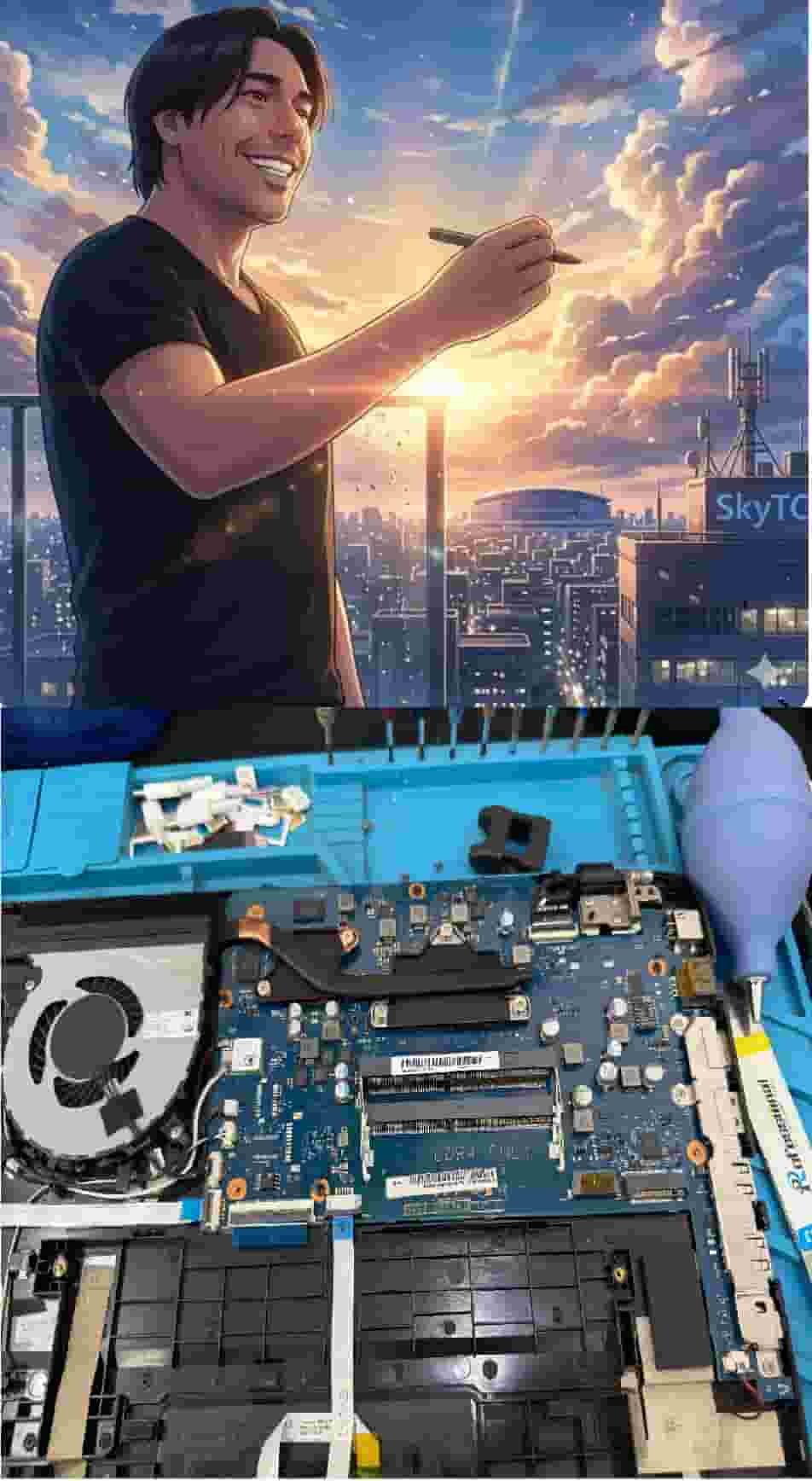
Technical Bio: Hardware & Laptops
“At SkyTC, technology is driven by engineering precision and real field experience. I am Valtersky, and I bring a unique background to the bench: from professional woodworking, the eye for structural integrity; from radiology, an absolute obsession with microscopic details.
As an ultra-endurance marathon runner, I don’t just browse store windows. I tear machines down, run intensive stress tests on thermal dissipation, and validate the actual build quality of every single component. My mission is to translate complex tech engineering and tech finances into smart decisions for your workflow.
Here, we speak straightforward, jargon-free English with the authority of someone who knows exactly what is inside the chassis.”
✨ Read also: Top Quiet Mechanical Keyboards for Shared Tech Workspaces
Content that perfectly complements this guide — highly recommended reading.