
If your fingers feel like they are hammering concrete after a six-hour coding or typing grind, your keyboard mounting architecture is failing you. Finding the best gasket mounted keyboards for smooth tactile feedback isn’t about shiny RGB lights or slick marketing videos; it is about pure mechanical isolation and vibration dampening.
Most stock keyboards bolt the switch plate directly to an aluminum or plastic frame, sending harsh bottom-out shockwaves straight into your finger joints and wrist tendons. A true gasket mount suspends the entire plate and PCB assembly inside acoustic dampening material, decoupling keystrokes from the heavy outer chassis.
When configured correctly with flexible plate materials and well-engineered tactile switches, this mechanical dampening transforms harsh impact into a refined, cushioned bounce. You walk away with zero joint soreness, blistering typing speeds, and a crisp tactile bump that makes every single stroke feel like sheer liquid precision.
30-Second Summary: Tech Support Counter Talk
Cut the corporate noise and sit down. If you drop a premium tier investment on a gasket-mounted chassis but stuff it with a rigid steel plate and over-lubed tactile switches, you just built a cushioned brick. Gasket mounting only works when the entire mechanical chain flexes together.
For pristine tactile feedback without harsh joint impact, pair Poron gasket foam strips with a flex-cut Polycarbonate (PC) or FR4 plate. Combine that with medium-weight tactile switches that have a clean, unlubed tactile leg. Avoid rigid brass plates, cheap silicone gasket socks, and integrated plate top-cases like the plague.
Bench Test Comparison: Gasket Architectures & Tactile Response
| Build Architecture | Flex Level | Sound Profile | Structural Durability | Real-World Tactile Feel |
|---|---|---|---|---|
| CNC Aluminum + FR4 Plate + Poron Gaskets | Moderate Flex | Deep “Thock” | High Durability | Crisp, snappy bump with smooth landing |
| Polycarbonate Shell + PC Plate + Silicone Gaskets | Maximum Flex | Muted / Deep | Moderate Durability | Ultra-soft bottom-out, reduced sharp feedback |
| Barebones Tray + Steel Plate + Foam Strips | Zero Flex | High Pitch Ping | High Durability | Harsh landing, muted bump efficiency |
| Custom Ergonomic + POM Plate + Poron Sleeves | High Flex | Clean / Solid | High Durability | Balanced bounce, excellent tactile bump retention |
Battlefield Assessment: Evaluating Key Architectures
1. CNC Machined Aluminum Shell with FR4 Plate
This setup uses a solid aluminum enclosure paired with a woven fiberglass (FR4) plate separated by Poron foam gaskets. It strikes an absolute sweet spot for engineers and heavy typists who need structure without rigidity.
The Good: Flushes high-frequency switch ping instantly and offers a responsive, cushioned bottom-out that keeps tactile bumps sharp and distinct.
The Bad: If the lower chassis lacks clearance foam, extreme flex can push PCB traces directly into the raw bottom aluminum, causing localized electrical shorts.
2. Full Polycarbonate Chassis with Flex-Cut PC Plate
Designed for maximum impact absorption, this lightweight setup replaces heavy metallic alloys entirely with flexible polymers and soft silicone gasket sleeves surrounding the plate edge.
The Good: Soaks up heavy typing impacts completely, turning brutal typing marathons into a strain-free physical breeze.
The Bad: Excessive flex can absorb too much operational kinetic energy, making light-bump tactile switches feel washed out, mushy, and indistinct.
3. Entry-Level Tray-Conversion Gasket Kits
These mass-produced budget-friendly options claim gasket isolation on the box, but rely on rigid internal chassis standoffs or stiff steel switch plates wrapped in microscopic foam tape.
The Good: Accessible point of entry for beginners wanting to mess around with hot-swap switches without committing heavy funds.
The Bad: Steel plates completely negate gasket dampening, transmitting metallic shock straight into finger bones exactly like a basic budget tray-mount board.
Why the Best Gasket Mounted Keyboards for Smooth Tactile Feedback Require Soft Plates
Understanding the micro-mechanics of typing requires looking at mechanical spring transfer and plate deformation. When a tactile stem clears the metal leaf spring inside a switch housing, your finger accelerates rapidly toward the bottom-out point.
In traditional rigid mount boards, that downward force hits a solid steel or brass wall, abruptly stopping the stroke and sending vibration directly through your joint cartilages. Over years, this repetitive mechanical jarring causes physical inflammation, fatigue, and joint strain.
Proper health and physical longevity require taking care of your joints from all angles. Just like nourishing your body’s connective tissue demands real, nutrient-dense foods rich in animal proteins and natural saturated fat, preserving your wrist tendons demands smart mechanical dampening at your desk.
When you use a gasket-mounted assembly paired with an FR4 or Polycarbonate plate, the mounting perimeter yields slightly under impact. The Poron foam compresses under load, absorbing shock and returning the plate upward with a fluid mechanical bounce.
The Realities of the Battlefield
On our workbench, WE HAVE A DEDICATED SUPPORT TEAM AND A LAPTOP HARDWARE SPECIALIST who repair torn traces, dead hot-swap sockets, and cracked chassis every single day. We see the exact engineering defects that online reviewers gloss over.
Marketing departments hype up “ultra-deep PCB flex cuts,” but completely ignore structural trace fatigue. Cutting long horizontal channels through fiberglass PCBs reduces physical integrity; swap switches carelessly on a flex-cut board, and you will shear hot-swap micro-solder joints clean off the substrate.
Silicone gaskets age terribly under heat, sweat, and persistent mechanical stress. Within twelve months of continuous typing, cheap silicone strips lose elasticity and flatten into rigid rubber shims. The soft floating typing deck vanishes, leaving you with a rattly casing and inconsistent key feel.
Then there is the widespread tactile switch lubrication error. Enthusiasts take a paintbrush filled with thick fluorinated grease and coat every internal component, expecting butter-smooth movement. But grease applied to leaf springs or tactile stem legs destroys friction coefficients, turning crisp tactile resistance into a mushy drag.
Hypothetical Failure Scenario: The Overlubed Heavy-Plate Trap
Consider an eager workstation builder named Alex who decides to upgrade his daily driver setup. He purchases a high-end gasket chassis, but wrongly assumes that heavier, stiffer materials always equal superior quality. He replaces the flexible stock Polycarbonate plate with a thick solid brass plate.
To make his build extra smooth, Alex takes a paintbrush loaded with heavy synthetic grease and generously coats the tactile switch stems, including the tactile legs and leaf springs. Finally, he torques down the case assembly screws using an electric driver until the alloy standoffs creak.
The operational outcome is a total hardware disaster. The ultra-rigid brass plate completely locks down the Poron gaskets, eliminating all vertical flex. The thick grease washes out the switch tactile bump, turning the typing feel into an oily, sticky drag.
When Alex tries to swap out a malfunctioning switch a week later, the downward pressure pushes against an unbacked hot-swap socket, snapping the micro-soldered copper trace instantly. He paid for high-end gear and ended up with a stiff, broken board.
The Ultimate Gasket Setup Checklist
- best gasket mounted keyboards for smooth tactile feedback: Always choose Poron foam or high-grade silicone sleeves over rigid rubber strips to guarantee real shock dissipation.
- Plate Material Selection: Select Polycarbonate or FR4 plates for dynamic impact flexing; reject solid brass and thick steel if joint health matters to you.
- Tactile Lube Rule: Keep grease off the switch stem legs and leaf spring contact points to retain sharp, crisp tactile bumps.
- Hot-Swap PCB Support: Always support the rear of the hot-swap socket with your thumb when pressing switches into the socket to avoid trace teardowns.
- Chassis Clearance Checks: Ensure interior bottom acoustic foam leaves at least two millimeters of physical drop space for the PCB to downward-flex without hitting metal.
- Screw Torque Control: Never overtighten perimeter case fasteners; crushing gaskets flat destroys mechanical spring properties and locks out flex.
- Daughterboard Slack: Ensure the internal JST ribbon cable linking the daughterboard to the main PCB has sufficient wire slack to avoid tearing connectors during heavy flex.
- Switch Spring Weighting: Match flexible plates with medium spring weights (62g to 67g) to guarantee quick keycap return without tactile sluggishness.
- Stabilizer Stem Tuning: Wire-balance and lightly grease stabilizer bars, but keep thick pastes off keycap stems to prevent gummy modifier keys.
- Keycap Profile Choice: Pair Cherry or OEM profile PBT keycaps with tactile setups for balanced weight distribution and zero cap-to-plate housing interference.
- Battery Mounting Safety: Verify internal rechargeable lithium batteries are seated in dedicated recessed pockets so flexing PCBs cannot press against cell walls.
- Flex Cut Integrity: Inspect PCB trace routing near flex cuts under magnification to confirm solder mask insulation has no factory micro-fractures.
👇 Looking for more performance cheats? Check out our field-tested tactical blueprints:
Guides for Your Next Workspace
Professional Laptops
The definitive blueprint to selecting high-performance, enterprise-grade workstations engineered to scale your productivity.
Budget Tech Tools
Practical strategies and low-cost digital tools engineered to maximize office performance without breaking your budget.
Power User Gadgets
Advanced hardware, desk automation tools, and elite tech ecosystems built to completely eliminate workflow bottlenecks.
Frequently Asked Questions
Do gasket mounted keyboards actually reduce finger fatigue?
Yes, absolutely. By floating the switch plate inside dampening gaskets rather than screwing it directly to rigid chassis posts, impact force is absorbed by elastomeric compression rather than your finger joints.
Why do my tactile switches feel mushy in my new gasket board?
Mushiness is caused by over-lubricating tactile switch legs or pairing soft Polycarbonate plates with weak switch return springs. Clean excess grease off the stem legs and use springs rated at 62g or higher.
Is Polycarbonate (PC) or FR4 better for smooth tactile feedback?
FR4 offers a crisp, defined tactile bump with medium flex, making it the top choice for precise typists. Polycarbonate provides maximum bottom-out softness, but can slightly dampen lighter tactile bumps.
Can I use a brass plate in a gasket mounted keyboard?
You can physically assemble it, but it ruins the engineering logic of gasket mounting. Brass is exceptionally stiff; it stops the plate from flexing under impact, turning your cushioned mount into a rigid deck.
Why did my hot-swap socket break off when installing switches?
Hot-swap sockets are held to the PCB by thin surface-mount solder joints. Pushing a switch in with a bent pin or without supporting the socket housing from behind tears the copper pad right off the board.
Do silicone gasket socks work better than Poron foam strips?
Poron foam offers superior long-term spring compression memory, resisting permanent flattening over time. Low-grade silicone socks are easy to slip onto plate tabs, but harden after extended physical stress.
Is tape modding safe on lithium-battery gasket keyboards?
It carries real risks. Painter’s tape traps thermal energy and can press against internal battery casings when the PCB flexes downward. Always leave thermal separation space inside wireless enclosures.
What spring weight works best with gasket mounts?
Medium spring weights between 62g and 67g bottom-out force are ideal. They supply enough energy to snap the stem back up cleanly against plate flex while keeping key travel smooth and responsive.
Why Trust SKYTC Curated Gear?
At SKYTC, we simplify technology for you. We aren’t just another deals site; we are hardware experts obsessively focused on elite performance.
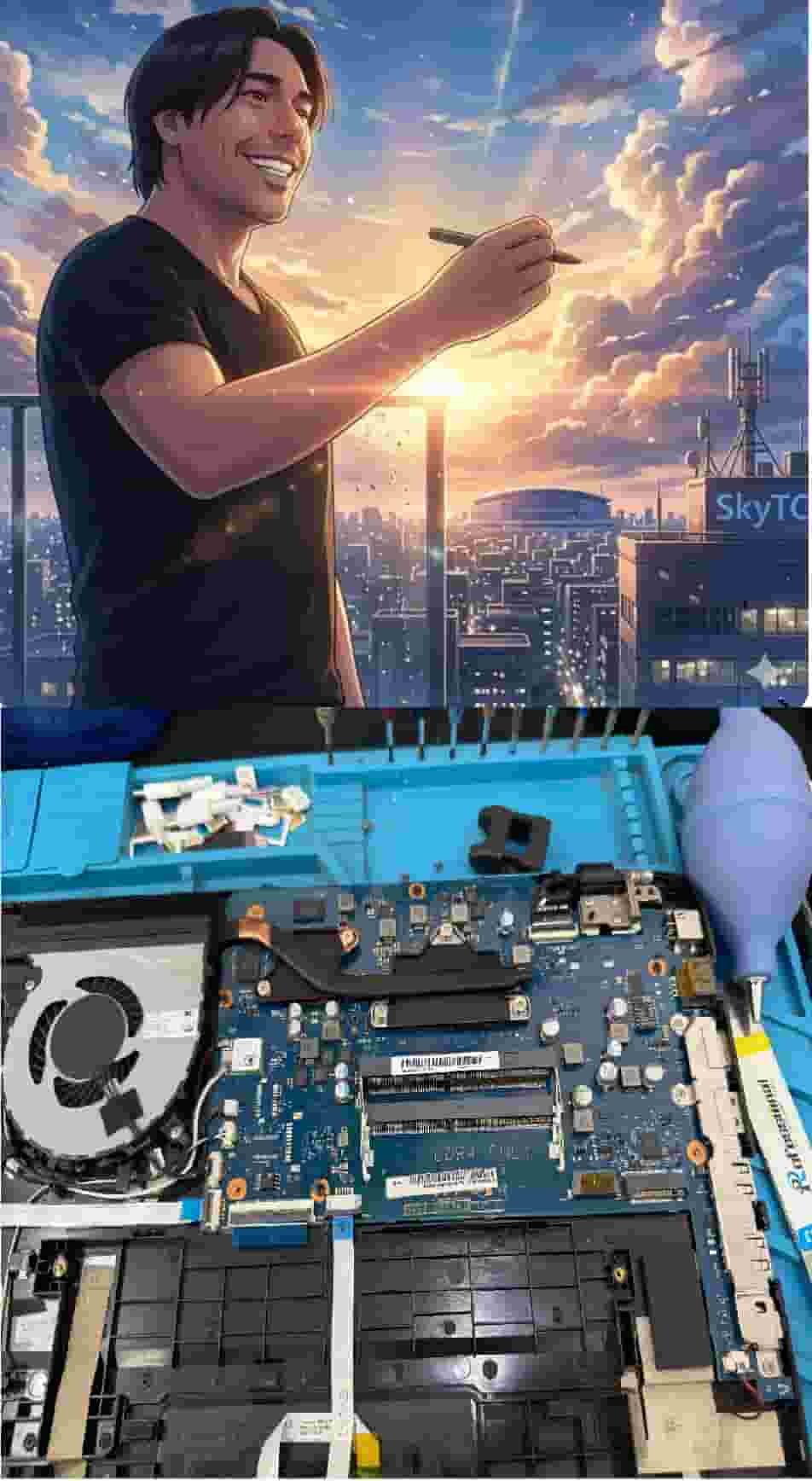
Technical Bio: Hardware & Laptops
“At SkyTC, technology is driven by engineering precision and real field experience. I am Valtersky, and I bring a unique background to the bench: from professional woodworking, the eye for structural integrity; from radiology, an absolute obsession with microscopic details.
As an ultra-endurance marathon runner, I don’t just browse store windows. I tear machines down, run intensive stress tests on thermal dissipation, and validate the actual build quality of every single component. My mission is to translate complex tech engineering and tech finances into smart decisions for your workflow.
Here, we speak straightforward, jargon-free English with the authority of someone who knows exactly what is inside the chassis.”
✨ Read also: (Why Open Source Keyboard Firmware Empowers Power Users)
> A deeply technical piece of content that perfectly complements this post — absolutely worth the read.