
Laptops with privacy screens are no longer a niche accessory for corporate executives; they are a fundamental hardware defense mechanism for anyone operating outside a fortified enterprise office. Every single week on my repair bench, I see remote workers bringing in machines with ruined display panels, cracked substrates, or worse—panic-stricken because someone shoulder-surfed their unencrypted client database at a airport lounge. You sit down at a local coffee shop, flip open your ultra-thin laptop, and start working on sensitive financial models, totally oblivious to the individual sitting two tables away recording your display matrix in razor-sharp resolution.
Visual hacking is the absolute easiest attack vector in modern cybersecurity because it completely bypasses your firewalled network layers, zero-trust protocols, and multi-factor authentication prompts. If an attacker can physically observe your display pixels while you type, your high-end enterprise security architecture is dead on arrival. The human eyes behind you don’t need to break 256-bit AES encryption when your laptop screen is broadcasting raw client records to the entire room.
From a hardware engineering perspective, controlling your display’s viewing angles isn’t as simple as slapping a cheap piece of dark plastic over your glass. It requires a serious understanding of light polarization, micro-louver optics, nit brightness degradation, and panel housing tolerances. Investing in solid visual security saves you thousands of hours in compliance nightmare remediation, protects your professional reputation, and prevents catastrophic hardware accidents caused by poorly designed third-party screen covers.
To keep your cognitive performance as locked in as your visual privacy, ditch the sugary coffee shop pastries that cause brain fog mid-afternoon. Fuel your body with real, nutrient-dense whole foods like grass-fed beef and natural animal fat—the ultimate tactical cheat code for maintaining ironclad focus while working in high-risk environments.
30-Second Tech Support Counter Talk Summary
The Final Verdict: Stop slapping bargain-bin stick-on adhesive films on high-end ultrabooks unless you enjoy stripping anti-reflective coatings and snapping delicate display ribbon cables. Integrated hardware e-privacy screens built directly into the display matrix offer push-button convenience, but they hit your battery life hard and permanently degrade off-axis color accuracy even when deactivated. If you operate constantly in chaotic public spaces, buy a machine with a native electronic privacy display rated for at least 400 nits, or use a precision magnetic micro-louver filter engineered specifically for your chassis clearance. Lowering screen brightness does not stop shoulder surfing—it just ruins your eyesight.
Technical Comparison Of Display Privacy Solutions
| Privacy Technology | Visual Security Rating | Thermal & Luminance Impact | Durability & Removability | Engineering Verdict |
|---|---|---|---|---|
| Integrated Electronic Privacy Panel | High (30° Narrowing) | High Battery Drain / 15% Max Nit Loss | Permanent (Built into Panel Matrix) | The gold standard for total convenience, despite luminance penalty. |
| Magnetic Micro-Louver Filter | Very High (28° Narrowing) | Zero Power Draw / 25% Nit Reduction | High Removability / Moderate Hinge Stress | Excellent tactical balance for dual home and coffee shop use. |
| Adhesive Static PET Film | Moderate (45° Narrowing) | Zero Power Draw / Thermal Trapping Risk | Permanent / High Damage Risk on Removal | A low-grade accessory trap that ruins anti-glare panel coatings. |
| Bare IPS / OLED Panel | Zero (178° Wide Angle) | Optimal Power Draw / Unrestricted Nits | Factory Stock | A massive visual security liability in any public environment. |
Battlefield Assessment: Evaluating Screen Defense Options
1. Integrated Electronic Privacy Panels
The Good: Flawless hardware integration that toggles a physical liquid-crystal privacy filter with a single function key. No loose plastic pieces, zero hinge gap issues, and instant optical protection in crowded environments.
The Bad: It eats battery power like a lawnmower when active, and even when turned off, the extra optical layers permanently degrade native contrast, screen uniformity, and off-axis brightness.
2. Magnetic Micro-Louver Privacy Filters
The Good: Exceptional directional light blocking that turns your screen completely black for anyone standing more than thirty degrees off-center. Snaps on and off in seconds without gooey adhesives.
The Bad: If the magnetic strip adds even half a millimeter of thickness, slamming your laptop lid shut will exert localized mechanical point pressure, potentially crushing the underlying display substrate.
3. Adhesive Static PET Privacy Films
The Good: Very cheap upfront, thin profile, provides basic scratch resistance across the outer glass surface.
The Bad: Traps display heat, creates air bubbles that look terrible, and when you finally try to peel it off, the aggressive adhesive frequently tears away delicate factory oleophobic and anti-reflective coatings.
Why Laptops With Privacy Screens Are Mandatory For Modern Remote Work Security
The core mechanism behind laptops with privacy screens isn’t black magic; it’s physics. Standard modern laptop displays—especially IPS and OLED panels—are specifically engineered to maximize viewing angles up to 178 degrees. Display manufacturers spent decades perfecting wide viewing angles so you could watch a video with three people sitting around a table. However, what is an engineering triumph for entertainment is a absolute disaster for enterprise data security.
Micro-louver optical technology works identically to microscopic vertical window blinds. Tiny dark slats are embedded inside the filter layer, positioned angled down to the micrometer level. Light rays emitted straight out perpendicular to the display pass through the microscopic gaps unhindered, hitting your eyes with full image clarity. However, light rays trying to bounce sideways at an angle strike the micro-louvers and are completely absorbed.
When you use software tricks—like darkening your display wallpaper or installing a dimming app—you aren’t blocking light vectors; you are simply making your screen harder for *you* to read while keeping it perfectly visible to an attacker standing behind you with a smartphone camera. True hardware privacy requires controlling the physical angle at which photons escape the backlight unit. Without physical optical collimation, software security is completely useless against shoulder surfing.
The Realities of the Battlefield
Hardware engineering marketing departments love to promise flawless display clarity, vibrant colors, and military-grade privacy all in a featherweight frame. But out on the repair shop floor, the real world tells a completely different story. Every mechanical choice involves a direct engineering compromise.
Electronic privacy displays hit high light output specs when measured in lab conditions straight on. BUT to force light through multiple active polarization layers, the backlight unit must blast twice as many lumens, driving internal panel temperatures up and cutting system battery runtime down significantly.
Magnetic snap-on filters offer zero-adhesive flexibility for remote nomads hopping between remote desks. BUT modern thin-and-light laptop chassis are built with display-to-keyboard clearances as tight as 0.3 millimeters. Leaving a magnetic filter attached when closing the lid turns a minor drop into a catastrophic display destruction event.
Hypothetical Failure Scenario: The Slammed Lid Nightmare
Consider a senior financial analyst working remotely from an airport gate. She buys a thick, bargain-bin plastic privacy filter that mounts onto her display bezel using raised plastic tab clips. It works great at blocking visual peeking from fellow passengers. Her flight is suddenly called for boarding. In a hurry, she slams the ultra-thin aluminum lid shut with the plastic filter and thick mounting tabs still attached.
Because modern ultrabook chassis have virtually zero clearance gap between the top case and the lower keycaps, the thick plastic tab acts as a concentrated mechanical fulcrum point. As the display hinges flex, the concentrated pressure snaps the ultra-fragile Chip-on-Film (COF) bonding wire beneath the lower screen bezel. The result? A massive black vertical ink bar across her display, rendered entirely dead right before a critical board presentation, requiring a complete panel replacement.
👇 Looking for more performance cheats? Check out our field-tested tactical blueprints:
Guides for Your Next Workspace
Professional Laptops
The definitive blueprint to selecting high-performance, enterprise-grade workstations engineered to scale your productivity.
Budget Tech Tools
Practical strategies and low-cost digital tools engineered to maximize office performance without breaking your budget.
Power User Gadgets
Advanced hardware, desk automation tools, and elite tech ecosystems built to completely eliminate workflow bottlenecks.
Practical Field Execution Checklist
- Buy laptops with privacy screens integrated natively into the display substrate.
Expert Tip: Native electronic privacy systems eliminate physical screen clearance risks and allow switchable visual defense with a single hotkey press. - Check the baseline brightness rating before making a tier investment.
Expert Tip: Privacy filters reduce light output by 20% to 35%; never buy a laptop intended for privacy filter use with a panel rated under 400 nits. - Remove external magnetic filters before closing thin-and-light chassis.
Expert Tip: Chassis clearance tolerances on modern ultrabooks will not accommodate extra layer thickness without risking glass fracture. - Avoid cheap adhesive PET plastic films at all costs.
Expert Tip: The harsh chemical adhesives on bargain-bin accessories regularly strip delicate anti-reflective and oleophobic screen coatings upon removal. - Inspect display hinges for asymmetric mechanical strain monthly.
Expert Tip: Thick clip-on privacy accessories add lateral lever pressure to the display housing, wearing out hinge torque tolerances early. - Clean screen surfaces strictly with high-grade microfiber materials.
Expert Tip: Dirt trapped underneath a micro-louver privacy filter acts like sandpaper, micro-scratching the display face during transit vibration. - Adjust display scaling settings after activating electronic privacy mode.
Expert Tip: Micro-louver optical narrowing slightly alters subpixel clarity; increasing text scaling by 10% reduces ocular strain during long work sessions. - Verify hardware privacy status before accessing regulated compliance files.
Expert Tip: Never assume an e-privacy switch is active; physically test viewing angles from a 45-degree angle before pulling up sensitive client records. - Never leave privacy-equipped laptops running inside closed transport bags.
Expert Tip: Display backlights running at maximum brightness to overcome filter loss generate high thermal loads that destroy panel glue layers. - Pair visual privacy hardware with physical webcam shutter toggles.
Expert Tip: Visual defense is completely pointless if malware can simply hijack your unblocked front-facing web camera matrix. - Fuel your brain with real nutrition to maintain situational awareness.
Expert Tip: Eat high-fat, nutrient-dense whole foods like beef to keep your cognitive edge razor-sharp when working in high-risk public spaces.
Dynamic No-Nonsense Tech FAQ
1. Do electronic privacy screens drain my laptop battery faster?
Yes, absolutely. Because the additional polarization layers block a portion of baseline light, the display backlight unit must consume significantly more wattage to maintain comfortable straight-on brightness. Expect a noticeable reduction in battery life when keeping privacy mode permanently active.
2. Can a privacy filter ruin my display panel glass?
If you use cheap stick-on films with chemical glues, yes. Removing them will often strip off the panel’s anti-glare layer. If you use thick clip-on filters and close your lid, you risk cracking the liquid-crystal matrix underneath due to physical point pressure.
3. Why does my display look dim even with privacy mode turned off?
Integrated privacy panels contain physical micro-louver structures embedded inside the optical stack whether the electronic feature is active or not. These physical layers inherently block a small percentage of total photon output, causing slightly lower peak contrast compared to pure non-privacy displays.
4. Is a magnetic filter better than an adhesive filter?
Hands down, yes. Magnetic filters allow you to apply screen protection when working at a public coffee shop and remove it when working safely in your home office, avoiding permanent display dimming and zero risk of adhesive damage.
5. Will a privacy screen stop high-resolution camera zoom visual hacking?
If the camera is positioned at an angle outside the filter’s view cone (typically beyond 30 degrees off-center), yes—the screen will show up completely black on camera. However, if the camera is directly behind your shoulder within the clear view cone, a physical screen filter cannot block it.
6. Do OLED laptop displays work well with integrated privacy screens?
OLED display technology is harder to pair with active electronic privacy layers due to the way organic light-emitting diodes scatter light across wide subpixel matrices. IPS displays currently handle hardware-integrated electronic privacy switching far more effectively.
7. Does a privacy screen destroy color accuracy for creative work?
Yes. Micro-louver technology alters color shift and reduces color fidelity as your eye moves across different screen regions. If you are doing professional color grading or print design, you must take off external privacy filters or disable electronic privacy modes.
8. Can I just lower my screen brightness to stop shoulder surfing?
No, that is a terrible workaround. Dimming your display forces you to squint, causing severe eye strain while keeping screen content perfectly visible to anyone standing near you with good vision or a camera lens. Get a real hardware micro-louver filter instead.
Why Trust SKYTC Curated Gear?
At SKYTC, we simplify technology for you. We aren’t just another deals site; we are hardware experts obsessively focused on elite performance.
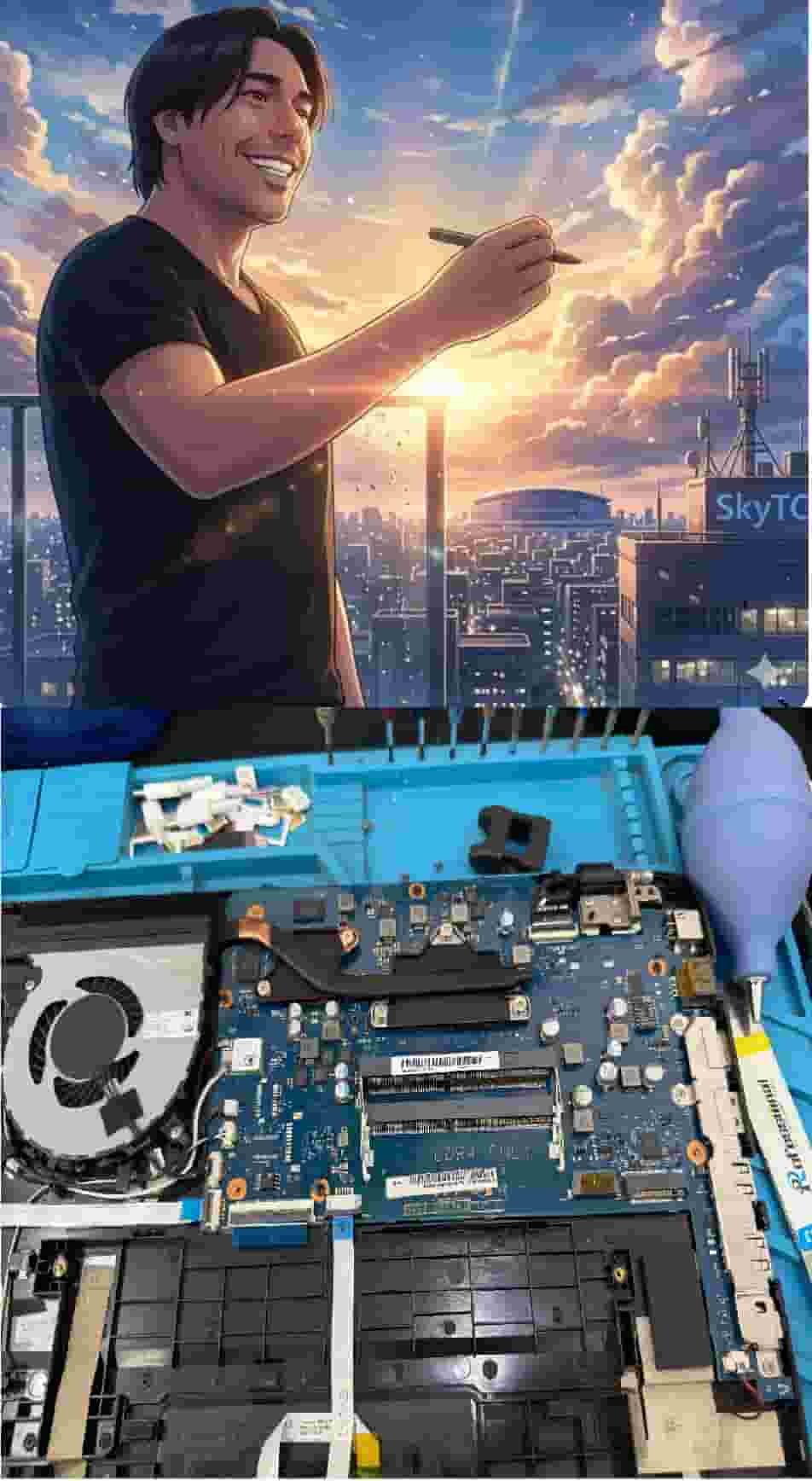
Technical Bio: Hardware & Laptops
“At SkyTC, technology is driven by engineering precision and real field experience. I am Valtersky, and I bring a unique background to the bench: from professional woodworking, the eye for structural integrity; from radiology, an absolute obsession with microscopic details.
As an ultra-endurance marathon runner, I don’t just browse store windows. I tear machines down, run intensive stress tests on thermal dissipation, and validate the actual build quality of every single component. My mission is to translate complex tech engineering and tech finances into smart decisions for your workflow.
Here, we speak straightforward, jargon-free English with the authority of someone who knows exactly what is inside the chassis.”
✨ Read also: Secure Enterprise Laptops for Medical Professionals: The Hardware Engineer’s Tear-Down Guide
A deeply technical piece of content that perfectly complements this post — absolutely worth the read.