
You are at mile 70 on a technical descent, and every single step feels like a physical hammer driving directly into your shins. It is not just the muscle fatigue screaming; it is a deep, structural ache that makes you wonder if your tibia is about to snap like dry kindling. Most endurance athletes make the critical mistake of focusing entirely on cardiovascular output and muscle endurance while completely ignoring the silent, load-bearing scaffolding underneath. Your carbon-plated, ultra-cushioned shoes are not going to save you when your internal skeletal chassis decides it has had enough of the constant, high-frequency abuse.
As a clinical analyst who spent 5 years in X-ray labs and 2 years staring at high-resolution Computed Tomography (CT) scans, I have seen the literal inside of human bone degradation. I have also spent 6 years in the kickboxing ring taking heavy shin kicks, and run multiple mountain ultramarathons over 42km. I can tell you with absolute certainty: bones are not static concrete pillars. They are highly dynamic, living tissues that adapt or wither based on the exact mechanical and metabolic signals you feed them.
By shifting your focus to targeted bone density biohacking, you will stop wasting months on the injury bench with stress fractures, bypass the useless, over-hyped calcium supplements that do nothing but calcify your arteries, and build an indestructible skeletal frame that can handle relentless mountain descents for the next thirty years. Let’s cut through the showroom marketing and look at the raw, clinical truth of how to build bones that do not break.
In 30 Seconds: The Quick-Verdict Box
The Raw Reality: Most traditional “bone health” advice is complete garbage. Popping chalky calcium carbonate pills and running more miles will only accelerate skeletal wear and arterial stiffening. If you want to survive ultra-distance impacts, you need to hack your osteoblasts (bone-building cells) via heavy axial loading (not high-volume running), consume high-fat red meat for fat-soluble vitamins (D3, K2), and drop the hyper-cushioned shoes that blind your nervous system to ground impact. If you do not force your bones to bend under heavy, low-frequency weight, they will never remodel into denser armor.
Skeletal Optimization: Bone Density Biohacking for Ultra Runners Compared
| Intervention Method | Osteogenic Impact | Clinical CT/X-Ray Assessment | The Battlefield Drawback (The Catch) | Approximate Cost |
|---|---|---|---|---|
| Heavy Axial Resistance (Squats/Deadlifts) | Extreme (Direct Wolff’s Law activation) | Marked cortical bone thickening in femur & spine | Requires precise mechanics; poor form under heavy load will wreck your lumbar spine instantly. | Gym membership ($30–$150/mo) |
| Maximalist Trail Shoes (Hoka, Altra, etc.) | Negative to Neutral (Dampens signal) | No osteogenic benefit; often hides micro-damage until catastrophic failure | Sells a false sense of security; silences the neural feedback needed for bone remodeling. | $140–$250 |
| Whole-Body Vibration Plates (WBV) | Low to Moderate (Highly model-dependent) | Minimal cortical changes; minor trabecular stimulation in highly sedentary patients | Most consumer plates are cheap plastic toys; medical-grade units are priced like used cars. | $200–$5,000 |
| Heavy Load Rucking (10-15% Bodyweight) | High (Continuous multi-joint compression) | Visible density increases in lower limbs and calcaneus | Adds serious systemic fatigue; will crush your recovery if stacked poorly with weekly mileage. | Cost of a weighted vest ($50–$200) |
| Strategic Nutrient Co-Factors (D3 + K2 + Boron) | High (Systemic mineralization catalyst) | Essential for preventing bone resorption under metabolic stress | Completely useless if you do not generate the physical mechanical strain to drive minerals into the matrix. | $30–$60/mo |
Let’s do a fast Battlefield Assessment of the primary tools in play. Heavy Squats and Deadlifts: The Good: They trigger massive systemic growth hormone release and force the femur and tibia to thicken their outer cortical walls to survive the load. The Bad: If your lifting form is sloppy, you will trade a tibial stress fracture for a herniated L5-S1 disc before you even reach the trailhead.
Maximalist Cushioned Shoes: The Good: They feel like walking on clouds and save your foot pads during 100-mile mountain runs. The Bad: They block sensory feedback from the ground, which tricks your brain into thinking the impact is low, preventing the osteogenic feedback loop from signaling your bones to harden.
The Realities of the Battlefield
The outdoor gear market is flooded with high-tech materials and smart gadgets designed to protect you from the trail, but the reality is that the industry is actively weakening your skeleton. Take carbon-plated trail running shoes, for example. They offer incredible energy return and technical rock protection. But the connector of opposition here is crucial: while they save your calf muscles from premature fatigue, they transfer those unyielding, high-frequency kinetic forces directly up into your tibia and fibula without the natural bio-mechanical dampening of your foot arches.
When you run in stiff, overly protective shoes, your foot’s intrinsic muscles turn off. When those muscles atrophy, your foot loses its natural elasticity, turning your lower leg into a rigid pole that absorbs every micro-shattering vibration from the hard pack. As an X-ray tech, I have scanned dozens of elite runners who swore by their $250 super-shoes, only to show them clear, dark stress lines cutting through their distal tibia on a CT scan.
Another major battlefield failure is the rise of low-frequency vibration recovery tools and cheap PEMF mats. While they claim to accelerate bone healing, most commercial units do not output the specific frequency (30–90 Hz) or the structural amplitude required to actually trigger bone-building cells. They are expensive, vibrating placebos designed for living room comfort, not the rugged biological demands of a mountain runner’s chassis.
The Cush-Saddled Runner’s Downfall: A Hypothetical Failure Scenario
Meet Dave. Dave is a 42-year-old executive who runs 60 miles a week on rocky mountain trails. To protect his “aging joints,” Dave buys the thickest, softest maximalist trail shoes on the market. He runs with zero foot-to-ground feel, landing heavily on his heels because the massive foam wedge dampens the immediate pain of the impact. Because he feels no discomfort, he keeps pushing his weekly volume.
Meanwhile, inside his legs, Wolff’s Law is working in reverse. Because the thick foam absorbs the sharp, high-velocity ground reaction forces, Dave’s brain never receives the signal that his bones are under stress. His body, trying to be efficient, decides it does not need to waste energy maintaining heavy, dense bones in his lower legs. His osteoclasts (bone-chewing cells) outpace his osteoblasts (bone-building cells).
Six weeks before his target 100K ultra, Dave transitions to a lighter, stiffer racing shoe for a speed session. During a descent, his under-mineralized, adapted tibia takes a series of sharp, un-cushioned hits. He hears a dull “pop” and collapses. The diagnosis? A complete, non-displaced fracture of the tibia. Dave’s attempt to cushion his way out of impact created a fragile, osteopenic skeleton that shattered the moment the artificial foam armor was removed.
The Ultimate Actionable Bone Density Biohacking Checklist
- Initiate bone density biohacking for ultra runners by scheduling heavy, multi-joint lifts (Squats, Deadlifts, Overhead Presses) at 80-85% of your 1-Rep Max at least twice a week. If you are not lifting heavy, your bones have no mechanical reason to get denser.
- Ditch the ultra-cushioned shoes for short recovery walks or grass runs. Force your feet to feel the ground to wake up the mechanoreceptors in your periosteum.
- Ditch traditional calcium carbonate supplements. It is cheap, unabsorbable chalk that deposits in your kidneys and coronary arteries rather than your skeletal matrix.
- Stack Vitamin D3 (at least 5,000 IU) with Vitamin K2 (MK-7, 180mcg). Vitamin D3 absorbs the calcium into your blood, but K2 acts as the traffic cop that forces that calcium into the bone matrix where it belongs.
- Prioritize high-fat, clean red meat as your primary recovery fuel. The natural fats in grass-fed beef provide the structural cholesterol and fat-soluble vitamins required for optimal steroid hormone production, which directly regulates bone remodeling.
- Incorporate 10 minutes of heavy rucking (15-20 lbs) to your weekly hikes. The sustained axial load forces the spine and hips to adapt by laying down dense trabecular bone.
- Implement high-velocity, multi-directional plyometrics (box jumps, lateral bounds) on non-running days. Bones adapt best to dynamic, unusual loading angles that they do not get from linear running.
- Monitor your blood biomarkers for alkaline phosphatase (ALP) and Vitamin D levels. If your ALP is bottomed out, your bone turnover rate is sluggish and ripe for injury.
- Stop using NSAIDs (like Ibuprofen) for minor trail aches. NSAIDs inhibit prostaglandins, which are the exact chemical messengers your body uses to signal bone repair and remodeling. You are literally turning off your bone-building engine.
- Get a baseline DEXA scan or a high-resolution peripheral quantitative CT (HR-pQCT) scan if you have a history of stress fractures. Stop guessing what your bone mineral density looks like.
- Include trace minerals like Boron (3-6mg daily) and Silica. These under-appreciated minerals act as cross-linking agents that dramatically increase the structural tensile strength of the collagen matrix inside your bones.
- Ensure your caloric intake matches your heavy output. Relative Energy Deficiency in Sport (REDs) is the absolute number one killer of bone density in ultra runners. If you are in a chronic deficit, your body will scavenge your bones for minerals to keep your heart beating.
👇 Looking for more performance cheats? Check out our field-tested tactical guides:
SkyTC Master Hub & Pillar Guides
Dynamic No-Nonsense FAQ
1. Can I just drink more milk and take calcium pills to fix my bone density?
No. That is a lazy, outdated approach that will likely land you in a cardiology clinic. Without mechanical stress (heavy lifting) and fat-soluble co-factors like Vitamin K2 and D3, excess calcium cannot penetrate the bone. It simply floats around your bloodstream, potentially calcifying your soft tissues and arteries. You need to lift heavy and eat clean, fat-rich animal proteins to actually utilize mineral intake.
2. Won’t running high mileage naturally make my leg bones stronger?
Only up to a very low ceiling. Bones adapt to novel, high-magnitude, short-duration impacts, not repetitive, low-magnitude, long-duration impacts. After about 20 to 30 minutes of running, your bone cells become “deaf” to the mechanical signal. Running 80 miles a week does not make your bones twice as strong as running 30 miles; in fact, due to metabolic depletion, it often makes them weaker.
3. Are carbon-plated trail shoes bad for my bones?
They are a double-edged sword. They reduce muscular fatigue on long runs, but they also mask ground feedback and change your natural gait mechanics. This lack of natural sensory input stops your nervous system from preparing your skeleton for the coming impact, which can lead to localized stress fractures in the tibia or foot bones if used exclusively.
4. How does red meat fit into a bone-building protocol?
Bone is not just mineral; it is a matrix of collagen. Clean, high-fat red meat provides the complete amino acid profile needed to build that flexible collagen framework, while its natural fats carry essential fat-soluble vitamins like D3 and K2. If you eat a ultra-lean, low-fat plant-based diet, your body will struggle to absorb the fat-soluble compounds required to lock minerals into your skeleton.
5. Can I use vibration plates to heal a stress fracture faster?
Only if you are using a high-fidelity, medical-grade vibration plate that operates at a precise frequency and low displacement (e.g., 30 Hz at 0.3g). The cheap, noisy plastic machines sold on consumer websites are a total gimmick. They do not generate the precise micro-strain required to stimulate osteoblast activity and are a waste of your money.
6. Should I stop running completely if I feel shin pain?
If the pain is sharp, localized, and hurts when you tap directly on the bone (the “hop test”), stop immediately. You are likely dealing with a stress reaction or a hairline fracture. Running through this will turn a 6-week recovery into a 6-month disaster. Get a diagnostic MRI or CT scan; plain X-rays often miss early-stage stress fractures entirely.
7. Is rucking better for bone density than running?
Yes, in terms of sheer structural remodeling per mile. Rucking applies a sustained, heavy axial load through your spine, hips, and lower limbs without the high-velocity, shearing joint forces of running. It is an incredible tool for building a robust, impact-resistant skeletal foundation without burning out your central nervous system.
8. Do NSAIDs like Ibuprofen really slow down bone healing?
Absolutely. Ibuprofen and other NSAIDs block the COX-2 pathway, which is essential for initiating the inflammatory cascade that triggers bone healing. If you take painkillers after every hard run or to mask bone pain, you are directly short-circuiting your body’s natural mechanism for structural remodeling and repair.
Why Trust SkyTC Biohacking Curation?
At SkyTC, we treat the human body as your most valuable technology. We are not just a recommendation site; we apply a rigorous clinical and practical screening process to ensure that each recommendation optimizes your biology with safety and real-world results.
✓ Technical Expertise:
Clinical experience in Radiology and Tomography (CT scans). We analyze methods through the lens of bone health and structural integrity.
✓ Specialization:
Focus on real-world biohacking. We test every wearable and supplement at the absolute limit of effort during marathons and on the mats.
✓ Authority:
Curation based on absolute transparency, always highlighting both the positive advantages and the real drawbacks of every technology.
✓ Trust:
A curation process built directly on the professional experience of a field practitioner, speaker, and high-performance leader coach.
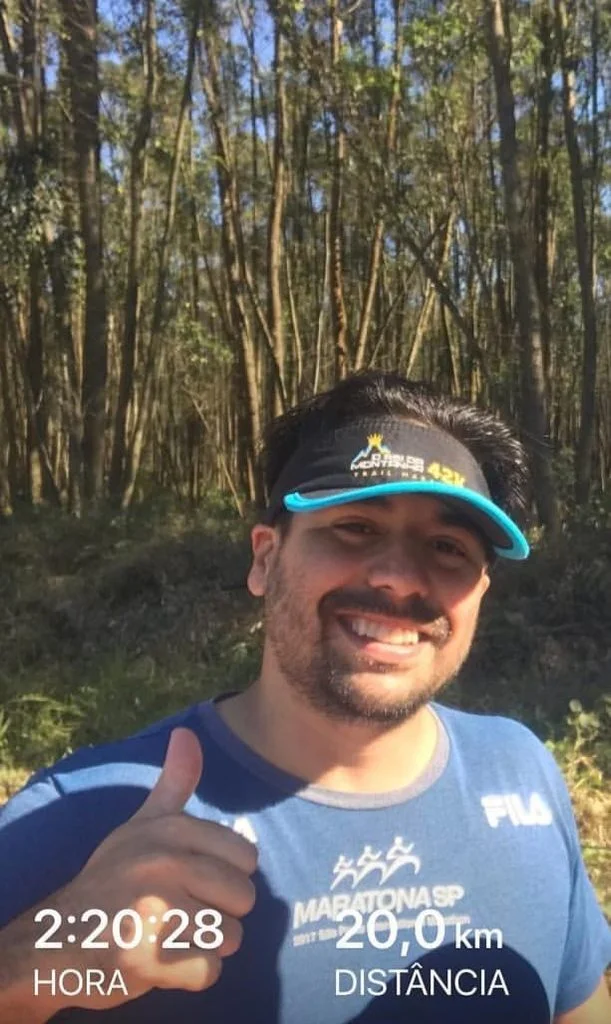


Optimizing the body demands the clinical precision of someone who operated in Radiology (Brazilian Board Certified, CRTR-SP 23595T) for years, combined with the unyielding resilience of someone who conquered multiple 42km+ mountain marathons. As an active professional, multi-pet handler, and tech benchmark researcher, at SkyTC, we bridge advanced technical science with extreme practical environments to help you biohack your active performance, optimize smart pet-tech ecosystems, and protect your structural longevit
Discover my full professional trajectory →✨ Read also: How to Improve Bone Density for Ultra Runners
A deeply technical piece of content that perfectly complements this post — absolutely worth the read.