
You are at mile 38, deep in a steep mountain descent. Your lungs are holding, your aerobic engine is purring, but there is a deep, localized, sickening ache radiating from your tibia with every foot strike. You try to tell yourself it is just a tight soleus or a superficial trail bruise, but deep down, you know the truth. Your structural framework is failing under the repetitive, unyielding stress of the trail. Mastering how to improve bone density for ultra runners is the absolute difference between running pain-free into your seventies and staring at a gray, pixelated fracture line on a clinical monitor while your season goes up in smoke.
Most runners mistake endurance for structural durability. They spend thousands of dollars on maximalist carbon-plated shoes, hoping a slab of synthetic foam will act as a substitute for real, dense bone architecture. It is a trap that leads straight to the MRI tube. As a clinical specialist who has spent years analyzing the human skeleton from the inside out, I can tell you that your bones do not care about your shoe brand. They only respond to the brutal, unvarnished laws of biophysics.
By understanding how to systematically trigger bone remodeling, you stand to save thousands of dollars on medical imaging, bypass months of depressing rehab, and build a skeletal chassis capable of absorbing hundreds of thousands of high-impact trail strikes. Let us strip away the marketing fluff and look at the hard, clinical mechanics of bone preservation.
In 30 Seconds: The Quick-Verdict Box
If you want to stop your bones from cracking under ultra-distance loads, stop relying on soft shoes and endless junk miles. Bone density is built through mechanotransduction—forcing the bone to bend under heavy, high-velocity loads so it signals osteoblasts to lay down new mineral matrix.
Skip the cheap, unabsorbable calcium carbonate pills. Your tactical checklist must prioritize heavy progressive resistance training, eccentric trail loading, and a diet packed with clean red meat and natural fats to supply the raw cholesterol and fat-soluble vitamins (D3 and K2) required to lock minerals into the bone matrix. If you are not lifting heavy or fueling with high-quality animal proteins, you are actively burning your skeleton for fuel.
The Technical Blueprint: Skeletal Adaptation Mechanics
To understand how to fortify your skeleton, we must look at how bone actually adapts to stress. Bone is not a dead, concrete pole; it is a highly active, dynamic organ. Through a process called Wolff’s Law, bone adapts to the mechanical loads placed upon it. When a bone is subjected to bending forces, it creates a minute electrical charge (piezoelectricity) that alerts osteocytes to start building a denser structural matrix. However, ultra-running alone is notoriously poor at triggering this response.
During a long, flat run, the mechanical stimulus is highly repetitive but very low in magnitude. Your bone cells actually desensitize to this constant, monotonous tapping after about 30 to 45 minutes. To jumpstart real osteogenesis, you need brief, high-magnitude, multidirectional forces. Let us look at how different interventions stack up under clinical and field scrutiny.
| Strategy / Intervention | Osteoblast Stimulation | Real-World Field Utility | Biomechanical Risk Profile | Key Mechanical Target |
|---|---|---|---|---|
| Heavy Resistance Training (80%+ 1RM) | Exceptional | High (Requires gym access) | Low (When form is locked) | Axial loading of femur, spine, and pelvis |
| High-Velocity Plyometrics | Very High | High (Minimal gear needed) | Moderate (High eccentric strain) | Cortical bone remodeling in tibia and metatarsals |
| Carbon-Plated Super Shoes | Low | Extreme (High speed boost) | High (Alters natural load paths) | Saves calf muscles but transfers stress upward |
| Whole-Body Vibration Plates | Poor / Negligible | Very Low | None (Just a waste of money) | Fails to meet the minimum osteogenic threshold |
| Targeted Micronutrient Loading (D3/K2) | Systemic Support | Simple Daily Habit | Very Low | Directs free-floating calcium into bone matrix |
The Battleground Assessment: Weighing the Hard Truths
Let us look at the structural interventions critically. Every training stimulus and tool has a dark side. If you ignore the mechanical drawbacks of your recovery or training protocols, your skeleton will pay the ultimate price out on the singletrack.
Heavy Squats & Deadlifts
The Good: Nothing builds structural density like compressing your spine and hips under a heavy iron bar. It triggers massive systemic hormonal cascades and forces the femoral neck—the most vulnerable break point in the human body—to thicken its trabecular walls.
The Bad: If your hip mobility is trash or your spine rounds under load, heavy barbell work will shear your L5-S1 disc before it ever strengthens your bones. It requires absolute technical precision.
Plyometric Drop Jumps
The Good: Teaches your lower-extremity bones to handle rapid, high-impact force. The sudden impact forces fluid through the bone’s lacunar-canalicular network, signaling rapid mineral deposition.
The Bad: If you are already running 70 kilometers a week on tired joints, landing hard on concrete can turn a pre-existing micro-crack into a full-blown structural failure. Timing and fatigue-management are everything.
Carbon-Plated Trail Shoes
The Good: They provide undeniable propulsive efficiency, allowing you to run faster with less perceived muscular fatigue over long distances.
The Bad: They act like a biomechanical splint. By stiffening the foot, they prevent the natural bones of your arch from flexing and absorbing energy. This forces your tibia and femur to take an unnatural, unmitigated beating, dramatically increasing stress fracture risk above the ankle.
👇 Looking for more performance cheats? Check out our field-tested tactical guides:
SkyTC Master Hub & Pillar Guides
How to Improve Bone Density for Ultra Runners: The Realities of the Battlefield
Let us talk about what actually happens out in the wild. As someone who has logged countless vertical meters on rugged, technical mountain trails and analyzed skeletal architecture on Computed Tomography (CT) scans, I can tell you that the marketing claims of the shoe and supplement giants disintegrate when faced with real-world mud, grit, and metabolic depletion.
The running industry loves to sell the narrative that “more cushioning equals safer joints.” This is a flat-out lie. When your foot strikes a ultra-squishy, highly cushioned midsole, your brain cannot accurately detect the hardness of the ground. This lack of sensory feedback causes your musculoskeletal system to naturally strike the ground harder to find stability. You think you are saving your joints, but your bones are actually absorbing a massive, muffled shockwave that shears the periosteum right off the tibia.
Furthermore, ultra-running is an incredibly catabolic sport. When you run for 6, 12, or 24 hours straight, your body enters a state of high energy availability deficit. If you are not aggressively fueling your runs, your endocrine system goes into emergency mode. It will pull calcium, phosphorus, and vital minerals directly out of your bones to keep your heart beating and muscles contracting.
This is the hidden crisis of REDs (Relative Energy Deficiency in Sport). You are literally digesting your own skeleton to finish the race.
The Bioenergetic Link: Red Meat, Fats, and Structural Recovery
To rebuild bone, you must feed the biological machinery. Bones are not made of chalk; they are a matrix of living collagen fibers filled with mineral crystals. This collagen scaffold requires a constant supply of high-quality amino acids and systemic hormonal support to repair.
This is where dietary calibration becomes non-negotiable. To optimize bone remodeling, you must prioritize the consumption of clean red meat and its natural fats. Red meat provides an unparalleled bioavailable source of zinc, iron, and highly absorbable proteins that stimulate IGF-1 (Insulin-like Growth Factor 1), a critical driver of bone mineralization.
The natural fats found in high-quality animal proteins are the raw precursors for cholesterol, which your body uses to synthesize testosterone and estrogen. If your hormone levels drop due to a low-fat, low-calorie diet, your osteoclast activity (bone breakdown) will completely outpace your osteoblast activity (bone building).
The Anatomy of a Catastrophe: A Hypothetical Failure Scenario
Let us look at a classic, avoidable disaster. Meet Dave. Dave is a 42-year-old executive training for his first 100k mountain race. He runs 80 kilometers a week, primarily on flat, paved paths to “save time.” To compensate for his mounting fatigue, he buys the most cushioned, carbon-plated shoes on the market. He eats a low-fat, highly processed plant-based diet because his corporate doctor told him to watch his cholesterol.
One morning, Dave feels a persistent, dull ache in his shin. He ignores it, takes two ibuprofen before every run, and pushes through. What Dave does not realize is that non-steroidal anti-inflammatory drugs (NSAIDs) actively suppress the prostaglandins required for bone healing. He has effectively turned off his body’s smoke detector while his house is on fire.
Three weeks before his race, Dave steps off a small wet rock on a descent. A sharp, explosive crack echoes through his leg, and he collapses. His tibia has suffered a complete, displaced stress fracture. He spends his race weekend in a plaster cast, scheduled for a surgical rod insertion, facing six months of muscular atrophy. All because he ignored mechanical load progression and starved his skeleton of the raw animal fats and heavy lifting it needed to adapt.
Your Actionable Field Checklist
Do not be like Dave. Use this hard-nosed, field-tested checklist to build a skeleton that can withstand any mountain trail.
- How to improve bone density for ultra runners begins with structural loading: perform heavy barbell squats or deadlifts at 80% to 85% of your 1RM twice a week to force axial bone remodeling.
Insider Observation: Do not chase reps; chase heavy, controlled compression. Your spine and hips must feel the weight. - Erase NSAIDs (ibuprofen, naproxen) from your gear bag completely; they blunt the inflammatory signals your bones need to repair micro-damage.
Insider Observation: If you need pills to survive a training run, your skeletal system is already crying for help. Stop running. - Switch up your running terrain: log at least 40% of your weekly volume on technical, off-camber dirt trails to introduce multidirectional shear forces to the lower limbs.
Insider Observation: Flat, monotonous road running breeds brittle, one-dimensional bones. Go find some rocks. - Prioritize clean red meat and its natural fats daily to supply vital amino acids, cholesterol, and zinc needed for collagen matrix construction.
Insider Observation: Grass-fed ribeyes provide the metabolic fuel and hormone building blocks that powder shakes simply cannot replicate. - Supplement with a high-dose liquid Vitamin D3 (at least 5,000 IU) paired with Vitamin K2 (MK-7) to guide calcium out of your arteries and directly into your bone matrix.
Insider Observation: Taking calcium without K2 is a fast track to arterial calcification and useless, brittle bones. - Incorporate progressive plyometrics: perform 3 sets of 10 depth drops from a 30cm box once a week, landing softly with a stiff, athletic posture.
Insider Observation: This teaches your neuromuscular system to stiffen the joints and stimulates cortical bone thickness. - Ensure you are in a slight caloric surplus on heavy training days to prevent your body from entering a catabolic state where it cannibalizes bone tissue.
Insider Observation: You cannot build a fortress on starved, empty metabolic reserves. Eat to perform, not just to look lean. - Ditch the ultra-thick, maximalist shoes for some of your shorter recovery runs to let the small intrinsic bones of your feet flex, adapt, and strengthen naturally.
Insider Observation: Splinting your foot in foam 24/7 turns your natural arch into a lazy, weak shock-transmitter. - Track your systemic recovery using biomarkers like heart rate variability (HRV) and deep-sleep latency to ensure your parasympathetic nervous system is actually rebuilding tissue.
Insider Observation: Bone remodeling does not happen on the trail; it happens when you are deeply, restoratively asleep.
The Field Tech FAQ: No-Nonsense Answers
Can I build bone density just by running high mileage?
Absolutely not. High-mileage running without resistance training or proper recovery often has the opposite effect. Your bones quickly desensitize to the repetitive, low-impact stimulus of running, and the chronic metabolic strain can lead to systemic bone mineral loss through relative energy deficiency. You must introduce heavy loads or high-velocity impacts to trigger new bone growth.
Are carbon-plated shoes bad for my bone health?
They are a double-edged sword. While they improve your running economy, they act as rigid biomechanical splints that restrict the foot’s natural movement. This alters how forces are distributed, often sparing your calves but sending a much harsher, concentrated shockwave straight up your tibia and femur. Do not use them as your everyday training shoe.
Does taking a standard calcium pill prevent stress fractures?
No. Standard calcium carbonate supplements are highly unabsorbable and often end up calcifying your soft tissues and arteries rather than strengthening your bones. Your body requires a delicate matrix of co-factors—specifically Vitamin D3, Vitamin K2, magnesium, and boron—along with a physical mechanical load to actually lock calcium into your skeletal structure.
How long does it take to actually change my bone density?
Bone is a slow-yielding tissue. While muscles adapt in weeks, a complete cycle of bone remodeling takes roughly 4 to 6 months. You will not see dramatic changes on a DEXA scan overnight. You must commit to a consistent, heavy-loading and nutritional protocol for at least half a year before your skeletal chassis undergoes measurable structural densification.
Can I run through a suspected stress reaction?
If you value your long-term mobility, absolutely not. A stress reaction is the precursor to a structural break. If you continue to apply repetitive impact to a bone that is actively demineralizing, it will crack. Rest, target your nutrition, load the rest of your body with non-impact resistance work, and let the bone heal before it turns into a surgical emergency.
Do vibration plates actually work for bone density?
For high-performance ultra-runners? They are a total gimmick. The mechanical stimulus from a standard consumer-grade vibration plate is far below the threshold required to trigger osteogenesis in a highly active individual. Save your money and buy a quality barbell or several kilograms of grass-fed beef instead.
How does red meat support my bone remodeling?
Bone is not just mineral; it is over one-third collagen protein. Clean red meat provides the precise amino acid profile, bioavailable minerals (like zinc and iron), and essential saturated fats required to support the hormonal environment (testosterone and IGF-1) that drives bone remodeling. Brittle bones are often a direct result of chronic protein and fat starvation.
Should I get a DEXA scan to check my bone density?
If you are a master’s athlete (40+) or have a history of unexplained stress fractures, yes. A dual-energy X-ray absorptiometry (DEXA) scan will give you a clear baseline of your bone mineral density in your hips and lumbar spine. It is a highly useful, low-dose diagnostic tool that cuts through guesswork and tells you exactly how much structural margin you have left to play with.
Why Trust SkyTC Biohacking Curation?
At SkyTC, we treat the human body as your most valuable technology. We are not just a recommendation site; we apply a rigorous clinical and practical screening process to ensure that each recommendation optimizes your biology with safety and real-world results.
✓ Technical Expertise:
Clinical experience in Radiology and Tomography (CT scans). We analyze methods through the lens of bone health and structural integrity.
✓ Specialization:
Focus on real-world biohacking. We test every wearable and supplement at the absolute limit of effort during marathons and on the mats.
✓ Authority:
Curation based on absolute transparency, always highlighting both the positive advantages and the real drawbacks of every technology.
✓ Trust:
A curation process built directly on the professional experience of a field practitioner, speaker, and high-performance leader coach.

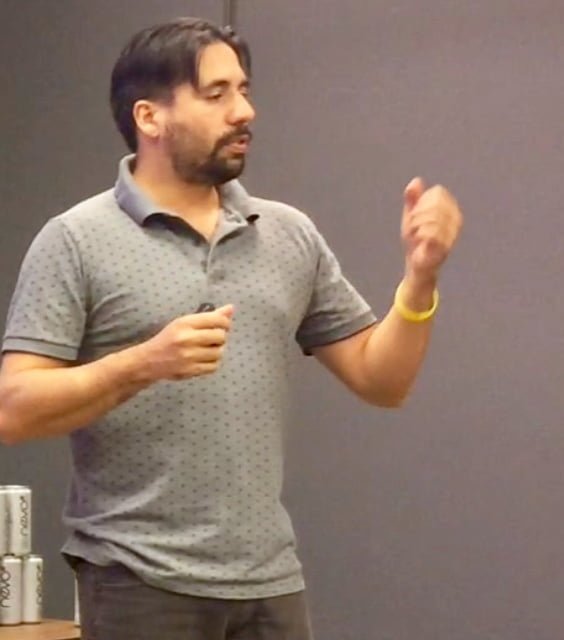


Optimizing the body demands the clinical precision of someone who operated in Radiology (Brazilian Board Certified, CRTR-SP 23595T) for years, combined with the unyielding resilience of someone who conquered multiple 42km+ mountain marathons. As an active professional, multi-pet handler, and tech benchmark researcher, at SkyTC, we bridge advanced technical science with extreme practical environments to help you biohack your active performance, optimize smart pet-tech ecosystems, and protect your structural longevit
Discover my full professional trajectory →