
If you are tired of staring at cloudy tank water and constantly fighting ammonia spikes, this comprehensive Fluval FX6 Review for Large Aquariums is written exactly for you. Managing a massive body of water can feel like a relentless second job, especially when keeping heavy-waste producers like fancy goldfish.
I know this pain intimately because, between my daily long-distance runs and my work as a professional seamstress, I spend my spare hours maintaining a giant 100-gallon aquarium. Over my eight years in this hobby, I have learned that a sub-par filter is a recipe for heartbreak and soggy carpets.
That is why we need to talk about the absolute beast of the aquarium world: the FX6. This filter is marketed as the ultimate defense system for large tanks, promising to churn through waste like a commercial-grade machine.
But does it actually live up to the massive hype, or is it just an overpriced plastic bucket with a loud motor? Let’s tear it down to the bare bolts and see if it is truly worth your hard-earned cash.
The Frustration of the Cloudy Tank Struggle
There is nothing more discouraging than spending hours cleaning your tank, only to wake up the next morning and find it looking like a bowl of weak milk. Beginners are often told that any cheap hang-on-back filter will do the trick, but that is an absolute trap.
Those tiny cartridges clog within days, choking your flow and leaving toxic ammonia to build up in your water.
When you transition to a larger tank, the anxiety only intensifies. You realize that a minor filter failure doesn’t just mean dirty water; it means potential disaster for your beloved fish.
You need a system that offers peace of mind, allowing you to enjoy your aquarium rather than constantly worrying about water chemistry. That is where high-output canister filters enter the conversation.
Fluval FX6 Review for Large Aquariums: The Deep Dive
The heart of this filter is its massive canister body, which houses multiple stackable media baskets. The design allows you to customize your filtration media, which is crucial for tailoring the system to your specific livestock needs.
Let’s look at the direct trade-offs of this massive canister system.
- The Good Side: The Smart Pump technology automatically monitors and optimizes the pump’s speed, evacuating trapped air every 12 hours to maintain high GPH and prevent airlocks.
- The Negative Point: The motor head is incredibly heavy, and if you open it clumsily during cleaning, you can easily crack the plastic securing clips and flood your living room floor.
As a seamstress, I understand the importance of build quality and material limits. When I work with heavy-duty fabrics, a single weak seam can ruin the entire garment under tension.
The same rule applies to aquarium filters. While the FX6 features thick plastic construction, some of the smaller plastic components feel surprisingly fragile under pressure.
The Reality of the Battlefield
In this section, we must look past the glossy marketing brochures and focus on how this equipment performs under real-life pressure. Manufacturers love to promise whisper-quiet operation and zero-maintenance reliability, but the reality on the bench is often quite different.
The self-priming system is designed to fill the canister automatically when you plug it in, but the hard reality is that it often struggles if your water level is even slightly below the rim. You will find yourself manual-priming or tilting the heavy canister back and forth just to get the air out.
The massive media trays hold a vast amount of bio-media, however, the plastic tray handles are notoriously thin and will snap right off if you pack the baskets too tightly with heavy ceramic rings. Once those handles break, fishing the baskets out of the deep canister becomes an absolute nightmare.
The dual output nozzles offer excellent directional flow, but the cheap plastic ball-and-socket joints tend to wear out over time, causing the nozzles to droop and point straight down instead of agitating the water surface.
Common Mistakes: A Sunday Night Disaster
Imagine this scenario: It is a late Sunday night, and you have just spent two hours deep-cleaning your massive canister filter. You wash the media, rinse the foam pads, stack the baskets back inside, and press the heavy lid down.
You tighten the metal fasteners, plug it in, and happily watch the water start flowing. Exhausted, you go to bed, proud of your hard work.
At 3 AM, you wake up to the sound of squishing carpet. You step out of bed and realize your living room floor is covered in two inches of water.
What went wrong? You forgot one tiny, crucial step: lubricating the main motor head O-ring with food-grade silicone grease.
Without lubrication, the rubber gasket pinched as you tightened the lid, creating an invisible gap that slowly leaked water under pressure. This is a classic user error that can easily be avoided with the right habits.
Always make sure to apply a thin layer of silicone grease to the seal during every single maintenance session.
In 30 Seconds: The Blunt Verdict
Look, here is the honest truth from the bench.
The FX6 is a pure muscle car. It moves massive amounts of water and keeps large, dirty tanks immaculate.
But it is also a heavy, high-maintenance beast that will punish you if you get lazy with your cleaning schedule.
If you want a simple, set-and-forget filter, this is not the one for you.
If you need absolute raw power for a high-bioload 100-gallon tank, this is your weapon—just buy some silicone grease and respect the seals.
How the FX6 Compares to the Competition
| Filter Model | Tank Capacity | Flow Rate (GPH) | Best Feature | Major Flaw |
|---|---|---|---|---|
| Fluval FX6 | Up to 400 gal | 563 GPH | Smart Pump tech | Heavy lid & seal leaks |
| Eheim Classic 1500XL | Up to 400 gal | 630 GPH | Bulletproof motor | Archaic setup & no self-prime |
| Penn-Plax Cascade 1500 | Up to 150 gal | 350 GPH | Budget-friendly | Cheap plastic clips |
| Oase BioMaster Thermo 850 | Up to 225 gal | 400 GPH | Easy pre-filter chamber | Lacks the raw volume of FX6 |
The Master Bench Troubleshooting Checklist
Here is a practical checklist for keeping your filtration running perfectly.
- Always lubricate the main motor O-ring before restarting your Fluval FX6 Review for Large Aquariums setup—Insider trick: Skip the cheap petroleum jelly; it degrades the rubber. Use pure food-grade silicone grease, or you’ll be buying a new seal assembly next month.
- Gently rock the canister from side to side during initial startup—Insider trick: It sounds basic, but trapped air pockets in the massive outer chambers will starve the impeller and cause a horrific rattling noise.
- Check the intake assembly for hairline cracks if you see a constant stream of tiny bubbles—Insider trick: Even a microscopic gap in the hosing connection will pull in air like a straw, turning your display tank into a foggy mess.
- Deep clean the intake strainer screen weekly—Insider trick: Plant debris and goldfish slime coat build up on that grid incredibly fast, choking the motor before the water even reaches the canister.
- Tighten the metal-reinforced rim fasteners in a cross-pattern, like lug nuts on a car tire—Insider trick: If you tighten them in a circle, you put uneven pressure on the gasket, which guarantees a slow, silent leak.
- Never pull the media baskets out by the center post when they are fully loaded—Insider trick: Support the bottom of the tray with your other hand, because that central plastic column is the weakest point of the entire design.
- Always flush the bottom utility drain with clean water after a water change—Insider trick: Gritty substrate particles love to settle right in the valve seat, preventing it from closing fully and causing slow drips.
- Pull the magnetic impeller out and clean the well with a soft brush every three months—Insider trick: Goldfish slime and mineral scale form a stubborn film inside the motor housing that slows down the rotation speed.
- Do not overstuff the outer foam rings—Insider trick: If the vertical foam pads get squeezed or warped, water will bypass the mechanical filtration entirely and dump raw debris straight onto your bio-media.
- Keep the ribbed hosing as straight as possible with no loops—Insider trick: Every unnecessary sag or bend in those thick hoses acts as a trap for debris, severely cutting down your GPH flow.
- Place a thick neoprene pad or a piece of yoga mat underneath the canister base—Insider trick: The FX6 motor is incredibly powerful, and its natural vibration will turn your wooden cabinet into a giant amplifier if it sits on bare wood.
- Place bagged carbon or resins only in the bottom tray—Insider trick: Putting fine chemical media bags in the top or middle trays can restrict the primary water flow and cause the pump to run hot.
👇 Looking for more performance cheats? Check out our field-tested tactical blueprints:
The Goldfish Ecosystem Blueprint
Complete your advanced technical training loop by exploring our core evergreen resources.
How to Feed Goldfish for Maximum Lifespan
A deep breakdown of digestive tract mechanics, bloating prevention, and premium sinking diets.
How to Maintain a 100 Gallon Goldfish Tank
Large-scale system parameters. Deep sand bed mechanics, nitrogen cycling, and bioload management.
Ultimate Guide to Goldfish Tank Filtration
Heavy-duty hardware configurations. Optimizing parallel canisters, bio-media setups, and automation.
Frequently Asked Questions
Is the FX6 too powerful for a 55-gallon tank?
Yes, absolutely, unless you are keeping a high-flow river setup or a massive school of heavy waste producers. For most average 55-gallon setups, the raw current will turn your tank into a washing machine, forcing your fish to swim for their lives. Stick to something smaller unless you plan on baffling the output flow heavily.
How often do I actually have to clean this giant bucket?
Do not believe the marketing hype that says you can go six months without touching it. If you have dirty fish like goldfish or large cichlids, you need to open this beast up every two months minimum. Letting organic waste rot inside a sealed plastic bucket for half a year is just asking for chronic nitrate problems.
Can I use playground sand as substrate with this filter?
You can, but you are playing with fire. The intake is incredibly powerful and will suck up fine sand like a vacuum if it sits too close to the bottom. Once that sand enters the canister, it will grind your impeller shaft to dust. Keep the intake strainer at least six inches above any sand bed.
Why is my FX6 blowing tons of tiny micro-bubbles into the tank?
It means you have a micro-leak on the intake side. Check the rubber connection hosing and make sure the metal clamps are completely tight. If the pump pulls in even a tiny bit of air, it shreds it into millions of micro-bubbles that look like white dust in your water.
Do I really need to use Fluval’s expensive branded media?
No, and anyone who tells you otherwise is trying to empty your wallet. Cheap lava rock, pot scrubbers, or generic ceramic rings work just as well as the high-priced branded media. The bacteria do not care about the logo on the box; they just want surface area.
How do I stop the annoying humming vibration?
The FX6 has a massive motor that vibrates naturally. If you place it directly on a wooden cabinet floor, it acts like a sounding board. Put a thick rubber mat, a piece of styrofoam, or an old yoga mat under the canister to absorb the vibration immediately.
Is it normal for the pump to turn off randomly during the day?
Yes, it is completely normal. The Smart Pump technology is programmed to shut down for about one to two minutes every 12 hours. This pause allows any trapped air inside the canister to rise to the top and escape through the output hose. Do not panic and unplug it.
What should I do if the canister lid won’t budge during cleaning?
Do not try to pry it open with a screwdriver, or you will crack the rim. The suction is caused by negative pressure inside the canister. Simply open the utility drain valve or disconnect one of the hoses to let air in, and the lid will lift off easily.
🛡️ │ WHY TRUST SKYTC GOLDFISH CARE CURATION?
At SKYTC, we hold aquatic ecosystem biology and biological parameter handling to a rigorous standard. We are not an automated affiliate review engine; we apply hands-on tests and serious filtration engineering workflows to ensure every recommendation guarantees the health and maximum lifespan of your fish with absolute safety.
✓ Engineering:
Structural experience backed by heavy-duty filtration math, continuous hydraulic turnover metrics, and robust mechanical support for large-scale coldwater systems.
✓ Expertise:
Focuse on preventative biological husbandry and premium nutrition. Thoroughly auditing biological media, sinking feeds, and elements that completely neutralize ammonia spikes.
✓ Authority:
Curation signed by real keepers running a balanced 100-gallon display ecosystem for over 8 years, pairing daily practical benchwork with direct wholesale breeder insights.
✓ Trust:
Product selections built on unfiltered transparency—exposing actual electrical draws, heat dissipation issues, and hidden costs before any Amazon recommendations.
📸 Our Journey in the Real World
From daily living room tank turn rates to macro-scale breeding setups.

🏠 The 100G Lab
Where we torture test every hardware option, pellet line, and filter layout live.

🏃♀️ Grit & Eye
Marathon endurance meets the precise, millimeter structural focus of a seamstress.
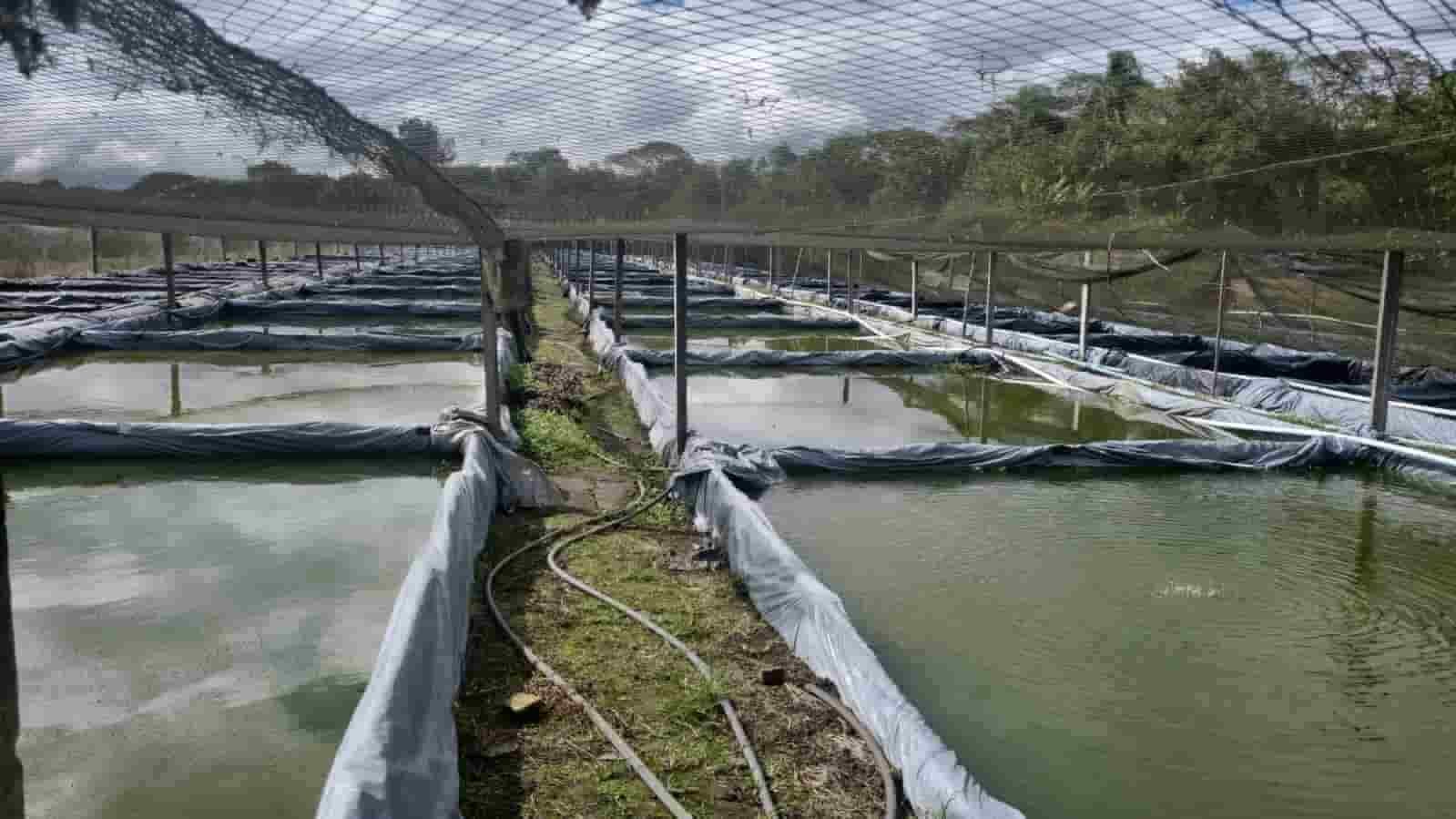
🐳 Monster Vats
Analyzing massive continuous turnovers inside large open-air mud farm vats.
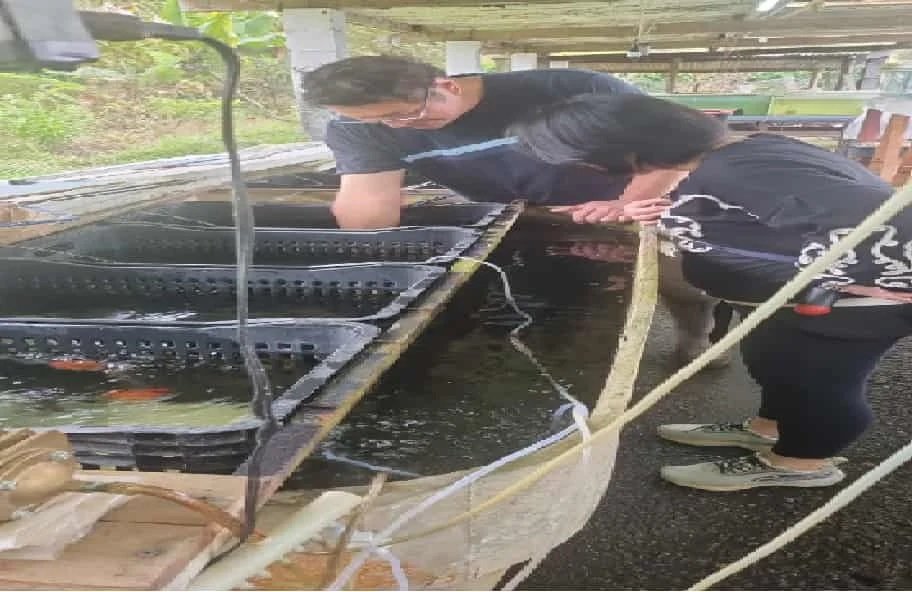
🤝 True Alliances
Working hand-in-hand with regional facility operations to target elite fancy bloodlines.
Read also: Best Canister Filter for Goldfish Tanks
A deeply technical piece of content that perfectly complements this post — absolutely worth the read.