
Upgrading to a massive aquarium is a thrilling milestone for any serious hobbyist, but before you order that giant glass box, you absolutely must know the physical space it will occupy. Understanding the dimensions of a standard 100 gallon tank is not just about clearing a spot on your living room wall; it is a critical safety step to ensure your floor doesn’t collapse under several hundred pounds of water pressure.
For many, this scale of aquarium represents the ultimate dream setup where high-performance aquatic ecosystems can truly thrive. However, the anxiety of getting the tape measure wrong, buying an incompatible stand, or miscalculating the floor load is incredibly real and frustrating.
As a professional seamstress, I spend my days measuring patterns down to the millimeter because a single miscalculation can ruin an entire project. That same obsession with precision is exactly what you need when planning for a massive aquarium. Maintaining my own 100-gallon (400-liter) setup for my fancy goldfish has taught me that “close enough” is never good enough. When I’m not stitching fabrics or running long-distance trails to clear my head, I’m obsessing over my tank’s footprint and structural load.
Today, we are going to dive deep into the exact physical specifications, structural weights, and spatial requirements for this massive vessel, giving you the absolute peace of mind and technical confidence you need before bringing one home.
Standard Specs: Dimensions of a Standard 100 Gallon Tank Explained
When shopping for a 100-gallon tank, you will quickly notice that “one size fits all” simply does not apply here. While there is a classic size that most manufacturers default to, variations exist to accommodate different visual preferences and stocking goals.
The standard classic long blueprint measures 72 inches in length, 18 inches in width (depth), and 20 inches in height. This long, sweeping design is beloved by aquarists because it provides an incredible surface area for gas exchange and gives fast-swimming fish plenty of horizontal room to run laps.
However, if you do not have six feet of free wall space, manufacturers offer alternative configurations. Let us break down the standard options available in today’s market:
- Glass Tanks
- The Good Side: They are incredibly scratch-resistant, maintain crystal-clear optical clarity for decades, and do not bow under the immense weight of the water.
- The Negative Point: The glass panels are unbelievably heavy, requiring at least three strong adults to lift, and if you accidentally bump a corner during moving, the entire panel can instantly shatter.
- Acrylic Tanks
- The Good Side: They are extremely lightweight, offer seamless rounded corners without ugly silicone seams, and are virtually shatterproof.
- The Negative Point: The surface scratches if you even look at it wrong, meaning a single piece of trapped algae-scrubbing sand will leave permanent, ugly white gouges across your front viewing pane.
The Reality of the Battlefield
In the world of aquarium marketing, manufacturers promise “complete structural safety,” “waterproof furniture,” and “lifetime leak-proof designs.” But anyone who has maintained a large tank knows that real-world use quickly exposes the flaws in these claims. Let us look at what actually happens to your gear and supplies over time.
The “Waterproof” Cabinet Myth
Many premium MDF or particleboard stands are praised by manufacturers for their sleek, contemporary aesthetics and integrated cable management systems. However, in real-life practice, the cheap laminate finish inevitably peels and water spills cause the compressed wood underneath to swell like soggy bread, completely ruining the structural integrity of the stand.
Self-Leveling Mats on Framed Tanks
Thick foam self-leveling mats are highly recommended by hobbyists for absorbing microscopic cabinet imperfections and reducing stress on the bottom glass. But on a traditional plastic-trimmed framed tank, placing a foam mat underneath actually voids the manufacturer’s warranty and forces the center of the glass upward, causing a catastrophic bottom-panel blow-out.
Rimless Silicone Seams
Sleek, rimless glass designs are widely praised for their stunning, minimalist look that makes the tank appear as if it is floating in mid-air. But without the structural reinforcement of a plastic rim, the high-tension silicone joints degrade much faster under the constant pressure of 100 gallons of water, leading to micro-tears and slow leaks after a few years of operation.
Calculating the Weight: The Half-Ton Reality Check
Imagine this: you buy a beautiful, used 100-gallon aquarium from a local classified ad. You bring it home, set it up on a solid-looking oak credenza, fill it with water, and decorate it with heavy river rocks. You go to sleep feeling accomplished.
At three in the morning, you wake up to a horrific cracking sound. The credenza’s center support has bowed under the weight, causing the glass to flex just enough to pop a seam. Suddenly, 100 gallons of dirty fish water are soaking into your expensive hardwood floor.
This is the nightmare of neglecting weight distribution and proper stand structural engineering. Let us look at the math behind a filled 100-gallon tank so you can plan safely:
- Empty Glass Tank: 150 to 200 lbs (varies by model)
- Water Weight: 834 lbs (calculated at 8.34 lbs per gallon)
- Substrate & Rock Decor: 100 to 150 lbs
- Total Filled Weight: 1,100 to 1,200 lbs
You are looking at over half a ton of continuous, concentrated load sitting on a footprint of just nine square feet. This is why using standard household furniture is an absolute recipe for disaster.
Spatial Planning and Room Integration
You must plan for more than just the tank’s exact footprint. You need room for filters, plumbing, and daily maintenance access.
Leave at least 4 to 6 inches of space between the tank and the wall. This gap is critical for running canister filter hoses, hang-on-back equipment, and power cords without pinching them. Additionally, ensure you have at least 12 inches of clearance on at least one side of the tank to comfortably access your utility cabinets and clean your filtration gear.
In 30 Seconds
A standard 100-gallon tank is usually 72″ long, 18″ wide, and 20″ tall, but compact versions can be 60″ or 48″ long.
Filled, this beast weighs between 1,100 and 1,200 pounds—which is equivalent to parking a compact car on your floorboards.
Never use cheap domestic furniture or unreinforced cabinets to support this much weight.
Keep at least 4 inches of gap behind the tank for filtration gear and pipe routing.
Check your joists; if your floor runs parallel to the tank, you must reinforce it or move it to a load-bearing wall.
No-nonsense verdict: Get the measurements right down to the fraction of an inch, or you will end up with a structural disaster that destroys your home.
Comparing Large Aquarium Layouts
Let us look at how the different 100-gallon configurations stack up against each other so you can choose the layout that fits your space:
| Tank Layout Style | Length (Inches) | Width/Depth (Inches) | Height (Inches) | Best Application |
|---|---|---|---|---|
| Standard 100 Long | 72 | 18 | 20 | Long-swimming active fish |
| 100 Show / Tall | 60 | 18 | 22 | Tall plants and slow-moving fancies |
| 100 Breeder / Deep | 48 | 24 | 20 | Aquascaping and territorial cichlids |
| Custom Rimless Cube | varies by model | varies by model | varies by model | Modern high-end reef display |
Let us look closely at how these different designs perform under pressure:
- Standard 100 Long
- The Good Side: It distributes the massive weight across six feet of flooring, making it much safer for standard residential joists.
- The Negative Point: It requires a massive amount of wall space, making it incredibly difficult to place in smaller living rooms or apartments.
- 100 Show / Tall
- The Good Side: It has a smaller horizontal footprint, allowing you to fit a large volume of water into tighter wall spaces.
- The Negative Point: It is incredibly deep, meaning you will need shoulder-length gloves just to reach the bottom and clean the substrate.
- 100 Breeder / Deep
- The Good Side: The extra depth from front to back gives you unmatched creative freedom for building intricate aquascapes and rock formations.
- The Negative Point: It juts out very far from the wall, taking up a huge amount of physical floor space in your room.
Critical Planning and Setup Checklist
- Measure the dimensions of a standard 100 gallon tank and map it onto your floor with painter’s tape before buying. Insider Note: What looks reasonable on paper will feel like a massive billboard in your living room; layout tape is the only way to avoid immediate buyer’s remorse.
- Find your floor joists using a heavy-duty stud finder. Insider Note: Always place a tank of this scale perpendicular to the floor joists to distribute that half-ton load across multiple structural beams.
- Check the level of the floor with a 48-inch bubble level. Insider Note: No floor is perfectly flat; if your stand is out of level by even a quarter inch, the glass will warp under pressure and blow out within a year.
- Inspect the silicone seams for bubbles or thinning. Insider Note: Run your fingernail along the inside seals; if the silicone peels away easily, the tank needs to be completely resealed before water touches it.
- Leave a minimum of 4 inches of rear clearance. Insider Note: If you push the stand flush to the drywall, you’ll pinch your filter hoses and cut your GPH flow rate in half.
- Verify the load capacity of your power outlet. Insider Note: Running a heavy heater, dual canister filters, and powerful LED lights can easily trip a standard 15-amp household breaker if shared with other appliances.
- Only use closed-cell foam pads under rimless tanks. Insider Note: Traditional plastic-trimmed tanks must never have foam underneath, but rimless tanks will crack without it.
- Avoid placing the tank near direct sunlight or drafty windows. Insider Note: Sunlight will trigger uncontrollable green algae blooms, and drafts will force your heater to run constantly, spiking your power bill.
- Ensure your cabinet doors have high-quality, adjustable hinges. Insider Note: Cheap hinges will rust shut within months due to the constant evaporation and moisture inside the cabinet.
- Plan your plumbing routes before filling the tank. Insider Note: Once that tank is full, you cannot move it even a fraction of an inch to accommodate a tight bulkhead fit.
- Place a heavy plastic tray or pond liner inside the cabinet base. Insider Note: Trust me, filters leak during maintenance, and a simple liner will save your cabinet wood from rotting from the inside out.
Common Mistakes to Avoid
Avoiding these classic pitfalls will save you from catastrophic tank failures and thousands of dollars in water damage repairs:
- Using Non-Aquarium Furniture: Trying to save money by using a cheap sideboard or console table is a recipe for disaster. Household furniture is not designed to support 1,200 pounds of continuous, shifting weight.
- Ignoring the Total Weight: Forgetting to calculate the weight of wet sand and heavy hardscaping rocks can easily add another 200 pounds to your setup.
- Neglecting Leveling Shims: Using plastic or soft cedar shims that compress over time will cause the stand to tilt later, putting immense torsional stress on the tank seams. Always use heavy-duty composite shims.
👇 Looking for more performance cheats? Check out our field-tested tactical blueprints:
The Goldfish Ecosystem Blueprint
Complete your advanced technical training loop by exploring our core evergreen resources.
How to Feed Goldfish for Maximum Lifespan
A deep breakdown of digestive tract mechanics, bloating prevention, and premium sinking diets.
How to Maintain a 100 Gallon Goldfish Tank
Large-scale system parameters. Deep sand bed mechanics, nitrogen cycling, and bioload management.
Ultimate Guide to Goldfish Tank Filtration
Heavy-duty hardware configurations. Optimizing parallel canisters, bio-media setups, and automation.
Frequently Asked Questions
Can my second-story floor support a 100-gallon tank?
Maybe, but don’t just guess. Standard residential flooring is built to hold about 30 to 40 pounds per square foot. A filled 100-gallon tank puts over 100 pounds per square foot on its footprint. Place it against a load-bearing wall, run it perpendicular to the joists, and if you live in an old house, reinforce the floor underneath or stick to the ground floor.
Why are standard 100-gallon tanks so hard to find compared to 90 or 120-gallon tanks?
Because the dimensions of a standard 100-gallon tank (usually 72″x18″x20″) occupy the exact same footprint as a 125-gallon tank, which is just taller. Most manufacturers stopped pushing the 100-long because customers would rather buy the 125 and get more volume for the exact same floor space.
Can I build my own stand out of standard 2×4 lumber?
Yes, you can, and it will actually be stronger than 90% of the overpriced MDF junk sold in stores. But don’t build it like a birdhouse. Use pocket holes, proper wood glue, and ensure the vertical weight-bearing studs sit directly under the top frame so the screws aren’t holding the load.
Is glass or acrylic better for a tank this size?
If you have kids, pets, or plan on moving often, acrylic is safer because it won’t shatter. But if you hate scratches, go glass. One tiny piece of gravel caught in your magnetic algae scraper will ruin an acrylic front panel forever, while glass can handle decades of cleaning.
How thick does the glass need to be on a 100-gallon tank?
It must be at least 3/8 inch (10mm) thick, but high-end rimless tanks will use 1/2 inch (12mm) glass to handle the bowing forces without a center brace. If you see a cheap tank with 1/4 inch glass and no top bracing, walk away. It is a ticking time bomb.
Do I really need a center brace on a 72-inch tank?
Yes, unless the glass is exceptionally thick and rimless by design. Standard-trimmed tanks rely on that plastic center brace to prevent the long front and back panels from bowing outward. If that center brace snaps or you cut it off to fit lights, your tank will eventually split down the middle.
How much substrate do I need for a 100-gallon tank?
For a standard 72×18 inch footprint, you will need about 100 to 120 pounds of sand or gravel to get a proper 2-inch depth. Don’t cheap out and buy builder’s sand from a hardware store unless you want to spend three days washing out mud and silting your tank.
What is the best filtration for a tank of this size?
Do not even think about using cheap hang-on-back filters for a 100-gallon tank unless you plan to hang three of them. You need a high-performance canister filter or a sump system. Goldfish and large cichlids produce massive waste, and you need a filter that holds at least 3 to 4 gallons of media to process it.
🛡️ │ WHY TRUST SKYTC GOLDFISH CARE CURATION?
At SKYTC, we hold aquatic ecosystem biology and biological parameter handling to a rigorous standard. We are not an automated affiliate review engine; we apply hands-on tests and serious filtration engineering workflows to ensure every recommendation guarantees the health and maximum lifespan of your fish with absolute safety.
✓ Engineering:
Structural experience backed by heavy-duty filtration math, continuous hydraulic turnover metrics, and robust mechanical support for large-scale coldwater systems.
✓ Expertise:
Focuse on preventative biological husbandry and premium nutrition. Thoroughly auditing biological media, sinking feeds, and elements that completely neutralize ammonia spikes.
✓ Authority:
Curation signed by real keepers running a balanced 100-gallon display ecosystem for over 8 years, pairing daily practical benchwork with direct wholesale breeder insights.
✓ Trust:
Product selections built on unfiltered transparency—exposing actual electrical draws, heat dissipation issues, and hidden costs before any Amazon recommendations.
📸 Our Journey in the Real World
From daily living room tank turn rates to macro-scale breeding setups.

🏠 The 100G Lab
Where we torture test every hardware option, pellet line, and filter layout live.

🏃♀️ Grit & Eye
Marathon endurance meets the precise, millimeter structural focus of a seamstress.
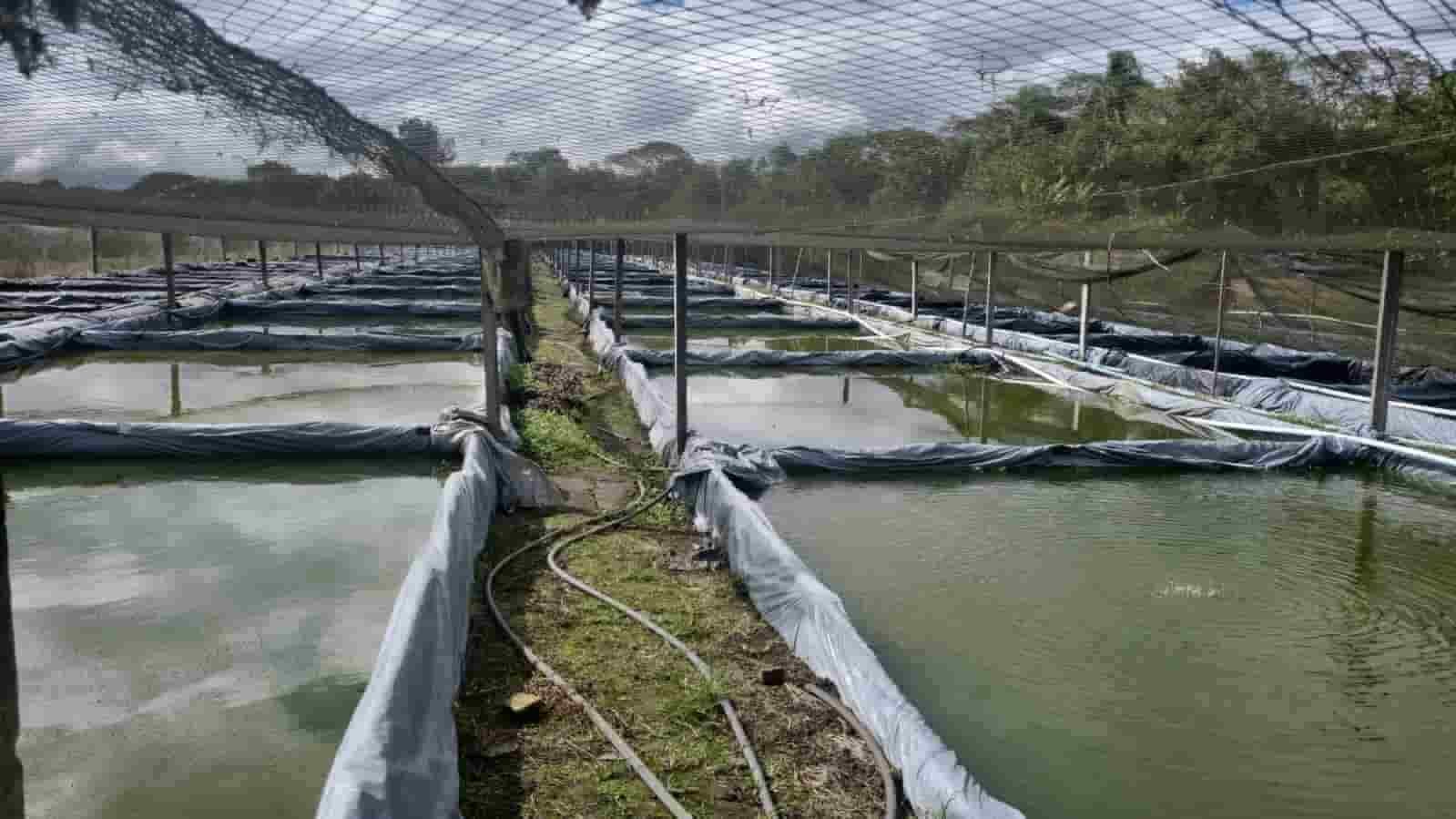
🐳 Monster Vats
Analyzing massive continuous turnovers inside large open-air mud farm vats.
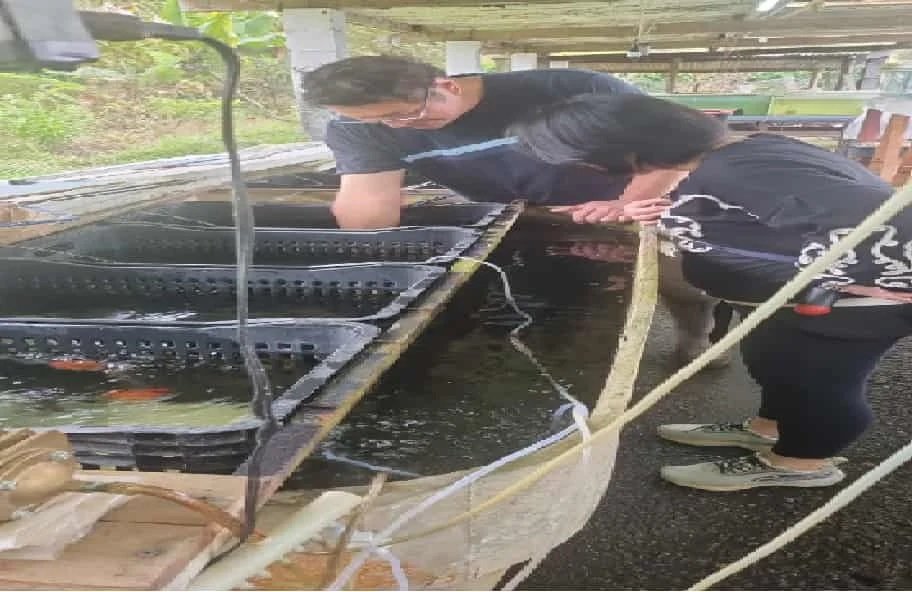
🤝 True Alliances
Working hand-in-hand with regional facility operations to target elite fancy bloodlines.
Read also: Where to Place a Large Goldfish Tank
A deeply technical piece of content that perfectly complements this post — absolutely worth the read.