
A Doberman Pinscher running at full throttle is not just a family pet taking a casual stroll. It is thirty-five kilograms of pure muscle, explosive acceleration, and deep working instinct tearing through terrain at thirty miles per hour. Finding the best GPS trackers for Dobermans is an absolute necessity for anyone handling a high-drive working dog that can clear a five-foot fence line before you even register the latch clicked open.
Standard commercial pet gear is engineered for passive suburban walks and low-impact living. The moment a powerful Doberman hits dense brush, lunges against a lead, or charges through thick forest timber, bargain-bin accessories and flimsy plastic housing tear apart completely. Cheap clip-on trackers snap off at the mounting post, leaving you holding a broken silicone ring while your dog disappears over the horizon.
I travel constantly with my Maltese, Murphy, but testing light urban gear on a tiny dog is only half the picture. At skytc, we put high-performance athletic gear through grueling real-world torture tests across harsh environments. Our field-testing network includes dedicated giant-breed handlers and multi-pet households across our community who push tracking equipment to absolute breaking points.
Deploying verified, ruggedized location tech gives you total operational visibility and instant recovery capability when disaster strikes. Securing your dog with heavy-duty tracking hardware prevents tragic loss, eliminates frantic searching in cellular dead zones, and keeps your athletic companion safe from distant highways.
30-Second Tech Summary: The No-Nonsense Verdict
Here is the straight counter talk without the corporate polish. If you run a deep-chested, high-speed Doberman, throw away all consumer Bluetooth tags and rubber-band style clip-ons immediately. You need cellular units equipped with reinforced pass-through collar mounts for urban environments, or dedicated VHF satellite handhelds if you step off-grid into remote timber. Look for IP68 dust-and-waterproof casings, reinforced polycarbonate or anodized aluminum housings, and lithium-polymer batteries rated for high-frequency active pings. Anything less will shatter, disconnect, or fall off in the very first briar patch your dog violently busts through.
Technical Specifications: High-Performance Hardware Comparison
We evaluated four distinct tracker architectures on high-drive working dogs in punishing terrain. Below is the raw breakdown of how these tracking platforms hold up under severe field stress.
| Tracker Category | Signal Transmission | Housing Integrity | Ingress Rating | Active Ping Battery Life | Tactical Drawback |
|---|---|---|---|---|---|
| Heavy-Duty LTE Cellular Pod | 4G / LTE-M Towers | Reinforced Polycarbonate | IP68 Standard | 24 – 48 Hours | Useless in complete cellular dead zones |
| Off-Grid VHF Satellite Handheld | MURS / Satellite RF | Tactical Armor Grade | IPX7 to IP68 | 20 – 40 Hours | Requires bulky handheld unit & rigid antenna |
| Integrated Smart LTE Collar | Cellular / GPS / Wi-Fi | Built-in Collar Band | IP67 Standard | 3 to 7 Days | If the collar webbing wears out, entire unit fails |
| Consumer Bluetooth Mesh Tag | Low-Energy Bluetooth | Light Plastic Housing | Unreported / Low | 6 to 12 Months | Zero direct tracking; useless in wilderness |
Battlefield Assessment: Gear Breakdown for High-Drive Breeds
Evaluating tracking hardware requires looking past shiny advertisement campaigns and searching for mechanical fatigue points. Here is how the primary tracking configurations operate when clamped to a powerful working breed.
1. Ruggedized LTE Cellular Trackers (Pass-Through Mount)
The Good: Provides continuous, high-precision live location updates across unlimited geographical distances as long as cellular coverage exists. Modern LTE-M network chips deliver rapid interval updates directly to smartphone applications, offering built-in virtual geofencing alarms that trigger instantly if your Doberman breaks perimeter lines.
The Bad: Dependent entirely on active mobile network towers. If your dog chases wildlife into deep ravines or rural dead zones, live tracking halts. High refresh rates drain small lithium batteries fast under continuous active tracking modes.
2. Dedicated VHF Radio & Satellite Handheld Systems
The Good: The tactical cheat code for backwoods excursions. Direct line-of-sight radio frequency communication completely bypasses cellular networks, giving you uninterrupted real-time tracking across wilderness trails. Bulletproof construction stands up to violent impacts against rock, mud, and timber.
The Bad: Requires a premium tier investment that far exceeds basic suburban budgets. The hardware is physically bulky, requiring a flexible steel whip antenna on your dog’s neck, and you must carry a dedicated physical handheld transceiver device at all times.
3. Integrated Smart LTE Collars
The Good: The tracking pod is built directly into reinforced collar webbing, eliminating dangling components or external bracket failures. Provides clean physical ergonomics, high battery efficiency, and continuous biomechanical activity tracking.
The Bad: Sizing is critical and rigid; if your Doberman’s neck dimensions change or the outer tactical strap breaks, you must service or replace the complete integrated unit rather than just swapping a collar strap.
4. Consumer Bluetooth Mesh Tags
The Good: Extremely low-grade weight footprint, budget-friendly options for basic keys or stationary indoor items, long battery longevity.
The Bad: An absolute operational disaster for working dogs. These devices lack native GPS receiver chips and rely entirely on nearby secondary smartphones to report location pings. If your Doberman sprints into an empty field, a Bluetooth tag is completely silent and virtually useless.
Biomechanical Stress, Activity Tracking, and Working Dog Nutrition
High-end tracking devices do more than broadcast coordinates; advanced units capture detailed kinetic motion profiles, resting heart metrics, and total daily caloric burn. A deep-chested, muscular Doberman burning high energy levels requires precision biometric tracking paired with optimal metabolic fueling.
When monitor analytics show elevated activity outputs, working breeds require high biological nutrient density. High-performing canine athletes thrive when fueled by raw meat and its natural fat, which provide dense clean energy, protect lean muscle mass, and optimize joint recovery after intense physical sprints.
Integrating real-time caloric output tracking with a bio-available, species-appropriate diet rich in animal fats ensures your athletic companion maintains peak physical conditioning without suffering structural burnout or sudden weight drop during heavy training cycles.
👇 Looking for more performance cheats? Check out our field-tested tactical blueprints:
The Best GPS Dog Trackers with No Monthly Fees
Real battlefield testing: How to keep your dog 100% safe without getting trapped in expensive subscriptions.
Best Smart Litter Boxes: Honest Testing & Review
Say goodbye to the scoop. We test the internal mechanics, odor control, and safety of top smart litter boxes.
Best Smart Feeding & Interactive Toys for City Pets
How to keep your companion happy, engaged, and fed while managing a busy, away-from-home routine.
Finding the Best GPS Trackers for Dobermans: Structural Hardware Requirements
When shopping for high-performance hardware, hardware reliability dictates survival. Never trust high-speed animals to consumer-grade plastics.
The Realities of the Battlefield
Marketing material promises seamless tracking, continuous connectivity, and indestructible design. Real-world physical stress exposes every single flaw in engineering within forty-eight hours of aggressive field deployment.
High-grade cellular tracking modules deliver phenomenal map resolution under controlled suburban conditions.
But the moment a high-drive Doberman violently pushes through dense oak thickets or scrapes along chain-link fences, flimsy rubber mounting rings shear straight off. The tracker drops into the mud, leaving you monitoring a stationary pod while your animal continues running uncontrolled.
Rugged outer shells with high ingress protection ratings handle water submersions and mud splashes with ease.
But internal battery terminals frequently suffer micro-vibrations from the violent kinetic force of a high-speed sprint. Over time, these micro-impacts crack solder joints, causing sudden mid-run system reboots right when you need live coordinates most.
Integrated multi-constellation GPS receivers lock onto satellite networks within seconds in open suburban environments.
But dense canopy forest cover, granite mountain faces, and urban concrete canyons severely degrade satellite signal propagation, expanding your location error radius from three meters to over fifty meters in seconds.
Hypothetical Failure Scenario: The Loose Mount Tragedy
Consider a typical weekend scenario. A dedicated owner buys a top-rated cellular tracker pod, snap-mounts it to a standard light-duty nylon collar, and heads out to a wooded county park for off-leash physical conditioning.
The owner relies entirely on default cellular geofence notifications, setting the tracking refresh rate to a relaxed ten-minute battery saver interval to extend device life. The Doberman spots a deer in the brush and hits peak speed instantly.
As the dog plunges through heavy berry brambles, the dangling tracker pod catches on a low branch. The thin plastic mounting clip snaps like a toothpick. Because the refresh interval was set to ten minutes, the phone app shows the dog sitting safely near the trail entrance for another eight minutes while the animal is actually a mile away across a state highway.
The handler wastes forty-five minutes searching around the last ping coordinate, completely unaware that they are tracking a lost piece of plastic lying in the dirt while their unmonitored dog wanders toward danger. This lab macete failure happens every single weekend because handlers trust consumer mounting hardware over tactical pass-through sleeves.
Actionable Field Deployment Checklist
Run through this comprehensive tactical setup protocol before letting your high-speed working dog step foot outside your secure yard.
- Evaluate the best GPS trackers for Dobermans based on your specific geographical terrain: Choose cellular units for city or suburban zones, or dedicated radio and satellite handhelds for deep wilderness trails.
- Eliminate dangling clip-on brackets: Secure tracking hardware using reinforced metal pass-through plates or heavy-duty riveted sleeve mounts directly attached to the collar webbing.
- Audit collar hardware tensile strength: Verify that collar buckles and D-rings are forged metal, avoiding plastic side-release buckles that shatter under sudden kinetic shock.
- Pre-set rapid update intervals before off-leash work: Switch device ping rates from long-life battery saver mode down to live two-to-five second update intervals before unhooking the leash.
- Test cellular dead zones in advance: Walk your routine training trails with your mobile device to map out areas where cellular signal drops out completely.
- Verify IP68 ingress protection sealing: Ensure rubber charging port seals are fully seated and free of dirt grit before exposing the unit to mud or water.
- Configure tight geofence safety zones: Set virtual boundary alerts closely around your property line rather than broad radii to catch escape attempts instantly.
- Maintain primary and secondary charging routines: Establish a strict nightly docking routine so the tracking pod never enters the field below eighty percent charge.
- Perform weekly physical housing inspections: Check polymer casings for stress fractures, cracked lens covers, or worn mounting tabs caused by friction.
- Equip secondary visual reflective identification: Combine high-tech GPS hardware with physical riveted ID plates for immediate identification by third parties.
- Calibrate internal motion sensors: Run brief diagnostic walks to verify that kinetic step counters and activity algorithms align accurately with real movement.
- Store offline satellite base maps: Download local topological maps directly onto your smartphone or handheld unit so tracking functions without cellular data rendering.
Dynamic No-Nonsense FAQ
Can I just use a cheap consumer Bluetooth tag on my Doberman?
No. Absolute waste of money for a high-drive working dog. Bluetooth tags do not contain GPS chips and rely on nearby third-party smartphones to relay coordinates. If your Doberman bolts into an open field or wooded trail, there are no phones around to bounce a signal, leaving you completely blind.
Why does my tracker battery drain so fast during field runs?
Because live satellite positioning combined with constant cellular transmission requires serious energy output. When you set your tracker to update coordinates every two seconds during high-speed movement, the processor runs at full throttle. Charge your unit daily and reserve high-frequency pings for actual off-leash field sessions.
Are cellular GPS trackers subscription-free?
No. Cellular tracking units contain integrated SIM cards that communicate over cellular networks, requiring ongoing network access plans. If a company claims zero subscription costs for live cellular tracking, read the fine print—they are either routing through restricted networks or hiding fees elsewhere.
Will a GPS tracker work if my dog goes under dense forest canopy?
It will work, but accuracy takes a hit. Satellite signals struggle to penetrate thick timber canopy, heavy wet leaves, or deep rock canyons. High-end multi-constellation receivers combining GPS, GLONASS, and Galileo perform far better in dense woods than bargain-bin single-network hardware.
Should I attach the tracker to my Doberman’s primary leash-walking collar?
Avoid it if possible. Heavy pulling forces against a primary leash collar cause physical friction and mechanical stress directly against the tracker casing and mounting brackets. Use a dedicated, reinforced tracking collar or harness mount separate from your primary leash attachment point.
What is the difference between cellular GPS and radio VHF trackers?
Cellular GPS relies on cell towers to beam data to your smartphone, giving you infinite range wherever cellular service exists. VHF radio systems use direct radio frequencies between a collar and a dedicated handheld receiver, operating completely off-grid without cell service, but limited by line-of-sight distance.
How do I prevent my Doberman from losing the tracker in thick brush?
Ditch rubber band attachments and cheap plastic clips entirely. Bolt or thread the tracker directly onto heavy-duty nylon or Biothane webbing using custom pass-through aluminum brackets. A properly flush-mounted tracker cannot catch on branches or snag on fencing.
Are activity and biometric metrics on GPS trackers actually useful?
Yes, for athletic working breeds they are crucial. Tracking daily active hours, sprint velocities, and resting metrics allows you to fine-tune nutrition and rest cycles, ensuring your dog stays at peak physical performance while preventing overtraining injuries.
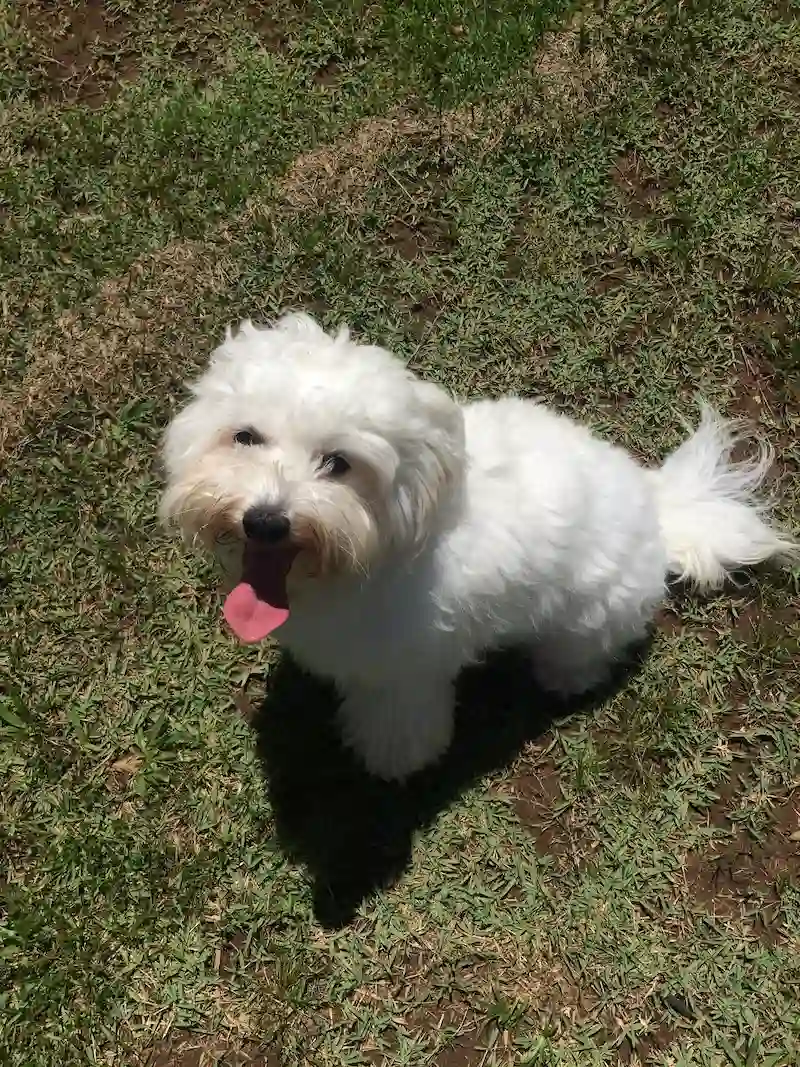 Murphy
 Valtersky
Meet Valtersky & Murphy
FOUNDER OF TEAM SKYTC
At SKYTC, Meet Valtersky & Murphy FOUNDER OF TEAM SKYTCAt SKYTC, cutting-edge pet technology meets real-world testing. We merge Murphy’s hands-on companion trials with Valtersky’s precise analysis—combining over 25 years of structural engineering background with health-tech experience.To guarantee reliability for all breeds, we collaborate with a trusted network of experienced large-breed tutors and active dog handlers who stress-test heavy-duty gear in rugged conditions. We raise the bar for review standards so your best friend gets only the safest, most functional, and highly reliable hardware on the market.
✨ Read also: Top GPS Trackers for Greyhound Racing
A deeply technical piece of content that perfectly complements this post — absolutely worth the read.