
When you feel a sharp, burning ache behind your kneecap after a long trail run, you are experiencing the direct structural impact of poor biomechanics. Understanding the connection between foot strike and knee wear is the difference between running pain-free into your seventies or ending up on my diagnostic table for a total joint replacement. As an amateur ultra runner, former competitive kickboxer, and former clinical CT scan technician, I have spent years looking inside human anatomy to see the exact radiologic evidence of patellofemoral cartilage erosion caused by terrible stride mechanics.
Most runners assume that knee pain is an inevitable tax paid for accumulating miles on mountain trails. They spend massive money on over-cushioned shoes, knee braces, and anti-inflammatory drugs while ignoring the harsh physical truth that every step sends a massive force vector straight up the kinetic chain into the articular cartilage.
By recalibrating how your foot contacts the ground, eliminating braking forces, and rebuilding compromised joint integrity through dense animal nutrition, you can immediately eliminate patellar friction. You stand to save thousands in medical bills, avoid premature knee surgery, and protect your functional mobility for a lifetime of unassisted mountain running.
30-Second Summary: The Tactical Counter Verdict
Look, stop blaming your age for your ruined knees. Overstriding with an aggressive heel strike creates an acute braking force vector that transfers peak ground reaction loads directly into your patellofemoral joint. Thick maximalist foam shoes do not absorb this impact force—they merely hide the initial shock while destroying your foot’s sensory feedback. To protect your knee joints, shorten your cadence, strike directly beneath your center of mass, and rebuild compromised connective tissue with clean red meat and its natural fats. Fix the mechanical vector before your cartilage turns into ground glass.
Biomechanical Breakdown: Foot Strike Types vs Joint Burden
Let’s look at how different foot strike mechanics distribute kinetic stress across the lower extremity based on clinical diagnostic data and field endurance testing.
| Foot Strike Type | Patellofemoral Stress | Achilles / Calf Load | Braking Force Vector | Joint Longevity Score |
|---|---|---|---|---|
| Overstriding Heel Strike | Severe / Critical | Low | Extreme (Braking) | Poor / Rapid Wear |
| Midfoot Strike (Under COM) | Low / Optimal | Moderate | Minimal | Exceptional / Sustainable |
| Aggressive Forefoot Strike | Low | Extreme / High Strain | Minimal | Moderate (Tendon Stress) |
| Maximalist Foam Heel Strike | Severe (Deceptive) | Low | High | Poor / Hidden Damage |
| Carbon-Plated Shoe Strike | Varies by Model | High | Moderate | Unreported / Accelerated Strain |
Battlefield Assessment: Evaluating Foot Strike Protocols
1. Maximalist Plush Shoes for Heel Striking
The Good: Provides initial plush surface dampening during long flat road runs when your leg muscles are completely fatigued.
The Bad: The ultra-thick stack height mutes sensory proprioception, causing you to overstride harder and drive severe impact torque straight into your knee joints without feeling it.
2. Pure Forefoot / Minimalist Barefoot Strike
The Good: Eliminates knee impact shock almost completely by using the ankle and Achilles tendon as natural coiled springs to absorb ground forces.
The Bad: If you transition too fast without building adequate soleus strength, you will tear your plantar fascia, stress-fracture your metatarsals, or ruin your Achilles tendon.
3. Controlled Midfoot Strike Under Center of Mass
The Good: Evenly distributes kinetic stress between the ankle, calf, quadriceps, and hips, maximizing mechanical energy efficiency and joint preservation.
The Bad: It requires relentless neurological discipline, core stability, and calf conditioning, making it difficult to maintain when gassed during mountain ultras.
The Realities of the Battlefield
The running footwear industry spends millions selling super-foams and rigid carbon plates that promise painless miles. But the hard negative reality is that no shoe upper, foam midsole, or carbon rocker can override bad physics. When you land heel-first far in front of your hip joint, your tibia acts like a solid strut transfer shaft driving ground reaction forces directly into your femoral condyles. In CT scans, I have seen thirty-five-year-old runners with knee cartilage wearing down like old brake pads.
High-end trail shoes feature aggressive lugged outsoles and water-resistant membranes designed for technical mountain descents. But under real battlefield conditions—wet mud, loose scree, and prolonged steep declines—ultra-thick foam midsoles twist unpredictably, causing severe lateral knee shear and meniscus tears. The gear cannot fix poor ankle mobility or weak glutes.
Supplements marketed for joint health promise rapid cartilage regeneration through low-grade synthetic collagen powders. But the brutal truth is that isolated synthetic compounds lack the structural amino acid density and bioavailable fat-soluble vitamins required to repair connective tissue. Real tissue restoration requires dense cellular fuel like clean red meat and natural animal fats that deliver natural gelatin, proline, and glycine straight to avascular joint capsules.
The Hypothetical Failure Scenario: The Descending Trail Disaster
Consider Runner Mark. Mark enters a fifty-kilometer mountain ultramarathon wearing a brand new pair of high-stack maximalist shoes. As he hits a long, four-mile technical downhill section, fatigue sets in. To maintain control, Mark leans backward, extends his lead leg straight out, and slams his heel into the rocky trail with every single step.
Because the thick shoe foam absorbs the initial sharp sensation, Mark doesn’t feel the structural damage occurring inside his knee. However, behind the scenes, every heel impact creates a massive braking force vector that shears his patellar tendon and crushes the smooth cartilage lining his patellofemoral joint.
By mile twenty-five, the soft foam inside his shoe has compressed unevenly. Mark’s knee inflames severely, forcing him to limp off the trail and DNF. Within three months, diagnostic imaging reveals advanced patellofemoral cartilage degeneration and a torn meniscus. Mark’s failure wasn’t a lack of cardiovascular fitness—it was a catastrophic misunderstanding of foot strike mechanics and force vectors.
👇 Looking for more performance cheats? Check out our field-tested tactical guides:
SkyTC Master Hub & Pillar Guides
Actionable Execution Checklist on the Connection Between Foot Strike and Knee Wear
- Master the connection between foot strike and knee wear now.
Pro-Tip: Shift your landing mechanics so your foot contacts the ground directly beneath your hips rather than reaching far in front of your body. - Increase your running cadence to one-hundred-and-seventy-five steps per minute.
Pro-Tip: A faster turnover naturally prevents overstriding and drastically reduces peak ground reaction forces on your patellofemoral joint. - Fuel cartilage repair with nutrient-dense clean red meat.
Pro-Tip: Glycine, proline, and bioavailable fats from animal tissue provide the exact structural raw materials needed to rebuild synovial joint linings. - Perform daily eccentric calf raises on a raised step.
Pro-Tip: Strengthening your lower leg complex allows your Achilles tendon to absorb ground impact shock instead of transferring force to your knees. - Ditch ultra-plush maximalist shoes for moderate stack footwear.
Pro-Tip: Excessive foam dampens sensory feedback, tricking your central nervous system into striking the ground harder than necessary. - Lean forward from your ankles rather than your waist.
Pro-Tip: Using gravity for forward propulsion eliminates the need to reach with your lead leg, cutting braking forces down to zero. - Strengthen your gluteus medius with targeted lateral band walks.
Pro-Tip: Weak hip stabilizers cause dynamic knee valgus, tilting your patella out of alignment during every single foot contact. - Incorporate short barefoot strides on flat grass weekly.
Pro-Tip: Unshod running instantly triggers protective reflexes, re-educating your nervous system to land softly on your midfoot. - Avoid aggressive heel braking on steep mountain descents.
Pro-Tip: Take shorter, quicker steps and keep your knees slightly flexed to dissipate downhill impact force through muscle engagement rather than joint compression. - Mobilize ankle dorsiflexion daily with wall stretches.
Pro-Tip: Restricted ankle dorsiflexion forces your foot to overpronate, creating torsional twist and shear forces directly across the knee joint. - Replace worn trail shoes every four hundred miles.
Pro-Tip: Compromised midsoles tilt under load, creating uneven joint loading that accelerates cartilage destruction over long distances.
Dynamic No-Nonsense FAQ
Is heel striking always bad for your knees?
Yes, if you overstride. Landing heel-first far in front of your center of mass creates a massive braking force vector that travels straight into your patella and meniscus with zero tendon absorption.
Can maximalist cushioning shoes prevent knee wear?
No. Plush foam creates a deceptive illusion of comfort while blinding your foot’s mechanoreceptors, causing you to pound the ground harder and increase knee joint stress.
How long does it take to transition to a midfoot strike?
Expect two to three months of gradual recalibration. If you try to switch overnight without building calf and foot strength, you will swap knee pain for Achilles tendinitis.
Why is red meat important for joint recovery?
Cartilage, tendons, and ligaments are built from collagen. Clean red meat and natural fats supply bioavailable amino acids like proline and glycine alongside zinc needed for tissue repair.
Are carbon-plated running shoes safe for mountain trail running?
No. Carbon plates are engineered for linear road speed. On uneven trails, they create unstable torque that can twist your ankle and tear knee ligaments instantly.
What cadence should I target to protect my knees?
Aim for 170 to 180 steps per minute. A higher turnover forces your feet to land directly under your hips, virtually eliminating knee-crushing braking forces.
Do knee sleeves or braces fix bad foot strike mechanics?
No. A brace is an external band-aid that warms the joint and provides mild proprioception, but it cannot override the terrible physics of an overstriding heel strike.
How do I know if my knee pain is structural cartilage damage?
Persistent deep aching, swelling post-run, or grinding feelings under the kneecap indicate cartilage wear. Get an MRI or CT scan and fix your gait mechanics immediately.
Why Trust SkyTC Biohacking Curation?
At SkyTC, we treat the human body as your most valuable technology. We are not just a recommendation site; we apply a rigorous clinical and practical screening process to ensure that each recommendation optimizes your biology with safety and real-world results.
✓ Technical Expertise:
Clinical experience in Radiology and Tomography (CT scans). We analyze methods through the lens of bone health and structural integrity.
✓ Specialization:
Focus on real-world biohacking. We test every wearable and supplement at the absolute limit of effort during marathons and on the mats.
✓ Authority:
Curation based on absolute transparency, always highlighting both the positive advantages and the real drawbacks of every technology.
✓ Trust:
A curation process built directly on the professional experience of a field practitioner, speaker, and high-performance leader coach.
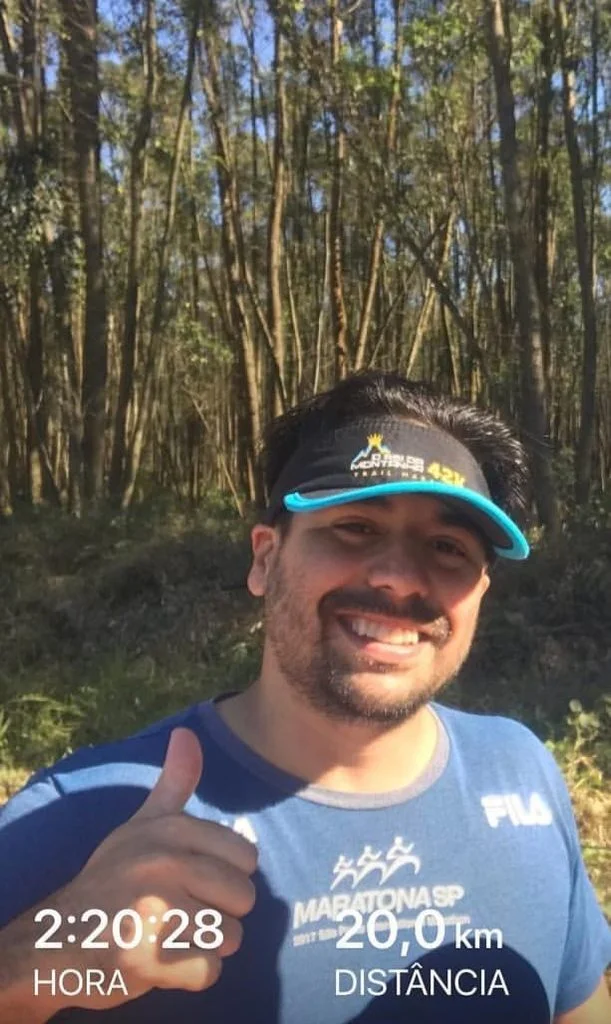



Optimizing the body demands the clinical precision of someone who operated in Radiology (Brazilian Board Certified, CRTR-SP 23595T) for years, combined with the unyielding resilience of someone who conquered multiple 42km+ mountain marathons. As an active professional, multi-pet handler, and tech benchmark researcher, at SkyTC, we bridge advanced technical science with extreme practical environments to help you biohack your active performance, optimize smart pet-tech ecosystems, and protect your structural longevit
Discover my full professional trajectory →✨ Read also: (How to Restore Knee Range of Motion After Ultra Runs: The Field Diagnostic Manual)
A deeply technical piece of content that perfectly complements this post — absolutely worth the read.