
When you feel a deep, nagging ache along your shinbone midway through a mountain ultramarathon, your body is delivering an urgent warning about mechanical structural strain. Understanding the science of bones under running pressure is the fundamental difference between building an unbreakable skeletal frame or suffering career-ending stress fractures. As an amateur ultra runner, former competitive kickboxer, and former clinical CT scan technician who spent five years analyzing X-rays and two years reviewing computed tomography scans, I have seen the literal diagnostic reality of bone piezo-electricity, trabecular degradation, and micro-fracture accumulation inside human limbs.
Most runners assume that bones are static, inert scaffolding that simply wears out as age advances. They buy high-priced maximalist shoes to hide ground reaction forces, completely ignoring Wolff’s Law and the fundamental biomechanical rules of bone remodeling.
By mastering how skeletal tissue responds to cyclic axial loading and fueling your body with bioavailable animal fats and dense proteins, you can trigger rapid osteoblast calcification. You will save years of wasted rehab, protect your financial resources from showroom gadget hype, and build a resilient skeletal chassis capable of crushing mountain trails for decades.
30-Second Summary: The Tactical Counter Verdict
Look, stop treating your skeleton like fragile china. Bones are dynamic, living piezo-electric structures that require controlled mechanical strain to initiate osteoblast bone remodeling. Hiding behind ultra-thick shoe foam lowers the mechanical signal needed for trabecular density, leaving your tibias brittle. To build bone density under running pressure, apply high-peak cyclic loads, allow adequate remodeling windows, and supply your body with clean red meat and its natural fats for critical collagen matrix synthesis and fat-soluble vitamin D3/K2 absorption. Stop dampening the load and start engineering the bone.
Evaluating Skeletal Stimulus: Force Load vs Bone Remodeling
Let’s look at how various training and recovery modalities stimulate skeletal remodeling based on radiologic density data and force-plate metrics.
| Skeletal Protocol | Osteogenesis Stimulus | Cortical Remodeling Rate | Micro-Fracture Risk | Skeletal ROI |
|---|---|---|---|---|
| Axial Trail Running (Controlled Load) | High / Optimal | Rapid (Wolff’s Law) | Moderate | Exceptional / Sustainable |
| Heavy Compound Weightlifting | Extreme | High Trabecular Density | Low | Exceptional Base |
| Maximalist Foam Road Running | Dampened / Low Signal | Sluggish | High (Compensatory) | Poor / Hidden Micro-Damage |
| Non-Weightbearing Swimming/Cycling | Negligible | Zero Osteoblast Response | Zero | Low (No Skeletal Adaptation) |
| Vibration Plate Therapy | Unreported | Varies by Model | Zero | Unreported / Accessory Only |
Battlefield Assessment: Evaluating Bone Loading Protocols
1. Ultra-Plush Maximalist Running Shoes
The Good: Reduces immediate sensory discomfort on hard asphalt when your lower leg muscles are completely fatigued.
The Bad: It absorbs beneficial piezoelectric strain signals, depriving your tibia of the impact force required to trigger osteogenesis and bone mineral density deposition.
2. High-Volume Low-Protein Endurance Diets
The Good: Keeps overall body mass low for brief uphill speed gains during flat road racing.
The Bad: It starves the bone collagen matrix of vital amino acids and fat-soluble vitamins, leading to micro-fracture accumulation, systemic osteopenia, and stress fractures.
3. Heavy Axial Resistance Training
The Good: Drives extreme compressive loads through the femur and lumbar spine, forcing high osteoblast activity and dense trabecular cross-linking.
The Bad: If executed with poor biomechanical form or insufficient recovery, it creates dangerous shear forces across spinal discs and joint capsules.
The Realities of the Battlefield
The fitness tech industry aggressively promotes lightweight smart rings and wrist wearables claiming to measure readiness and skeletal health. But the hard negative reality is that no wrist sensor can measure internal cortical bone thickness or trabecular micro-fracture accumulation. Tracking digital readiness scores without understanding skeletal mechanics leads to false confidence and sudden stress fractures on the trail.
High-end running shoe brands market super-plush midsoles designed to protect your skeletal frame from impact force. But when subjected to real battlefield conditions—steep mountain descents, wet rocks, and heavy weekly mileage—these soft foams collapse unevenly. This creates severe torsional twisting across the tibia and fibula, converting normal axial load into destructive shearing forces.
Supplements marketed for bone health rely on cheap synthetic calcium carbonate powders. But the brutal diagnostic reality seen on CT scans is that unabsorbed synthetic calcium frequently calcifies arterial walls rather than rebuilding bone tissue. Real bone remodeling requires an organic collagen matrix provided by clean red meat and natural animal fats, which supply bioavailable vitamins K2, D3, and phosphorus necessary to drive calcium straight into the bone mineral matrix.
The Hypothetical Failure Scenario: The Brittle Shin Collapse
Consider Runner Dave. Dave decides to train for a fifty-mile mountain ultra. Fearing joint pain, he buys the thickest plush maximalist shoes available and cuts all animal fats from his diet to drop weight rapidly.
As his weekly mileage ramps up, his cushioned shoes suppress the mechanical strain signals that tell his osteoblasts to lay down new cortical bone. Simultaneously, his low-fat diet leaves his body depleted of vitamin K2 and collagen-building amino acids.
At mile thirty of his target race, a sharp, excruciating pain explodes along his mid-tibia. Diagnostic X-rays and subsequent CT scans reveal severe tibial stress fractures and localized osteopenia. Dave didn’t fail because of hard trails—he failed because he muted the mechanical signals his skeleton needed while starving his bone matrix of real biological fuel.
👇 Looking for more performance cheats? Check out our field-tested tactical guides:
SkyTC Master Hub & Pillar Guides
Actionable Execution Checklist on the Science of Bones Under Running Pressure
- Understand the science of bones under running pressure daily.
Pro-Tip: Recognize that bones adapt specifically to applied mechanical vectors through piezoelectric osteoblast stimulation rather than passive rest. - Incorporate heavy axial squatting twice per week.
Pro-Tip: High-magnitude compressive loads signal your femur and spine to deposit dense trabecular bone structure to prevent age-related bone loss. - Fuel your bone matrix with clean red meat.
Pro-Tip: Animal protein provides the exact hydroxyapatite and collagen scaffold required for calcium minerals to bind effectively inside bone tissue. - Consume natural animal fats for vitamin K2 absorption.
Pro-Tip: Fat-soluble vitamins K2 and D3 act as molecular navigators, directing circulating calcium into bone matrix rather than arterial walls. - Avoid continuous use of ultra-plush maximalist footwear.
Pro-Tip: Excessive shoe cushioning dampens the ground reaction force required to trigger natural bone remodeling under Wolff’s Law. - Incorporate short downhill trail running intervals weekly.
Pro-Tip: Controlled eccentric loading subjects your long bones to high-impact forces that stimulate cortical bone thickening over time. - Allow seventy-two hours of recovery after peak strain.
Pro-Tip: Bone remodeling involves micro-damage resorption followed by calcification; insufficient recovery turns productive strain into stress fractures. - Ditch synthetic calcium carbonate bargain-bin supplements immediately.
Pro-Tip: Low-grade inorganic calcium compounds have poor bioavailability and frequently cause soft tissue calcification instead of bone density. - Maintain optimal hydration with unrefined sea salt minerals.
Pro-Tip: Proper electrolyte balance maintains serum pH, preventing your body from leaching alkaline calcium salts from your bones. - Execute barefoot grass warm-ups before fast workouts.
Pro-Tip: Direct ground contact activates foot mechanoreceptors, improving force distribution across your metatarsals and ankle joints. - Monitor deep bone aches with diagnostic CT imaging.
Pro-Tip: Persistent localized shin pain that worsens under impact load requires cross-sectional imaging before a full structural fracture occurs.
Dynamic No-Nonsense FAQ
Does running cause long-term bone degradation?
No. Controlled running load stimulates osteoblast activity and increases bone mineral density. Degradation only occurs when you overtrain without proper nutrition or rest.
Why are plush maximalist shoes bad for bone density?
Excessive foam dampens ground reaction forces, muting the piezoelectric signal your bones need to trigger remodeling. Your bones become weaker because they aren’t challenged.
How does red meat help build stronger bones?
Bones are fifty percent collagen by volume. Clean red meat provides dense proline, glycine, and bioavailable heme iron necessary to build the flexible collagen matrix that holds minerals together.
What is the difference between an X-Ray and a CT scan for bone stress?
X-rays only show obvious fractures or late-stage remodeling. Computed Tomography (CT) provides high-resolution cross-sectional views that detect early trabecular micro-fractures before total structural failure.
Can you rebuild bone density after age forty?
Absolutely. Wolff’s Law applies throughout your entire life. By combining heavy resistance loading, impact running, and nutrient-dense animal fats, you can continuously increase cortical thickness.
Are cheap calcium supplements worth buying?
No. Low-grade calcium carbonate supplements are a waste of money and can calcify your arterial walls. Get your bone minerals from real food like bone broth and clean red meat.
How do I know if I have a stress fracture or muscle soreness?
Muscle soreness spreads across tissue and fades with movement. A stress fracture is sharp, point-tender on a raw bone, and hurts intensely under any impact load.
Is cycling enough to maintain skeletal bone mass?
No. Cycling is non-weightbearing and provides zero impact shock to your legs. Without axial impact, your lower long bones will lose density over time.
Why Trust SkyTC Biohacking Curation?
At SkyTC, we treat the human body as your most valuable technology. We are not just a recommendation site; we apply a rigorous clinical and practical screening process to ensure that each recommendation optimizes your biology with safety and real-world results.
✓ Technical Expertise:
Clinical experience in Radiology and Tomography (CT scans). We analyze methods through the lens of bone health and structural integrity.
✓ Specialization:
Focus on real-world biohacking. We test every wearable and supplement at the absolute limit of effort during marathons and on the mats.
✓ Authority:
Curation based on absolute transparency, always highlighting both the positive advantages and the real drawbacks of every technology.
✓ Trust:
A curation process built directly on the professional experience of a field practitioner, speaker, and high-performance leader coach.

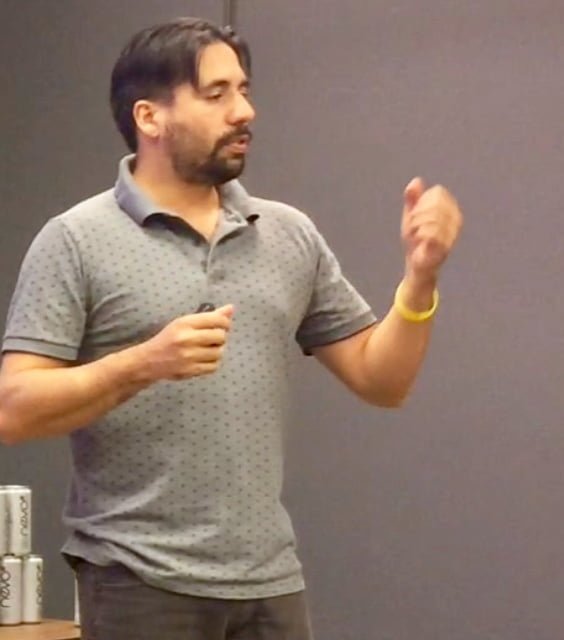


Optimizing the body demands the clinical precision of someone who operated in Radiology (Brazilian Board Certified, CRTR-SP 23595T) for years, combined with the unyielding resilience of someone who conquered multiple 42km+ mountain marathons. As an active professional, multi-pet handler, and tech benchmark researcher, at SkyTC, we bridge advanced technical science with extreme practical environments to help you biohack your active performance, optimize smart pet-tech ecosystems, and protect your structural longevit
Discover my full professional trajectory →✨ Read also: (Science of Bones Under Running Pressure: The Structural Bio-Engineering Guide)
A deeply technical piece of content that perfectly complements this post — absolutely worth the read.