
You are halfway through an exhausting shift in a chaotic emergency department, and your system freezes because cheap silicon under a plastic shell throttled into oblivion. Finding true secure enterprise laptops for medical professionals isn’t about reading slick corporate brochures or listening to fast-talking sales reps; it’s about deploying machinery that won’t die when critical patient care is on the line.
Most healthcare administration buyers fall into the trap of purchasing ultra-sleek consumer machines with low-grade components hidden behind polished aluminum skins. When these lightweight units run heavy Electronic Health Record (EHR) suites, local DICOM imaging software, and encrypted network tunnels simultaneously, their underengineered cooling systems choke instantly.
As a bench technician who has spent years with a microscope and micro-soldering iron fixing fried motherboard power rails, I see the aftermath every day. Shorted power MOSFETs, cracked solder balls beneath BGA chips, and corrupt solid-state drives are the direct result of bad hardware architecture forced into demanding environments.
In this tear-down guide, we are cutting through the marketing hype to reveal the exact physical specs, security silicon, and thermal designs required for clinical operations. By choosing battle-tested hardware, you will save endless hours of tech-support downtime, protect your practice from devastating security breaches, and keep your clinical workflow entirely bulletproof.
In the 30-Second Summary: Tech Support Counter Talk
Look, if you are short on time, here is the unfiltered truth straight from the repair bench: skip consumer ultrabooks entirely. Medical environments require discrete TPM 2.0 security chips soldered directly to the motherboard PCB, robust magnesium-alloy chassis frames, physical smart card readers, and dual-heatpipe cooling systems that vent away from sensitive hinges. If a machine cannot survive aggressive disinfectant wipes, continuous shift power cycling, and accidental drops off rolling medical carts, it does not belong in a hospital. Invest in modular enterprise-tier chassis and stop burning money on disposable gear.
Architectural Standard for Secure Enterprise Laptops for Medical Professionals
We tore down four major enterprise laptop chassis tiers commonly found in hospital networks to see how their motherboard components, security chips, and cooling systems hold up under continuous clinical stress.
| Chassis Tier | Security Silicon & Auth | Thermal Design & Cooling | Chemical Shielding | Board Repair Score |
|---|---|---|---|---|
| Modular Enterprise Workstation | Dedicated dTPM 2.0 + SmartCard + Match-on-Chip | Dual copper heatpipes + dual high-CFM fans | MIL-STD-810H deck with liquid channels | 9/10 (Socketed RAM, swappable SSD) |
| Ruggedized Healthcare Unit | Hardware dTPM 2.0 + Encrypted RFID / CAC Reader | Vapor chamber with sealed fan assembly | IP65 fully sealed antimicrobial body | 7/10 (Modular sub-boards, heavy dampeners) |
| Slim Executive Ultrabook | Firmware fTPM / Software encryption options | Single tiny heatpipe + undersized exhaust | Unsealed keyboard, low chemical tolerance | 2/10 (All components soldered) |
| Budget Office Fleet Chassis | Basic fTPM 2.0 / No physical SmartCard slot | Extruded aluminum block without active lines | Standard plastic casing; degrades under wipes | 4/10 (Fragile plastic tabs, thin rails) |
Battlefield Assessment: Gear Breakdown
Modular Enterprise Workstations
The Good: Exceptional thermal headroom, dedicated dTPM 2.0 crypto-processors, and field-replaceable parts that keep clinical downtime near zero.
The Bad: Slightly thicker profile that adds extra weight to mobile crash carts, and higher upfront capital requirements compared to consumer models.
Ruggedized Healthcare Units
The Good: Complete immunity to harsh chemical disinfectants, IP-rated liquid splash resistance, and near-indestructible casing.
The Bad: Chunky aesthetic, heavy frame that tires mobile staff during long rounds, and cooling vents that demand manual dust intake cleanouts.
Slim Executive Ultrabooks
The Good: Exceptionally lightweight frame, elegant aesthetic, and effortless portability for administrators walking between executive suites.
The Bad: Severe thermal throttling under heavy EHR workloads, fully soldered memory that prevents upgrades, and flexible frames that break solder joints under mechanical strain.
The Realities of the Battlefield
Enterprise laptop marketing promises silent operation and military-grade durability, but the physical reality of a hospital floor quickly destroys underengineered machines. Chemical disinfectants containing high concentrations of isopropyl alcohol and hydrogen peroxide systematically eat through standard rubberized paint finishes, turning sleek chassis surfaces into sticky, discolored residue within weeks.
Furthermore, medical software stack environments are notoriously unoptimized. Running high-resolution DICOM medical imaging alongside continuous background telemetry and real-time database syncing places a constant load on the system’s central processing unit. Thin cooling blocks dissipate heat straight into the hinge assembly, heating up voltage regulator modules (VRMs) until solder joints develop microscopic hairline fractures.
Maintaining operational stamina under continuous clinical stress requires robust underlying engineering. Just as human stamina relies on dense, unrefined energy sources like grass-fed meat and natural fats to sustain sharp mental focus through demanding shifts without physical exhaustion, an enterprise workstation relies on solid tantalum capacitors, thick copper power planes, and heavy VRM heatsinks to deliver clean, stable voltage without thermal failure.
Cheap laptops rely on bargain-bin ceramic capacitors that short-circuit when exposed to thermal shock. When a doctor moves a hot laptop from a warm examination room into an air-conditioned intensive care unit, rapid thermal contraction puts immense mechanical strain on micro-soldered surface-mount components. Without reinforced PCB traces, motherboard boards warp, leading to intermittent power cuts and total system lockups.
The Crash Cart Meltdown: A Lesson in Board-Level Failure
Consider a typical scenario in a busy clinical department: a clinician finishes reviewing charts on a budget-friendly laptop sitting directly on a cotton blanket atop a patient bed. The soft fabric blocks the intake vents on the bottom panel, causing internal temperatures to surge past ninety degrees Celsius instantly.
To sanitize the unit quickly between patients, a staff member sprays a heavy mist of disinfectant directly over the keyboard deck. Because the chassis lacks an isolated liquid drain tray, the liquid creeps past the keycaps and drops directly onto the unshielded main power rail carrying nineteen volts of DC power.
The fluid bridges the high-voltage main rail to a low-voltage data line feeding the primary controller hub. In a fraction of a second, high voltage fries the CPU die directly, destroying unbacked-up patient notes instantly and rendering the laptop a dead brick. A proper enterprise chassis prevents this precise disaster through isolated drainage channels and conformal coatings over critical board components.
👇 Looking for more performance cheats? Check out our field-tested tactical blueprints:
Guides for Your Next Workspace
Professional Laptops
The definitive blueprint to selecting high-performance, enterprise-grade workstations engineered to scale your productivity.
Budget Tech Tools
Practical strategies and low-cost digital tools engineered to maximize office performance without breaking your budget.
Power User Gadgets
Advanced hardware, desk automation tools, and elite tech ecosystems built to completely eliminate workflow bottlenecks.
Field Checklist: Deploying Medical Enterprise Laptops
- Verify secure enterprise laptops for medical professionals feature dTPM.
Expert Tip: Avoid software-emulated TPM (fTPM) embedded in CPU firmware, as hardware security keys can be compromised during cold-boot side-channel attacks. - Select chassis tested against medical chemical disinfectant wipes.
Expert Tip: Look for polycarbonate or anodized magnesium alloys rated for ammonium chloride and hydrogen peroxide cleanings to avoid melted chassis plastics. - Demand dual heatpipes or vapor chamber active cooling.
Expert Tip: Single-heatpipe designs throttle under concurrent DICOM image rendering and EHR database syncs, reducing processor speeds to a crawl. - Insist on physical Smart Card hardware authentication readers.
Expert Tip: Integrated contact readers offer faster, touchless, or tap-in clinical login workflows while maintaining full compliance with access control standards. - Opt for modular chassis with socketed RAM slots.
Expert Tip: Soldered memory forces complete motherboard replacement during single-chip failures, exponentially raising long-term fleet maintenance costs. - Inspect display hinge anchors for reinforced metal brackets.
Expert Tip: Hinges screwed directly into thin plastic display covers crack under daily opening and closing abuse on mobile medical carts. - Choose displays with high-contrast anti-glare glass coatings.
Expert Tip: Bright hospital overhead fluorescent lights wash out low-grade panels, forcing staff to strain their eyes during critical data entry. - Ensure battery systems support hot-swappable hardware setups.
Expert Tip: Swappable batteries allow continuous round-the-clock shift operation without forcing staff to tether machines to wall outlets mid-treatment. - Audit BIOS firmware for remote out-of-band management.
Expert Tip: Enterprise platforms like Intel vPro or AMD Pro allow IT specialists to push security patches remotely, even if the OS is frozen. - Test spill-resistant keyboard drain channels with isolation.
Expert Tip: Ensure fluid channels bypass the motherboard completely rather than simply channeling liquids into internal battery compartments. - Enforce Full Disk Encryption with self-encrypting drives.
Expert Tip: Hardware-level encryption offloads cryptographic tasks from the CPU, maintaining system speed while locking down sensitive records.
Dynamic No-Nonsense FAQ
Is consumer hardware fine for small medical clinics?
No. Consumer laptops lack discrete hardware security modules, suffer from fragile plastic chassis, and thermally throttle under basic clinical software stacks. Buying consumer gear for medical environments is a financial trap that ends in data breaches and dead motherboards.
What is the difference between fTPM and dTPM in medical security?
fTPM runs inside the main CPU firmware, leaving cryptographic keys vulnerable if the chip is compromised. dTPM is a physical, tamper-resistant chip micro-soldered directly onto the motherboard, isolating encryption keys from software-level attacks.
Why do hospital laptops keep overheating during EHR charting?
Most thin laptops use undersized copper cooling lines and restrictive intake grills. When multi-layered medical databases run alongside anti-malware agents, heat saturates the thermal module, forcing the processor to throttle down to prevent physical melting.
Can we clean enterprise laptops with industrial disinfectant wipes?
Only if the laptop chassis is explicitly rated for chemical resistance. Standard plastics dissolve, discolor, or become sticky when wiped with alcohol or ammonium compounds. Enterprise medical models feature chemical-resistant chassis coatings.
Should medical practices buy laptops with soldered RAM?
Never buy fleet units with fully soldered memory unless absolute minimal thickness is your only metric. When a soldered RAM chip develops a bad memory address, you must replace the entire motherboard rather than swapping a simple module.
How do hardware biometric scanners protect HIPAA compliance?
Match-on-Chip biometric scanners process and store fingerprint data inside an isolated hardware enclave rather than passing raw biometric images to the OS. This keeps login credentials safe from malware sniffing network traffic.
Why do laptop hinges tear off motherboard mounting points in healthcare settings?
Manufacturers often anchor metal hinges into fragile plastic screw posts. When medical staff repeatedly open and shut lids quickly on mobile carts, fatigue snaps the plastic anchors, tearing up internal display cables in the process.
Are ultra-thin laptops worth the premium tier investment for doctors?
For mobile rounds where weight is paramount, high-tier ultrabooks offer convenience. However, you trade away repairability, port selection, and sustained cooling performance. For heavy station work, modular enterprise workstations win every time.
Why Trust SKYTC Curated Gear?
At SKYTC, we simplify technology for you. We aren’t just another deals site; we are hardware experts obsessively focused on elite performance.
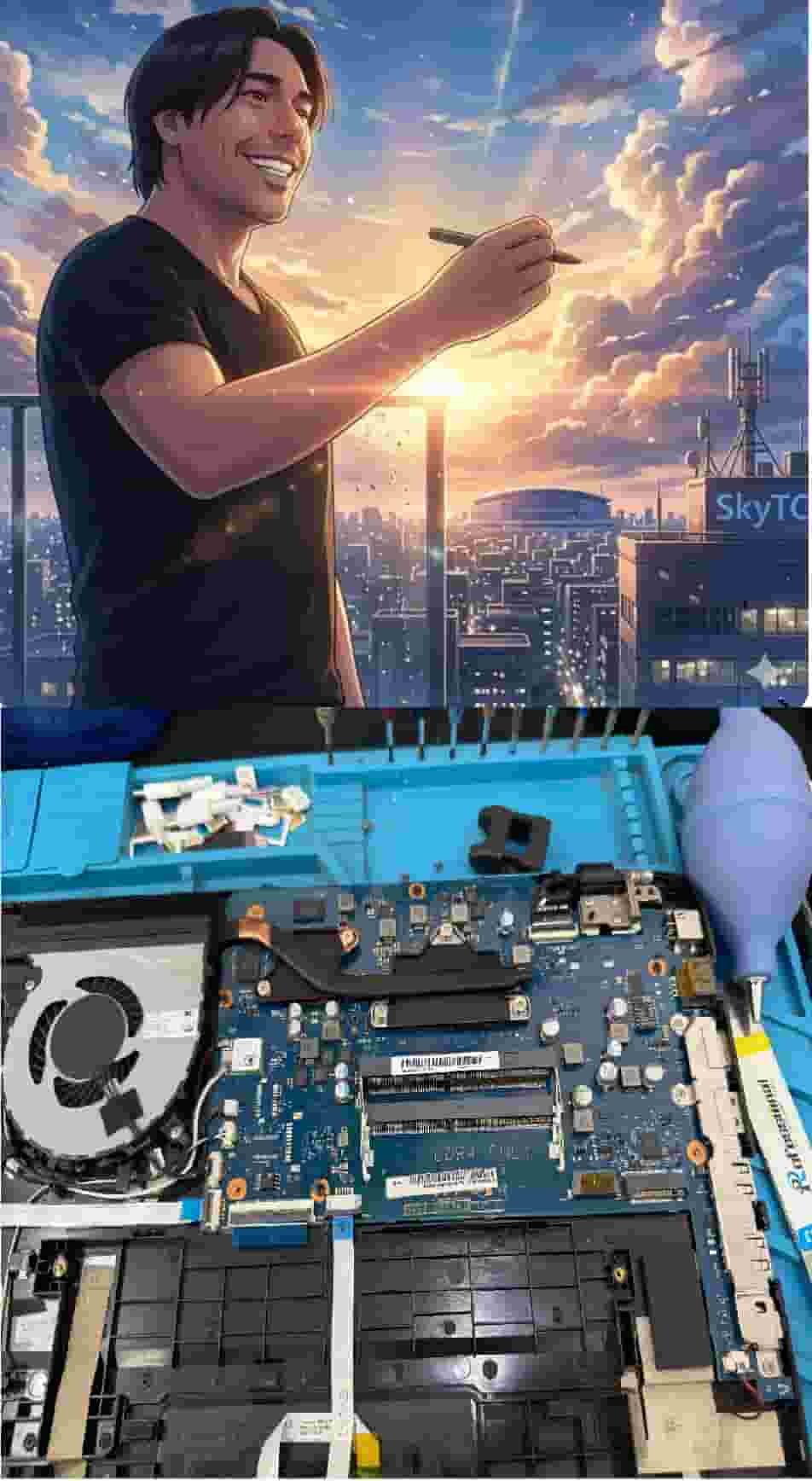
Technical Bio: Hardware & Laptops
“At SkyTC, technology is driven by engineering precision and real field experience. I am Valtersky, and I bring a unique background to the bench: from professional woodworking, the eye for structural integrity; from radiology, an absolute obsession with microscopic details.
As an ultra-endurance marathon runner, I don’t just browse store windows. I tear machines down, run intensive stress tests on thermal dissipation, and validate the actual build quality of every single component. My mission is to translate complex tech engineering and tech finances into smart decisions for your workflow.
Here, we speak straightforward, jargon-free English with the authority of someone who knows exactly what is inside the chassis.”
✨ Read also: Top Work Laptops With Biometric Fingerprint Scanners: Hardware Engineer’s Tear-Down Guide
A deeply technical piece of content that perfectly complements this post — absolutely worth the read.