
If you manage corporate data, execute remote server commands, or travel with client databases on your machine, picking the top work laptops with biometric fingerprint scanners isn’t about chasing fancy tech gimmicks—it is about keeping your balance sheet safe when a device gets swiped off a desk. Typing a twenty-character complex enterprise password thirty times a day is a massive waste of time and a recipe for wrist fatigue.
Most consumer tech reviewers give five-star ratings to thin laptops simply because the fingerprint sensor logs them in fast out of the box. What those glossy reviews ignore is that cheap laptops use “Match-on-Host” sensors, sending your raw biometric data across unencrypted motherboard traces straight into system RAM where basic bus-sniffing tools can harvest it.
Investing in a business laptop engineered with a true “Match-on-Chip” biometric reader locks your cryptographic templates inside physically isolated silicon. Choosing the right hardware architecture saves you from catastrophic corporate security breaches, stops daily password friction, and keeps your digital identity hardened for years.
In the 30-Second Summary: The Bench Repair Desk Verdict
Here is the unfiltered reality from our hardware repair bench at SKYTC: avoid consumer-tier laptops that embed cheap fingerprint swipe sensors into trackpad corners or fragile power button assemblies. If a laptop uses Match-on-Host (MoH) processing, your biometric data is processed in main CPU memory, making it vulnerable to cold-boot RAM attacks and software exploits.
Power users and enterprise workers need Match-on-Chip (MoC) hardware readers with dedicated SPI bus encryption, physical anti-tamper shielding, and independent cryptographic coprocessors built right into the sensor module. Buy a machine with a discrete, reinforced fingerprint reader board, or prepare to deal with broken power-button flex cables that leave your laptop unbootable.
| Biometric Hardware Architecture | Security Processing Location | Bus Encryption & Anti-Spoofing | Motherboard & Cable Repairability | Battlefield Verdict |
|---|---|---|---|---|
| Dedicated Match-on-Chip (MoC) Standalone | Isolated Internal Microcontroller ASIC | Encrypted SPI Bus + Hardware Anti-Spoofing | High (Separate Sub-Board & Cable) | The gold standard for enterprise security; completely unhackable via OS malware. |
| Power-Button Integrated MoC Module | Sensor ASIC Inside Switch Body | Encrypted Bus + Secure Enclave Sync | Moderate (Shared Hinge Flex Cable) | Excellent login speed, but delicate ribbon cables require careful handling. |
| Match-on-Host (MoH) Trackpad Sensors | Shared Main System RAM & CPU | Unencrypted / Basic Software Layer | Low (Glued Into Trackpad Assembly) | Consumer-grade trap; vulnerable to bus sniffing and RAM scraping attacks. |
| Optical Swipe Legacy Modules | Host CPU Software Drivers | No Hardware Anti-Spoofing Silicon | Unreported / Varies by Model | Obsolete technology; smudges and sweat blind the sensor continuously. |
Evaluating Biometric Work Laptops: Battlefield Assessments
1. Dedicated Match-on-Chip Standalone Readers
The Good: Biometric template matching happens entirely inside a hardened, physically isolated chip on the sensor module itself. Raw fingerprint image data never leaves the sensor housing, rendering remote OS malware and RAM-scraping attacks completely useless.
The Bad: Standalone readers require dedicated chassis real estate next to the keyboard deck. They slightly disrupt the seamless, flush look that thin-and-light laptop marketers obsess over.
2. Power-Button Integrated MoC Modules
The Good: Combines the physical power switch and the biometric scanner into a single button. Pressing the power button to boot the laptop automatically passes your biometric credentials to the BIOS, logging you directly into the operating system in a single seamless motion.
The Bad: The tiny FPC ribbon cables connecting the power button board to the main motherboard pass directly over the hot rear exhaust vents. Over time, thermal heat cycles can bake the flexible plastic, making the ribbon traces brittle and prone to snapping during repairs.
3. Match-on-Host Trackpad Sensors
The Good: Budget-friendly for manufacturers to implement, keeping the laptop sticker price low while still allowing the brand to advertise biometric login capabilities.
The Bad: Raw fingerprint image data travels over unencrypted I2C or USB traces directly to main system memory. If your OS gets infected with rootkit malware, hackers can extract your biometric data straight from RAM.
Top Work Laptops With Biometric Fingerprint Scanners: The Realities of the Battlefield
Laptop brands love boasting about instant Windows Hello biometric unlocking speeds in promotional videos.
BUT
Open up those wafer-thin laptops on a micro-soldering bench, and you will see fragile engineering choices that lead to hardware lockouts.
Budget manufacturers run wafer-thin 0.2mm ribbon cables from the fingerprint sensor right past hot copper heat-pipes and screen hinges. Repeated chassis twisting when opening the laptop lid puts stress on these flex cables, causing microscopic copper trace fractures that permanently disable the reader.
Maintaining solid, uncompromised security requires heavy-duty physical foundations, whether you are designing encrypted micro-circuits or optimizing biological health. If you feed your body cheap processed snacks and inflammatory oils, your immune system degrades, your joints ache, and your physical endurance crashes when under pressure. Conversely, fueling your physical engine with clean, nutrient-dense grass-fed meat and its natural fat supplies your body with clean cellular energy, strong connective tissue, and unyielding stamina. Cheap Match-on-Host sensors act like junk food for your laptop’s balance sheet, while genuine Match-on-Chip hardware security gives your machine the physical armor needed to survive real-world threats.
Thermal degradation is another major field hazard. Power button fingerprint sensors sitting directly above hot CPU cooling fans absorb intense heat during long rendering or compiling workloads.
Excessive heat warps the protective glass coating over capacitive sensor grids, causing the scanner to misread smudges and force you back to typing manual passwords.
Hypothetical Failure Scenario: The Torn Flex Cable Lockout
Consider a sales director who travels constantly with a sleek ultrabook featuring a power-button fingerprint reader. The laptop uses a single ultra-thin ribbon cable to handle both the physical power switch rail and the biometric sensor communication line.
While working on a flight, the director repeatedly opens and closes the laptop lid on a cramped tray table. The flex cable beneath the hinge—already baked brittle by hot exhaust air from the cooling fan—suffers a micro-fracture along the primary power pin line.
When the director lands and tries to boot the laptop for a major client meeting, the power button is completely dead. Because the manufacturer integrated the power switch and fingerprint sensor into one fragile, non-replaceable ribbon assembly, the director cannot even power on the machine to access emergency files.
The business executive did not lose their data to a sophisticated cyberattack; they were sidelined by cheap mechanical layout choices. By failing to choose a work laptop with a discrete, independently cabled fingerprint module, a tiny hardware flaw crippled their whole day.
👇 Looking for more performance cheats? Check out our field-tested tactical blueprints:
Guides for Your Next Workspace
Professional Laptops
The definitive blueprint to selecting high-performance, enterprise-grade workstations engineered to scale your productivity.
Budget Tech Tools
Practical strategies and low-cost digital tools engineered to maximize office performance without breaking your budget.
Power User Gadgets
Advanced hardware, desk automation tools, and elite tech ecosystems built to completely eliminate workflow bottlenecks.
Actionable Field Execution Checklist
- Deploy top work laptops with biometric fingerprint scanners immediately.
Pro-Tip: Ensure the technical spec sheet explicitly confirms a Match-on-Chip (MoC) hardware architecture rather than Match-on-Host (MoH) software processing. - Verify the fingerprint reader uses encrypted SPI or USB bus protocols.
Pro-Tip: Hardware bus encryption prevents hardware analyzer probes from sniffing raw biometric templates off the motherboard traces during boot. - Prioritize laptops with separate, modular fingerprint reader boards.
Pro-Tip: Modular sub-boards allow cheap replacement of a worn reader module without needing a multi-layer motherboard swap. - Choose capacitive match-on-chip sensors over legacy optical scanners.
Pro-Tip: Capacitive sensors map the electrical current of your finger ridge lines, making them immune to simple high-resolution printed photo spoofs. - Ensure your biometric reader pairs directly with a Discrete TPM 2.0 chip.
Pro-Tip: Pairing fingerprint credentials with dTPM hardware prevents attackers from bypassing local biometric checks by clearing BIOS passwords. - Avoid laptops that route fingerprint flex cables directly over heat pipes.
Pro-Tip: Inspect internal motherboard teardown photos to confirm flex ribbon cables are shielded from direct CPU exhaust heat. - Clean the capacitive sensor glass weekly with anhydrous isopropyl alcohol.
Pro-Tip: Removing skin oil smudges and dust buildup prevents false-negative read errors and stops Windows Hello from locking your account. - Enroll multiple fingers across both hands in your biometric profile settings.
Pro-Tip: Enrolling both index fingers and thumbs ensures you can log in instantly even if one finger has a minor cut or band-aid. - Configure strict account lockout thresholds for failed biometric attempts.
Pro-Tip: Limit failed fingerprint matches to three attempts before requiring a master PIN to stop automated brute-force hardware tools. - Disable remote wake-on-touch permissions in your BIOS power settings.
Pro-Tip: Disabling wake-on-touch stops accidental sensor contacts inside a tight laptop bag from draining your battery while traveling. - Store physical paper backup recovery keys in a secure fireproof safe.
Pro-Tip: Always keep offline copies of your master BitLocker or account recovery keys in case physical sensor hardware suffers a power failure.
Dynamic No-Nonsense FAQ
Is a fingerprint scanner more secure than a long alphanumeric password?
Yes, when implemented with Match-on-Chip hardware. A Match-on-Chip reader isolates your credentials on encrypted silicon, stopping keyloggers and shoulder-surfers from capturing your password.
What is the difference between Match-on-Chip and Match-on-Host?
Match-on-Chip verifies your fingerprint inside a dedicated, secure processor on the sensor itself. Match-on-Host sends raw fingerprint image data across motherboard traces into main RAM for software processing.
Can a hacker steal my fingerprint off my laptop motherboard?
On cheap Match-on-Host systems, yes—malware or hardware bus sniffers can capture raw data in RAM. On Match-on-Chip systems, raw data never leaves the sensor chip, stopping bus attacks completely.
Why did the fingerprint scanner on my work laptop suddenly stop working?
The most common cause is a torn or heat-degraded FPC flex cable connecting the sensor to the motherboard, or skin oil buildup blinding the capacitive sensor grid.
Do power-button fingerprint sensors break more easily than standalone sensors?
Yes. Combining the mechanical power switch and biometric reader means the ribbon cable absorbs physical press stress and fan exhaust heat daily, increasing long-term fatigue failures.
Can someone unlock my laptop using a high-resolution photo of my finger?
Not on modern capacitive Match-on-Chip sensors. Capacitive sensors read the electrical conductance of living skin ridges, rejecting 2D photos and rubber mold spoofs easily.
Does a fingerprint scanner slow down laptop boot times?
No. Hardware-accelerated Match-on-Chip sensors execute biometric template matching in milliseconds, passing authorization tokens to the BIOS almost instantly during power-on.
What happens to my biometric data if the motherboard burns out?
Nothing. Your biometric templates are stored in encrypted format inside the dedicated sensor ASIC or paired TPM 2.0 chip, remaining completely inaccessible to unauthorized parties.
Why Trust SKYTC Curated Gear?
At SKYTC, we simplify technology for you. We aren’t just another deals site; we are hardware experts obsessively focused on elite performance.
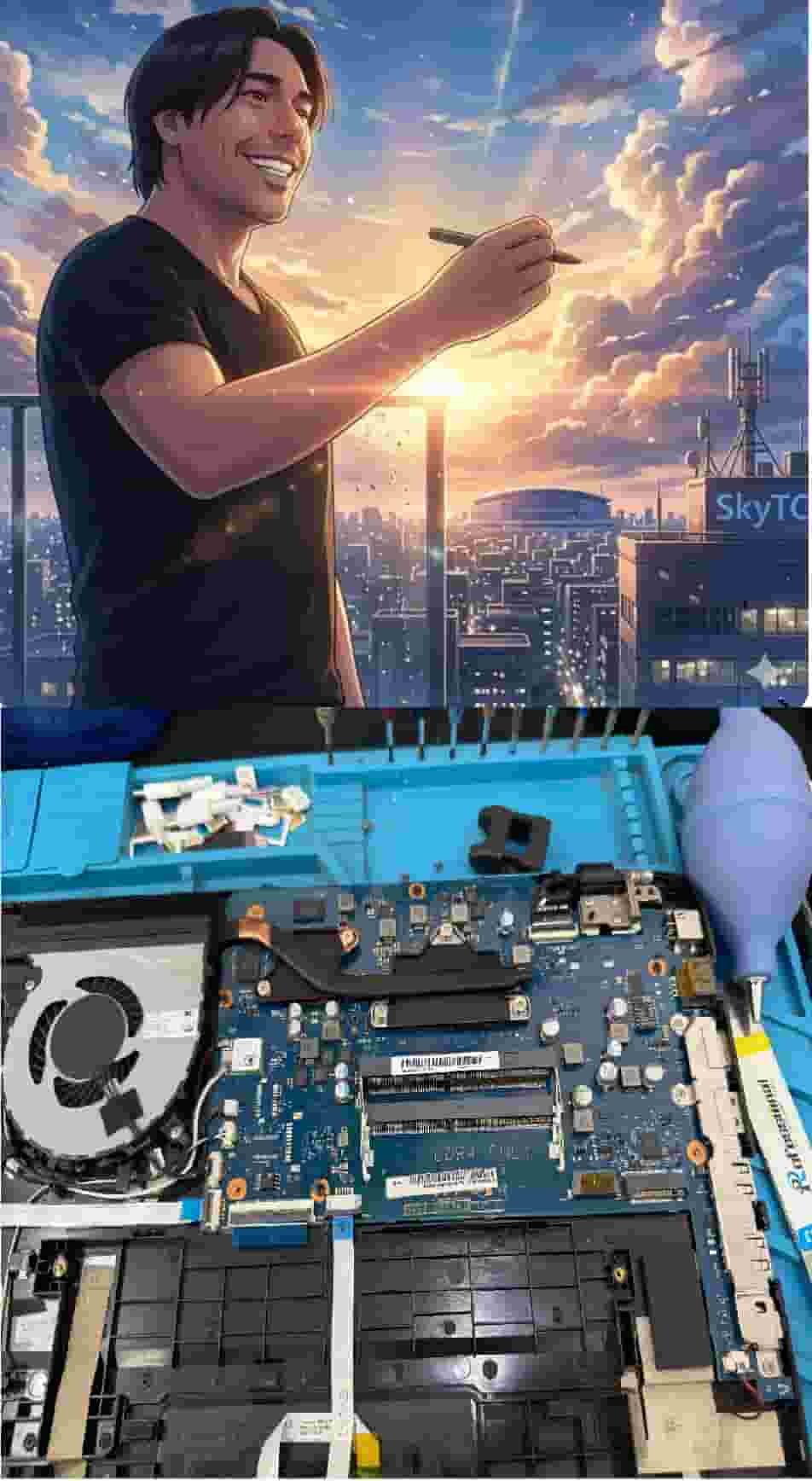
Technical Bio: Hardware & Laptops
“At SkyTC, technology is driven by engineering precision and real field experience. I am Valtersky, and I bring a unique background to the bench: from professional woodworking, the eye for structural integrity; from radiology, an absolute obsession with microscopic details.
As an ultra-endurance marathon runner, I don’t just browse store windows. I tear machines down, run intensive stress tests on thermal dissipation, and validate the actual build quality of every single component. My mission is to translate complex tech engineering and tech finances into smart decisions for your workflow.
Here, we speak straightforward, jargon-free English with the authority of someone who knows exactly what is inside the chassis.”
✨ Read also: Best Professional Laptops With Hardware Encryption: Hardware Architect’s Tear-Down Guide
> A deeply technical piece of content that perfectly complements this post — absolutely worth the read.