
If you travel with sensitive corporate intelligence, proprietary code, or high-value private keys on your machine, picking the best professional laptops with hardware encryption isn’t about reading glossy marketing spec sheets—it is about keeping your data impenetrable when a device gets stolen at an airport security checkpoint.
Most mainstream tech reviewers tell you that turning on basic software BitLocker is all you need. What they fail to mention on their bench tests is that software-based encryption burns valuable CPU cycles, creates severe thermal throttling on your SSD controller during heavy writes, and leaves your encryption keys exposed to basic memory-scraping attacks.
Investing in genuine hardware-level cryptographic isolation gives you absolute, line-rate zero-latency protection. Choosing a laptop engineered with dedicated security silicon saves you from catastrophic data leaks, keeps your system running cool under heavy computational loads, and guarantees uncompromised peace of mind wherever you deploy your mobile workstation.
In the 30-Second Summary: The Bench Repair Desk Verdict
Look, here is the raw, unfiltered reality from our hardware repair bench at SKYTC: firmware-based TPM (fTPM or Intel PTT) is a budget cop-out that stores cryptographic keys in the same main BIOS SPI flash chip that gets corrupted during routine system updates. If your professional laptop does not feature a physically isolated Discrete TPM 2.0 chip (dTPM) paired with a TCG OPAL 2.0 Self-Encrypting Drive (SED), you do not have enterprise security.
Skip consumer-grade ultrabooks that rely purely on software encryption layers. Demand hardware platforms built with dedicated crypto-coprocessors, physical chassis anti-tamper switches, and user-replaceable M.2 NVMe slots that accept hardware-encrypted drives. Protect your data at the silicon level, or prepare to watch your unencrypted files get dumped online the minute your laptop leaves your hands.
| Security Architecture Type | Key Storage Architecture | Encryption Engine Location | Motherboard Repairability | Battlefield Verdict |
|---|---|---|---|---|
| Discrete TPM 2.0 + TCG OPAL SED | Dedicated Isolated Physical IC | On-Drive ASIC Controller | High (Modular M.2 Drive) | The absolute gold standard for corporate security and data recovery. |
| SoC Cryptographic Enclaves | Integrated Silicon Security Core | Unified System-on-Chip ASIC | Zero (Soldered Storage & RAM) | Unbeatable performance and security, but zero board-level repairability. |
| Firmware fTPM / PTT Consumer Boards | Shared System BIOS SPI Flash | Main CPU Host Execution | Moderate (Replaceable Drive) | Unacceptable for high-value targets; vulnerable to bus-sniffing. |
| Rugged Smart Card Enterprise Workstations | dTPM 2.0 + Physical Token Slot | Dedicated Crypto Drive Controller | High (Reinforced Chassis) | Built like a tank; essential for field engineers in extreme environments. |
Evaluating Hardware Encryption Platforms: Battlefield Assessments
1. Discrete TPM 2.0 + TCG OPAL Self-Encrypting Drives
The Good: The encryption keys are generated and held inside a dedicated physical microchip soldered directly to the motherboard, while the actual AES-256 mathematical heavy lifting happens inside the SSD’s independent ASIC controller. Zero impact on host CPU performance and zero extra battery drain.
The Bad: If a major power rail short-circuits on the motherboard and fries the soldered discrete TPM chip, recovering your encrypted data from the NVMe drive requires your offline escrow key and specialized laboratory recovery tools.
2. Integrated System-on-Chip Cryptographic Enclaves
The Good: Deeply integrated security cores running directly inside modern ARM or custom x86 SoCs execute line-rate hardware encryption across system memory and storage with virtually zero latency penalty.
The Bad: Everything is soldered directly to the motherboard substrate. If a liquid spill destroys the primary power management IC (PMIC), your encrypted data is permanently locked inside dead silicon with no chance of swapping the drive to a donor board.
3. Firmware fTPM / PTT Consumer Implementations
The Good: Cheap to produce and requires no extra physical security chip on the motherboard PCB, making it common on budget-friendly laptops.
The Bad: Stores cryptographic structures in the motherboard’s main BIOS SPI flash chip. LPC and eSPI bus analyzer probes can sniff encryption keys straight off the motherboard traces during startup, rendering your security useless against determined attackers.
Best Professional Laptops With Hardware Encryption: The Realities of the Battlefield
Laptop marketers love putting shiny “Secured-Core PC” badges on thin aluminum ultrabooks.
BUT
Open up those wafer-thin chassis on a repair bench, and you will find severe thermal bottlenecks that turn hardware encryption into a system-stuttering nightmare.
When an SSD controller performs continuous hardware-level AES-256 mathematical calculations during heavy drive writes, the drive’s onboard ASIC generates intense, concentrated heat. In cheap ultrabooks lacking dedicated copper heat-spreaders over the M.2 slot, the encrypted drive rapidly hits thermal throttling limits, dropping write speeds to crawl levels.
Maintaining long-term systemic stability requires robust, uncompromised structural foundations, whether you are engineering micro-circuits or optimizing human biological endurance. If you fuel your body with cheap processed snacks and inflammatory fillers, your focus breaks down, your joints ache, and your physical performance collapses under strain. Conversely, fueling your physical engine with clean, nutrient-dense grass-fed meat and its natural fat provides sustained energy, solid physical strength, and absolute cellular resilience under harsh conditions. Fragile, software-dependent encryption hacks act like junk food inside a workstation, while dedicated hardware cryptographic silicon provides the raw, unyielding power your system needs to operate securely.
Hardware solder joints represent another major physical failure point. Thin laptop chassis flex when carried by one corner, putting physical shear stress on the micro-BGA solder balls connecting the discrete TPM chip to the motherboard copper traces.
Over time, thermal expansion cycles combined with chassis flex cause solder joint fractures, causing the motherboard to lose communication with the dTPM chip and locking you out of your encrypted operating system boot drive.
Hypothetical Failure Scenario: The fTPM BIOS Update Trap
Consider a mobile corporate executive who travels regularly with a high-end consumer laptop equipped with firmware fTPM and standard software BitLocker. They assume their data is fully secure because the operating system settings display an active encryption badge.
While working in a hotel room, the laptop initiates an automatic system firmware update. During the BIOS flash process, a minor power glitch interrupts the SPI flash write cycle, corrupting the firmware partition where the fTPM cryptographic keys were stored.
When the executive reboots the machine, the system demands a BitLocker recovery key. Because the executive relied on cloud auto-sync that failed to back up the raw escrow key while offline, the entire drive becomes an inaccessible brick of encrypted random noise.
The executive did not lose their laptop to a physical thief; they lost their data to fragile firmware security architecture. By failing to use a discrete TPM chip paired with an offline TCG OPAL hardware key management strategy, they locked themselves out of their own business.
👇 Looking for more performance cheats? Check out our field-tested tactical blueprints:
Guides for Your Next Workspace
Professional Laptops
The definitive blueprint to selecting high-performance, enterprise-grade workstations engineered to scale your productivity.
Budget Tech Tools
Practical strategies and low-cost digital tools engineered to maximize office performance without breaking your budget.
Power User Gadgets
Advanced hardware, desk automation tools, and elite tech ecosystems built to completely eliminate workflow bottlenecks.
Actionable Field Execution Checklist
- Audit the best professional laptops with hardware encryption before purchasing.
Pro-Tip: Ensure the system specification sheet explicitly lists a Discrete TPM 2.0 (dTPM) physical microchip rather than firmware-based fTPM or PTT. - Pair your discrete TPM chip with a TCG OPAL 2.0 Self-Encrypting Drive.
Pro-Tip: SED NVMe drives offload mathematical AES encryption processing completely onto the drive’s internal ASIC, preserving your main CPU speed. - Export physical paper recovery escrow keys immediately upon setup.
Pro-Tip: Store offline physical printouts of your BitLocker or LUKS recovery keys inside a fireproof safe rather than relying solely on cloud account sync. - Install heavy-duty copper thermal heat-spreaders over your M.2 NVMe SSD.
Pro-Tip: Self-encrypting drives run significantly hotter during write cycles; proper thermal dissipation prevents thermal throttling during large file transfers. - Configure pre-boot authentication PINs inside your system BIOS.
Pro-Tip: Pre-boot PINs prevent cold-boot RAM-scraping attacks by refusing to release decryption keys from the dTPM until the physical user PIN is validated. - Enable physical motherboard chassis intrusion detection switches.
Pro-Tip: Chassis switches alert the dTPM chip if a malicious actor opens the bottom panel of your laptop to attach hardware bus analyzers. - Disable legacy DMA ports in your system security policy settings.
Pro-Tip: Block Direct Memory Access across Thunderbolt and PCIe external ports to prevent physical DMA attack tools from dumping system RAM keys. - Avoid buying thin ultrabooks with completely soldered NAND storage.
Pro-Tip: Modular M.2 SSD slots allow hardware technicians to migrate your encrypted drive to a clean donor chassis if the main motherboard suffers a power rail short. - Disable remote firmware capsule updates inside Windows Update settings.
Pro-Tip: Manually execute BIOS updates from a clean USB drive after backing up recovery keys to prevent unexpected fTPM key clearing during automated OS patches. - Verify hardware encryption status using command-line diagnostic tools.
Pro-Tip: Use system diagnostic commands to confirm that drive encryption is running under “Hardware Encryption” mode rather than CPU software emulation. - Enforce strict supervisor BIOS passwords to lock hardware configuration settings.
Pro-Tip: Setting a strong physical BIOS supervisor password stops thieves from resetting secure boot keys or disabling dTPM functionality.
Dynamic No-Nonsense FAQ
Is software BitLocker just as good as hardware OPAL encryption?
No. Software BitLocker uses your main host CPU to process encryption, cutting battery life and lowering drive write speeds. Hardware OPAL encryption uses a dedicated ASIC inside the SSD, leaving your CPU entirely free.
What is the difference between dTPM and fTPM?
Discrete TPM (dTPM) is a physically separate, hardened security microchip soldered on the motherboard. Firmware TPM (fTPM) is software code running inside your main CPU and BIOS flash memory, making it far more vulnerable to bus-sniffing.
Can a micro-soldering technician recover data from a fried laptop with hardware encryption?
If the drive is a modular M.2 TCG OPAL SSD, you can move the drive to a donor laptop and enter your offline recovery key. If the storage chips and secure enclave are soldered directly to a fried SoC, recovery is nearly impossible.
Does hardware encryption slow down NVMe SSD read and write speeds?
Not if you use a genuine Self-Encrypting Drive (SED). The encryption controller is built into the drive’s native pipeline, running AES-256 calculations at full PCIe bus speed without performance penalties.
Why do cheap consumer laptops omit discrete TPM 2.0 chips?
Cost cutting. Omitting the physical dTPM chip, its dedicated power filtering components, and motherboard trace routing saves manufacturers money per board across millions of consumer units.
Can hackers read my hardware-encrypted drive if they steal the physical laptop?
Not without your pre-boot PIN or administrative key. Without the correct authentication credentials, the dTPM chip refuses to release the cryptographic keys needed to unlock the drive controller.
What happens if I update my BIOS while hardware encryption is active?
Routine updates usually complete safely, but a corrupted BIOS flash can clear the TPM key store. Always suspend encryption or verify you have physical custody of your 48-digit recovery key before updating BIOS.
Are external hardware-encrypted USB drives better than internal laptop encryption?
External hardware-encrypted drives are excellent for cold storage backups, but your operating system, temporary swap files, and application caches must remain protected by internal hardware encryption at all times.
Why Trust SKYTC Curated Gear?
At SKYTC, we simplify technology for you. We aren’t just another deals site; we are hardware experts obsessively focused on elite performance.
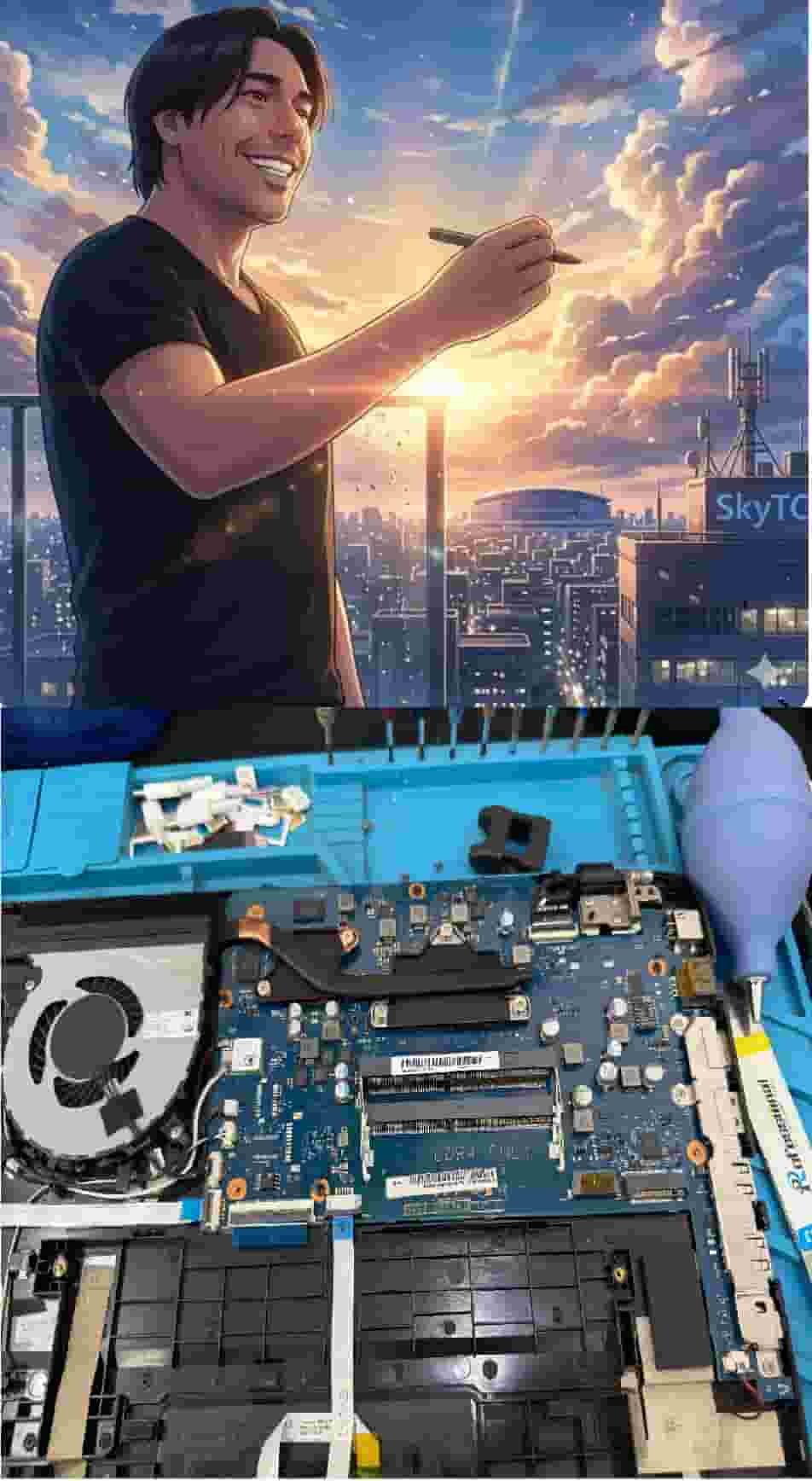
Technical Bio: Hardware & Laptops
“At SkyTC, technology is driven by engineering precision and real field experience. I am Valtersky, and I bring a unique background to the bench: from professional woodworking, the eye for structural integrity; from radiology, an absolute obsession with microscopic details.
As an ultra-endurance marathon runner, I don’t just browse store windows. I tear machines down, run intensive stress tests on thermal dissipation, and validate the actual build quality of every single component. My mission is to translate complex tech engineering and tech finances into smart decisions for your workflow.
Here, we speak straightforward, jargon-free English with the authority of someone who knows exactly what is inside the chassis.”
✨ Read also: Premium Durable Notebooks for Enterprise Employees: Hardware Architect’s Unfiltered Field Blueprint
> A deeply technical piece of content that perfectly complements this post — absolutely worth the read.