
Selecting the top high polling rate wireless mouses for day trading is the single most critical hardware decision an active scalper or momentum trader can make. When you are micro-scalping volatility spikes or executing multi-lot orders across volatile markets, a half-millisecond delay in click execution or cursor smoothing isn’t just annoying—it is a direct drain on your trading account. You spend endless hours analyzing order flow and depth of market charts, only to miss your fill because a low-grade wireless sensor dropped packets during a high-frequency execution window.
Most traders waste capital on generic office mice or heavy RGB gaming gimmicks that suffer from terrible sensor jitter, aggressive power-saving sleep modes, and fragile mechanical micro-switches prone to accidental double-clicking. When you are pulling ten-hour sessions at your desk, running on low-grade fuel and seed-oil heavy processed foods, mental brain fog combined with physical wrist fatigue makes every imprecise cursor movement infuriating. Real operational stamina comes from fueling your body with nutrient-dense animal fats like grass-fed ribeye and beef marrow, paired with ergonomic hardware designed for precision micro-adjustments.
By ditching bargain-bin peripherals and upgrading to a true high polling rate wireless setup built around optical micro-switches and high-speed Nordic MCUs, you completely eliminate cursor latency and click registration delays. You gain instant pixel-perfect execution, saving thousands in slippage over your trading career while protecting your wrists and tendon health from repetitive strain injuries.
Top High Polling Rate Wireless Mouses for Day Trading
Tech Support Counter Talk Verdict: Cut through the tech reviewer hype immediately. Bluetooth is garbage for active trading—it tops out at a miserable 125Hz polling rate and goes to sleep right when you need to execute a stop-loss. Standard 1000Hz wireless is fine for swing trading, but if you are scalping order books on high-refresh-rate monitors, you need true 2000Hz to 8000Hz polling via a dedicated 2.4GHz dongle. Look for optical micro-switches to eliminate double-click hardware failure, pure PTFE feet for zero glide resistance, and a chassis under 60 grams to save your wrist joints. Fix your peripheral stack today or keep eating slippage on every fast break.
The Hardware Physics of Polling Rates and Sensor Latency
To understand why a high polling rate matters for day trading, you have to look inside the mouse chassis. Standard office mice operate at a 125Hz polling rate, meaning the mouse reports its position to your operating system once every eight milliseconds. A modern high polling rate mouse running at 4000Hz or 8000Hz updates its sensor coordinates every 0.25 to 0.125 milliseconds. When paired with a high-refresh display, that difference translates directly into instantaneous, stutter-free cursor positioning across complex multi-monitor trading stations.
Inside high-tier wireless mice, a high-performance Microcontroller Unit (MCU)—typically engineered by Nordic Semiconductor—handles raw sensor data translation and 2.4GHz RF radio transmission. Bargain-bin wireless mice use underpowered MCUs that apply aggressive motion smoothing and artificial prediction to hide sensor flaws, introducing massive input lag that ruins click timing. As a veteran micro-soldering expert who opens up these boards daily, our support team constantly sees cheap MCUs overheat and drop wireless packets right under heavy multi-tasking workloads.
Equally critical are the micro-switches under the main left and right mouse buttons. Traditional mechanical switches rely on physical metallic leaf contacts that degrade over time due to electrical arcing and oxidation, leading to the dreaded “double-click failure.” True flagship setups use optical switches, where an infrared light beam is broken to register a click instantly without debounce delay, guaranteeing millions of crisp, fail-safe order executions.
Battlefield Assessment: Wireless Mouse Hardware Matrix
| Mouse Tier / Hardware Architecture | Polling Rate Capability | Click Execution Switch | Battery / RF Stability | Battlefield Grade |
|---|---|---|---|---|
| 8000Hz Esports Wireless Flagship | 8000Hz (0.125ms delay) | Optical Micro-Switches | High Drain / Ultra-Stable RF | Apex Tactical Tier |
| 4000Hz Ultralight Ergo Mouse | 4000Hz (0.25ms delay) | Optical / Dustproof Mechanical | Moderate Drain / Stable RF | High-Performance Standard |
| 1000Hz Productivity Ergonomic Mouse | 1000Hz (1.0ms delay) | Mechanical Micro-Switches | Long Battery / Multi-Device | Low-Grade Component |
| Generic Bluetooth Office Mouse | 125Hz (8.0ms delay) | Low-Tier Mechanical Leaf | Aggressive Sleep / Jittery RF | Bargain-Bin Trash |
| Heavy RGB Desktop Wireless Mouse | 1000Hz (varies by model) | Standard Mechanical | Heavy Weight Drag / Moderate RF | Gimmick Tier |
Battlefield Assessment: 8000Hz Esports Wireless Flagship
The Good: Delivers absolute zero-latency cursor tracking and instantaneous optical click responses for lightning-fast micro-scalping.
The Bad: Requires a premium tier investment and drains the internal battery rapidly, requiring daily USB-C recharge cycles.
Battlefield Assessment: 1000Hz Productivity Ergonomic Mouse
The Good: Exceptional battery life that lasts for months on a single charge with comfortable palm-support contours.
The Bad: Uses heavy mechanical switches prone to copper oxidation double-clicking, and carries excessive weight drag that tires your wrist over long trading sessions.
Battlefield Assessment: Generic Bluetooth Office Mouse
The Good: Extremely budget-friendly options that work without occupying a USB port on portable laptop setups.
The Bad: Suffers from horrific 125Hz latency, frequent radio frequency packet loss, and aggressive sleep timers that freeze your cursor right when market volatility spikes.
The Realities of the Battlefield
Peripheral manufacturers market their wireless mice with flashy RGB lighting effects, high DPI marketing numbers like 30,000 DPI, and claims of weeks-long battery life. They want you to believe that a high DPI number alone guarantees precision tracking on your trading desk.
BUT high DPI is a completely meaningless marketing specification if the mouse MCU suffers from high glass-tracking latency, poor sensor placement, or RF signal degradation. The real world is filled with wireless landmines: unshielded USB 3.0 ports on laptop docks emit 2.4GHz radio frequency noise that completely jams cheap wireless receivers, causing cursor stutter during fast market moves.
When you sit at your trading desk for eight straight hours, physical fatigue accumulates rapidly. If you fuel your body with processed snacks and seed-oil slop, your systemic inflammation rises, making stiff mechanical switches and heavy mouse shells feel like bricks on your desk. Switching to nutrient-dense animal fats like grass-fed steak and natural butter gives your nervous system raw energy, but you still need an ultralight mouse chassis under 60 grams to prevent carpal tunnel strain.
Hypothetical Failure Scenario: The Latency Slip on a Flash Crash
Consider the case of a day trader managing leverage on volatile momentum stocks. He runs a high-end multi-monitor setup powered by a flagship laptop, but buys a bargain-bin Bluetooth ergonomic mouse to save desktop space. He leaves the mouse on default settings, unaware that Bluetooth locks his reporting rate to a laggy 125Hz.
During a high-impact economic news release, market volatility explodes, and his target stock drops sharply. He grabs his mouse to click “Flatten Position” on his execution software. Because the mouse entered its low-power sleep state during ten minutes of inactivity, the first click fails to register entirely while the MCU wakes up.
Panicking, he clicks again, but unshielded USB 3.0 interference from his nearby laptop dock causes the cursor to stutter across the screen, missing the buy/sell button by twenty pixels. By the time he manually realigns the cursor and lands a registered click, slippage has wiped out two weeks of trading profits. The root cause wasn’t the broker or the market—it was a low-grade wireless peripheral incapable of handling real-time execution demands.
Selecting High Polling Rate Wireless Mouses for Day Trading
When auditing peripherals for your trading station, ignore gimmicky software bundles and focus strictly on core hardware engineering. First, inspect the sensor module—flagship sensors like the PixArt 3395 or custom optical variants deliver true 1:1 raw tracking without artificial smoothing or acceleration up to high velocity speeds.
Second, demand a dedicated 2.4GHz wireless receiver with an extension dongle. Never plug a high polling rate receiver directly into the back of a busy computer chassis surrounded by metal shielding and noisy motherboard components. Place the wireless receiver within ten inches of your mousepad using an extension cable to ensure a clean line-of-sight RF link that eliminates packet dropouts.
Third, look for pure virgin-grade PTFE (Teflon) feet or polished glass skates on the bottom of the chassis. Low-friction mouse feet drastically reduce initial static friction, allowing you to make micro-pixel cursor corrections to hit exact price lines on your charting software without straining your wrist muscles.
👇 Looking for more performance cheats? Check out our field-tested tactical blueprints:
Guides for Your Next Workspace
Professional Laptops
The definitive blueprint to selecting high-performance, enterprise-grade workstations engineered to scale your productivity.
Budget Tech Tools
Practical strategies and low-cost digital tools engineered to maximize office performance without breaking your budget.
Power User Gadgets
Advanced hardware, desk automation tools, and elite tech ecosystems built to completely eliminate workflow bottlenecks.
Practical Execution Checklist
Deploy top high polling rate wireless mouses for day trading immediately.
Expert Tip: Switch from 125Hz Bluetooth to a dedicated 2.4GHz 2000Hz or 4000Hz receiver to drop execution latency under half a millisecond.
Select optical micro-switches over traditional mechanical copper contacts.
Expert Tip: Optical switches eliminate debounce delays and completely prevent oxidation-induced double-clicking failures over millions of clicks.
Position the 2.4GHz wireless dongle within close range of your mousepad.
Expert Tip: Use an extension cable to elevate the receiver away from USB 3.0 ports that emit heavy 2.4GHz radio frequency interference.
Target an ultra-lightweight chassis weight under sixty grams total.
Expert Tip: Reducing physical weight drag decreases repetitive wrist friction, protecting your median nerve during long trading sessions.
Verify your monitor refresh rate matches your high polling rate output.
Expert Tip: Running an 8000Hz mouse on a laggy 60Hz display is useless; pair high polling rates with 144Hz or higher displays for fluid motion.
Disable all artificial sensor smoothing and motion prediction settings.
Expert Tip: Angle snapping and sensor prediction distort natural hand movement, causing cursor overshooting when targeting precise price levels.
Replace factory stock plastic feet with 100% virgin-grade PTFE skates.
Expert Tip: High-purity PTFE skates lower static starting friction, allowing effortless micro-adjustments on high-density charting grids.
Turn off all RGB lighting features inside mouse configuration software.
Expert Tip: Disabling useless decorative LEDs doubles your battery life and prevents thermal build-up inside the lightweight plastic shell.
Pair high polling rate peripherals with high-bandwidth USB motherboard ports.
Expert Tip: Plug high-rate receivers directly into dedicated CPU-connected USB root ports rather than unpowered, cheap external hubs.
Establish a dedicated wired charging routine during market off-hours.
Expert Tip: Never let your wireless mouse battery dip below twenty percent, as low-voltage states can trigger aggressive power-saving latency spikes.
Fuel your physical body with nutrient-dense saturated animal fats daily.
Expert Tip: Eating grass-fed steak and natural marrow provides steady bio-available energy, keeping your hand steadier than caffeine-fueled jitter.
Dynamic No-Nonsense FAQ
Is an 8000Hz polling rate really necessary for trading, or is 1000Hz enough?
For standard swing trading, 1000Hz is plenty. But if you micro-scalp order books on 240Hz monitors, 4000Hz or 8000Hz provides noticeably smoother cursor movement and lower input lag. Just ensure your CPU has available clock cycles, as 8000Hz polling puts a real load on your processor.
Why should I avoid Bluetooth for day trading mouses?
Bluetooth is designed for battery saving, not performance. It caps out at a sluggish 125Hz polling rate, suffers from frequent radio interference, and goes into sleep mode after brief pauses. Using Bluetooth for active order execution is an invitation to slippage.
Will a high polling rate wireless mouse drain battery faster?
Yes. Cranking a mouse from 1000Hz to 4000Hz or 8000Hz increases MCU power draw significantly, reducing battery life from weeks down to a few days. Turn off RGB lights and dock the mouse on a USB-C cable overnight to keep your battery topped off.
What is the difference between optical switches and mechanical switches?
Mechanical switches use physical metal leaves that touch to register a click, which wear down and eventually double-click accidentally. Optical switches use an infrared light beam that triggers when pressed, offering faster registration and zero risk of metallic wear and double-clicking.
Can USB 3.0 ports really interfere with my high polling rate wireless signal?
Yes. USB 3.0 ports, unshielded docks, and external hard drives emit radio frequency noise in the 2.4GHz band. If your wireless receiver is plugged right next to a busy USB 3.0 port, your mouse will drop packets and stutter. Always use an extension cable to move the dongle closer to your mousepad.
Why does mouse weight matter if I am not a competitive gamer?
Because moving a 110-gram mouse for eight hours a day causes micro-trauma to your wrist tendons and forearms. An ultralight mouse under 60 grams requires minimal force to slide and stop, dramatically reducing wrist fatigue and carpal tunnel risk during long trading sessions.
Do glass mouse feet work better than PTFE feet for day trading?
Glass feet offer extremely low kinetic friction for fast sweeps, but pure PTFE feet provide better stopping power and micro-control. For precise chart work and hitting small UI buttons, high-quality PTFE feet are generally superior because they give you better control when stopping your cursor.
Are expensive heavy productivity mice with infinite scroll wheels good for trading?
No. Most productivity mice are heavy, use low polling rates, and rely on mechanical switches that fail over time. Their infinite scroll wheels are nice for reading long PDFs, but their heavy weight drag and high click latency make them poor tools for fast order execution.
Why Trust SKYTC Curated Gear?
At SKYTC, we simplify technology for you. We aren’t just another deals site; we are hardware experts obsessively focused on elite performance.
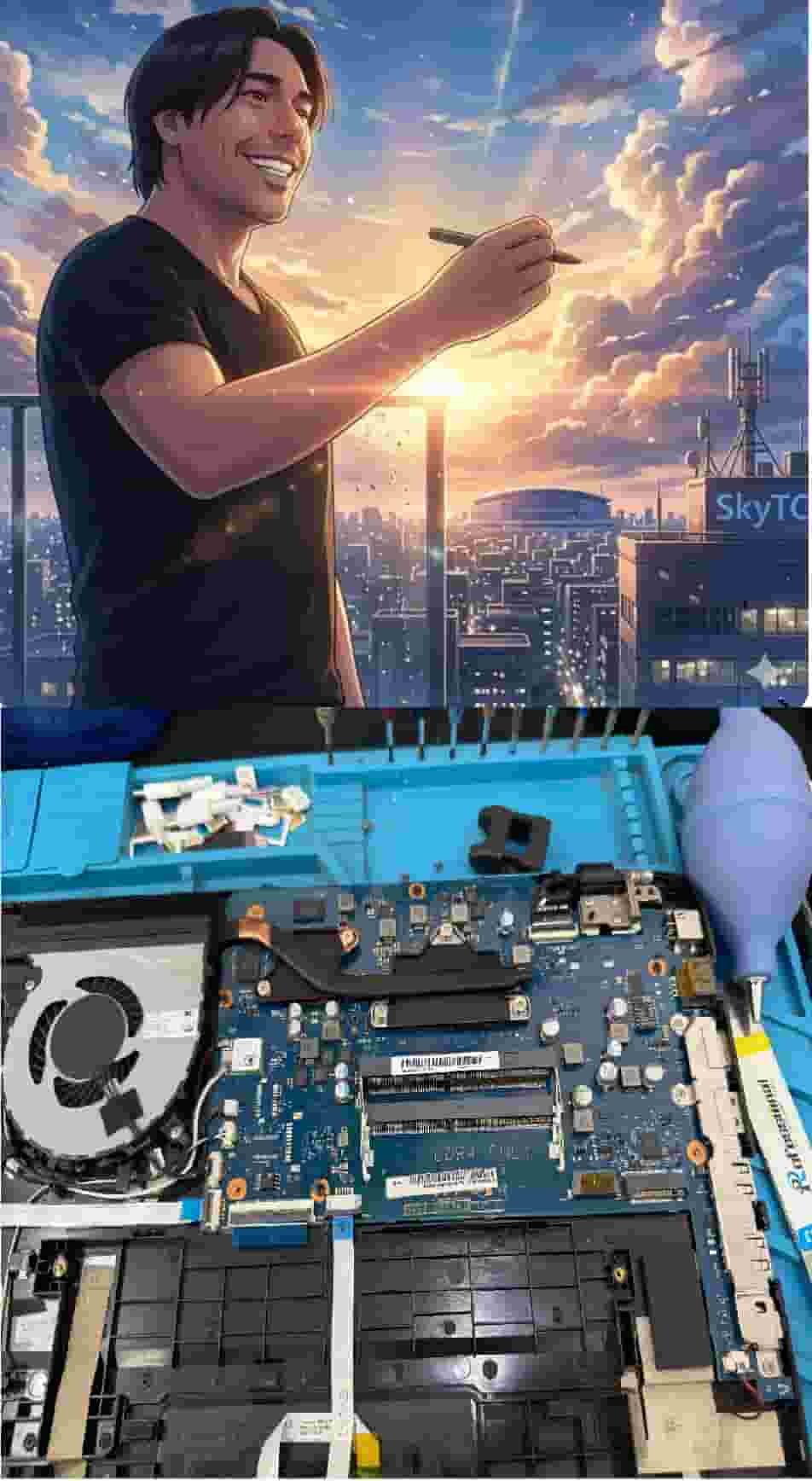
Technical Bio: Hardware & Laptops
“At SkyTC, technology is driven by engineering precision and real field experience. I am Valtersky, and I bring a unique background to the bench: from professional woodworking, the eye for structural integrity; from radiology, an absolute obsession with microscopic details.
As an ultra-endurance marathon runner, I don’t just browse store windows. I tear machines down, run intensive stress tests on thermal dissipation, and validate the actual build quality of every single component. My mission is to translate complex tech engineering and tech finances into smart decisions for your workflow.
Here, we speak straightforward, jargon-free English with the authority of someone who knows exactly what is inside the chassis.”
✨ Read also: Top Cheap Noise Cancelling Headphones for Remote Work
> A deeply technical piece of content that perfectly complements this post — absolutely worth the read.