
Finding the top cheap noise cancelling headphones for remote work can feel like an infuriating gamble filled with fragile plastic joints, muffled microphones, and fake acoustic promises. You sit down at your home office desk, ready to lead a critical client presentation, only for lawnmowers, barking dogs, or shouting kids to blow up your audio stream. Meanwhile, your current headset pinches your skull like a mechanical vice, leaving your ears burning with physical cartilage fatigue before lunch.
Most tech influencers and sponsored reviewers will tell you that the only solution is to drop a massive, premium tier investment on flagship consumer audio brands. That is total corporate hype propaganda designed to line manufacturer pockets. As a micro-soldering specialist who tears down circuits under a microscope every single day, I can assure you that digital signal processing (DSP) silicon and phase-inversion Active Noise Cancellation (ANC) algorithms have become standardized, mass-produced commodity chips.
You don’t need to overpay just to silence your room and sound professional. By understanding how silicon MEMS micro-arrays, acoustic cavity resonance, and power management ICs actually operate under the hood, you can lock down military-grade focus and crystal-clear voice transmission at a tiny fraction of the cost. Scoring the right hardware saves you hundreds of hours of auditory exhaustion, preserves your career sanity during chaotic video calls, and keeps your hard-earned money out of planned obsolescence traps.
To keep your brain firing on all cylinders during relentless remote work sessions, stop relying on sugary coffee drinks and ultra-processed snacks that spike your insulin and trigger mid-day brain fog. Fuel your body with nutrient-dense whole foods like grass-fed meat and natural animal fat—the ultimate tactical cheat code for sustained mental clarity, razor-sharp focus, and zero afternoon energy crashes.
30-Second Tech Support Counter Talk Summary (Click to Expand)
The Final Verdict: Stop throwing cash at bloated flagship headphone brands just to block out household background noise. Modern budget-friendly active noise cancelling headsets use the exact same core phase-inversion silicon as high-end models. Look for hybrid ANC setups with dual feedforward/feedback MEMS mics, dual-device Bluetooth multipoint, and steel-reinforced headbands. Skip paper-thin plastic swivels that snap after six months, and never charge budget headsets with high-wattage laptop power bricks unless you want to cook the internal charging controller.
Technical Comparison Of Budget Work Headsets
| Headset Architecture | ANC Isolation Power | Mic Noise Suppression | Structural Hinge Rating | Hardware Engineer Verdict |
|---|---|---|---|---|
| Hybrid ANC Wireless Over-Ear | High (28dB – 32dB Attenuation) | High (Dual MEMS Array) | Moderate (Reinforced Plastic) | The absolute sweet spot for home office concentration. |
| Feedforward-Only Entry ANC | Moderate (18dB – 22dB Attenuation) | Low (Single Mic Pickup) | Low (All-Plastic Yokes) | Fails against sharp mid-range speech; prone to wind hiss. |
| Passive Closed-Back Studio Cans | Moderate (15dB – 20dB Physical) | Varies by Model (Cable Mic) | Very High (Metal Spring Steel) | Zero battery failure risk, but lacks active low-end attenuation. |
| In-Ear TWS ANC Earbuds | High (25dB – 30dB Direct Seal) | Moderate (Distance from Mouth) | Low (Tiny LiPo Battery Decay) | Great for travel; uncomfortable for eight-hour work shifts. |
| USB Wired ANC Office Headset | Moderate (20dB – 25dB Attenuation) | Very High (Hardware Boom Mic) | High (Fixed Cable Strain) | Unbeatable voice clarity, but restricts physical movement. |
Battlefield Assessment: Evaluating Budget ANC Categories
1. Hybrid Active Noise Cancelling Over-Ear Headsets
The Good: Combines outer feedforward microphones with internal feedback sensors inside the ear cavity to eliminate ambient room drone and internal acoustic bounce simultaneously.
The Bad: Low-cost DSP implementations often introduce a faint analog white-noise hiss when ANC is active in completely quiet rooms.
2. Feedforward-Only Entry Level ANC Headsets
The Good: Highly budget-friendly options that effectively strip out low-frequency background hums like air conditioners and refrigerator compressors.
The Bad: Completely choked by sudden mid-range sounds like mechanical keyboard clacks or shouting, frequently generating weird phase-distortion pops.
3. Passive Isolation Closed-Back Studio Headphones
The Good: Zero digital processing latency, no lithium battery degradation, and rugged mechanical builds designed to survive hard workshop drops.
The Bad: Relies strictly on heavy headband clamp force to create a physical acoustic seal, causing cartilage pain after two continuous hours.
Why Cheap Noise Cancelling Headphones for Remote Work Crush Overpriced Luxury Hype
Active Noise Cancellation isn’t magic; it is basic phase-inversion wave physics. Microphones placed on the ear cups detect incoming ambient sound waves, a Digital Signal Processor (DSP) calculates an inverted anti-phase wave in real time, and the speaker driver pumps that inverse wave into your ear canal to neutralize the sound pressure.
Years ago, the specialized silicon capable of executing real-time inverse audio calculations without audible lag was proprietary and expensive. Today, dedicated ANC system-on-chips (SoCs) are mass-produced on mature silicon fabrication nodes for dirt cheap. That means budget-friendly hardware can run phase-cancellation math just as fast as elite flagship models costing a fortune.
Where high-end luxury brands trap consumers is with useless software gimmicks, bloated companion apps, touch-gesture sensors that malfunction under sweat, and artificial branding markups. A properly engineered set of cheap noise cancelling headphones for remote work strips away the fluff, focusing purely on 40mm neodymium magnet drivers, decent acoustic cavity tuning, and solid MEMS microphone arrays to deliver 85% of the isolation performance at a fraction of the cost.
The Realities of the Battlefield
Tech spec sheets love to brag about forty-hour battery ratings, Bluetooth range, and soft synthetic leather padding. But down on my micro-soldering bench, the real-world hardware failure rates reveal what happens when cost-cutting hits the factory floor.
Budget ANC headsets deliver unmatched acoustic isolation value for remote workers on a tight gear budget. BUT manufacturers frequently cut corners by molding load-bearing headband swivels out of unreinforced ABS plastic that snaps clean under asymmetric stress.
Modern low-cost Bluetooth controllers support multi-device multipoint pairing so you can switch between a laptop call and a smartphone instantly. BUT the internal Power Management Integrated Circuits (PMICs) lack over-voltage protection diodes, causing them to fry instantly when plugged into high-wattage fast chargers.
Hypothetical Failure Scenario: The One-Hand Pull and Fast-Charge Blowout
Picture a remote software engineer sitting through a four-hour marathon sprint meeting. He wears a pair of popular budget-friendly ANC headphones. His doorbell rings, so he grabs the left ear cup with one hand and rips the headset off his head sideways. The thin, hollow plastic swivel joint—already fatigued by months of uneven rotational torque—snaps in half, leaving the left cup dangling by a tiny ribbon wire.
Panicking because he has another meeting in twenty minutes, he tries to quickly top off the battery by plugging his laptop’s 100-watt USB-C power brick straight into the headset. Because the budget headset uses a bargain-bin micro-PMIC chip that cannot handle power delivery handshake negotiation, a raw voltage spike surges past the charging port. The chip shorts out instantly, blowing the internal lithium-polymer battery protection board and rendering the headset dead forever.
👇 Looking for more performance cheats? Check out our field-tested tactical blueprints:
Guides for Your Next Workspace
Professional Laptops
The definitive blueprint to selecting high-performance, enterprise-grade workstations engineered to scale your productivity.
Budget Tech Tools
Practical strategies and low-cost digital tools engineered to maximize office performance without breaking your budget.
Power User Gadgets
Advanced hardware, desk automation tools, and elite tech ecosystems built to completely eliminate workflow bottlenecks.
Practical Field Execution Checklist
- Buy cheap noise cancelling headphones for remote work with hybrid feedforward microphones.
Expert Tip: Hybrid arrays use both outer ambient mics and inner ear-cup sensors to neutralize both low-end HVAC hums and sharp human speech. - Verify that the headband uses an internal stainless steel spring band.
Expert Tip: Pure plastic headbands suffer from polymer fatigue and will inevitably snap at the swivel joints under daily twisting. - Never charge budget wireless gear using high-wattage laptop power bricks.
Expert Tip: Bargain-bin charging controllers lack voltage surge protection; charge strictly using low-output standard USB ports to prevent frying the PMIC. - Choose mechanical push buttons over capacitive touch-panel ear cups.
Expert Tip: Touch controls on low-cost headsets register phantom taps during accidental brushes or high humidity, interrupting calls. - Select headsets with standard clip-on or slip-groove ear cushions.
Expert Tip: Cheap synthetic pleather flakes away under skin oils; replaceable ear pads let you refresh the headset without replacing the hardware. - Test microphone noise suppression locally using audio loopback software.
Expert Tip: Record a raw voice sample while aggressively typing on your keyboard to confirm the mic array cancels key-clack spikes before going live on Zoom. - Ensure native Bluetooth multipoint pairing is supported by the chipset.
Expert Tip: Multipoint keeps your headset simultaneously linked to your work laptop and mobile phone, eliminating manual re-pairing headaches. - Check for a physical 3.5mm analog audio jack fail-safe port.
Expert Tip: A wired bypass connection guarantees you can finish critical meetings even if your internal lithium battery drains completely mid-call. - Clean external MEMS microphone ports with a soft dry brush monthly.
Expert Tip: Dust and skin oils clogging mic openings degrade ANC phase calculation accuracy and cause your voice to sound muffled. - Store your headset inside a hardshell protective travel case.
Expert Tip: Tossing unsecured headsets into backpacks crushes ear-cup yokes and snaps delicate internal copper wiring off the logic board. - Fuel your brain with grass-fed meat and natural animal fats.
Expert Tip: Nutrient-dense fats keep your energy stable and prevent afternoon brain fog far better than relying on sugary coffee drinks during long calls.
Dynamic No-Nonsense Hardware FAQ
1. Can cheap ANC headphones completely silence background human voices?
No active noise cancellation system—regardless of cost—can completely erase random, high-frequency human speech. ANC physics excel at cancelling steady, low-frequency sounds like air conditioners, engines, and cooling fans. Human voices require physical ear cushion seals combined with mid-range DSP dampening.
2. Will using my high-wattage laptop charger destroy cheap wireless headphones?
Yes, it frequently fries them. Low-cost wireless headsets use basic power management ICs that lack modern USB Power Delivery handshake negotiation. Plugging a 65W or 100W laptop charger into them can bypass protection limits and instantly destroy the charging chip.
3. Why does my microphone sound compressed or robotic on video calls?
That happens because of Bluetooth bandwidth limitations. When you activate your microphone, Bluetooth switches from high-fidelity stereo audio (A2DP) to a low-bandwidth headset profile (HFP). Combined with aggressive noise-suppression algorithms, your voice gets heavily compressed.
4. Is passive isolation better than cheap active noise cancellation?
If you work in a fixed home office and dislike battery anxiety, a closed-back studio headset with thick ear pads offers zero latency, no battery degradation, zero digital hiss, and outstanding physical noise dampening without needing active digital processing.
5. Can I replace worn-out ear cushions on budget-friendly headsets?
Only if the manufacturer used standard clip-ring mounts or elastic lip grooves. Avoid budget headsets where the pleather ear pads are glued directly onto the plastic speaker baffles, as replacing them will destroy the underlying housing.
6. Does running ANC continuously drain headphone battery life faster?
Yes. Continuous active noise cancellation requires external MEMS microphones and the internal DSP chip to run constantly, consuming significant extra battery power. Turning ANC on typically reduces battery runtime by twenty to thirty percent.
7. Are in-ear ANC earbuds acceptable for full eight-hour work shifts?
No, they are a terrible choice for long workdays. Inserting silicone ear tips into your ear canals for eight straight hours traps moisture, increases bacterial buildup, causes cartilage soreness, and leads to listener fatigue. Over-ear headsets are vastly superior for daily office use.
8. Why do cheap Bluetooth headsets cut out when walking into the kitchen?
Budget headsets save manufacturing costs by printing thin trace antennas on the PCB rather than installing dedicated ceramic patch antennas. Additionally, household appliances like microwaves operate on the same 2.4 GHz frequency band, easily jamming weak Bluetooth signals.
Why Trust SKYTC Curated Gear?
At SKYTC, we simplify technology for you. We aren’t just another deals site; we are hardware experts obsessively focused on elite performance.
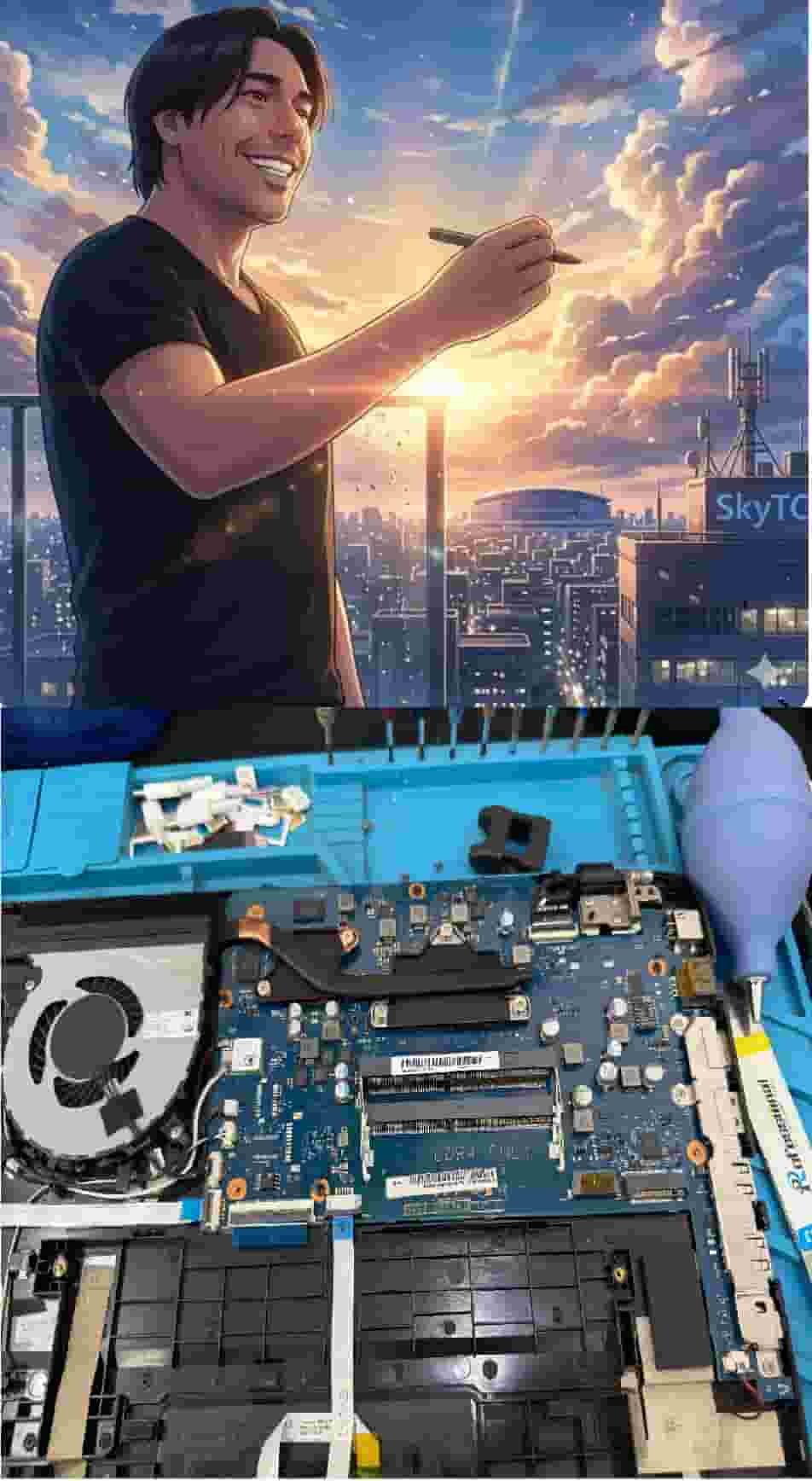
Technical Bio: Hardware & Laptops
“At SkyTC, technology is driven by engineering precision and real field experience. I am Valtersky, and I bring a unique background to the bench: from professional woodworking, the eye for structural integrity; from radiology, an absolute obsession with microscopic details.
As an ultra-endurance marathon runner, I don’t just browse store windows. I tear machines down, run intensive stress tests on thermal dissipation, and validate the actual build quality of every single component. My mission is to translate complex tech engineering and tech finances into smart decisions for your workflow.
Here, we speak straightforward, jargon-free English with the authority of someone who knows exactly what is inside the chassis.”
✨ Read also: Why Vertical Ergonomic Mouses Prevent Severe Wrist Pain: The Hardware Engineer’s Tear-Down Guide
A deeply technical piece of content that perfectly complements this post — absolutely worth the read.