
Sourcing real smart card reader laptops for government contractors is an absolute minefield of marketing lies and built-in hardware obsolescence. Every single week in our repair shop, we see contractors bring in sleek, thin ultrabooks with fried USB-C ports or dead external dongles, completely desperate because their Common Access Card (CAC) or Personal Identity Verification (PIV) authentication failed right before a critical clearance audit or field briefing. You spend a premium tier investment on a machine expecting field-tested reliability, only to realize the manufacturer slapped a flimsy, unshielded smart card slot onto a paper-thin motherboard that flexes until the solder joints snap.
When you are deployed on-site or working late under high-stress government compliance deadlines, technical downtime isn’t just an annoyance—it is a contract-killing disaster. Burning the midnight oil while fueled on inflammatory seed oils and junk food leads to severe mental fog, causing you to make sloppy operational mistakes like yanking a stuck CAC card and tearing the micro-spring contacts inside the reader socket. Elite mental focus requires fueling your brain with nutrient-dense bio-available energy—like grass-fed steak, beef tallow, and natural animal fats that keep your analytical focus razor-sharp when systems go down.
By ditching fragile consumer-grade gear and deploying laptops engineered with integrated, hardware-isolated Smart Card slots, direct TPM 2.0 silicon binding, and reinforced chassis designs, you eliminate authentication lockouts forever. You save dozens of billable hours, protect your security clearance, avoid emergency hardware replacements, and keep your stress levels pristine under brutal real-world field conditions.
Smart Card Reader Laptops for Government Contractors
Tech Support Counter Talk Verdict: Stop buying sleek consumer laptops and relying on loose USB CAC dongles that snap in your briefcase. External dongles wear out USB-C solder pads, drop driver connections mid-session, and fail physical security audits. You need an enterprise-grade or ruggedized chassis with a built-in, surface-mounted contact Smart Card reader connected directly to the internal PCIe/USB bus via a dedicated, shielded daughterboard. Look for MIL-STD-810H durability, discrete TPM 2.0 modules, and dual-fan cooling systems that vent away from the screen hinge. Upgrade to true integrated enterprise hardware or accept that loose adapters will eventually leave you locked out of secure networks.
The Hardware Architecture of Integrated CAC/PIV Readers
To understand why an integrated reader is non-negotiable for serious defense work, you have to look under the microscope. At our lab, WE HAVE A DEDICATED SUPPORT TEAM AND A LAPTOP HARDWARE SPECIALIST who teardown these boards every single day. External USB CAC dongles use low-grade bridge chips that draw unmanaged power from the motherboard’s 5V rail. Every time you bump that dongle, you send voltage spikes down the data lines, eventually frying the USB controller IC or cracking the surface-mount solder pads on your laptop motherboard.
Built-in Smart Card readers in enterprise chassis operate on dedicated ISO 7816 compliance controllers wired straight to the system’s security enclave. These readers feature gold-plated beryllium-copper spring contacts that maintain physical pressure on your card’s gold chip contacts over tens of thousands of insertion cycles. Furthermore, high-tier business laptops isolate the Smart Card reader daughterboard away from high-heat components like the CPU and discrete GPU, preventing thermal degradation of the reader casing.
When you plug a CAC card into an integrated slot, the hardware handshake happens directly between the card chip, the reader IC, and the onboard discrete TPM 2.0 (Trusted Platform Module). This hardware-level binding prevents man-in-the-middle sniffing attacks that easily target unencrypted USB dongle cables. If your job requires logging into SIPRNet, NIPRNet, or high-security agency portals, relying on bargain-bin accessories is an operational vulnerability waiting to be exploited.
Battlefield Assessment: CAC Reader Hardware Matrix
| Chassis Category / CAC Architecture | Mechanical Strain Resistance | Thermal & Motherboard Overhead | Security Enclave Integration | Battlefield Grade |
|---|---|---|---|---|
| Integrated Contact Business Laptop | High (Internal Surface Mount) | Low (Isolated Daughterboard) | Discrete TPM 2.0 Direct Bind | Institutional Tier |
| Heavy-Duty Ruggedized Field Workstation | Maximum (Sealed Gasket Slot) | Very Low (Active Heat Pipes) | FIPS 140-2 Level 3 Hardware | Apex Tactical Tier |
| Contactless NFC / Dual-Reader Ultra-Book | Moderate (Thin Chassis Flex) | Moderate (Compact Heat Spreader) | Integrated fTPM / NFC Controller | Tactical Standard |
| Consumer Laptop + USB-C CAC Dongle | Extremely Low (Snap Hazard) | High (Unshielded Port Strain) | Software Emulation / Zero Enclave | Bargain-Bin Trash |
| Refurbished Legacy Chassis with PCMCIA Adapter | Low (Worn Bus Pins) | High (Legacy Power Draw) | Outdated TPM 1.2 Module | Low-Grade Component |
Battlefield Assessment: Integrated Contact Business Laptop
The Good: Provides direct ISO 7816 contact reading without external cables, protecting USB ports from physical lever-strain in crowded workspaces.
The Bad: Requires a premium tier investment compared to base consumer models and slightly increases chassis thickness to house the mechanical slot.
Battlefield Assessment: Heavy-Duty Ruggedized Field Workstation
The Good: Features spring-loaded weather seals over the card slot that block dust, mud, and water ingress during forward tactical deployments.
The Bad: Heavy total weight drag that adds noticeable shoulder strain when carrying field gear across airports and mobile command posts.
Battlefield Assessment: Consumer Laptop + USB-C CAC Dongle
The Good: Allows you to use ultra-thin budget-friendly options that are readily available at retail electronics stores.
The Bad: The dangling reader acts as a lever arm that tears the USB-C port off the motherboard when snagged on a backpack strap or desk edge.
The Realities of the Battlefield
Laptop manufacturers love to slap “Military Grade” labels on their marketing materials, showing photos of sleek carbon-fiber laptops sitting gracefully on clean wooden desks. They want you to believe that passing a few artificial lab drop tests means the machine can handle years of grueling contractor field deployments.
BUT when you disassemble those laptops on a repair bench, the reality is far uglier: flimsy plastic Smart Card slot guides mounted right next to scorching-hot NVMe SSDs, unshielded ribbon cables routed over sharp chassis edges, and cooling fans that vent hot air directly into the screen hinge assembly.
When you are working twelve-hour shifts under harsh environmental conditions, cheap hardware fails fast. Unshielded Smart Card reader slots suck in ambient dust and humidity, forming an insulating crust on the internal contact pins that causes intermittent read drops mid-transmission. If your laptop’s chassis flexes when picked up by one corner, that flexing snaps the microscopic solder balls connecting the Smart Card controller IC to the PCB, bricking your authentication setup instantly.
Hypothetical Failure Scenario: The Snapped Dongle in the Field
Consider the case of a defense systems contractor deployed to a remote military installation to perform a critical software patch. To keep his travel kit light, he buys a sleek consumer ultra-book and packs a loose $15 USB-C CAC reader dongle in his bag. He considers his setup modern and efficient because he saved money on a budget-friendly option.
On the first day of the assignment, he sets up his workstation inside a crowded tactical trailer. While reaching across his desk to check a cable, his elbow snags the dangling CAC reader cable. The stiff dongle acts as a pry bar, instantly snapping the male USB-C connector inside the laptop port and ripping the internal copper trace pads off the motherboard PCB.
With the primary USB port fried and the dongle destroyed, he attempts to force the damaged Smart Card into a backup USB hub. The bent contacts inside the hub score and crack the gold microchip on his official government CAC card. Unable to authenticate into the secure network, he misses the mandatory compliance deployment window, triggering a contractual non-performance review that jeopardizes his firm’s multi-year task order.
Deploying Smart Card Reader Laptops for Government Contractors
When specifying hardware for defense contracts, you must bypass retail consumer lines completely and order directly from enterprise business or ruggedized workstation catalogs. Demand systems that integrate a surface-mounted Smart Card slot directly into a magnesium-aluminum roll cage or reinforced chassis frame.
Ensure the Smart Card reader daughterboard is modular and user-serviceable. In top-tier business chassis, the card reader lives on a separate PCB connected via a detachable ribbon cable. If a end-user manages to jam a broken card or pour coffee into the slot, our technicians can replace the $20 daughterboard in ten minutes without scraping a multi-thousand dollar motherboard.
Additionally, audit the laptop’s thermal exhaust architecture. Avoid thin chassis designs where cooling fans vent hot air across the Smart Card slot area or against the bottom display bezel. Continuous exposure to 80°C exhaust air warps the plastic card guides inside the reader mechanism, causing cards to jam or misalign with the internal contact springs over time.
👇 Looking for more performance cheats? Check out our field-tested tactical blueprints:
Guides for Your Next Workspace
Professional Laptops
The definitive blueprint to selecting high-performance, enterprise-grade workstations engineered to scale your productivity.
Budget Tech Tools
Practical strategies and low-cost digital tools engineered to maximize office performance without breaking your budget.
Power User Gadgets
Advanced hardware, desk automation tools, and elite tech ecosystems built to completely eliminate workflow bottlenecks.
Practical Execution Checklist
Deploy smart card reader laptops for government contractors immediately.
Expert Tip: Prioritize internal surface-mounted contact readers over external USB dongles to prevent physical port snapping and driver dropouts.
Inspect the Smart Card slot thermal shielding during hardware sourcing.
Expert Tip: Ensure the card reader daughterboard is physically isolated from heat-generating NVMe drives to prevent CAC card thermal warping.
Verify discrete TPM 2.0 silicon integration on the motherboard.
Expert Tip: Avoid firmware-based fTPM implementations that can be bypassed or rendered unbootable during aggressive BIOS security updates.
Demand MIL-STD-810H chassis certification for harsh field operations.
Expert Tip: Reinforced magnesium-aluminum frames prevent internal motherboard flex that fractures micro-solder joints around the Smart Card reader IC.
Opt for user-serviceable Smart Card reader daughterboards.
Expert Tip: Choose laptops where the card reader is on a modular sub-board so a worn-out mechanical slot doesn’t require replacing the main system board.
Select dual-fan cooling systems with rear exhaust vents.
Expert Tip: Avoid laptops that exhaust hot air directly onto the screen hinge or plastic card reader housings to maintain motherboard longevity.
Disable automatic USB power-saving sleep modes in device manager.
Expert Tip: Windows power management often puts internal Smart Card USB buses to sleep, causing authentication timeouts during active sessions.
Engage physical port locks and dust covers in sandy environments.
Expert Tip: Dust and grit inside the card reader spring contacts cause mechanical read errors; keep slots covered when not actively inserted.
Maintain an emergency spare physical CAC/PIV cleaning card.
Expert Tip: Isopropyl-alcohol-soaked cleaning cards remove skin oils and oxidation from internal reader pins without opening the laptop chassis.
Store master cryptographic recovery keys on physical offline hardware.
Expert Tip: Never sync BitLocker or TPM recovery keys to commercial cloud accounts subject to third-party subpoena or breach.
Fuel your operational focus with nutrient-dense animal fats daily.
Expert Tip: Eating grass-fed beef tallow and ribeye steak keeps your cognitive energy steady during high-stress hardware recovery crises.
Dynamic No-Nonsense FAQ
Are external USB CAC readers as secure as built-in smart card slots?
No. External readers connect via unshielded USB cables that can be physically tapped or intercepted by hardware keyloggers. Built-in smart card slots route traces directly inside the motherboard layers straight to the secure enclave, making physical signal interception virtually impossible without destroying the board.
Why does my laptop say “No Smart Card Detected” even when the card is inserted?
Nine times out of ten, it is either skin oil buildup on the card’s gold contacts or oxidation on the internal reader spring pins. Clean the card chip with an eraser and use an isopropyl cleaning card in the slot. If that fails, aggressive Windows power-saving has likely put the internal card bus to sleep.
Can a bad thermal design actually ruin my physical CAC card?
Yes. Low-grade laptops that route NVMe heat pipes directly under the card reader slot transfer high thermal loads into the card chamber. Temperatures exceeding 70°C will warp the PVC plastic of your CAC card, causing the embedded microchip to delaminate and fail permanently.
Is contactless NFC smart card reading safe for government work?
Contactless reading is convenient for low-level physical door access, but high-security network authentication (NIPRNet/SIPRNet) strictly mandates contact ISO 7816 readers. Contactless NFC signals can be skimmed by rogue proximity readers if you aren’t using an RFID-blocking sleeve.
Why shouldn’t I just buy a cheap consumer laptop and use an adapter?
Because consumer laptops use low-grade solder, flexible plastic chassis frames, and lack discrete TPM 2.0 security chips. A single minor drop in your bag will flex the chassis enough to crack surface-mount components, leaving you stranded without a working machine during field deployments.
What happens if the internal smart card reader physically breaks?
In a proper enterprise chassis, the reader lives on a modular daughterboard. Our repair shop can swap that daughterboard out in ten minutes for a small parts cost. In cheap consumer laptops, the card slot is soldered directly to the main logic board, forcing a complete motherboard replacement.
Does a built-in smart card reader drain the laptop battery faster?
The power draw of a smart card reader controller is practically microscopic (milliwatts) when idle. It only draws active current for a split second during cryptographic signing operations. It has zero noticeable impact on your overall daily battery runtime.
How do I clean dust out of an internal smart card reader slot?
Never spray compressed air directly into the slot at high pressure, as that pushes dust deeper into the mechanical switch contacts. Use a specialized ISO-swab cleaning card or a soft-bristled anti-static brush dipped in 99% isopropyl alcohol to clear out ambient debris safely.
Why Trust SKYTC Curated Gear?
At SKYTC, we simplify technology for you. We aren’t just another deals site; we are hardware experts obsessively focused on elite performance.
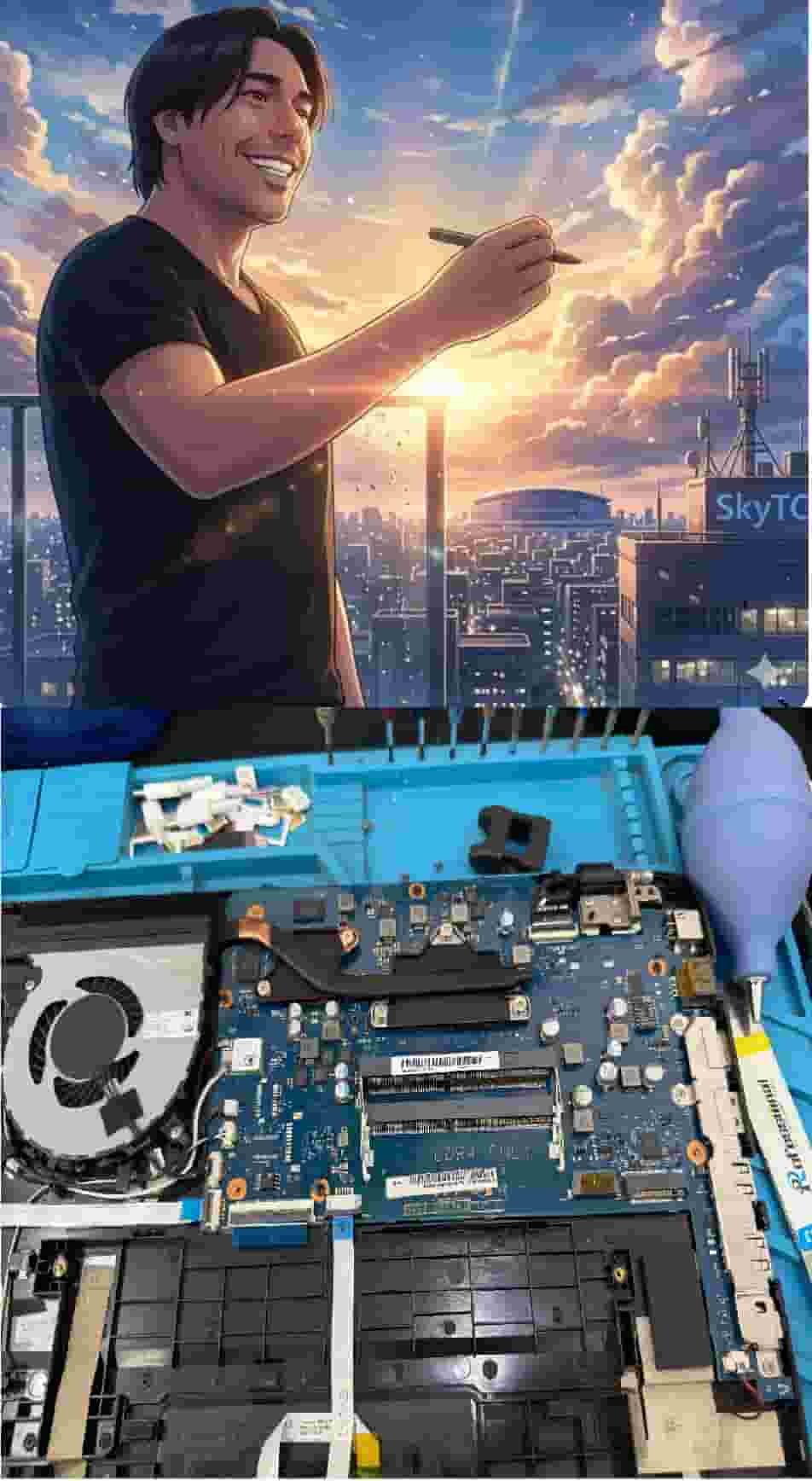
Technical Bio: Hardware & Laptops
“At SkyTC, technology is driven by engineering precision and real field experience. I am Valtersky, and I bring a unique background to the bench: from professional woodworking, the eye for structural integrity; from radiology, an absolute obsession with microscopic details.
As an ultra-endurance marathon runner, I don’t just browse store windows. I tear machines down, run intensive stress tests on thermal dissipation, and validate the actual build quality of every single component. My mission is to translate complex tech engineering and tech finances into smart decisions for your workflow.
Here, we speak straightforward, jargon-free English with the authority of someone who knows exactly what is inside the chassis.”
✨ Read also: Best Secure Laptops for Financial Analyst Software
> A deeply technical piece of content that perfectly complements this post — absolutely worth the read.