
Choosing the best secure laptops for financial analyst software is not a matter of falling for sleek consumer marketing or paper-thin aluminum chassis. When you are running heavy financial modeling, multi-threaded Excel macro calculations, real-time Bloomberg Terminal data feeds, and Monte Carlo risk simulations, you are pushing your silicon to its physical limits. At the exact same time, you are handling highly sensitive corporate financial records, insider trading data, and proprietary client portfolios that require ironclad hardware security.
Every single week in my repair shop, financial analysts bring in melted ultrabooks with fried motherboard buck converters, thermal throttled CPUs stuck at 800MHz, or corrupted encrypted drives. They bought shiny consumer laptops that look great in a coffee shop, but crumble under sustained computational loads. Worst of all, many of these consumer machines rely on weak firmware-based security that leaves confidential financial models vulnerable to hardware-level side-channel attacks and cold-boot memory extraction.
To survive in modern corporate finance, you need a machine engineered with discrete hardware encryption microchips, self-healing BIOS architectures, and dual-fan cooling systems that prevent thermal throttling. Making the right hardware choice saves you hundreds of hours in lost productivity, prevents catastrophic motherboards failures, protects your firm from legal compliance disasters, and guarantees that your complex financial models calculate without freezing mid-presentation.
When you are spending twelve hours a day auditing balance sheets and building valuation models, mental stamina is everything. Don’t ruin your focus with high-sugar energy drinks or low-fat processed office snacks that leave you crashing by mid-afternoon. Fuel your brain with nutrient-dense whole foods like grass-fed meat and natural animal fat—the ultimate tactical cheat code for maintaining ironclad cognitive endurance during high-stakes financial analysis.
30-Second Tech Support Counter Talk Summary (Click to Expand)
The Final Verdict: Skip consumer thin-and-lights completely for serious financial analysis. You need a dedicated enterprise-grade workstation or business laptop equipped with a discrete TPM 2.0 security chip, OPAL 2.0 self-encrypting NVMe storage, and a Match-on-Chip fingerprint reader. Ensure the chassis has dual heat pipes and actual exhaust vents—not cooling fans that blow directly into the display hinge. Look for upgradable SODIMM RAM slots so you can scale up to 64GB or 128GB of memory as your financial datasets grow.
Technical Comparison Of Secure Financial Workstation Architectures
| Laptop Architecture | Hardware Security Engine | Thermal & CPU Throttling Resistance | RAM & Storage Expansion | Hardware Engineer Verdict |
|---|---|---|---|---|
| Enterprise Mobile Workstation | Discrete TPM 2.0 + SmartCard + OPAL 2.0 | Very High (Dual-Fan / Vapor Chamber) | High (Dual/Quad SODIMM Slots) | The gold standard for heavy financial modeling and data security. |
| Enterprise Business Ultrabook | Discrete TPM 2.0 + Match-on-Chip Biometrics | Moderate (Single Fan / Power Capped) | Moderate (Soldered RAM / Single NVMe) | Great for travel and pitch decks; struggles on massive datasets. |
| Consumer Premium Thin-and-Light | Firmware TPM (fTPM) / Soft Security | Low (Single Fan Venting into Hinge) | Zero (Fully Soldered Board) | A thermal disaster and security risk for professional finance. |
| Ruggedized Secure Terminal | Discrete TPM 2.0 + Hardware Crypto Engine | High (Passive Heat Pipe / Sealed) | Moderate (Proprietary Modules) | Overkill for office work; designed for field auditing in harsh environments. |
Battlefield Assessment: Evaluating Secure Financial Laptops
1. Enterprise Mobile Workstations
The Good: Features dedicated discrete TPM 2.0 microchips isolated from the main CPU, physical SmartCard readers, OPAL 2.0 self-encrypting drive controllers, and massive thermal assemblies capable of sustaining high clock speeds during 100,000-row Excel recalculations.
The Bad: Chunky chassis profiles, heavier weight in your briefcase, and shorter battery runtimes when running discrete graphics cards at full wattage.
2. Enterprise Business Ultrabooks
The Good: Excellent balance of physical port selection, hardware Match-on-Chip fingerprint security, and lightweight portability for digital nomads visiting corporate clients.
The Bad: Compact chassis limits cooling capacity, forcing aggressive CPU thermal throttling when running parallel financial software simulations for more than fifteen minutes.
3. Consumer Premium Thin-and-Light Laptops
The Good: Stunning displays, ultra-thin profiles, and sleek aesthetic appeal that looks impressive in coffee shops.
The Bad: Relies on soft firmware TPMs susceptible to bus-sniffing exploits, uses fully soldered RAM that prevents future upgrades, and features terrible thermal designs that turn the bottom case into a frying pan.
Why the Best Secure Laptops for Financial Analyst Software Demand Hardware-Level Defense
Most people think security is just a matter of installing an antivirus program and turning on BitLocker. In the world of enterprise finance, software-level protection is completely inadequate. The best secure laptops for financial analyst software implement security at the physical silicon layer long before the operating system even boots up.
A discrete TPM 2.0 (dTPM) is a dedicated microchip soldered directly onto the motherboard. Unlike a firmware TPM (fTPM) that runs inside the CPU’s general execution environment, a discrete TPM contains its own cryptographic engine, physical tamper-resistance circuits, and isolated key storage. If a hacker attempts to execute a physical side-channel attack or cold-boot attack to extract encryption keys from system RAM, a discrete TPM detects the physical intrusion and locks down the encryption keys instantly.
Furthermore, running complex financial software like MATLAB, SAS, Python quantitative libraries, and multi-sheet Excel workbooks pushes system memory to its absolute breaking point. When your system runs out of RAM, it starts paging data onto the storage drive. If your NVMe SSD lacks OPAL 2.0 hardware-level encryption, that temporary paging file creates a massive security leak where unencrypted financial data sits exposed on raw flash memory cells. Hardware-level security ensures every single bit written to storage is encrypted instantly by the controller without taking a single clock cycle away from your CPU core performance.
The Realities of the Battlefield
Laptop marketing departments love to flash glossy slides showing high turbo boost frequencies, sleek brushed metal enclosures, and paper-thin screen bezels. But inside a real hardware repair workshop, we judge laptops by how they survive sustained workloads on the bench.
Modern ultra-thin business laptops boast incredible single-core CPU speed specs. BUT their single-fan cooling loops vent exhaust heat directly into the screen hinge assembly, cooking the display ribbon cables and throttling CPU clock speeds down to a crawl after five minutes of continuous financial data crunching.
Low-grade consumer laptops advertise vast amounts of fast LPDDR memory. BUT every single chip is soldered permanently to the motherboard using micro-BGA solder balls, meaning a single bad memory cell will permanently brick your entire system board and freeze your un-backed-up financial models.
Hypothetical Failure Scenario: The Monte Carlo Meltdown
Imagine a senior equity research analyst working under a tight deadline before a market opens. She is running a complex 50,000-iteration Monte Carlo risk simulation across multiple linked financial workbooks. She is using a sleek consumer ultrabook connected to a cheap multi-port USB-C hub charging brick.
As the CPU pegs all cores at maximum wattage, internal temperature inside the ultra-thin chassis spikes past ninety-five degrees Celsius. Because the single cooling fan cannot displace the heat, thermal saturation spreads straight across the motherboard to the voltage regulator modules (VRMs). At the exact same time, the cheap USB-C hub experiences an un-regulated voltage ripple. The overloaded VRM buck converter shorts out, sending a high-voltage spike straight into the CPU power rail, instantly killing the motherboard, corrupting the un-encrypted temporary drive cache, and destroying weeks of un-saved financial modeling work right before her presentation.
👇 Looking for more performance cheats? Check out our field-tested tactical blueprints:
Guides for Your Next Workspace
Professional Laptops
The definitive blueprint to selecting high-performance, enterprise-grade workstations engineered to scale your productivity.
Budget Tech Tools
Practical strategies and low-cost digital tools engineered to maximize office performance without breaking your budget.
Power User Gadgets
Advanced hardware, desk automation tools, and elite tech ecosystems built to completely eliminate workflow bottlenecks.
Practical Field Execution Checklist
- Select the best secure laptops for financial analyst software with dedicated dTPM 2.0 microchips.
Expert Tip: Verify in the system BIOS that the security chip is listed as discrete (dTPM) rather than firmware-based (fTPM/PTT) for true hardware isolation. - Choose laptops equipped with OPAL 2.0 self-encrypting NVMe storage drives.
Expert Tip: Hardware-based SSD encryption offloads crypto-processing from the CPU, keeping your financial macro calculations running at maximum speed. - Insist on dual-fan cooling assemblies with dedicated rear or side exhaust vents.
Expert Tip: Avoid any chassis design where fans blow exhaust air directly onto the screen hinge, as this creates a heat trap that forces severe CPU throttling. - Opt for physical SODIMM memory slots instead of fully soldered LPDDR RAM.
Expert Tip: Financial datasets grow rapidly; physical slots allow you to easily upgrade to 64GB or 128GB of RAM down the road without buying a whole new laptop. - Verify Match-on-Chip biometric security integration for fingerprint authentication.
Expert Tip: Match-on-Chip sensors process and store biometric data entirely inside the sensor module itself, preventing malware from intercepting finger scans. - Ensure the motherboard features a self-healing BIOS recovery chip.
Expert Tip: Dual-BIOS chips automatically restore corrupted firmware in the event of a failed update or physical BIOS tampering attack. - Equip your rig with physical SmartCard readers if handling enterprise banking feeds.
Expert Tip: Physical multi-factor SmartCards provide an un-hackable hardware token layer required by top-tier financial institutions and trading desks. - Clean internal cooling heatsinks and fan fins every six months.
Expert Tip: Dust buildup inside compact heatpipes reduces thermal efficiency by thirty percent, triggering premature CPU throttling during Excel runs. - Always connect high-draw financial laptops directly to official power adapters.
Expert Tip: Unbranded third-party USB-C hubs lack proper power delivery negotiation and can fry motherboard buck converters under heavy system load. - Enable BIOS-level port disabling for external USB storage devices.
Expert Tip: Locking down USB data lines at the hardware level prevents unauthorized physical extraction of confidential financial models via thumb drives. - Fuel your brain with grass-fed meat and natural animal fats during heavy audits.
Expert Tip: High-fat whole foods provide steady ketone energy, eliminating cognitive fatigue during intensive multi-hour financial valuation modeling.
Dynamic No-Nonsense Hardware FAQ
1. Is a discrete TPM 2.0 really necessary over a firmware TPM for financial software?
Yes, absolutely. Firmware TPMs run inside the primary CPU’s system management mode and share system memory, making them vulnerable to physical hardware bus-sniffing and memory exploitation attacks. A discrete TPM is a physically isolated microchip built specifically to resist physical tamper attempts.
2. How much RAM do I actually need for running advanced financial modeling software?
Do not accept anything less than 32GB of RAM for serious financial analysis. Large Excel workbooks with cross-linked macros, Bloomberg Terminals, and Python quantitative scripts swallow memory rapidly. If your system runs out of physical RAM, it pages data to storage and slows calculations to a crawl.
3. Why do sleek consumer ultrabooks throttle so quickly under Excel macro recalculations?
Consumer ultrabooks prioritize thinness and quiet operation over thermal dissipation. When complex multi-threaded financial calculations push all CPU cores to max usage, heat builds up faster than the single fan can exhaust it, forcing the CPU to drastically lower its clock speed to prevent self-destruction.
4. Does hardware-level NVMe drive encryption slow down financial software performance?
No. OPAL 2.0 self-encrypting drives perform crypto operations directly inside a dedicated controller chip on the SSD itself. Unlike software-based BitLocker encryption which consumes CPU cycles, hardware encryption operates at full PCI-Express bus speed with zero performance degradation.
5. Can I use a consumer-grade laptop if I install enterprise security software?
You can try, but it is an engineering trap. Software security cannot compensate for missing hardware security chips, flexible chassis that crack motherboard trace lines, or inadequate thermal cooling loops that throttle your CPU during critical market hours.
6. What is the danger of soldered RAM in laptops used for financial work?
Soldered RAM cannot be upgraded or repaired. If your financial data models expand beyond your current memory capacity, your entire laptop becomes obsolete. Worse yet, if a single soldered memory chip develops a hardware micro-fault, the entire motherboard is dead.
7. Why are SmartCard readers still built into high-end secure financial laptops?
Because physical hardware tokens remain the gold standard for zero-trust security. SmartCards store cryptographic keys on an isolated physical card that cannot be cloned or intercepted over a network, ensuring that only authorized financial personnel can access restricted trading systems.
8. Do discrete graphics cards help accelerate financial analyst software?
It depends on your software stack. Basic Excel workbooks rely purely on single-threaded CPU power. However, modern quantitative finance tools, Monte Carlo risk engines, and machine-learning valuation models built on Python or MATLAB use GPU CUDA cores to run thousands of parallel calculations simultaneously.
Why Trust SKYTC Curated Gear?
At SKYTC, we simplify technology for you. We aren’t just another deals site; we are hardware experts obsessively focused on elite performance.
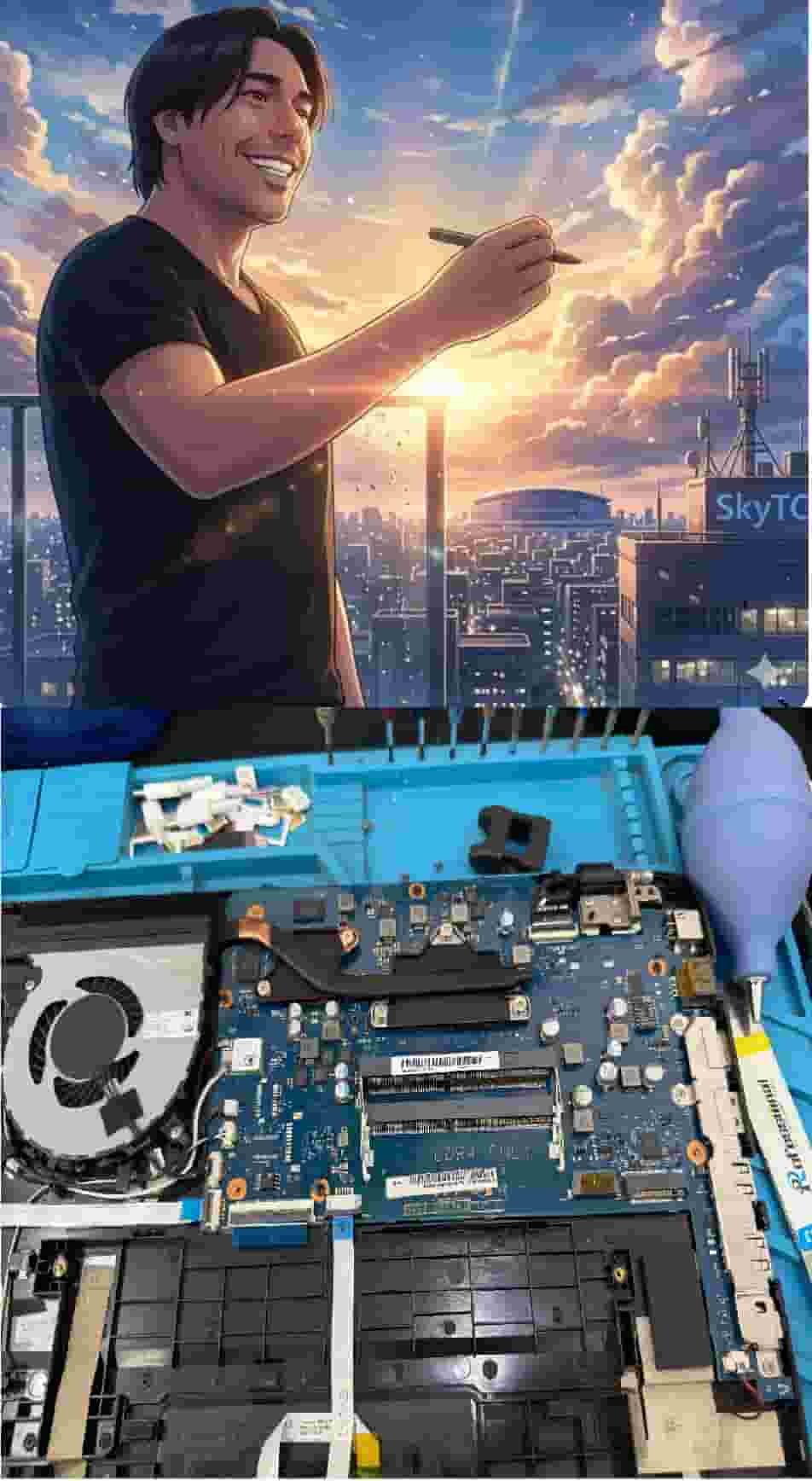
Technical Bio: Hardware & Laptops
“At SkyTC, technology is driven by engineering precision and real field experience. I am Valtersky, and I bring a unique background to the bench: from professional woodworking, the eye for structural integrity; from radiology, an absolute obsession with microscopic details.
As an ultra-endurance marathon runner, I don’t just browse store windows. I tear machines down, run intensive stress tests on thermal dissipation, and validate the actual build quality of every single component. My mission is to translate complex tech engineering and tech finances into smart decisions for your workflow.
Here, we speak straightforward, jargon-free English with the authority of someone who knows exactly what is inside the chassis.”
✨ Read also: Why Remote Workers Need Laptops With Privacy Screens
A deeply technical piece of content that perfectly complements this post — absolutely worth the read.