
You are sitting in another back-to-back meeting, typing up status reports, and your wrists are absolutely screaming. That cheap, mushy plastic keyboard your company handed you is doing zero favors for your hands or your productivity. As someone who coordinates teams, ships code, and manages high-pressure deployments, you deserve a workspace that actually supports your daily grind. Finding the best low profile mechanical keyboards for tech managers is not just about desk aesthetics; it is about saving your wrists from repetitive strain while maintaining a clean, highly professional setup.
Our dedicated support team and laptop hardware specialist over here at Valtersky have seen it all: from managers suffering from early-stage carpal tunnel to high-end setups ruined by cheap, bargain-bin accessories. Just last week, I had a client—a senior director at a software firm—bring in a dead laptop because he spilled coffee all over his desk. While recovering his drive, he complained about his stiff, giant mechanical keyboard. I handed him a low-profile board with linear switches, and his eyes practically lit up. It was quieter, sleeker, and did not require a massive wrist rest just to feel comfortable.
But let’s be honest: the keyboard market is flooded with marketing hype, flashy RGB lighting, and confusing technical terminology. If you buy the wrong gear, you end up with a noisy, clicky board that annoys your entire Zoom call or a flimsy plastic deck that flexes every time you type a harsh email. We are here to filter out the noise and show you what actually works.
In 30 Seconds: The Quick Verdict
If you are in a rush and need a no-nonsense recommendation straight from the repair shop counter, here is the quick breakdown:
- The Best Overall: Look for boards with premium PBT keycaps and hot-swappable sockets so you can replace broken parts down the road.
– **Acoustics Matter**: Avoid clicky switches at all costs unless you want your team to mute you on every single call. Quiet linear or silent tactile switches are your best friends.
– **Build Quality Over Hype**: Aluminum frames offer the best structural rigidity, preventing the board from sliding around or flexing during intense typing sessions.
– **The Verdict**: Go with a high-end 75% or Tenkeyless (TKL) layout. It keeps your mouse closer to your body, reducing shoulder strain, and fits perfectly in a travel bag.
Why Low-Profile Keyboards Rule the Tech Manager’s Desk
A standard mechanical keyboard is incredibly satisfying to type on, but it sits high off the desk, forcing your wrists into an unnatural upward bend that causes fatigue over long workdays. Low-profile mechanical keyboards solve this by lowering the overall height of the chassis and switches. This allows you to type comfortably without needing a bulky foam wrist rest.
These boards use specialized low-profile switches that have a shorter travel distance. You get the same crisp, tactile feedback of a traditional mechanical switch, but with a much faster actuation point. This means less finger fatigue when you are firing off hundreds of emails, reviewing merge requests, or updating project roadmaps.
However, keep in mind that while low-profile setups are excellent for ergonomics, their compact housings leave less room for dampening foam; this means they can sound slightly hollower or more high-pitched than their thick, full-sized counterparts. Choosing a model with a dampening silicone pad inside the case is key to keeping the noise deep and quiet.
Choosing the Best Low Profile Mechanical Keyboards for Tech Managers
To make sure you are making a premium tier investment that lasts, keep these hardware details in mind:
- Hot-Swappable Sockets: This feature allows you to pull out a malfunctioning switch and pop in a new one without touching a soldering iron; however, some budget-friendly brands use non-standard socket sizes that only fit their specific, hard-to-find switches.
- PBT Keycaps: Standard ABS keycaps absorb finger oils and turn into shiny, greasy-looking messes within a few months; double-shot PBT keycaps have a textured finish that resists wear, though they usually limit how much light shines through the legends.
- Tri-Mode Connectivity: Having Bluetooth, a 2.4GHz USB dongle, and a wired USB-C option gives you ultimate flexibility; note that while 2.4GHz wireless offers lag-free typing, losing the tiny USB dongle means you are stuck with slower Bluetooth connections.
- Gasket Mounting: Some high-end keyboards mount the internal plate using flexible gaskets to cushion your keystrokes; while this makes typing feel incredibly soft and premium, it also makes the keyboard thicker and heavier to carry around.
The Reality of the Battlefield
Let’s talk about how these products actually perform under daily office abuse. Many brands promise “aircraft-grade aluminum construction” and “lifetime keycap durability,” but the reality is often quite different.
Low-profile optical switches offer blistering response times and absolute precision for fast typists. But their proprietary stem designs mean you can almost never find aftermarket keycaps, leaving you completely stuck with cheap, oil-slicked ABS plastic keys once the factory letters wear down and peel off.
Similarly, wireless connectivity keeps your desk looking incredibly clean and modern. However, the internal battery cells in ultra-thin keyboards are often tiny and suffer from rapid capacity degradation, forcing you to keep the device permanently plugged in after just a couple of years of heavy use.
We also see a lot of “ultra-slim” boards that look gorgeous in product photos, but once you put them on a slightly uneven wooden desk, they wobble like a cheap restaurant table because their thin plastic chassis warps under heat or physical pressure. Do not fall for marketing aesthetics over structural integrity. Look, steer clear of certain brands because it is a total trap designed to sell you thin plastic toys that die the moment you drop them in your commuter bag.
The Zoom Call Nightmare: A Common Mistake
Picture this: You just got promoted to Lead Tech Manager. To celebrate, you go online and buy a highly-rated mechanical keyboard featuring “clicky blue switches” because you heard they offer the best typing feedback. It arrives, looks stunning, and you plug it in just in time for the Monday morning sync.
As you take notes and assign tasks, your microphone picks up every single keystroke. To your team, it sounds like an angry woodpecker is attacking your desk. Within ten minutes, someone politely type-chats: “Hey, can whoever is typing please mute?” You spend the rest of the meeting feeling self-conscious, typing at a snail’s pace to keep the noise down.
This is why switch choice is critical. For a professional setting, linear switches or silent tactile switches are non-negotiable. They give you the physical feedback you need to type quickly without turning your workspace into a construction zone.
Comparing the Top Low Profile Keyboards
Here is a quick breakdown of how the leading options compare in the real world.
| Keyboard Model | Build Quality | Keycap Material | Switch Type Options | Connectivity | Best Suited For |
|---|---|---|---|---|---|
| Keychron K3 Max | Aluminum Frame / Plastic Base | Double-shot LSA PBT | Low-profile Gateron MX (Red/Blue/Brown) | 2.4GHz / Bluetooth 5.1 / Wired | Cross-Platform Mac & Windows Users |
| NuPhy Air75 V2 | Aluminum Top, Plastic Bottom | Double-shot nSA PBT | NuPhy Herb/Aloe/Wisteria (Hot-swappable) | 2.4GHz / Bluetooth 5.0 / Wired | Digital Nomads & Travel Enthusiasts |
| Lofree Flow | Full Aluminum Chassis | Dye-sub PBT | Kailh Full-POM Switches | Bluetooth 5.0 / Wired | Creatives Demanding Ultra-Quiet Keys |
| Logitech MX Mechanical Mini | Plastic Base with Aluminum Plate | ABS Paint-coated | Tactile Quiet / Linear / Clicky | Logi Bolt / Bluetooth / Wired (Charging only) | Corporate Environments & Office Ecosystems |
Actionable Checklist for Buying and Setting Up Your Keyboard
Follow these steps to ensure you choose, configure, and maintain your board like a pro:
- Identify the best low profile mechanical keyboards for tech managers that fit your operating system; pro-tip: always check if the keyboard comes with dedicated Mac keycaps in the box so you do not have to guess where the Option and Command keys are.
- Choose tactile or linear switches over clicky ones; pro-tip: linear switches are generally the quietest option for open offices, while tactile switches give a subtle bump that helps prevent typos.
- Verify if the board is hot-swappable; pro-tip: even if you do not plan to customize your keyboard, hot-swap sockets mean you can fix a single broken switch in two minutes instead of throwing the whole board in the trash.
- Select double-shot PBT keycaps; pro-tip: PBT keycaps maintain their textured, matte feel for years, keeping your workspace looking clean and professional during stakeholder presentations.
- Test the Bluetooth connection in a crowded area; pro-tip: if you work in an office with dozens of wireless networks, use the 2.4GHz USB receiver instead of Bluetooth to avoid lag and keystroke dropouts.
- Inspect the stabilizers on the spacebar and shift keys; pro-tip: cheap stabilizers make a loud, annoying rattling sound every time you press the spacebar; adding a tiny drop of dielectric grease can mute that rattle instantly.
- Configure your function keys for your workflow; pro-tip: use the keyboard’s companion software to map media controls, screenshot shortcuts, or mute keys directly to your function row to save time.
- Clean the keyboard regularly with compressed air; pro-tip: low-profile boards have tighter tolerances, meaning small crumbs or dust can easily jam a switch mechanism much faster than on standard keyboards.
- Adjust the typing angle using the built-in feet; pro-tip: keeping the keyboard as flat as possible is actually better for your wrists, so only use the tilt feet if your desk setup is exceptionally low.
- Check the battery sleep-mode settings; pro-tip: some boards aggressively turn off to save battery, causing an annoying two-second delay when you start typing again; adjust this in the settings if it bugs you.
- Invest in a padded travel sleeve; pro-tip: if you commute between home and the office, a simple sleeve prevents the delicate low-profile keycaps from getting snagged and popped off inside your backpack.
👇 Looking for more performance cheats? Check out our field-tested tactical blueprints:
Guides for Your Next Workspace
Professional Laptops
The definitive blueprint to selecting high-performance, enterprise-grade workstations engineered to scale your productivity.
Budget Tech Tools
Practical strategies and low-cost digital tools engineered to maximize office performance without breaking your budget.
Power User Gadgets
Advanced hardware, desk automation tools, and elite tech ecosystems built to completely eliminate workflow bottlenecks.
Frequently Asked Questions (From the Tech Support Desk)
Here are the blunt answers to the most common questions I hear at the repair counter from professionals making expensive mistakes.
Do low-profile mechanical keyboards feel different from standard ones? Yes, absolutely. They have a shorter key travel distance, meaning you do not have to press the keys down as far to register a letter. It feels like a middle ground between a laptop keyboard and a traditional, chunky mechanical keyboard. If you love deep, bouncy key travel, you might find them a bit stiff at first, but your wrists will thank you.
Can I use any mechanical switch on a low-profile board? No. Standard MX switches will not fit in low-profile boards because the pins are spaced differently and the physical housings are too tall. You must buy specialized low-profile switches from brands like Gateron, Kailh, or Cherry. Always check your keyboard’s manual to see exactly which brand of low-profile switch it supports.
Are low-profile mechanical keyboards loud? They can be, but it depends entirely on the switch. If you get “blue” clicky switches, you will drive your coworkers insane. If you get “red” linear or “brown” tactile switches, they are very quiet and perfectly fine for a shared office or video calls. Do yourself a favor and steer clear of clicky switches for work.
Is wireless connectivity reliable for daily office work? If you use a 2.4GHz USB receiver, yes, it is rock solid. If you rely on Bluetooth, it can sometimes lag or drop connection, especially in offices crowded with wireless routers, smart TVs, and bluetooth headsets. If you do a lot of real-time typing or system administration, keep it plugged in or use the USB dongle.
Why are PBT keycaps so highly recommended? Because ABS plastic keycaps are garbage for long-term use. ABS absorbs the natural oils from your fingers, which turns the keys shiny, slick, and greasy-looking after just a few weeks. PBT keycaps use a different plastic blend that resists oil, maintaining a clean, professional matte finish that lasts for years.
Can I swap the keycaps on a low-profile keyboard? It is incredibly difficult. Because low-profile switches do not have a standardized stem height, standard keycaps will bottom out and hit the keyboard plate. Plus, the stabilizer placements for larger keys like the spacebar are rarely standardized. If you want custom keycaps, stick to traditional-sized keyboards.
Do these keyboards work well with both Mac and Windows? Many of them do, but you must double-check the description. Brands like Keychron and NuPhy have a physical toggle switch to swap between Mac and Windows layouts and include extra keycaps for both. Avoid boards that rely purely on complex software remapping, as it can break when your work laptop blocks unauthorized software.
How long do the internal batteries last on wireless models? With the backlight turned off, a decent board can last several weeks or even months on a single charge. If you turn on full RGB lighting at maximum brightness, the battery will die in a few days. Turn off the flashy lights; you are a tech manager, not a streamer, and your battery will thank you.
Why Trust SKYTC Curated Gear?
At SKYTC, we simplify technology for you. We aren’t just another deals site; we are hardware experts obsessively focused on elite performance.
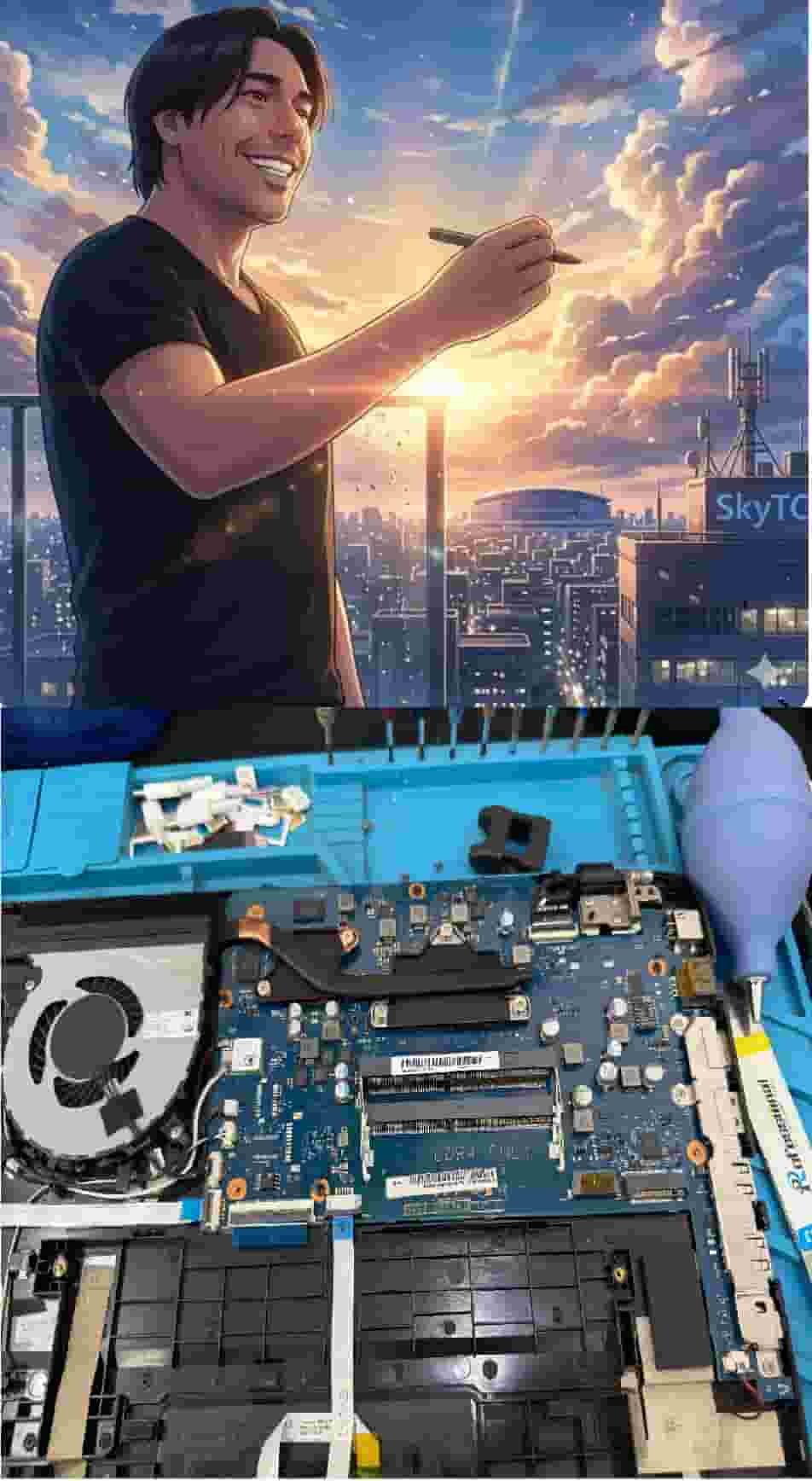
Technical Bio: Hardware & Laptops
“At SkyTC, technology is driven by engineering precision and real field experience. I am Valtersky, and I bring a unique background to the bench: from professional woodworking, the eye for structural integrity; from radiology, an absolute obsession with microscopic details.
As an ultra-endurance marathon runner, I don’t just browse store windows. I tear machines down, run intensive stress tests on thermal dissipation, and validate the actual build quality of every single component. My mission is to translate complex tech engineering and tech finances into smart decisions for your workflow.
Here, we speak straightforward, jargon-free English with the authority of someone who knows exactly what is inside the chassis.”
✨ Read also: Why Linear Switches Are Better for Intensive Office Work
Content that perfectly complements this guide — highly recommended reading.