
If you have ever owned a Coonhound, you know that their nose is not just an organ—it is a highly advanced, biological navigation system that completely hijacks their entire brain. The moment a Black and Tan, Bluetick, or Treeing Walker hits a cold scent trail, their ears tune out, their eyes glaze over, and they are gone. Because of this intense prey drive, finding the top GPS trackers for Coonhound Breeds is not just a cool tech upgrade; it is a vital safety tool to prevent your dog from vanishing into the deep woods.
My dog Murphy is a Maltese, and since we travel constantly, he rarely leaves my side and would never dream of chasing a raccoon into a swamp. However, our physical testing team at skytc includes a dedicated pet parent and tracking specialist who regularly works with high-prey-drive hunting and working breeds. We have spent countless hours trudging through dense briars, muddy creeks, and mountainous terrain to push these pet tracking devices to their absolute absolute limits.
We don’t look at glossy marketing brochures; we look at how these collars survive real-world conditions. Let’s break down what actually works when your hound goes on a wild run, and what is just overpriced plastic.
The Empathy Point: The Dread of the Silent Woods
There is a unique kind of dread that only Coonhound owners truly understand. You are out for a hike, or maybe you just let them out in the yard, and suddenly you hear that deep, booming bay. Within seconds, the sound fades into the distance. You call, you whistle until your throat is raw, but the woods are completely silent.
Standing in the dark, wondering if your dog is stuck in a sinkhole, tangled in a fence, or miles away crossing a busy highway, is an incredibly painful experience. It makes you feel helpless.
We buy technology to give us peace of mind. But if that technology fails the moment your dog crosses a ridge, it is worse than useless—it gives you a false sense of security. You need a device that matches the relentless, unstoppable nature of a hound on a scent.
Why the Top GPS Trackers for Coonhound Breeds Must Survive the Briar Patch
Standard pet trackers designed for city dogs simply do not cut it when attached to a working scent hound. Coonhounds do not walk nicely on gravel paths; they bulldoze their way through thick brush, swim across muddy swamps, and climb up rocky ridges.
Physical Attachment Security
Cheap tracking collars often rely on thin plastic clips or flimsy rubber sleeves to hold the expensive tracking module. One fast run through a thick patch of wild blackberries, and that cheap bracket will snap, leaving your expensive tracker lying in the dirt while your dog keeps running. You need a collar that weaves directly through a heavy-duty, polyurethane-coated collar strap.
Dual-Network Fallbacks
Many budget-friendly trackers rely purely on cellular networks to transmit their location to your phone. This is fine if you live in a flat suburb, but the moment your hound dives into a deep ravine or a densely forested valley, cellular signals disappear. The best setups utilize a combination of GPS, cellular data, and local VHF radio frequencies to keep you connected even in absolute dead zones.
Dust and Water Armor
If a tracker is only rated for light rain, it is going to die on a Coonhound. Hounds love water, mud, and muck. The charging ports must be completely sealed, and the casing needs an IPX8 water rating, meaning it can survive being submerged for extended periods while your dog swims across a creek.
The Reality of the Battlefield
Let’s be completely honest: the pet tracking industry is full of wild promises and under-tested gear. Manufacturers love to advertise battery lives that last for weeks, but they only achieve those numbers when the dog is sleeping in your living room.
In the real world, when a tracker is actively pinging a satellite every few seconds to trace a fast-moving dog, that battery life drops dramatically. If you do not configure your settings correctly, a battery advertised to last a month can die in less than six hours of active searching.
The absolute cellular tracking model is fantastic because it sends updates directly to your smartphone without requiring a bulky handheld receiver, but it requires a solid cellular signal and will leave you completely blind the second your hound runs into a deep, forested ravine with no coverage.
Furthermore, many smart collars use low-grade plastic buckles that can easily crack under cold temperatures or heavy impact. We have seen charging prongs rust after a single swim in salty or mineral-rich water, making it impossible to recharge the device without scrubbing the contacts with steel wool.
The “Suburban Illusion” Scenario
Imagine this: You live in a quiet neighborhood that borders a state park. You buy a highly-rated, budget-friendly Bluetooth and cellular tracker because it was easy to set up and didn’t require a high-end setup investment. You feel completely safe.
One evening, a deer leaps over your back fence. Your Bluetick Coonhound catches the scent, lets out a massive bellow, and clears the fence in a single bound. You open your smartphone app, confident you will see exactly where they are.
But because the dog ran into the state park—a known dead zone for your cellular provider—the app simply spins and shows “Last seen 20 minutes ago at your house.”
You drive around the edge of the park, hoping the Bluetooth picks up a signal from a passing hiker’s phone, but there is no one else out there. You spend the night walking through the dark with a flashlight, completely blind, because you trusted a tracker designed for a city park rather than the wild woods. It is a terrifying, preventable mistake.
In 30 Seconds: The Rapid Verdict
If you are busy and just want to know what to buy, here is the direct, honest truth from our skytc testing team.
- The Best Overall: A hybrid system that uses both GPS satellites and VHF radio frequencies. It does not rely on cell towers, making it the only reliable choice for deep woods and mountainous areas.
- What to Avoid: Simple Bluetooth-only tags or cheap cellular-only trackers with no external antenna. They will fail the moment your dog leaves the suburbs.
- The Golden Rule: Always look for trackers that allow you to adjust the “update interval” on the fly. Slower updates save battery when they are safe; fast updates are for when they are running.
- The Maintenance Trick: Wash the collar with fresh water after every single run to prevent mud and salt from corroding the copper charging points.
Pet Tracker Performance Comparison
| Tracker Category | Best For | Range Capability | Battery Under Active Track | Ruggedness Rating |
|---|---|---|---|---|
| VHF / Satellite Hybrid | Deep woods, hunting, & mountain hiking | Up to 9 miles (No cell needed) | 20 to 40 Hours | Military Grade |
| Cellular / GPS Smart Collar | Suburban escape artists & daily walks | Unlimited (Requires cell signal) | 10 to 24 Hours | High (Waterproof) |
| Bluetooth Tag | Indoor search & small yards | 300 Feet (Relies on passing phones) | Several Months | Low (Delicate plastic) |
| Low-Frequency Radio | Semi-rural properties without cell service | Up to 2 miles | 2 to 3 Days | Moderate |
Actionable Checklist for Coonhound Owners
- Invest only in the Top GPS Trackers for Coonhound Breeds that use multi-constellation satellite networks rather than simple regional cellular bands. (Pro-tip: Multi-satellite support means the collar locks onto GPS, GLONASS, and Galileo systems simultaneously for faster positioning).
- Test the real-world battery drain in “Active Tracking Mode” before you actually need to use it in an emergency. (Pro-tip: Turn on live tracking while walking your dog in a known area to see how fast the battery percentage drops).
- Opt for a collar strap made of polyurethane-coated nylon rather than standard woven fabric. (Pro-tip: Coated collars do not hold moisture, will not rot, and do not catch on thorns or brambles).
- Always set up your “Virtual Safe Zones” or geofences before letting your dog off-leash. (Pro-tip: Set the alert trigger to your phone with a loud, distinct alarm so you know the second they cross the boundary).
- Keep a set of spare collar straps and heavy-duty charging clips in your glove compartment. (Pro-tip: If you are out in the field and your charger breaks, you are completely stuck without a backup).
- Clean the metallic charging contacts with a cotton swab and rubbing alcohol weekly. (Pro-tip: Dirt and dried sweat build up insulation over the contacts, preventing a full charge).
- Make sure the tracking module is mounted on top of the dog’s neck, not dangling under their throat. (Pro-tip: Having the GPS antenna facing the sky ensures a much faster satellite lock).
- Never rely on cheap plastic split-rings to attach the tracker to the collar. (Pro-tip: Use rivet-on brackets or heavy brass hardware that cannot be ripped off by thick brush).
- Turn down the screen brightness on your handheld controller to conserve battery during long search operations. (Pro-tip: A dead receiver is just as bad as a dead collar).
- Double-check the network coverage maps of the specific cellular provider used by your tracker. (Pro-tip: Many smart collars use specific cellular roaming bands that may not match your personal phone carrier’s coverage).
- Introduce the collar to your dog gradually inside the house to ensure the fit is snug but comfortable. (Pro-tip: You should be able to fit two fingers tightly under the strap so it doesn’t slip over their ears when they sniff the ground).
Common Mistakes to Avoid
The most common trap is choosing a tracking system based purely on a low monthly subscription model. Many budget-friendly options use incredibly slow update rates (sometimes only updating every few minutes) to save on data costs. If your Coonhound is running at full speed, they can easily cover half a mile in two minutes. A slow update rate means you will always be chasing a ghost, looking at where your dog was, not where they are right now.
Another major mistake is ignoring the weight of the device. Coonhounds are muscular, but carrying a heavy, industrial-sized hunting receiver on a daily basis can cause neck strain and skin chafing. Ensure you match the physical size of the tracking module to your dog’s build—especially if you have a smaller female hound.
FAQ
Do I need a cellular subscription for a Coonhound tracker?
If you choose a VHF radio hybrid system, you do not need any cellular service or subscription tiers. These systems use a dedicated handheld receiver that communicates directly with the dog’s collar over radio frequencies, which is why professional hunters rely on them.
Can my dog swim with a GPS tracker on?
Yes, but only if the tracker is rated IPX7 or IPX8 waterproof. Many cheap trackers are only “water-resistant,” meaning they will survive rain but will short-circuit and die the first time your hound plunges into a creek or swamp.
Why does my tracker take so long to find a satellite signal?
If the tracker has been turned off for a long time or moved far away since its last use, it needs to download new satellite orbit data. Turn the collar on in an open area with a clear view of the sky for ten minutes before you start your run.
Is a Bluetooth tag like an AirTag enough for a Coonhound?
To be blunt: absolutely not. Bluetooth tags rely on being close to other smartphones to relay their location. If your Coonhound runs into the woods, fields, or a rural road where there are no people, a Bluetooth tag is completely useless.
How tight should the tracking collar be?
It needs to be snugger than a standard walking collar. If it dangles, the tracking module will bounce against their chest, and the GPS antenna will point toward the ground, severely degrading the signal and tracking accuracy.
Can I track multiple dogs on one system?
Yes, high-end setups allow you to track dozens of collars on a single handheld receiver or smartphone app. This is crucial for hound owners who run pairs or packs of dogs together.
What happens to the tracker in sub-zero winter temperatures?
Lithium-ion batteries drain much faster in freezing cold weather. If you are tracking in winter, expect your active battery life to cut down by up to thirty percent, and keep the handheld receiver inside your warm jacket pocket.
Is it worth investing in a premium tier tracking setup?
Yes, without a doubt. Saving money on a bargain-bin tracker is a complete trap. A premium tracking system uses high-grade components, offers real-time tracking, and lasts for years, ensuring you can always bring your hound home safely.
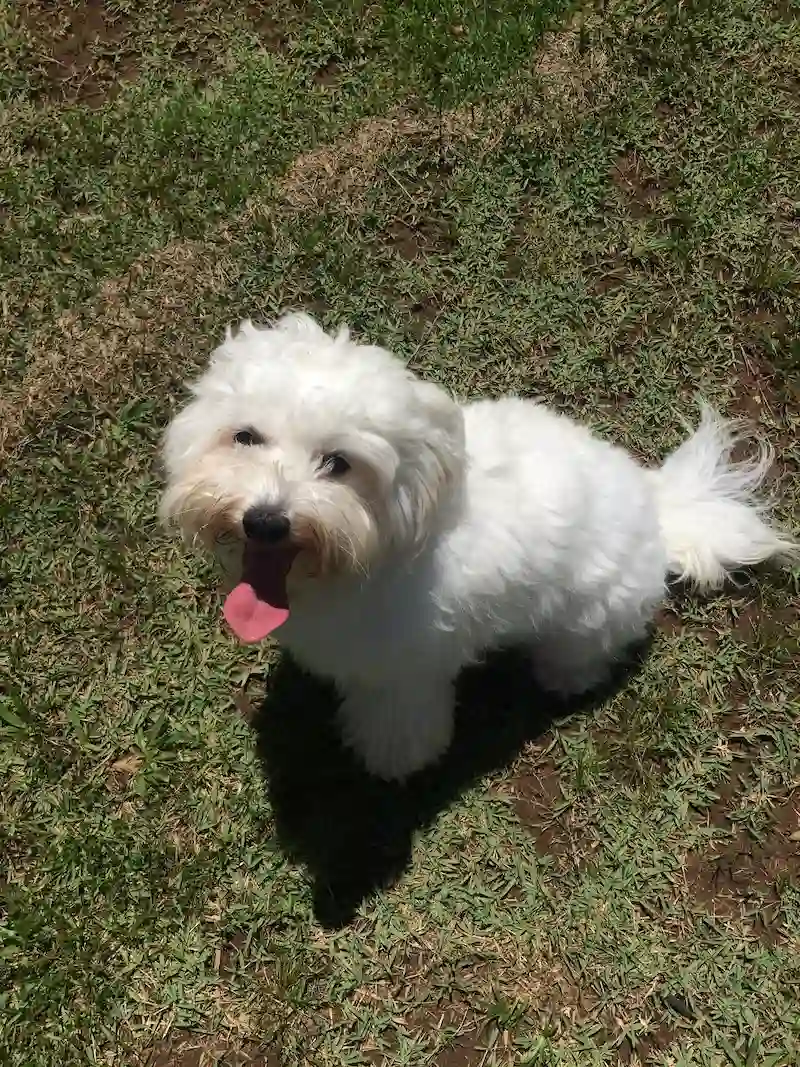 Murphy
 Valtersky
Meet Valtersky & Murphy
FOUNDER OF TEAM SKYTC
At SKYTC, Meet Valtersky & Murphy FOUNDER OF TEAM SKYTCAt SKYTC, cutting-edge pet technology meets real-world testing. We merge Murphy’s hands-on companion trials with Valtersky’s precise analysis—combining over 25 years of structural engineering background with health-tech experience.To guarantee reliability for all breeds, we collaborate with a trusted network of experienced large-breed tutors and active dog handlers who stress-test heavy-duty gear in rugged conditions. We raise the bar for review standards so your best friend gets only the safest, most functional, and highly reliable hardware on the market.
✨ Read also: Best GPS Collars for Jack Russells
A deeply technical piece of content that perfectly complements this post — absolutely worth the read.