
If you spend your workday editing video timelines, scrubbing CAD assemblies, or tweaking audio channels, reaching for a mouse every three seconds destroys your physical flow. Finding the top high end keyboards with integrated navigation knobs isn’t about buying a flashy desktop ornament with a hollow volume dial; it is about precision rotary encoding and robust PCB integration.
Most mass-market keyboard manufacturers slap cheap, mechanical potentiometers onto basic circuit boards, marketing them as executive productivity tools. In reality, those ungrounded metal dials wobble on their plastic shafts, generate annoying electrical noise, and break their delicate solder joints after a few months of daily spinning.
A properly engineered navigation knob uses a high-cycle optical encoder or a reinforced stepped mechanical dial, hard-anchored to an internal plate and grounded against electrostatic discharge. When designed right, a rotary encoder turns complex macro navigation into pure muscle memory, saving you hours of wrist travel while keeping your hands locked in a comfortable, fatigue-free typing position.
30-Second Summary: Tech Support Counter Talk
Cut through the marketing fluff. A rotary knob is only as good as the encoder soldered beneath it. If a keyboard manufacturer uses a bargain-bin potentiometer soldered directly to a thin PCB without plate support, that knob will wobble, register ghost inputs, and snap off under pressure.
To get true executive-grade navigation, demand optical rotary encoders or high-detent mechanical switches anchored to an FR4 or aluminum plate. Ensure the keyboard firmware supports open-source VIA or QMK mapping so you can program the dial for frame-by-frame timeline scrubbing, brush sizing, or canvas zooming rather than just basic system volume controls.
Bench Test Comparison: Rotary Encoder & Knob Architectures
| Knob & Encoder Setup | Mechanical Detent Feel | PCB Anchoring Method | ESD Grounding Level | Real-World Lifespan |
|---|---|---|---|---|
| Optical Encoder + CNC Metal Knob | Ultra-Smooth / Frictionless | Plate-Mounted Sub-Housing | Full Chassis Grounding | Maximum / High Reliability |
| Stepped Mechanical + Solid Alloy Cap | Crisp Tactile Clicks | Through-Hole Solder Tabs | Grounded via Plate Pad | High / Durable Performance |
| Standard Potentiometer + Plastic Cap | Mushy / Loose Spin | Surface-Mount Pads Only | Ungrounded / High Static Risk | Low / Prone to Early Failure |
| Dual Rotary Ergonomic Assembly | Tactile / Stepped Dual | Reinforced Daughterboard | Dedicated Ground Trace | Exceptional Utility Tier |
Battlefield Assessment: Evaluating Rotary Navigation Systems
1. CNC Machined Aluminum Case with Optical Rotary Encoder
Optical encoders use light sensors rather than physical wiper arms to register rotation, completely eliminating physical contact wear inside the component housing.
The Good: Infinite rotation lifespan with zero electrical noise, delivering fluid frame scrubbing across video production suites.
The Bad: Requires sophisticated onboard microcontroller processing, which increases baseline power draw on wireless Bluetooth connections.
2. Plate-Mounted Stepped Mechanical Encoder with Solid Alloy Dial
This design utilizes internal mechanical detents that click satisfyingly into place with every notch of rotation, providing distinct physical feedback.
The Good: Outstanding tactile feedback for stepped operations like zooming in discrete percentage jumps or scrolling through code lines.
The Bad: Physical mechanical detents wear down gradually after millions of cycles, reducing the sharp resistance feel over years of heavy use.
3. Surface-Mounted Potentiometers on Unreinforced PCBs
Found on entry-tier boards mimicking luxury designs, these components solder directly onto thin fiberglass circuit boards without secondary structural support.
The Good: Low barrier to entry for users looking to experiment with basic volume controls on a desk setup.
The Bad: Downward pressure applied during knob clicks flexing the main PCB, eventually tearing microscopic copper solder pads clean off the board substrate.
Why the Top High End Keyboards With Integrated Navigation Knobs Require Optical Encoders
When you analyze rotary control systems under a microscope on a repair bench, the physical friction points tell the whole story. Traditional mechanical potentiometers rely on tiny metal wiper arms scraping across carbon resistive tracks to measure rotation angle and speed.
Over months of continuous scrubbing on workstation desks, ambient dust mixes with micro-debris from the scraping metal wipers. This creates dead spots on the resistive track, causing erratic input jumping where twisting clockwise suddenly registers as counter-clockwise motion.
Maintaining physical focus and joint longevity during ten-hour editing marathons demands comprehensive biological care. Just as staying sharp at your desk requires fueling your body with nutrient-dense real food like whole meat and its natural fats to support joint cartilage and cognitive focus, your productivity setup requires friction-free optical components that eliminate physical wear and tear.
Optical encoders completely eliminate physical contact by shining an infrared light beam through a tiny slotted wheel. Every time a slot breaks the light beam, the microcontroller counts a pulse. With no physical contact surfaces inside the encoder, component wear drops to zero, giving you buttery-smooth navigation that never degrades.
The Realities of the Battlefield
On our workbench, WE HAVE A DEDICATED SUPPORT TEAM AND A LAPTOP HARDWARE SPECIALIST who disassemble, micro-solder, and rebuild custom input hardware every single day. We see the exact component flaws that marketing photos hide behind glossy lighting.
A massive industry design flaw is ungrounded metal knob caps. Manufacturers love fitting heavy anodized aluminum knob caps over encoder shafts, but they forget to ground the shaft to the keyboard’s chassis ground plane. When you walk across a carpeted office and touch that metal knob, static electricity arcs directly down the shaft into the microcontroller, frying the main chip instantly.
Another major issue is shaft wobble caused by oversized plate cutouts. If the structural switch plate doesn’t tightly collar the encoder housing, every rotational twist creates lateral leverage against the tiny surface-mount solder pins beneath the board.
Furthermore, proprietary software drivers ruin great hardware. Many commercial brands force you to run bloated background software just to map the navigation dial to basic functions. If that background app crashes, your expensive navigation knob reverts to a useless volume control wheel.
Hypothetical Failure Scenario: The Snapped Shaft & Static Zap Disaster
Imagine an ambitious digital artist named Leo who buys a sleek keyboard featuring a prominent metal navigation dial for his daily Photoshop workflow. The keyboard uses a cheap surface-mounted mechanical encoder soldered to an unreinforced PCB, topped with an oversized aluminum knob cap.
On a dry winter afternoon, Leo walks across his carpeted studio, sits down, and reaches out to adjust his brush size using the metal dial. A visible static spark jumps from his finger straight into the ungrounded aluminum cap, traveling down the metal shaft and zapping the microcontroller’s signal pins.
Panicking as his keyboard stops responding, Leo tries to pull the heavy aluminum cap off the shaft to inspect the damage beneath. Because the cap was secured with press-fit friction without supporting the PCB beneath, the upward pulling force rips the entire rotary encoder off the board, taking three copper solder pads along with it. Leo turned a premium tier investment into a dead piece of plastic because he bought aesthetics over engineered durability.
The Actionable Workbench Checklist
- top high end keyboards with integrated navigation knobs: Always inspect the physical rotary encoder shaft and solder anchoring pads before buying to avoid wobbly dials.
- Encoder Type Selection: Demand optical encoders for smooth timeline scrubbing, or stepped mechanical encoders for precise discrete macro jumps.
- ESD Grounding Verification: Check that metal knob caps have direct continuity to the PCB ground plane to discharge static electricity safely.
- QMK/VIA Firmware Support: Confirm the keyboard supports open-source firmware for native, onboard macro remapping without bloated background software.
- Plate Collar Reinforcing: Ensure the switch plate features a snug physical collar around the encoder housing to absorb lateral twist torque.
- Knob Material & Texture: Choose CNC machined aluminum caps featuring knurled outer rings for effortless one-finger rotation during fast editing.
- Push-Button Click Force: Test the encoder’s integrated center-click switch to confirm it requires firm downward pressure, preventing accidental clicks while turning.
- Daughterboard Isolation: Select designs where the rotary encoder sits on an independent daughterboard, making future micro-soldering repairs quick and cheap.
- Detent Resistance Level: Verify mechanical detent resistance matches your workflow; soft detents suit video scrubbing, while stiff detents suit weapon switching in games.
- Keycap Height Clearance: Ensure the top of the navigation knob sits slightly higher than adjacent keycaps so your hand can turn it without hitting nearby keys.
- Hot-Swap PCB Safety: Support the rear of the encoder socket area if you ever replace surrounding switches to avoid flexing the board trace.
- Multi-Layer Macro Layers: Program your rotary knob with layer modifiers so a single dial can handle volume, timeline scrubbing, and canvas zoom simultaneously.
👇 Looking for more performance cheats? Check out our field-tested tactical blueprints:
Guides for Your Next Workspace
Professional Laptops
The definitive blueprint to selecting high-performance, enterprise-grade workstations engineered to scale your productivity.
Budget Tech Tools
Practical strategies and low-cost digital tools engineered to maximize office performance without breaking your budget.
Power User Gadgets
Advanced hardware, desk automation tools, and elite tech ecosystems built to completely eliminate workflow bottlenecks.
Frequently Asked Questions
Can I remap my keyboard navigation knob to control adobe premiere or photoshop?
Yes, provided the keyboard supports open-source VIA or QMK firmware. You can map clockwise and counter-clockwise rotation to custom hotkeys like jog-frame stepping or brush sizing without needing proprietary software.
Why does my keyboard volume knob jump erratically when turned?
Erratic input jumping is caused by worn or dirty mechanical wiper contacts inside a cheap potentiometer. Dust or carbon wear creates dead spots on the internal track; replacing the encoder or spraying contact cleaner inside fixes it.
Are optical encoders better than mechanical encoders for keyboard knobs?
Optical encoders are vastly superior for continuous, friction-free movement like video timeline scrubbing and audio panning. Mechanical encoders are better if you prefer tactile, stepped clicks for precise discrete increments.
Why did my metal keyboard knob stop working after a static shock?
If the metal knob cap is not grounded to the chassis ground plane, static electricity travels directly down the encoder metal shaft into the microcontroller, frying its input/output pins. Always choose grounded designs.
Can I replace a broken rotary encoder myself with a soldering iron?
Yes, if you have basic micro-soldering skills. Rotary encoders typically use three signal pins and two heavy structural support tabs; desoldering the old unit with solder wick allows you to drop in a fresh replacement.
What is the difference between a potentiometer and a rotary encoder?
A potentiometer has fixed start and stop travel limits and changes electrical resistance. A rotary encoder offers infinite 360-degree rotation, sending digital pulse signals to the controller for endless scrolling and scrubbing.
Will an oversized custom metal knob damage my keyboard encoder?
Heavy or tall custom metal knobs increase physical leverage on the encoder shaft. If you press or pull on an oversized knob without supporting the plate beneath, you risk snapping the encoder housing or solder pads off the PCB.
Why do some rotary knobs feel loose and wobbly out of the box?
Wobble happens when the manufacturer fails to collar the encoder housing inside the structural switch plate, relying solely on thin surface-mount solder legs to hold the component upright against daily twisting force.
Why Trust SKYTC Curated Gear?
At SKYTC, we simplify technology for you. We aren’t just another deals site; we are hardware experts obsessively focused on elite performance.
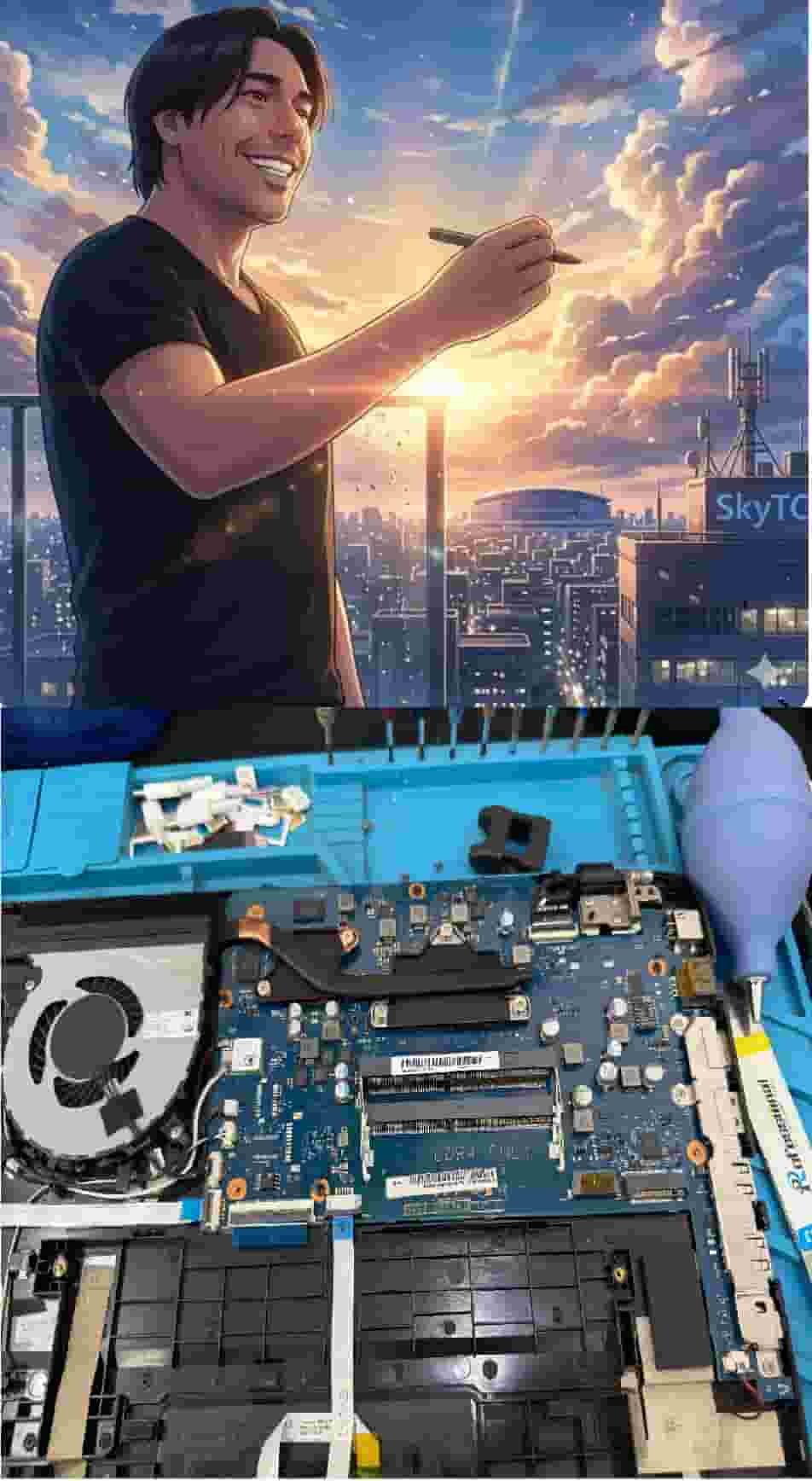
Technical Bio: Hardware & Laptops
“At SkyTC, technology is driven by engineering precision and real field experience. I am Valtersky, and I bring a unique background to the bench: from professional woodworking, the eye for structural integrity; from radiology, an absolute obsession with microscopic details.
As an ultra-endurance marathon runner, I don’t just browse store windows. I tear machines down, run intensive stress tests on thermal dissipation, and validate the actual build quality of every single component. My mission is to translate complex tech engineering and tech finances into smart decisions for your workflow.
Here, we speak straightforward, jargon-free English with the authority of someone who knows exactly what is inside the chassis.”
✨ Read also: ( Best Gasket Mounted Keyboards for Smooth Tactile Feedback: Hardware Blueprint )
> A deeply technical piece of content that perfectly complements this post — absolutely worth the read.
https://skytchome.com/skytc-gasket-keyboards/