
You are leading a massive development team, managing complex codebases, and typing thousands of lines a day, yet you are still using that mushy plastic chiclet keyboard that came with your desktop. Finding the top programmable mechanical keyboards for software leads isn’t just about looking cool in your home office; it’s about protecting your hands from carpal tunnel while executing complex multi-step macros with a single keystroke. When you spend ten hours a day at a terminal, a high-quality keyboard is the difference between working with effortless speed and waking up with aching wrists.
Investing in a solid tool will save you thousands of hours of repetitive strain and keep your development environment running at peak efficiency. Look, I get it. You have probably scrolled through endless enthusiast forums showing off split ergonomic boards that look like alien spaceships, or tiny ultra-minimalist keyboards that don’t even have arrow keys. It is incredibly confusing to navigate the world of mechanical switches, custom firmware, and layout options when you just want a reliable daily driver that gets the job done without a fuss.
Most guides online are written by hobbyists who care more about how the switches “thock” than how the board actually handles high-stress development cycles and heavy terminal customization. Let’s cut the fluff and focus on the hardware that actually makes you a faster, more comfortable manager of code. As a laptop hardware specialist who has seen literally hundreds of fried motherboards, swollen batteries, and stripped keycaps, I have learned exactly where manufacturers cut corners.
In 30 Seconds: The Repair Shop Verdict
If you are running a dev team, your keyboard needs QMK or VIA firmware compatibility out of the box so you can remap keys instantly without installing bloated proprietary software. Get a 75% or TKL layout because smaller boards force you into painful key combinations for basic navigation, while full-sized boards force your mouse arm into an awkward, wide angle. Opt for hot-swappable sockets with silent tactile switches so you don’t sound like a machine gun during critical client meetings. Skip the cheap plastic cases and go with an aluminum frame; the extra weight keeps the keyboard from sliding around your desk when you are furiously typing out a hotfix.
The Reality of the Battlefield
Let’s analyze the gear that is heavily pushed by major gaming brands and trendy design influencers. These companies love to advertise fancy “cloud-soft” wrist rests, double-shot keycaps, and dynamic RGB lighting that syncs with your IDE. However, behind the flashy marketing, they often use cheap, proprietary software that hog your system’s RAM and crash constantly, leaving your custom macros completely useless right in the middle of a deployment. It is a classic design trap where external aesthetics are prioritized over reliable internal firmware, meaning a single software update can turn your premium keyboard into a dumb plastic brick.
The hot-swappable sockets on cheap boards are another common failure point. Manufacturers brag about easy switch customization, but they use low-grade solder on the circuit board pads. In practice, the first time you try to swap out a broken switch, the internal socket pops right off the circuit board, killing that key permanently unless you know how to perform delicate micro-soldering repairs. If you are a software lead, you cannot afford to have your backspace or colon key randomly die because of a cracked solder joint on a bargain-bin circuit board.
A Nightmare Scenario: The Night Before the Big Release
Imagine this: It is 11 PM on a Thursday, and your team is pushing a critical production hotfix. You need to quickly jump between multiple terminal windows, run a series of Docker containers, and monitor the build logs. You reach for your sleek, newly unboxed compact keyboard, but the proprietary companion app decided to auto-update in the background and wiped your active key-mapping profile. Now, instead of running your customized terminal macros, your custom keys are firing off random media player controls, and your escape key is completely unresponsive.
You spend the next forty-five minutes trying to reinstall legacy drivers instead of leading your team through the deployment. In my years running a hardware repair shop, I have seen clients bring in boards with completely scrambled internal memory just because they plugged their keyboard into a different USB port. This is why having onboard, open-source firmware like QMK or VIA is an absolute necessity; it saves your custom mappings directly inside the keyboard’s physical microcontroller, completely eliminating the need for buggy background software.
As a personal tech support note, I once had an engineering manager bring in a beautiful custom split keyboard that was completely dead. He had spent hours soldering it himself but accidentally used a high-voltage wall charger on the keyboard’s USB port, thinking it would charge faster. The cheap voltage regulator on the board couldn’t handle the load and fried the main controller. Always use standard USB ports on your computer or a certified power hub to keep your hardware safe!
Sourcing the Top Programmable Mechanical Keyboards for Software Leads
When you are selecting your weapon of choice, you need to understand how different physical designs affect your typing ergonomics and software workflow. Let’s break down the most popular styles and their hidden drawbacks.
75% and Tenkeyless (TKL) Layouts
These layouts are the sweet spot for most engineers because they retain the dedicated function row and arrow keys without taking up too much desk space. They keep your mouse closer to your body, reducing shoulder fatigue during long sessions. While they are highly intuitive and require almost no learning curve, the compact key spacing can make it easy to accidentally hit adjacent keys if you have larger hands.
Split Ergonomic Keyboards
These keyboards are split into two separate halves, allowing you to position them at shoulder width to keep your chest open and your wrists straight. Although they provide unmatched ergonomic relief and can completely cure repetitive strain injuries, the physical split makes it incredibly difficult to type one-handed while holding a cup of coffee or referencing a physical notebook.
Ortholinear and Columnar-Staggered Boards
Instead of the traditional staggered layout inherited from old typewriters, these boards place the keys in straight vertical columns to match the natural movement of your fingers. They greatly reduce finger travel distance and speed up your typing once mastered. However, the muscle memory adjustment is brutal, and you will likely see your typing speed drop to a painful crawl for the first week or two of transition.
1800-Compact and Full-Size Layouts
These boards include a dedicated number pad, which is excellent if you do a lot of data entry, spreadsheet work, or system architecture modeling. They give you access to every key imaginable without relying on complex layers. However, they are incredibly bulky, forcing your mouse arm way out to the side, which eventually leads to persistent right-shoulder pain and neck stiffness.
Comparing the Heavy Hitters
Let’s look at how these layout categories stack up when it comes to build quality, firmware flexibility, and everyday usability for software management.
| Keyboard Style | Firmware Support | Case Material Preference | Ergonomic Protection | Learning Curve Level |
|---|---|---|---|---|
| 75% Hot-Swap | QMK / VIA / VIAL | Anodized Aluminum | Medium (Standard layout) | Very Low (Zero downtime) |
| Split Ergonomic | ZMK / QMK | High-Grade Acrylic / Nylon | Maximum (Shoulder width) | High (Requires practice) |
| Ortholinear | QMK / VIA | CNC Machined Aluminum | High (Straight columns) | Very High (Relearn typing) |
| TKL (Tenkeyless) | QMK / VIA | Aluminum / Steel Plate | Medium (Saves mouse room) | None (Standard layout) |
| 1800-Compact | Proprietary / VIA | Heavy ABS Plastic | Low (Wide arm position) | None (Includes numpad) |
The Deployment Checklist: Building Your Ideal Board
Use this checklist before you invest in any hardware. It will ensure you get a board that stands up to the demands of daily software management without letting you down when you need it most.
- Check if the top programmable mechanical keyboards for software leads you are looking at feature true QMK, VIA, or VIAL support out of the box. Expert tip: If a keyboard forces you to download a proprietary executable from a sketchy website to remap keys, avoid it like the plague.
- Opt for hot-swappable 5-pin switch sockets rather than 3-pin sockets. Expert tip: 5-pin switches offer far better structural stability and prevent the switch from wobbling or bending pins during heavy typing sessions.
- Select high-quality PBT double-shot keycaps instead of cheap painted ABS keycaps. Expert tip: Painted ABS keycaps will wear down and turn shiny and greasy-looking within months, obscuring the legends under your fingers.
- Ensure the keyboard utilizes a detachable USB Type-C port with decent recess depth. Expert tip: Recessed ports protect the internal connector from snapping off if you accidentally yank the cable or drop the board.
- Verify that the board has onboard memory profiles to store your customized layers. Expert tip: Onboard storage ensures your macros and key rebinds work perfectly when switching between your work Mac and your personal Linux machine.
- Look for screw-in PCB stabilizers instead of clip-in plate stabilizers. Expert tip: Clip-in stabilizers rattle terribly and can pop out during keycap changes, whereas screw-in models stay rock-solid and keep your spacebar silent.
- Choose a keyboard case with integrated acoustic dampening foam or silicone gaskets. Expert tip: A hollow-sounding plastic case will amplify switch noise, turning your home office into an echoing, annoying cave.
- Test the latency and polling rate of the keyboard if you plan to use it wirelessly. Expert tip: Cheap Bluetooth connections drop the first character you type after a period of inactivity, which completely ruins fast terminal typing.
- Select silent tactile switches if you share an office space or spend hours on video calls. Expert tip: Linear or silent tactile switches give you physical confirmation of a keypress without creating that loud machine-gun clack on your microphone.
- Ensure your layout choice matches your operating system’s modifier key requirements. Expert tip: If you use a Mac, look for a board that has a physical toggle switch to instantly swap the Alt and Windows/Command key functions.
- Add a solid, heavy wrist rest made of wood or firm foam to your order. Expert tip: A heavy wrist rest keeps your wrists straight, preventing the painful upward bending that leads to repetitive strain injuries.
- Verify that the case uses standard hex or Torx screws instead of proprietary security screws. Expert tip: Standard screws make it easy to open up the case to clean out dust, hair, and spilled coffee without stripping the housing.
Common Mistakes That Cost You Cash
The absolute biggest mistake I see freelancers and tech leads make is buying pre-built “gaming” keyboards from mainstream consumer electronics stores. These keyboards are filled with low-grade components and use cheap ABS plastic cases that rattle. They charge a premium for fancy RGB lighting effects that you will probably turn off anyway to avoid distractions during late-night coding sessions. Instead, look for enthusiast-grade barebones kits where you buy the frame, the switches, and the keycaps separately. It is much easier to customize, feels ten times better to type on, and allows you to replace individual components as they wear out over the years.
Another classic error is buying clicky switches (like blues) because they sound satisfying in online typing tests. In a real-world office environment, that constant clicking is incredibly loud and will quickly make you the most hated person on your software team. Save your relationships and your ears by investing in quiet, high-quality tactile switches like browns, or dedicated silent switches that use internal rubber dampeners to keep your work sessions completely silent.
Finally, steer clear of keyboards that use non-standard layout sizes for keycaps, such as a shortened right shift key or an unusually wide spacebar. When you eventually want to upgrade to high-quality, durable keycaps, you will find it nearly impossible to find a set that actually fits your non-standard board. Stick to standard layouts so you can swap out worn-out parts without having to hunt down rare, custom-molded plastic keys.
👇 Looking for more performance cheats? Check out our field-tested tactical blueprints:
Guides for Your Next Workspace
Professional Laptops
The definitive blueprint to selecting high-performance, enterprise-grade workstations engineered to scale your productivity.
Budget Tech Tools
Practical strategies and low-cost digital tools engineered to maximize office performance without breaking your budget.
Power User Gadgets
Advanced hardware, desk automation tools, and elite tech ecosystems built to completely eliminate workflow bottlenecks.
Frequently Asked Questions From the Repair Counter
Why should I care about QMK/VIA firmware?
Because proprietary keyboard software is absolute garbage. It hogs your computer’s RAM, crashes constantly, and forces you to sign in just to change a keybind. VIA stores your custom keymaps directly on the keyboard’s internal chip, meaning your custom layout works on any machine instantly without installing a single driver.
Is a split keyboard actually better for my health?
Yes, but only if you are willing to spend two weeks cursing at your desk while you build up muscle memory. Split boards keep your shoulders back and your chest open, which stops you from hunching. If you already have wrist pain, it is a lifesaver, but expect a temporary drop in your typing speed.
Can I use a wireless mechanical keyboard for programming?
You can, but wired is still the king of reliability. Wireless is fine for basic typing, but cheap wireless chips introduce lag and drop the first letter you type after the board goes to sleep. If you must go wireless, buy a board with a dedicated 2.4GHz USB receiver instead of relying on standard Bluetooth.
What is the difference between hot-swappable and soldered boards?
Soldered boards require you to use a hot soldering iron to replace a single dead switch, which is a major pain. Hot-swappable boards let you pull a broken switch out with a simple tool and pop a new one in within ten seconds. Unless you love the smell of melting lead, buy hot-swappable.
Why do my stabilizers rattle so much, and how do I fix it?
They rattle because they are cheap plastic and don’t have enough lubrication. You can fix this by desoldering (or pulling out) the stabilizers, applying a thick synthetic grease to the wire ends, and bandaging the PCB underneath them. Or, just buy a high-end board that comes with pre-lubed screw-in stabilizers.
Are custom keycaps worth the extra investment?
Yes, if you buy PBT double-shot caps. Cheap ABS caps get a greasy, shiny texture from your finger oils within a month, and the letters eventually wear off. Double-shot PBT keycaps use two layers of plastic so the legends can never wear off, and they keep a nice, matte texture forever.
Is an aluminum keyboard case actually necessary?
No, but it makes a massive difference in how the board feels and sounds. Plastic cases sound hollow and slide around your desk when you are typing fast. A heavy aluminum case acts like an anchor, absorbing switch vibrations and giving the keyboard a solid, high-quality, quiet sound profile.
How do I clean a mechanical keyboard without breaking it?
First, unplug the thing. Pull all the keycaps off and soak them in warm water with a little dish soap. Use a small brush and compressed air to clean out all the hair and dust from the board, then wipe it down with isopropyl alcohol. Let the keycaps dry completely before snapping them back on.
Why Trust SKYTC Curated Gear?
At SKYTC, we simplify technology for you. We aren’t just another deals site; we are hardware experts obsessively focused on elite performance.
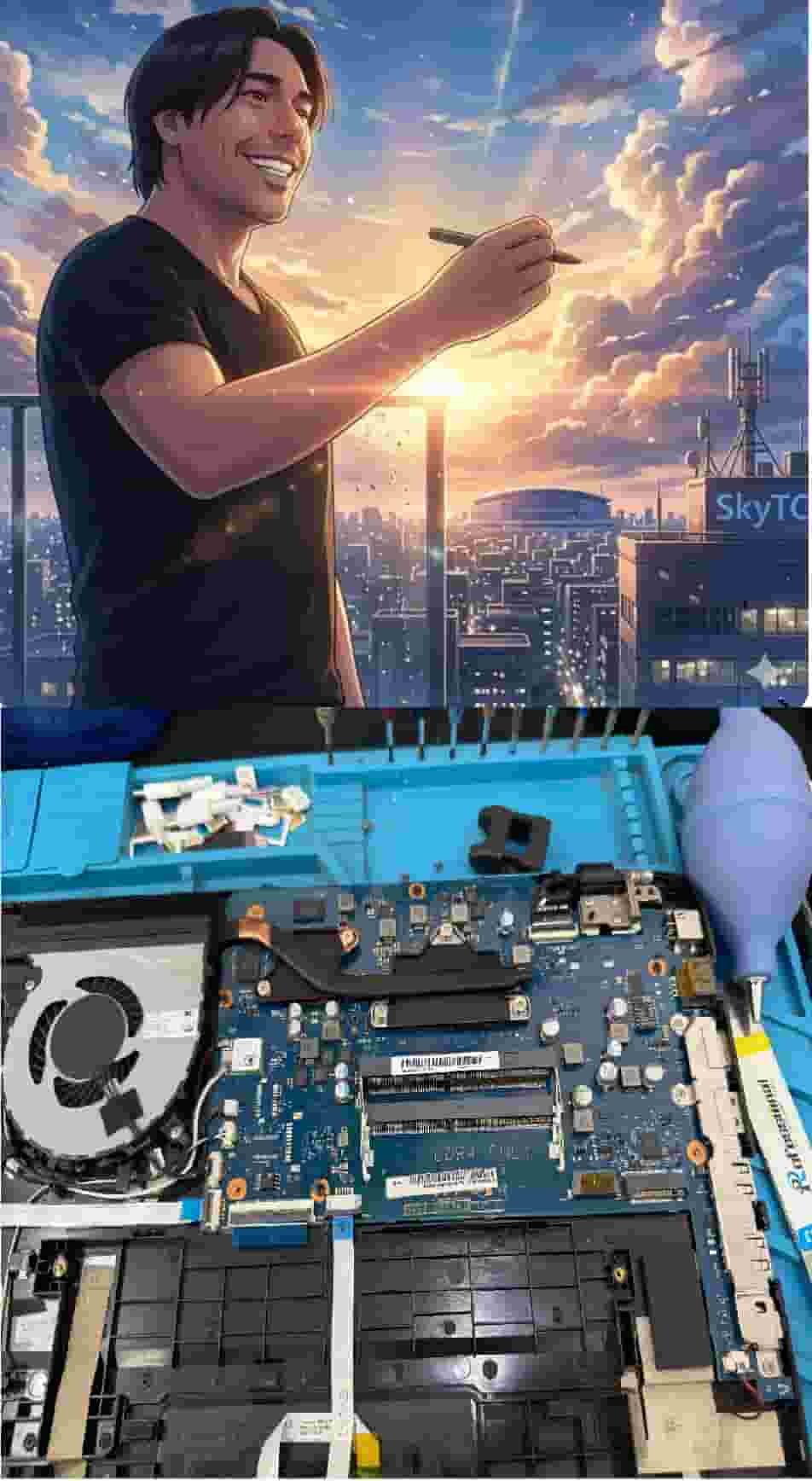
Technical Bio: Hardware & Laptops
“At SkyTC, technology is driven by engineering precision and real field experience. I am Valtersky, and I bring a unique background to the bench: from professional woodworking, the eye for structural integrity; from radiology, an absolute obsession with microscopic details.
As an ultra-endurance marathon runner, I don’t just browse store windows. I tear machines down, run intensive stress tests on thermal dissipation, and validate the actual build quality of every single component. My mission is to translate complex tech engineering and tech finances into smart decisions for your workflow.
Here, we speak straightforward, jargon-free English with the authority of someone who knows exactly what is inside the chassis.”
✨ Read also: How Custom Keyboard Macros Optimize Advanced Workflows
Content that perfectly complements this guide — highly recommended reading.