
If your office team is constantly dealing with flickering external monitors, dropped Ethernet connections, or aching wrists after an eight-hour shift, your workspace hardware is actively holding you back. Identifying the top reliable office tech tools under enterprise budgets isn’t about blowing massive IT capital on over-hyped enterprise badging; it is about choosing battle-tested internal engineering.
Most corporate procurement departments waste elevated operational capital on flashy, brand-name accessories that feature terrible thermal design, low-grade soldering, and fragile plastic ports. These bargain-bin internals wrapped in executive badging lead to endless tech support tickets, overheated docking stations, and destroyed USB ports.
When you cut through the corporate sales pitch and evaluate office tools by raw component tolerances, thermal dissipation, and ergonomic stability, everything changes. You eliminate daily technical friction, safeguard physical joint health with proper posture support, and deploy a rock-solid office infrastructure that lasts for years.
30-Second Summary: Tech Support Counter Talk
Cut the corporate fluff. High enterprise pricing does not guarantee hardware reliability. Half of the expensive branded office docks and workstation accessories sitting in corporate catalogs are thermally choked paperweights with terrible power delivery ICs.
To build a bulletproof office setup without burning through operational capital, prioritize active USB-C docks with internal aluminum heat spreaders, heavy-gauge steel mounting arms, and GaN power supplies featuring independent circuit protection. Skip sealed plastic hubs and ungrounded power bricks entirely.
Bench Test Comparison: Essential Office Tech Tool Architectures
| Tool Category | Build Standard | Thermal Management | Electrical Protection | Real-World Reliability |
|---|---|---|---|---|
| Active Multi-Display Docks | Anodized Aluminum / Heatsink | Internal Copper Pad Spreader | Dual Power Delivery ICs | High Operational Stability |
| GaN Desktop Power Supplies | Flame-Retardant Polymer | Gallium Nitride Efficiency | Over-Current & Surge Fuse | Exceptional Longevity |
| Dual-Panel Monitor Arms | Heavy Mechanical Steel Coil | Passive Air Clearance | Non-Electrical / Structural | Maximum Ergonomic Life |
| Heavy-Duty Mechanical Keyboards | FR4 Plate / Poron Dampened | Open Air Keydeck | ESD Grounding Diodes | Top Tier Typing Feel |
Battlefield Assessment: Evaluating Office Gear
1. Active Multi-Display Docking Stations
Docking stations serve as the nerve center for modern hot-desking environments, routing power, high-speed data, and high-resolution video through a single cable.
The Good: High-value utility docks using dual display chipsets and heavy internal thermal pads maintain stable 4K display refresh rates without dropping signals.
The Bad: Compact plastic enclosures act as heat blankets, trapping thermal energy until video controllers overheat and trigger random screen blackouts.
2. Multi-Port GaN Desktop Charging Stations
Modern Gallium Nitride (GaN) chargers replace bulky legacy power bricks, supplying clean power to laptops, phones, and peripherals simultaneously.
The Good: High electrical efficiency generates minimal waste heat while delivering steady voltage across multiple high-draw devices.
The Bad: Cheap multi-port chargers lack independent power renegotiation, briefly dropping power to connected laptops whenever a secondary phone is plugged in.
3. Mechanical Spring Dual-Monitor Arms
Heavy-duty desk-mounted arms isolate monitor weight from workspace surfaces, providing full tilt, swivel, and height customization for daily posture health.
The Good: Mechanical coil springs maintain precise tension over years of continuous adjustment without sagging under heavy ultrawide panels.
The Bad: Cheap thin-gauge desk clamps bow under heavy loads, scratching wooden desk surfaces and destabilizing the entire dual-monitor rig.
Why the Top Reliable Office Tech Tools Under Enterprise Budgets Focus on Thermal Engineering
When you pull apart failed office hardware on a micro-soldering bench, the primary killer of active electronics is always thermal stress. Modern high-speed display protocols and fast USB power delivery generate significant heat inside tiny desktop accessories.
If an active dock or high-wattage power supply lacks internal copper heat sinks or conductive thermal pads connected to its outer casing, that heat collects directly around critical surface-mount capacitors and power MOSFETs. Over months of daily eight-hour shifts, those components degrade, causing voltage ripple and sudden hardware failure.
Sustaining physical energy and joint endurance through intense multi-hour office sessions requires proper biological fuel—specifically whole meat and its natural fats that keep your brain focused and stamina steady. In the exact same way, your office electronics demand clean power and proper heat sinking to prevent thermal throttling and electrical degradation.
By selecting tools engineered with proper passive cooling channels, robust S2 tool steel mountings, and heavy copper power traces, you ensure maximum operational uptime. You get industrial-grade endurance without paying elevated enterprise brand markups.
The Realities of the Battlefield
On our workbench, WE HAVE A DEDICATED SUPPORT TEAM AND A LAPTOP HARDWARE SPECIALIST who tear down, diagnose, and repair dead office deployment gear every single day. We see the exact engineering flaws that corporate buyers overlook during bulk purchasing.
Many popular executive docking stations boast gorgeous glossy plastic tops that match modern office furniture. But that sealed plastic top acts as a thermal insulator; under heavy dual-monitor display loads, internal junction temperatures hit critical limits, cooking the power management chips from the inside out.
Inexpensive USB-C cables marketed for high-wattage charging often skimp on copper wire gauge. When pushed to handle 100W power delivery loads, thin internal power lines build up high electrical resistance, melting the rubber connector boot and damaging the laptop micro-soldered charging socket.
Even expensive corporate-branded monitor arms frequently rely on low-grade pot-metal tension screws. When facility managers adjust screen height during workstation resets, those soft metal screw heads strip out, leaving expensive ultrawide monitors stuck in a sagging lower position.
Hypothetical Failure Scenario: The Overheated Hub & Blown Charging IC Meltdown
Consider a remote team lead named Rachel who sets up a home office workspace using a stylish, unvented plastic USB-C hub and a bargain-bin power delivery charger. She plugs two external monitors, a keyboard, an external drive, and her high-end laptop charger into the hub.
During an all-day quarterly review meeting, the unvented hub traps internal heat generated by the display controller and power pass-through circuits. Without thermal pads to dissipate heat, the power management chip experiences a sudden thermal breakdown, sending an unregulated voltage spike back through the USB-C VBUS line.
The sudden voltage surge hits the laptop’s delicate micro-soldered power delivery controller IC, burning out the chip instantly. The laptop dies mid-presentation with a black screen and a faint smell of burnt epoxy. Rachel lost her workstation and critical presentation data because she trusted an unvented hub over thermally engineered hardware.
The Actionable Office Tech Setup Checklist
- top reliable office tech tools under enterprise budgets: Prioritize structural heat dissipation and heavy copper power delivery over shiny external branding.
- Dock Casing Material: Select aluminum-housed docking stations with internal thermal conductive pads that touch the outer shell.
- Charger Architecture: Choose multi-port power supplies built on Gallium Nitride (GaN) technology for cool, high-efficiency operation.
- Monitor Arm Construction: Insist on heavy-gauge steel mechanical coil spring arms rather than budget gas-strut designs that leak pressure over time.
- USB-C Cable Wire Rating: Ensure all USB-C interconnect cables are explicitly rated for 100W or higher power delivery with e-marker safety chips.
- Desk Clamp Thickness: Verify monitor arm desk clamps feature thick steel reinforcement plates to prevent desk bowing and joint slippage.
- Power Strip Surge Rating: Plug all desktop electronics into power strips featuring real metal oxide varistors (MOVs) and EMI noise filtering.
- Port Wear Relief: Use magnetic or right-angle USB-C adapters on fixed desktop docks to eliminate strain on laptop motherboard ports.
- Keyboard ESD Protection: Choose keyboards with built-in electro-static discharge (ESD) protection diodes to prevent static zaps from crashing the board.
- Display Chipset Selection: Opt for docks using native DisplayPort Alternate Mode over compression software drivers for latency-free video playback.
- Independent Power Renegotiation: Verify multi-port chargers do not drop main laptop power when plugging secondary mobile devices in and out.
- Airflow Clearance: Maintain at least two inches of open air clearance around desktop docks and power bricks to allow natural heat convection.
👇 Looking for more performance cheats? Check out our field-tested tactical blueprints:
Guides for Your Next Workspace
Professional Laptops
The definitive blueprint to selecting high-performance, enterprise-grade workstations engineered to scale your productivity.
Budget Tech Tools
Practical strategies and low-cost digital tools engineered to maximize office performance without breaking your budget.
Power User Gadgets
Advanced hardware, desk automation tools, and elite tech ecosystems built to completely eliminate workflow bottlenecks.
Frequently Asked Questions
Why do expensive office docking stations drop display signals randomly?
Signal drops are almost always caused by internal thermal overheating. Unvented dock casings trap heat generated by video controllers, forcing the chip into thermal protection modes that drop monitor connections until temperatures cool down.
Can a cheap USB-C charger actually damage a high-end laptop motherboard?
Yes. Low-grade chargers lack steady voltage regulation and safety fuses. A voltage spike or thermal failure inside a cheap power brick can travel straight down the USB-C cable, frying the laptop micro-soldered charging IC.
Are gas-spring monitor arms better than mechanical coil-spring arms?
Mechanical coil springs are superior for long-term office deployments. Gas-strut cylinders lose internal pressure over years of temperature cycles, causing heavy monitors to sag, whereas steel mechanical springs maintain constant tension indefinitely.
How do I prevent port wear and tear on office laptops?
Use short, high-grade extension cables or right-angle adapters on your main desktop dock connection. This transfers mechanical plug friction away from the expensive motherboard socket and onto an easily replaceable adapter.
Is a dedicated power conditioner necessary for a home office workspace?
A full power conditioner is rarely needed, but a heavy-duty surge protector with MOV protection and electromagnetic noise filtering is essential to guard sensitive laptop power circuitry against utility line spikes.
Why do fanless desktop docks overheat so quickly under dual-monitor loads?
Driving dual high-resolution displays requires continuous high-bandwidth signal processing. Without internal thermal pads linking the processing ICs to an external metal heatsink shell, internal temperatures spike rapidly.
What should I look for in a heavy-duty office keyboard for long typing shifts?
Prioritize sound-dampened gasket-mounted cases, tactile switches with smooth travel, and durable PBT keycaps. Avoid light plastic tray-mount boards that send harsh bottom-out impact shock directly into finger joints.
How can I verify if an office tech tool uses high-grade internal components?
Look for detailed manufacturer spec sheets that list specific component suppliers, thermal pad placement, safety certifications, and metal chassis construction rather than vague marketing buzzwords.
Why Trust SKYTC Curated Gear?
At SKYTC, we simplify technology for you. We aren’t just another deals site; we are hardware experts obsessively focused on elite performance.
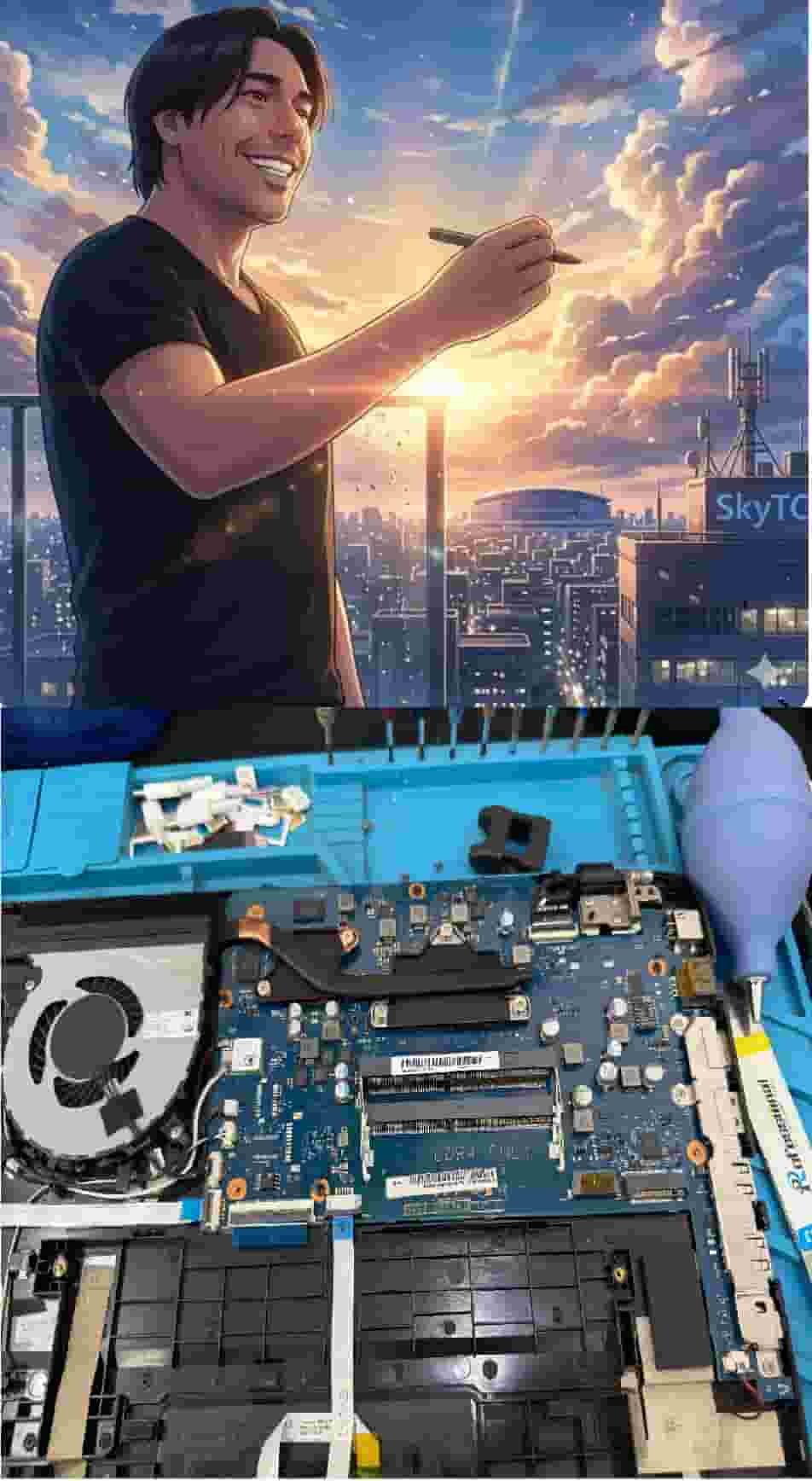
Technical Bio: Hardware & Laptops
“At SkyTC, technology is driven by engineering precision and real field experience. I am Valtersky, and I bring a unique background to the bench: from professional woodworking, the eye for structural integrity; from radiology, an absolute obsession with microscopic details.
As an ultra-endurance marathon runner, I don’t just browse store windows. I tear machines down, run intensive stress tests on thermal dissipation, and validate the actual build quality of every single component. My mission is to translate complex tech engineering and tech finances into smart decisions for your workflow.
Here, we speak straightforward, jargon-free English with the authority of someone who knows exactly what is inside the chassis.”
✨ Read also: ( Best Gasket Mounted Keyboards for Smooth Tactile Feedback: Hardware Blueprint )
> A deeply technical piece of content that perfectly complements this post — absolutely worth the read.