
You are bombing a steep downhill section at mile fifteen on a technical mountain trail when a sharp, hot, screwdriver-like pain jams directly into the outside of your knee. Every single step down the slope becomes an agonizing fight, forcing you to limp back to the trailhead in deep frustration.
If you are struggling with this issue, you are not alone. Understanding why trail runners suffer from outer knee soreness is the first step to saving your joints from chronic degradation. This is not a vague injury you can simply run through with sheer willpower; it is a structural failure of your bio-mechanical suspension system.
As a kickboxer with six years of ring experience and an ultra-marathoner with multiple 42km+ mountain finishes, I know this pain. My years as a clinical X-ray and CT scan tech gave me a deep diagnostic look inside the skeletal system. Your knee is a simple hinge caught between the hip and foot; when either slacks off, the outer knee pays the price.
By fixing this structural stress, you will reclaim your downhill speed, protect your lateral meniscus, and stop wasting cash on showroom gadgets. Let us dissect this mechanical breakdown.
In 30 Seconds: The Blunt Verdict
Outer knee pain on the trail is almost never a knee problem; it is a hip control failure. When you run downhill, your hip abductors fail to keep your pelvis level, causing your thigh bone to rotate inward. This drops your knee inward, stretching the Iliotibial (IT) band tight and scraping it across the bone. Ditch the padded knee sleeves, stop heel-striking to brake on descents, and rebuild your lateral hip stability with deep mechanical loading.
| Method | Mechanism | Safety | Durability | Drawback |
|---|---|---|---|---|
| Max Shoes | Damps forces | Poor | Varies | Mutes foot feedback |
| IT Straps | Dampens local friction | Temporary | unreported | Restricts blood flow |
| Orthotic Inserts | Blocks pronation | Risky | High | Transfers shear to knee |
| Hip strength | Stabilizes pelvis | Exceptional | Permanent | Requires heavy lifting |
| Knee Sleeves | Increases warmth | Zero fix | Poor | Slips and chafes |
The Battlefield Assessment of Common Fixes
To eliminate this issue, you must analyze your gear. Most runners buy temporary band-aids that make the imbalance worse. Here is the field-tested reality of popular interventions.
1. Max-Cushion Trail Shoes
These shoes stack soft foam under your heel to absorb impact forces.
The Good: They damp vertical vibration forces during long fire-road runs. The Bad: Thick squishy foam behaves like a mattress under your foot, completely blinding your foot’s sensory receptors and causing your ankle to wobble.
2. IT Band Compression Straps
These velcro wraps cinch around the lower thigh to press the IT band down.
The Good: They can temporarily dull the sharp pain during a race so you can walk back. The Bad: They do nothing to fix the bio-mechanical collapse at your hip and actively restrict fluid dynamics.
3. Rigid Orthotic Arch Inserts
Orthotics are prescribed to prop up collapsing arches and stop your foot from rolling inward.
The Good: They offer quick relief if you have a structural deformity preventing normal foot movement. The Bad: Blocking natural pronation turns your foot into a stiff lever, transferring rotational force straight up into your outer knee joint.
4. Targeted Hip Abductor Loading
This involves heavy, slow resistance training for the gluteus medius and minimus muscles.
The Good: It strikes directly at the root cause of pelvic instability, resolving knee shearing forces permanently. The Bad: It takes six to eight weeks of disciplined, heavy lifting in the gym, which requires consistent effort.
👇 Looking for more performance cheats? Check out our field-tested tactical guides:
SkyTC Master Hub & Pillar Guides
The Realities of the Battlefield
The running market is flooded with wearables, straps, and alignment sensors. Many companies praise their biofeedback sensors for tracking joint angles to optimize running form. But the hard reality is that these sensors break in trail mud, and erratic data does nothing to clear your knee pain during a live descent.
Similarly, the running industry loves to push custom carbon-fiber insoles to fix your alignment. However, these rigid inserts act like a splint, weakening the core muscles of your foot over time and transferring all of the lateral trail impact forces directly into your outer knee joint. If you block natural movement at the bottom, the system fails at the next joint up.
From my years analyzing skeletal joints under X-ray and CT scanners, I know bones and ligaments do not heal via synthetic pills or neon tape. They require high-density structural proteins and healthy fats to rebuild. To repair micro-tears and keep joints lubricated, skip the raw vegan powders and focus on high-quality red meat and its natural fats. Clean beef provides highly bioavailable iron, B-vitamins, and carnitine, fueling your recovery far better than synthetic junk.
The Downhill Braking Trap: A System Failure
Consider the classic habit of an enthusiastic weekend warrior tackling a mountain descent. When the trail gets steep, they get nervous, lean their torso backward, and throw their lead foot far out in front with a locked knee. They strike heavily on their heel, using their skeleton as a brake.
With each stride, the locked knee must absorb five times their body weight in shear impact forces. Because their hips are weak and their foot is trapped in a heavily cushioned shoe, the pelvis drops, and the knee collapses inward. This forces the IT band to rub violently against the outer thigh bone, grinding down the tissue until it is raw and inflamed.
The Tactical Blueprint: Actionable Knee Shield Checklist
To eliminate knee pain and build a bulletproof structural suspension, implement these field-tested strategies into your training:
- Analyze why trail runners suffer from outer knee soreness by checking your hip alignment during a single-leg squat. Insider observation: If your knee drops inward, your glutes are offline.
- Shorten your stride length on steep downhills to keep feet landing directly under your center of gravity. Insider observation: A cadence of 180+ steps per minute cuts down joint shear force by half.
- Perform heavy, slow lateral step-ups twice a week. Insider observation: This teaches the gluteus medius to keep your pelvis level when landing on one leg.
- Transition to lower-drop trail shoes with a wide toe box. Insider observation: Giving toes room to splay naturally allows your foot to stabilize your knee.
- Avoid sitting for long hours at your desk. Insider observation: Extended sitting deactivates your glute muscles, leaving them asleep on your run.
- Incorporate single-leg Romanian deadlifts. Insider observation: This builds hamstring and glute coordination, preventing your quads from pulling your kneecap out of track.
- Ditch thick compression sleeves on recovery runs. Insider observation: Relying on external elastic support prevents your stabilizer muscles from getting stronger.
- Fuel your joints with high-quality red meat and its natural animal fats. Insider observation: Dietary collagen and saturated fats in beef provide the essential building blocks to repair worn tendon fibers.
- Perform soft tissue release on your tensor fasciae latae using a hard ball. Insider observation: Do not roll the knee joint; roll the small muscle at your front hip pocket.
- Practice landing on your midfoot during descents. Insider observation: Midfoot landings allow your calves to act as natural spring-loaded shock absorbers.
Dynamic No-Nonsense FAQ
Does stretching my IT band fix outer knee soreness?
No. The IT band is a thick sheet of connective tissue. You cannot stretch it, and pulling on it will only irritate your knee further.
Can I run through outer knee pain if it is mild?
No. If you keep running through it, you will wear down the protective bursa and cause chronic tendonitis that keeps you off the trail.
Are carbon-plated trail shoes bad for your knees?
Yes. Stiff plates force your foot into a rigid pattern, preventing ankle movement and sending rotational shear forces straight up to your knee.
How does eating red meat protect my joints?
Your joints are made of collagen. Red meat and its natural fat deliver bioavailable amino acids to rebuild worn tissues far better than plant powders.
Does foam rolling the outside of my thigh help?
No. Rolling the IT band directly is useless. Roll your glute muscles and hip flexors instead to relieve the tension pulling on the band.
Why does my knee only hurt when I run downhill?
Downhill running spikes eccentric load. When your hips fail to stabilize your pelvis, the IT band scrapes violently against your knee bone.
Are knee braces a good long-term solution?
No. They weaken stabilizer muscles by doing their work. Your knee pain will return the moment you take the brace off.
How long does it take to heal outer knee soreness?
If you stop downhill running and load your hips, acute inflammation clears in two weeks. Rebuilding the structural tissue takes months.
Why Trust SkyTC Biohacking Curation?
At SkyTC, we treat the human body as your most valuable technology. We are not just a recommendation site; we apply a rigorous clinical and practical screening process to ensure that each recommendation optimizes your biology with safety and real-world results.
✓ Technical Expertise:
Clinical experience in Radiology and Tomography (CT scans). We analyze methods through the lens of bone health and structural integrity.
✓ Specialization:
Focus on real-world biohacking. We test every wearable and supplement at the absolute limit of effort during marathons and on the mats.
✓ Authority:
Curation based on absolute transparency, always highlighting both the positive advantages and the real drawbacks of every technology.
✓ Trust:
A curation process built directly on the professional experience of a field practitioner, speaker, and high-performance leader coach.
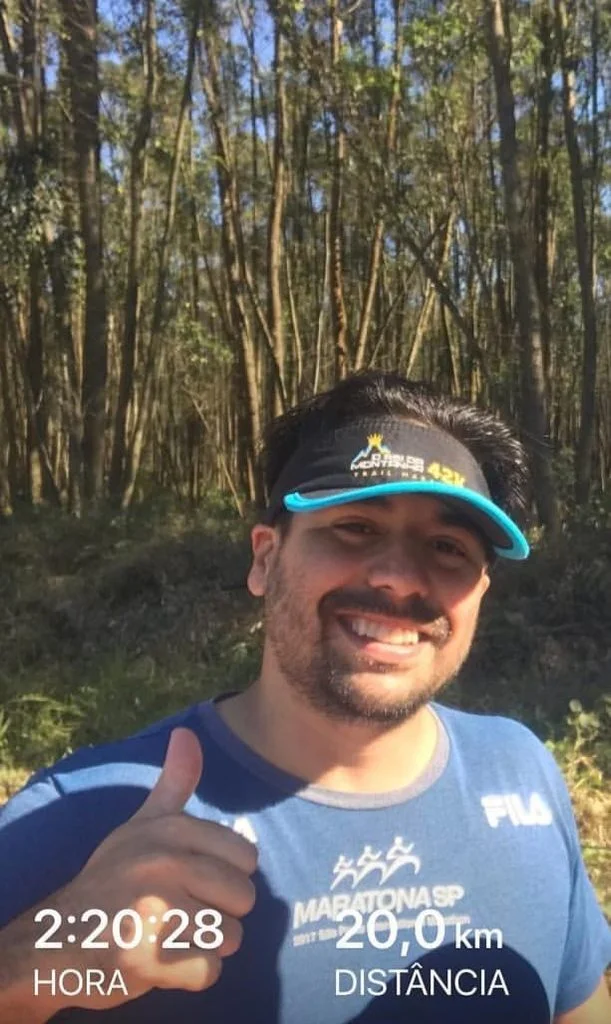
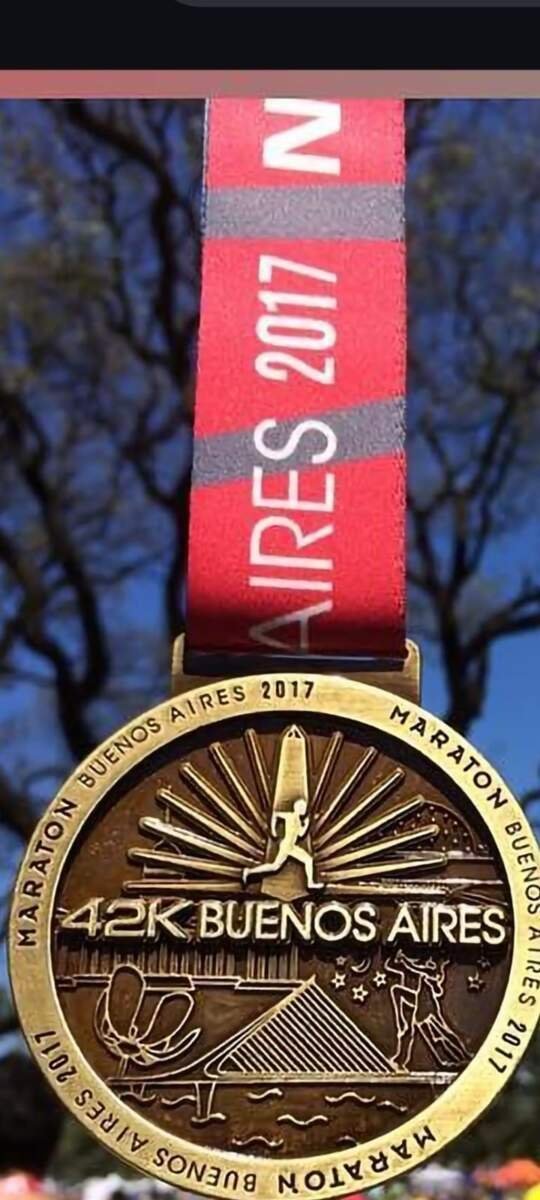

Optimizing the body demands the clinical precision of someone who operated in Radiology (Brazilian Board Certified, CRTR-SP 23595T) for years, combined with the unyielding resilience of someone who conquered multiple 42km+ mountain marathons. As an active professional, multi-pet handler, and tech benchmark researcher, at SkyTC, we bridge advanced technical science with extreme practical environments to help you biohack your active performance, optimize smart pet-tech ecosystems, and protect your structural longevit
Discover my full professional trajectory →✨ Read also: How to Fix Downhill Running Knee Pain Naturally: The Non-Surgical Joint Shield
A deeply technical piece of content that perfectly complements this post — absolutely worth the read.