
You feel a dull, aching throb in your shin bone that refuses to go away after miles of pounding technical trail. You ignore it, assuming it is just a stubborn case of shin splints, until a sudden sharp crack stops you dead in your tracks. A stress fracture has just sidelined you for three months, throwing your training block and your peace of mind directly into the trash.
If you are an active runner over thirty, your skeletal frame is quietly shedding minerals every single year. Learning how to build dense bones for lifetime running is not a luxury option; it is a critical survival manual for your joints. If you do not actively trigger bone remodeling, the mechanical stress of running will slowly grind down your skeletal frame until it fractures.
As a former competitive kickboxer with six years of heavy ring experience and an ultra-marathoner with multiple 42km+ mountain finishes, I know what skeletal impact demands. My five years working as a clinical X-ray technician and two years specialized in Computed Tomography (CT scans) gave me a literal deep diagnostic look inside the human skeletal system. I have scanned thousands of shins, hips, and spines, witnessing firsthand the difference between hollow, brittle bone matrices and dense, high-performance skeletal structures.
By fixing your bone remodeling pathways, you will run without pain, secure your structural longevity, and stop wasting thousands of dollars on useless supplement trends. Let us bypass the showroom marketing hype and look at the actual clinical engineering of your bones.
In 30 Seconds: The Blunt Verdict
Running alone does not build dense bones; in fact, chronic low-intensity cardio without strength training actively wastes bone mass over time. To force your osteoblasts to lay down new calcium, you need intense, multi-directional impact and heavy axial loading. Throw away the synthetic calcium carbonate pills that only calcify your arteries. Rebuild your structural frame using heavy squats, short plyometric sessions, and a diet rich in saturated animal fats to absorb bone-building vitamins.
| Intervention | Primary Stimulus | Latency | Equipment | The Battle Drawback |
|---|---|---|---|---|
| Heavy Squats | Axial mechanical load | 4 – 6 Months | Barbell rack | Requires strict form |
| Plyometrics | Multi-directional impact | 3 – 4 Months | None | High joint strain risk |
| LISS Running | Repetitive low-impact | Adaptive plateau | Shoes | Can deplete bone mass |
| Vibe Plates | Micro-oscillations | Minimal effect | Vibration plate | Extremely expensive |
| Calcium Pills | Dietary mineral load | Zero stimulus | Pills | Calcifies blood vessels |
The Mechanics to Build Dense Bones for Lifetime Running
To systematically trigger osteogenesis, you must choose the right mechanical stimulus. Most runners pick the easiest option, wasting months on protocols that provide zero skeletal adaptation. Here is the clinical assessment of how these interventions perform in the real world.
1. Heavy Axial Squats
Placing a heavy barbell across your shoulders compresses your entire spine and femur, sending a clear mechanical signal to your osteocytes that they need to strengthen the bone matrix.
The Good: It is the single most powerful tool to trigger whole-body bone density increases in the spine and femoral neck. The Bad: If your lifting form collapses or you rush to lift too heavy, you risk herniating a disc or damaging your knee cartilage.
2. Multi-Directional Plyometrics
Bones adapt specifically to the direction of force. Running is purely linear, whereas plyometric jumping forces bone remodeling from multiple defensive angles.
The Good: It builds localized density in the heel, tibia, and ankle joints in under fifteen minutes per week. The Bad: If you perform these drills on hard concrete while already carrying chronic tissue fatigue, you will easily trigger an Achilles tendon tear.
3. High-Volume Steady-State Running
Chronic long-distance running is often assumed to build bone density, but the repetitive, low-impact nature of flat running fails to trigger new adaptation once the body adjusts.
The Good: It maintains cardiovascular pathways and base metabolic health. The Bad: Excess mileage without strength work raises cortisol, depleting your systemic hormone levels and actively eroding your bone density over time.
4. Synthetic Calcium Carbonate Supplements
The standard wellness trap is to swallow massive doses of chalk-like calcium carbonate pills to protect your skeleton from fracturing.
The Good: They are cheap and readily available at every local pharmacy. The Bad: Without crucial fat-soluble vitamins, this inorganic calcium cannot navigate to your bones, depositing instead into your arteries and forming dangerous plaque.
👇 Looking for more performance cheats? Check out our field-tested tactical guides:
SkyTC Master Hub & Pillar Guides
The Realities of the Battlefield
The fitness industry is flooded with high-frequency vibrating power plates that claim to cure bone density loss passively. Many health centers praise these vibrating platforms for stimulating osteoblast activity while you simply stand on them. But the hard reality is that these machine vibrations produce a fraction of the mechanical force required to trigger deep cortical bone thickening, making them an expensive showroom gimmick that wastes your time.
Similarly, the wellness market loves to push green powder mineral drinks and plant-based bone complex supplements. However, these highly processed vegan powders lack the essential animal-based lipids and natural fats required to absorb fat-soluble vitamins like D3 and K2. Your bones are not composed of dry minerals; they are built on a living protein collagen scaffold that requires proper biological fuel.
When you look at skeletal architecture via CT scans, you realize that bone density depends entirely on your body’s ability to deposit calcium into the osteon matrix. To coordinate this process, your system needs the high-density cholesterol and saturated fats found in clean red meat and its natural fat. Saturated fat acts as the tactical transport vehicle for vitamins D3 and K2, ensuring calcium is pulled out of your bloodstream and locked directly into your skeleton. Skipping the ribeye steak and tallow for green juices is a fast-track ticket to osteopenia and stress fractures.
The Low-Fat Cardio Loop: A Classic System Failure
Consider the daily routine of a highly driven, thirty-five-year-old executive training for their first 50km mountain trail run. To stay lean and mean, they cut all animal fats from their diet, subsisting on salads, egg whites, and black coffee. They run sixty miles a week, pounding flat pavement while completely ignoring strength training.
Within six months, their high training volume combined with low fat-soluble vitamin intake sends their cortisol levels sky-high, shutting down their sex hormones and halting bone remodeling. A sudden, sharp pain appears in their hip, which a CT scan later reveals is a femoral neck stress fracture. Because they starved their skeletal system of high-fat red meat and heavy mechanical load, they are forced into months of crutches, losing all their hard-earned conditioning.
The Tactical Blueprint: Actionable Bone Density Checklist
To protect your skeletal frame from micro-fractures and build resilient joints, implement this field-tested checklist immediately:
- Build dense bones for lifetime running by scheduling two heavy strength training sessions every single week. Insider observation: Focus on axial compound movements like the barbell back squat to load your entire spine and femurs.
- Incorporate multi-directional hops and jumps on soft grass before your runs. Insider observation: Jumping sideways and diagonally forces your bone cells to thicken the skeletal walls against unpredictable trail twisting.
- Ditch the cheap calcium carbonate supplements immediately. Insider observation: These chalky pills do not reach your skeletal system and end up calcifying your delicate cardiovascular walls instead.
- Prioritize eating grass-fed red meat with its natural yellow fat. Insider observation: The natural fats and cholesterol in high-quality beef are essential to optimize your natural hormone production and support bone remodeling.
- Supplement with high-dose Vitamin D3 and K2 dissolved in animal fat. Insider observation: Vitamin D3 absorbs the calcium from your gut, while K2 acts like a GPS, driving that calcium straight into your bones.
- Ditch the max-cushion platform shoes for your daily walking or easy runs. Insider observation: Overly thick foam mutes the sensory ground feedback, preventing your legs from registering the bone-building impact signals.
- Monitor your morning heart rate variability (HRV) to check for systemic recovery. Insider observation: A chronically tanked HRV indicates high cortisol levels, which actively blocks osteoblast activity and wastes bone tissue.
- Perform heavy farmer’s carries with heavy kettlebells once a week. Insider observation: Carrying half your body weight in your hands forces your collarbones, wrists, and spine to compress and thicken rapidly.
- Avoid running high mileages while in a deep caloric deficit. Insider observation: Running on empty forces your body to pull minerals out of your bones to keep your muscular system firing.
- Expose your skin to midday sunlight for fifteen minutes without sunscreen. Insider observation: Natural UV exposure triggers endogenous vitamin D production, which is the foundational catalyst for bone mineralization.
Dynamic No-Nonsense FAQ
Can running alone prevent bone density loss?
No. Running is a repetitive, linear movement. Once your skeleton adapts to the impact of your stride, bone remodeling plateaus, and high mileage without lifting will actually deplete your bone mass.
Why are calcium pills a waste of money?
Most calcium pills use cheap calcium carbonate, which is essentially chalk. Your body cannot absorb it properly without vitamins D3 and K2, causing it to calcify your arteries instead of your bones.
Does lifting weights make runners too heavy or slow?
Absolutely not. Lifting heavy weights with low repetitions builds dense, high-performance muscle fibers and thickens bone matrix without adding bulky, slow mass. It is your ultimate longevity cheat code.
How does eating red meat protect against stress fractures?
Your bones are not just minerals; they are built on a living collagen protein matrix. Red meat and its natural fats provide the amino acids, fat-soluble vitamins, and cholesterol required to rebuild this matrix.
Are bone density scans (DEXA) actually useful?
Yes, but only if you track them over years. A single scan only gives you a static snapshot. You need serial scans to see if your training and diet are actually building bone over time.
How long does it take to rebuild bone density?
Bone is a slow-adapting tissue. While muscles adapt in weeks, it takes four to six months of consistent heavy axial loading to see measurable changes in your bone density scans.
Is swimming or cycling good for building dense bones?
No. They are non-weight-bearing exercises. While excellent for cardiorespiratory health, they provide zero mechanical stimulus to trigger bone remodeling, leaving your bones vulnerable to thinning.
Should I run with weighted vests to build bone?
No, that is a recipe for joint disaster. Adding dead weight to a repetitive linear motion spikes joint shearing forces. Build your bone density through heavy squats and plyometrics in a controlled gym environment instead.
Why Trust SkyTC Biohacking Curation?
At SkyTC, we treat the human body as your most valuable technology. We are not just a recommendation site; we apply a rigorous clinical and practical screening process to ensure that each recommendation optimizes your biology with safety and real-world results.
✓ Technical Expertise:
Clinical experience in Radiology and Tomography (CT scans). We analyze methods through the lens of bone health and structural integrity.
✓ Specialization:
Focus on real-world biohacking. We test every wearable and supplement at the absolute limit of effort during marathons and on the mats.
✓ Authority:
Curation based on absolute transparency, always highlighting both the positive advantages and the real drawbacks of every technology.
✓ Trust:
A curation process built directly on the professional experience of a field practitioner, speaker, and high-performance leader coach.

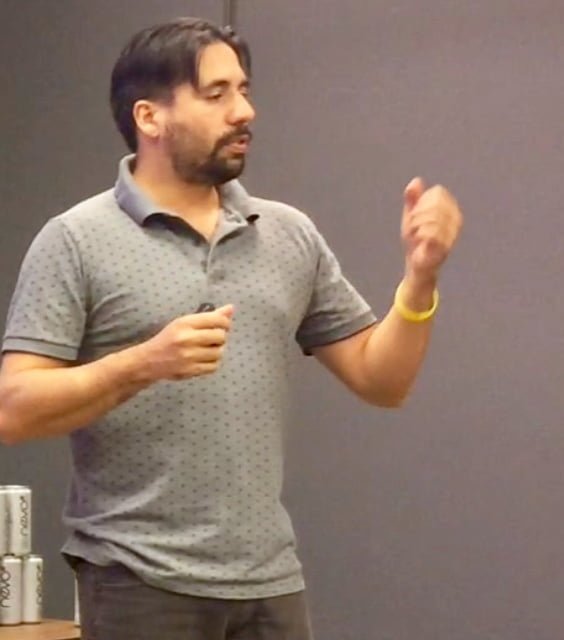


Optimizing the body demands the clinical precision of someone who operated in Radiology (Brazilian Board Certified, CRTR-SP 23595T) for years, combined with the unyielding resilience of someone who conquered multiple 42km+ mountain marathons. As an active professional, multi-pet handler, and tech benchmark researcher, at SkyTC, we bridge advanced technical science with extreme practical environments to help you biohack your active performance, optimize smart pet-tech ecosystems, and protect your structural longevit
Discover my full professional trajectory →✨ Read also: How to Fix Running Bone Density Loss Naturally and Save Your Skeletal Frame
A deeply technical piece of content that perfectly complements this post — absolutely worth the read.