
If you are hunting for the best GPS trackers for Border Collies, you already know you aren’t dealing with a typical lazy lapdog. You are dealing with an athletic escape artist who has the brain of a rocket scientist and the energy of a hyperactive toddler. Tracking a dog like this requires serious, field-tested technology that keeps up with their lightning-fast pace and high-mileage adventures.
Look, I don’t own a Border Collie myself—my personal sidekick is a small Maltese named Murphy. Murphy’s idea of a wild day is chasing a rogue dust bunny under the couch, so he isn’t exactly planning any prison breaks. However, my team at skytc spends all our time physically testing pet gear out in the wild. One of our team members is a dedicated pet parent and a working dog specialist who knows exactly how fast things go south when an active breed spots a squirrel. We have run these gadgets through mud, rivers, and dense forests to find out what actually keeps your dog safe.
In this guide, we are going to cut through the marketing nonsense and give you the raw truth. No corporate speak, no unrealistic promises, and absolutely no sanitized reviews. Let’s look at what works when your gate gets left open and your dog decides to explore the next town.
Addressing the Pain: The Sudden Panic of the Empty Yard
It is a terrifying feeling that makes your stomach instantly drop. You walk into your backyard with a leash in hand, only to realize the garden gate is swinging open. For owners of most breeds, a quick jog to the end of the driveway is enough to spot their dog sniffing a neighbor’s flowerbed.
With a Border Collie, that is rarely how it plays out. These dogs do not just wander; they travel with absolute purpose and incredible speed. Within five minutes of slipping past your fence, a bored Border Collie can easily be a mile away, weaving through traffic or chasing local wildlife.
Standard microchips are a decent backup, but they only help if someone catches your dog and scans them at a clinic. By then, the damage is already done. You need real-time, active tracking that alerts you the millisecond your dog leaves your property, giving you the peace of mind that you can find them before they reach a busy highway.
Common Mistakes: The Bluetooth and Discount Tech Trap
The biggest mistake city dog owners make is trusting simple Bluetooth tags like Apple AirTags or Tile trackers.
These devices do not contain GPS chips. They rely entirely on nearby smartphones to ping their location. If your Border Collie bolts into an empty park, a wooded trail, or a quiet neighborhood during work hours, there are no phones around to update the signal. You will be left staring at a screen that says “Last seen 2 hours ago” while your dog keeps running farther away.
Another common pitfall is buying cheap, unbranded trackers from sketchy online marketplaces. They promise free tracking with zero subscription fees, but they use cheap 2G cellular chips that lose connection if a single cloud rolls in. Skimping on the safety tech for a highly active dog is a recipe for heartbreak.
In 30 Seconds: The Quick Verdict
If you are standing at a retail counter right now and just want the straight facts, here is the direct counter-service verdict.
The most reliable all-around tracker for a suburban or city Border Collie is the Fi Series 3. It has the longest battery life among smart cellular collars and features a solid, fast escape alert system.
If you want the fastest real-time updates and do not mind charging the device twice a week, grab the Tractive GPS.
If you live off-grid, hike in deep mountains, or have zero cell service, ignore the smart collars entirely and invest in a VHF radio system like the Garmin Alpha. It is expensive and bulky, but it is the only tech that works without cell towers.
Avoid AirTags unless you are using them purely as a backup tag.
Comparative Tracking Analysis
Here is how the top contenders stack up based on our real-world testing. We do not use manufacturer laboratory claims; these numbers reflect actual field use with highly active dogs.
| Tracker Model | Network Type | Real Battery Life | Weight | Subscription Needed | Best For |
|---|---|---|---|---|---|
| Fi Series 3 | LTE-M / GPS | 2 to 4 weeks | 1.1 oz | Yes | Low-maintenance safety |
| Tractive GPS | LTE / GPS | 3 to 7 days | 1.2 oz | Yes | Rapid real-time recoveries |
| Whistle Switch | AT&T LTE / GPS | 5 to 10 days | 1.3 oz | Yes | Health tracking + security |
| Garmin Alpha T20 | VHF Radio | 20 to 68 hours | 8.8 oz | No | Off-grid hiking & rural |
| Apple AirTag | Bluetooth | 1 year | 0.39 oz | No | Secondary backup tag |
The Reality of the Battlefield
Every brand claims their tracker has “weeks of battery life” and is “completely indestructible.” Out on the rugged battlefield of an active dog’s neck, those marketing promises fall apart quickly.
First, battery life is a massive illusion if your dog actually goes missing. Most smart collars save battery by connecting to your home Wi-Fi network. The moment your dog escapes that Wi-Fi bubble, the tracker goes into high-power mode, fighting for cellular and GPS signals. This massive power draw drains batteries fast. A collar that claims to last a month will often run out of juice in twenty-four to forty-eight hours if it is stuck searching for a signal in a weak coverage area.
Second, the hardware finishes on these trackers wear down rapidly. The shiny metallic finishes scratch and peel off within the first week of your dog running through thick brush. Plastic mounting clips can easily crack if your dog plays rough with other pups at the park.
Additionally, even though smart collars are incredibly lightweight, they depend heavily on active cell towers, meaning you will be left in the dark if your dog wanders into a canyon or an area with spotty coverage. If your Border Collie loves diving chest-first into thick briars, a bulky tracker can get snagged and ripped clean off the collar, leaving you tracking a plastic puck in the dirt instead of your actual dog.
Deep Dive: Honest Reviews of the Top Options
Let us look closely at how these trackers perform when strapped to a high-energy working breed.
Fi Series 3 Smart Collar
The Fi Series 3 is the tech industry’s favorite tracker, and it does a lot of things right. It uses an LTE-M network, which penetrates physical obstacles like walls and heavy tree canopies much better than standard cellular signals. The fitness and sleep tracking are fun, and the collar itself looks sleek.
However, the hardware has a frustrating limitation. It utilizes a proprietary link system, meaning you cannot easily slide the tracker onto your favorite heavy-duty tactical collar without buying custom third-party adapters. Also, the escape notification has a lag of ninety seconds to two minutes before it pings your phone. For an athletic dog, ninety seconds is enough time to get three blocks away.
Tractive GPS Dog Tracker
Tractive is a European powerhouse that is highly popular for city pets. Its main selling point is the outstanding “Live Tracking” mode. When you turn it on, the tracker updates its location on your map every two to three seconds. You can literally watch your dog run in real time.
But the battery performance is a significant drawback. Because Tractive updates so frequently and does not have the advanced power-saving chips of some competitors, you will find yourself charging it every few days if your dog spends a lot of time away from home Wi-Fi. It also relies heavily on stable cellular networks; if you live in a valley with poor cell service, this device will spend more time searching for a signal than actually tracking your pup.
Garmin Alpha T20 (VHF System)
The Garmin Alpha is a heavy-duty tool built for hunting and working dogs. It does not use cellular networks and requires zero subscription fees. Instead, it transmits data directly to a rugged handheld receiver using VHF radio waves.
The tracking capability is unmatched—it works in deep mountains, canyons, and remote wilderness areas with absolutely no cell tower coverage. However, carrying this system is a lifestyle choice. The collar is heavy, features a long whip antenna, and the handheld receiver is bulky. It is an expensive solution that is complete overkill for a suburban yard, but it is the only option that keeps your dog safe in the wild.
Why the Best GPS Trackers for Border Collies Must Be Built Differently
You cannot treat a Border Collie like a lazy lap dog. Murphy, my Maltese, can wear almost anything because his top speed is a gentle trot. A Border Collie is a different beast entirely, requiring gear that matches their extreme lifestyle.
First, they run very low to the ground and love diving directly into underbrush. This means their collar tracker is going to take a beating from rocks, thick mud, and water. A tracker with a weak waterproof rating will short out the first time your dog jumps into a creek. You should only look for military-grade waterproofing (IP68).
Second, their acceleration is explosive. A Border Collie can hit top speed in a heartbeat. Because of this, you need a tracker with a high-refresh GPS rate. A tracker that only updates its location every five or ten minutes is useless; by the time you get the notification, your dog could be in another zip code.
The Common Escape Scenario: A Cautionary Tale
Let us paint a picture of how these technical differences play out in the real world.
Imagine it is a windy Tuesday afternoon. You are stuck at the office, and your Border Collie is home in the yard. A utility worker leaves the side gate unlatched by mistake. Your dog, sensing an adventure, pushes the gate open and trots out.
If you have an AirTag on your dog’s collar, nothing happens. Your dog runs down your quiet suburban street. Because it is mid-day, most neighbors are at work, so there are no iPhones nearby to register the tag. Your dog reaches the edge of the local nature reserve and disappears into the thick trees. You have no idea they are gone until you get home hours later.
If you have a proper cellular tracker like the Fi Series 3, your phone buzzes two minutes later with an alert: “Your dog has left the safe zone.” You immediately open the app, switch to lost mode, and see their live path heading toward the park. You can drive straight there and intercept them before they get deep into the woods.
That single notification is the boundary between a minor scare and a tragedy.
Actionable Checklist for Choosing and Using Your Tracker
- Choose from the best GPS trackers for Border Collies that utilize true cellular and GPS chips rather than simple Bluetooth tracking tags. Pro-tip: If a tracker does not require a monthly subscription for cellular data, it is likely using outdated or unreliable tech.
- Check the cellular coverage map for your neighborhood before buying. Pro-tip: If your home has great Verizon coverage but poor AT&T service, choose a tracker that matches your local carrier strength.
- Test the geofence boundary immediately after setting up the app. Pro-tip: Walk the collar around your yard yourself to see exactly where the alert triggers before putting it on your dog.
- Establish a strict charging schedule that fits your routine. Pro-tip: Charge the tracker overnight on a specific day of the week so you never get caught with a dead battery.
- Keep the tracker’s charging contacts clean of dirt and hair. Pro-tip: Use an old toothbrush to clean the brass charging pins on the collar once a month to prevent charging failures.
- Check the collar strap tension weekly. Pro-tip: You should be able to fit two fingers comfortably under the collar; heavy trackers can sag and cause skin irritation if too loose.
- Always pair your GPS tracker with a physical, engraved ID tag. Pro-tip: Tech can fail, so a classic brass tag with your phone number is your ultimate backup safety net.
- Install the tracking app on every family member’s phone. Pro-tip: Share the login credentials so anyone can initiate a search immediately during an emergency.
- Inspect the tracker’s attachment clips for hairline fractures. Pro-tip: Plastic brackets degrade from UV exposure; replace them at the first sign of wear to prevent the tracker from falling off.
- Deactivate “Live Mode” as soon as your dog is secured. Pro-tip: Leaving live tracking active when it is not needed will drain a full battery in a matter of hours.
👇 Looking for more performance cheats? Check out our field-tested tactical blueprints:
The Best GPS Dog Trackers with No Monthly Fees
Real battlefield testing: How to keep your dog 100% safe without getting trapped in expensive subscriptions.
Best Smart Litter Boxes: Honest Testing & Review
Say goodbye to the scoop. We test the internal mechanics, odor control, and safety of top smart litter boxes.
Best Smart Feeding & Interactive Toys for City Pets
How to keep your companion happy, engaged, and fed while managing a busy, away-from-home routine.
FAQ: Direct Answers from the Field
Can I use an Apple AirTag to track my Border Collie?
No. Stop trying to save a buck on your dog’s life. AirTags do not have built-in GPS. They rely on nearby iPhones to update their location. If your dog runs into an empty field, a forest, or a quiet residential street during work hours, you will get zero updates. AirTags are great for keys; they are useless for high-energy escaping dogs.
Do I really have to pay a monthly subscription for these trackers?
Yes. Any GPS tracker that communicates with your phone over long distances without a handheld receiver uses cellular networks. The subscription covers the cellular data plan for the collar. If a brand promises “free cellular tracking with no subscription,” they are selling you junk with a hidden catch.
How long does the battery actually last when my dog is lost?
If your dog is actually lost and the tracker is actively searching for a cellular signal, the battery will drain rapidly. Expect twelve to forty-eight hours of battery life in active search mode, regardless of what the box says. This is why you must act immediately when you get an escape alert.
Are these trackers completely waterproof?
Most quality brands have an IP68 rating, which means they can survive being submerged in shallow water. However, if your Border Collie loves dock diving or swimming in rough river currents for hours, water can eventually find its way past the seals. Always dry the tracker thoroughly after your dog goes swimming.
Will a GPS tracker work inside my house?
GPS signals come from satellites in space, so they struggle to penetrate roofs and concrete ceilings. Most smart collars use your home Wi-Fi network as a “handshake” to know they are safe inside. When the collar loses the Wi-Fi connection, it assumes the dog has left and starts looking for GPS.
Can I attach a GPS tracker to any collar I want?
It depends on the brand. Tractive and Whistle use rubber clips that can attach to almost any standard collar. The Fi Series 3 uses a integrated link system, which requires you to buy specialized collars designed specifically to hold the tracker unit.
What happens if my dog gets lost in an area with no cell service?
If you are using a standard smart collar (like Fi or Tractive) and your dog runs into an area with no cell towers, the tracker cannot send its location to your phone. If you frequently hike off-grid, you must use a VHF radio system like the Garmin Alpha, which does not rely on cell towers.
Do these trackers work internationally?
Some do, but it depends on the subscription plan you choose. Tractive offers a global plan that works in dozens of countries, while other brands are locked to specific regional networks. Double-check the carrier compatibility if you plan to travel across borders with your dog.
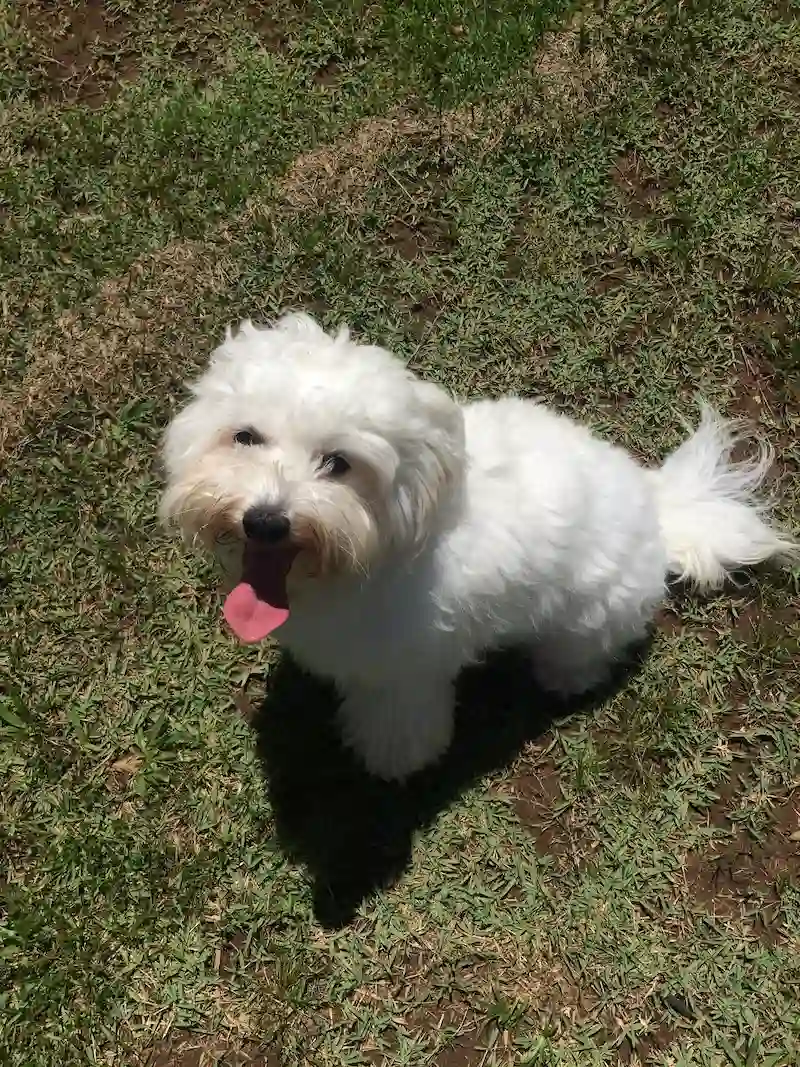 Murphy
 Valtersky
Meet Valtersky & Murphy
FOUNDER OF TEAM SKYTC
At SKYTC, Meet Valtersky & Murphy FOUNDER OF TEAM SKYTCAt SKYTC, cutting-edge pet technology meets real-world testing. We merge Murphy’s hands-on companion trials with Valtersky’s precise analysis—combining over 25 years of structural engineering background with health-tech experience.To guarantee reliability for all breeds, we collaborate with a trusted network of experienced large-breed tutors and active dog handlers who stress-test heavy-duty gear in rugged conditions. We raise the bar for review standards so your best friend gets only the safest, most functional, and highly reliable hardware on the market.
✨ Read also: Smart GPS Collars for German Shepherds
A deeply technical piece of content that perfectly complements this post — absolutely worth the read.