
If you are currently staring at a spinning wheel of death while your machine struggles to render a basic vector file, or if your wrist feels like it is on fire from using a tiny, poorly designed mouse, you are not alone. Finding reliable affordable tech tools for every creative professional is a total minefield because the internet is absolutely crawling with sponsored reviews pushing low-grade junk. You do not need to spend a small fortune on high-end setups just to get your work done on time, but you do need to know where the traps are.
Look, I spend my days behind a repair counter covered in solder smoke, fixing laptops and peripherals that choked because their owners trusted flashy marketing. I see beautiful aluminum shells that hide cheap, bargain-bin capacitors designed to fail the moment you run a heavy rendering cycle. My goal is to show you how to spot the difference between genuine budget value and cheap plastic garbage that will let you down during a tight deadline.
You do not need an academic lecture on tech specs; you need honest, field-tested advice on what hardware holds up under daily professional pressure. We are going to break down the critical accessories that actually make a difference in your workflow, focusing heavily on build quality, thermal management, and physical durability.
By focusing on structural value rather than brand-name hype, you can build a highly efficient workstation that keeps your projects on track and saves you from costly downtime. Let us get down to the dirty details and separate the real workhorses from the landfill-bound toys.
In 30 Seconds: The Straight-Up Verdict
Stop wasting money on over-hyped, brand-name tech when you can build a killer setup using smart, budget-friendly hardware alternatives. Focus your spending on high-quality interface cables, robust color-accurate panels, and ergonomic tools with durable internal switches. Never buy accessories with cheap integrated cables, skip generic hubs that lack proper power shielding, and always prioritize active cooling over plastic aesthetic designs. Buy smart, keep your ports clean, and let the pretenders overpay for logos.
Why Cheap Gear Often Costs You Double
It is incredibly easy to fall into the trap of buying the absolute cheapest option on the shelf when you are trying to bootstrap a creative business. You see a monitor or a tablet with specs that look identical to a premium model, and you think you have beaten the system. But here is the hard truth: those specs are often measured under impossible conditions, and the actual build quality is where the manufacturer clawed back their profit margins.
When you buy bargain-bin tools, you are not just buying cheap plastic; you are buying structural instability, poor thermal design, and awful quality control. That budget keyboard might feel okay for the first week, but once the cheap membrane mushiness kicks in, your typing speed drops, and your hands start cramping up during late-night edits.
A common hypothetical error scenario illustrates this perfectly: Imagine you are a freelance designer putting the final touches on a massive branding project for a high-paying client. You decide to save some cash by using a cheap, unbranded USB dock to connect your backup drive and your graphics tablet. In the middle of saving your massive master file, the dock overheats, loses its connection for a split second, and corrupts your entire storage drive. Now, you have lost days of hard work, missed your critical deadline, and damaged your professional reputation—all because you wanted to save a tiny bit of budget on a vital connection point.
That is the real cost of cheap gear; it is not just the price of the item itself, but the immense stress, lost time, and potential repair bills when it inevitably fails you at the worst possible moment. As a technician, I see this heartbreak weekly, and it is entirely avoidable if you know what to look for.
The Reality of the Battlefield
Many budget mechanical keyboards receive immense praise for their heavy metal top plates and customizable keycaps; however, the actual underlying circuit board is often secured with fragile solder points that crack easily, causing entire columns of keys to stop registering after a few months of heavy typing. Manufacturers love to give you a premium metal feel on the outside while leaving the crucial internal electronics completely unprotected.
Similarly, cheap ergonomic mice boast wonderful soft-touch rubber coatings that provide immediate comfort during long design sessions; but, the low-grade adhesives holding those rubber pads in place will inevitably liquefy under the warmth of your hand, leaving you with a sticky, messy device that ruins your productivity.
Even highly-rated budget IPS monitors promise flawless color gamuts and wide viewing angles on their box; however, the plastic stand mechanisms are often incredibly flimsy, meaning your entire screen will wobble violently every time you type, unless you spend extra money on a solid aftermarket mounting arm. If the structural skeleton of your gear is compromised, all those high-end specifications are completely useless in a real studio environment.
Let me share a quick story from my workbench. Last month, a local video editor brought in an expensive laptop with a melted USB-C port. He had bought a generic multi-port hub online that looked great but had zero power isolation circuitry inside. The hub back-fed voltage directly into his motherboard, turning a simple accessory purchase into a major mainboard repair. This is why I am so obsessive about checking internal build quality before recommending anything.
Essential Tech Categories Demystified
To build a reliable setup without wasting your cash, you need to understand which tech categories offer the best bang for your buck and where the hidden cut corners usually lie. Let us break down the key tools you need to keep your creative projects moving.
Visual Real Estate: Budget Color-Accurate Monitors
A solid display is the absolute center of any creative setup, but high-end monitors can cost a fortune. Thankfully, you can find excellent budget-friendly IPS panels that offer great color accuracy; although they are lightweight and affordable, the screen bezels often feel incredibly cheap and are prone to creaking when adjusted.
When shopping in this tier, look for monitors that offer at least 99% sRGB coverage and factory calibration reports. Avoid panels that boast incredibly high refresh rates at the expense of color depth; a high refresh rate is useless for design work if your reds look like washed-out oranges on your client’s screen.
Make sure the monitor has a matte finish to prevent annoying glare from your studio lights. Glossy screens look pretty in a dark room, but they will turn into giant mirrors the second the sun comes up, causing terrible eye strain over long working days.
Precision Inputs: Ergonomic Mice and Tablets
Your mouse or drawing tablet is your primary interface with your digital canvas, so ergonomics are non-negotiable. Budget vertical mice are fantastic for saving your forearm muscles from painful twisting; however, the physical scroll wheels on these budget models tend to wear out quickly, becoming mushy and skipping lines when you try to scroll through complex timelines.
For illustrators and designers, budget pen tablets have come an incredibly long way, offering pressure sensitivity levels that rival high-end industry standards. Just keep in mind that the passive stylus pens included with cheaper tablets are often incredibly lightweight and feel like cheap hollow plastic in your hand, which can feel awkward until you get used to the balance.
Prioritize tablets that use electromagnetic resonance (EMR) technology so you never have to worry about charging the pen. There is nothing worse than having your creative flow interrupted because your stylus ran out of juice in the middle of a drawing session.
Storage and Hubs: The Silent Workflow Lifesavers
Fast storage and reliable connectivity are the unsung heroes of any creative professional’s desk. Building your own external drive using an NVMe enclosure and a bare SSD is a brilliant way to get blazing-fast speeds without paying the premium brand markup; while these aluminum enclosures are incredibly compact, they can run hot enough to burn your skin during long file transfers if they lack proper internal thermal padding.
When it comes to USB hubs, look for options that feature solid metal housings and detachable connection cables. Hubs with cheap integrated cables are a ticking time bomb because once that main cable frays or gets bent in your bag, the entire hub becomes a useless paperweight.
Always ensure your USB-C hub has dedicated power delivery pass-through that matches or exceeds your laptop’s charging requirements. This prevents your machine from slowly draining its battery while you are running heavy rendering processes on your external drives.
Comparative Table of Budget Gear Performance
Here is a quick look at how these affordable tech categories stack up when you look past the marketing hype and examine the actual hardware value.
| Tech Category | Build Quality Tier | Primary Creative Benefit | Hidden Hardware Flaw | Estimated Lifespan |
|---|---|---|---|---|
| Budget IPS Monitors | Mid-grade panel, plastic frame | Accurate sRGB color reproduction | Inconsistent corner backlighting | 3 to 5 years |
| Vertical Ergonomic Mice | Low-grade plastic shell | Reduces carpal tunnel strain | Fragile scroll wheel axles | 1 to 2 years |
| NVMe Drive Enclosures | Anodized aluminum body | Ultra-fast scratch disk storage | High heat output under load | 5+ years (enclosure only) |
| Budget Drawing Tablets | Medium-durability composite plastic | Precise digital brush control | Easily scratched drawing surface | 2 to 4 years |
| Multi-Port USB-C Hubs | Extruded aluminum casing | Consolidates legacy connections | Wireless signal interference | not informed |
Sourcing Affordable Tech Tools for Every Creative Professional
This checklist will help you navigate the buying process like an absolute pro, ensuring you get maximum value and avoid throwing hard-earned money down the drain.
- Affordable tech tools for every creative professional must offer clear firmware upgrade options on the manufacturer’s website.
Expert Tip: If the manufacturer does not have a support website with downloadable firmware updates, do not buy it. When your computer’s operating system gets an update, that accessory will likely become a useless brick without new drivers. - Inspect the cable joints on any budget USB-C hub.
Expert Tip: Look for reinforced rubber collars at the cable entry point. If the cable feels stiff and lacks flexibility, it will snap internally after a few months of being crammed into your backpack. - Verify the sRGB color gamut of your chosen display.
Expert Tip: Never buy a monitor for design work that has less than 99% sRGB coverage. If the manufacturer does not list the color space coverage, it means the color accuracy is awful. - Choose hot-swappable mechanical keyboards over soldered models.
Expert Tip: Hot-swappable boards allow you to pull out a broken switch and pop in a new one in ten seconds. Soldered boards require a soldering iron to fix a single dead key, which usually means the trash can for most users. - Check for thermal pads inside external NVMe SSD enclosures.
Expert Tip: High-speed drives get incredibly hot and will slow down to a crawl to protect themselves. Make sure the enclosure includes thick silicone thermal pads to transfer heat directly to the metal outer shell. - Look for drawing tablets with physical express keys.
Expert Tip: Physical keys save you from constantly reaching for your keyboard while drawing. Test the keys first to make sure they do not wobble or feel mushy, as cheap buttons will stick over time. - Avoid USB hubs that do not offer dedicated power delivery (PD).
Expert Tip: If you run high-draw devices like external hard drives through a hub without external power, you risk corrupting your data. Make sure the hub can handle pass-through power of at least 85W. - Select vertical mice with matte, textured plastic rather than soft rubber coatings.
Expert Tip: Soft-touch rubber feels great in the store, but skin oils and sweat will turn it into a sticky, peeling mess in less than a year. Plain matte plastic is much easier to clean and lasts forever. - Confirm VESA mount compatibility on any budget display.
Expert Tip: The stands included with cheap monitors are almost always garbage and offer zero height adjustment. A VESA mount allows you to bolt the screen to a cheap monitor arm for perfect ergonomics. - Test any new hub for wireless signal interference immediately.
Expert Tip: Unshielded USB 3.0 ports can completely kill 2.4GHz wireless mouse and Wi-Fi signals. Plug in your external drive and see if your wireless mouse starts lagging; if it does, return the hub.
👇 Looking for more performance cheats? Check out our field-tested tactical blueprints:
Guides for Your Next Workspace
Professional Laptops
The definitive blueprint to selecting high-performance, enterprise-grade workstations engineered to scale your productivity.
Budget Tech Tools
Practical strategies and low-cost digital tools engineered to maximize office performance without breaking your budget.
Power User Gadgets
Advanced hardware, desk automation tools, and elite tech ecosystems built to completely eliminate workflow bottlenecks.
Frequently Asked Questions (FAQ)
Are cheap drawing tablets actually worth it, or should I just buy the big-brand name?
Yes, they are worth it, but stop expecting them to feel like luxury items. The tracking chips inside are highly accurate nowadays, but the actual plastic drawing surface will scratch if you look at it wrong. Keep spare nibs on hand, change them the second they get sharp, and you will save a mountain of cash.
Why does my cheap USB hub keep dropping my wireless mouse connection?
Because the manufacturer saved pennies by skipping electromagnetic shielding on the USB ports. High-speed data transfer creates radio frequency noise that completely chokes out 2.4GHz wireless signals. Plug your wireless receiver into the opposite side of your laptop or use a short USB extension cable to get it away from the hub.
Can I use a cheap gaming monitor for professional color grading?
Absolutely not. Gaming monitors are built for speed, not accuracy. They boost contrast and oversaturate colors to make games look flashy, which completely ruins your ability to calibrate skin tones or print layouts. Buy a budget IPS panel designed for design work, even if it only runs at 60Hz.
Is it safe to run my operating system off a cheap external SSD?
It is a terrible idea. Budget external drives use cheap flash controller chips that are not built for constant, random read/write cycles of an operating system. They will overheat, throttle your performance to a crawl, and eventually lock up, leaving your system unbootable. Use them for asset storage, not boot drives.
Why do cheap mechanical keyboards sound like a loud machine gun?
Because they use cheap, unlubricated stabilizers and hollow plastic cases that act as acoustic echo chambers. If you do not want your clients or roommates to hate you during video calls, buy a keyboard with silent switches or take the time to add some dampening foam inside the case.
Will a cheap vertical mouse actually cure my wrist pain?
It will help rotate your arm into a natural position, but it is not magic. If you keep resting your wrist directly on the hard desk surface instead of using your forearm to move, the pain will stay. Also, be careful not to knock it off your desk; those cheap vertical models have awful drop survival rates.
Should I buy a monitor light bar or just use a desk lamp?
Get the monitor light bar. A cheap desk lamp will create horrible glare on your screen, which forces your eyes to constantly adjust and causes massive headaches. Light bars project light straight down at an angle that illuminates your desk without hitting the glass of your display.
Why do budget tech accessories always seem to break right after the return window?
Because they are built to pass a brief factory test, not to survive the vibration, heat, and humidity of the real world. Manufacturers use low-grade solder that degrades under thermal cycling. Keep your gear cool, do not yank on cables, and clean the dust out of your ports regularly to extend their life.
Why Trust SKYTC Curated Gear?
At SKYTC, we simplify technology for you. We aren’t just another deals site; we are hardware experts obsessively focused on elite performance.
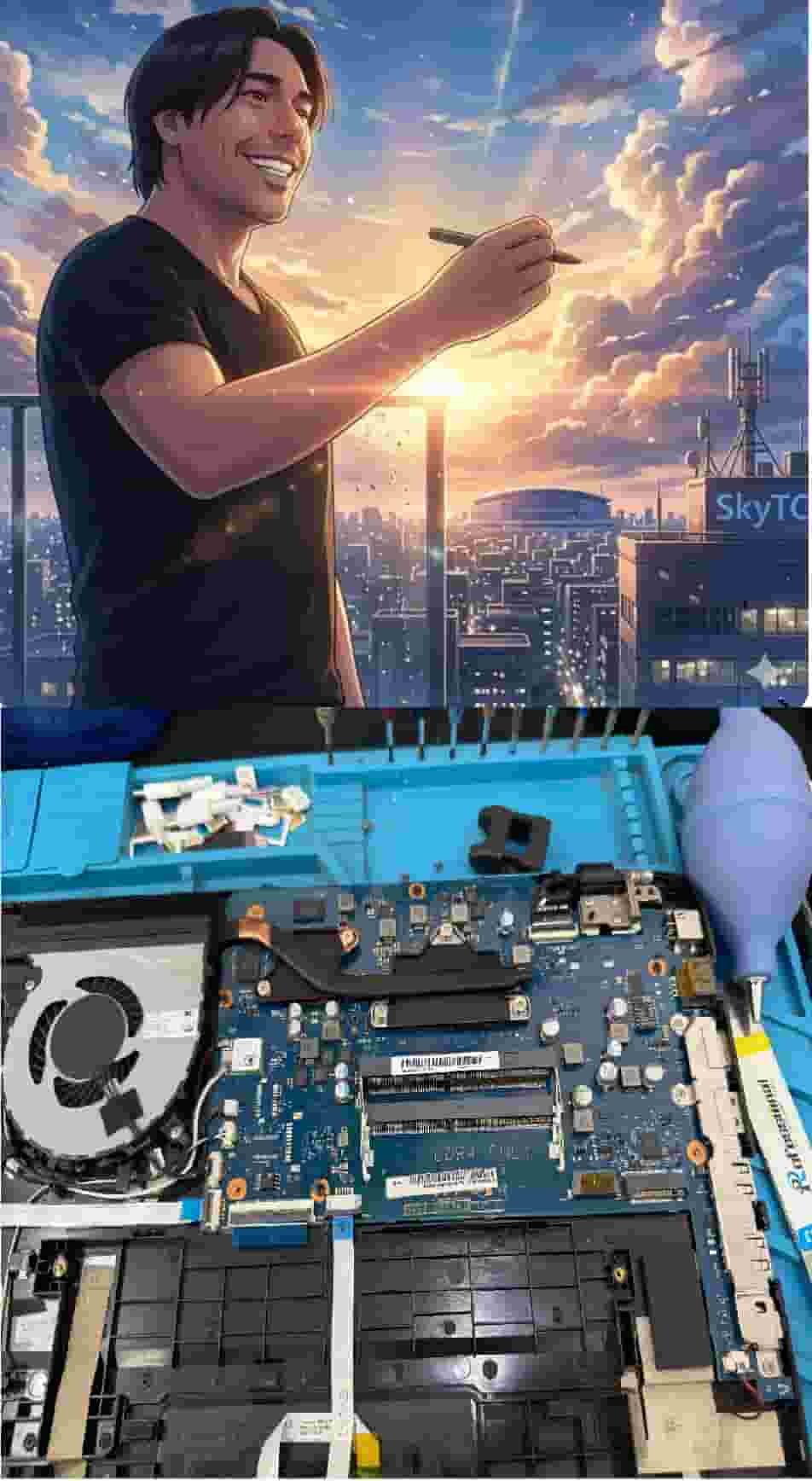
Technical Bio: Hardware & Laptops
“At SkyTC, technology is driven by engineering precision and real field experience. I am Valtersky, and I bring a unique background to the bench: from professional woodworking, the eye for structural integrity; from radiology, an absolute obsession with microscopic details.
As an ultra-endurance marathon runner, I don’t just browse store windows. I tear machines down, run intensive stress tests on thermal dissipation, and validate the actual build quality of every single component. My mission is to translate complex tech engineering and tech finances into smart decisions for your workflow.
Here, we speak straightforward, jargon-free English with the authority of someone who knows exactly what is inside the chassis.”
✨ Read also: Best Value Tech Tools for Remote Freelance Office Desks