
If you are currently sitting at your office desk, rubbing your sore wrists while your coworkers or family members glare at you over the relentless clattering of your keyboard, you are likely typing on the wrong hardware. Understanding why linear switches are better for intensive office work is the absolute first step toward reclaiming your productivity and saving your joints from unnecessary daily fatigue. Most people buy a mechanical keyboard based on flash-in-the-pan internet trends, only to end up with bruised fingertips and an incredibly loud workspace.
Look, I spend my days behind a tech repair bench covered in flux and solder smoke, fixing keyboards for writers, programmers, and digital nomads who easily clock ten hours of typing every single day. I have seen countless beautiful, premium tier setups completely abandoned because the user selected their key switches based on gaming highlights instead of pure, unadulterated office ergonomics. You do not need overcomplicated technical specs; you just need a smooth, effortless typing experience that keeps you typing comfortably until your shift ends.
In this guide, we are going to look past the marketing hype and focus strictly on the physical mechanics of typing. We will dissect how switch design impacts your hand health, typing speeds, and sanity in a professional environment. By the end of this article, you will see exactly why a set of quality linear switches is the single best investment you can make for your everyday workstation.
In 30 Seconds: The Straight-Up Verdict
Choosing linear switches are better for intensive office work because they eliminate the physical friction of a tactile bump, letting your fingers glide effortlessly from key to key without straining your hand muscles. They are significantly quieter than clicky alternatives, preventing your workstation from sounding like a demolition site during important conference calls. Avoid heavy switches and unlubricated assemblies to prevent muscle strain; instead, go for lightly-weighted, factory-lubed linears for a whisper-quiet, incredibly comfortable daily grind.
Why Traditional Office Keyboards Fail Your Hands
Most of us are forced to use the cheap, generic membrane keyboards that come bundled with pre-built office computers. These low-grade components use a squishy rubber dome under each keycap, which requires you to press the key completely down to register the stroke. Over a long ten-hour workday, this constant bottoming-out creates a harsh, repetitive impact that travels straight up your fingers and into your wrists, causing severe fatigue and eventual repetitive strain injuries.
To escape this mushiness, many professionals upgrade to mechanical keyboards, but they make the critical mistake of buying tactile or clicky switches. Tactile switches use a physical bump inside the housing to let you feel when the key registers; however, that physical bump requires extra actuation force to push past, meaning your fingers are constantly working harder on every single letter you type.
If you type thousands of words a day, that tiny bit of extra resistance adds up to real muscle strain by mid-afternoon. Clicky switches are even worse because they feature an internal plastic collar that snaps down to create a loud noise; but, this design is incredibly loud and will quickly make you the most hated person in your shared office space or home.
A common hypothetical error scenario happens all the time: Imagine you are a remote copywriter working on a massive product launch with a tight deadline. You buy a highly recommended keyboard online with tactile switches, thinking the feedback will help you type faster. By hour four, your fingers feel incredibly stiff, and you find yourself slowing down just to rest your hands. You start making typos because your fatigued fingers are not pressing hard enough to clear the physical bump of the switch, forcing you to delete, re-type, and waste valuable hours of productivity.
This is where linear switches completely change the game. By offering a smooth, straight-down path from top to bottom with absolutely zero bumps or clicks in the middle, they allow your hands to maintain a light, natural typing rhythm that preserves your energy. You can glide across the keyboard with a feather-light touch, eliminating the harsh impacts that lead to chronic joint strain.
The Reality of the Battlefield
Many budget-friendly linear switches receive technical praise for their incredibly smooth movement and quiet travel straight out of the box; however, the manufacturer often saves money by applying a tiny amount of low-grade, watery lubricant that completely dries up within three months of intensive daily use, leaving you with a scratchy, sandy keypress that feels terrible under your fingers. This is a common issue with pre-assembled keyboards that promise custom-level performance.
Similarly, optical linear switches are highly marketed as practically indestructible because they use infrared light beams instead of physical metal leaves to register your keystrokes; but, the low-grade stabilizer bars on larger keys like the spacebar and backspace are rarely lubricated properly at the factory, causing a loud, metallic rattle that completely defeats the purpose of buying quiet switches. I see this constantly on my repair counter—great switches ruined by terrible, cheap stabilizer engineering.
Even premium tier keyboards boast heavy aluminum frames that make the board feel like a tank; however, the plastic switch plates holding the actual keys are often poorly mounted, causing the keyboard to flex and creak whenever you type quickly near the edges of the board. If the chassis and mounting hardware are cheap, even the most expensive linear switches will feel sloppy and unresponsive during a heavy workload.
Let me share a quick story from my workbench. A local architect brought in a beautiful, high-end keyboard because he was getting severe cramps in his hands during long CAD drawing sessions. His board was equipped with heavy tactile switches. I desoldered his old switches and swapped them out for a set of smooth, light-weight linear switches with premium factory lubrication. He stopped by my shop two weeks later just to tell me that his hand cramps had completely vanished and his typing speed had actually increased.
Analyzing Switch Styles for Professional Environments
To understand why linear switches are the superior choice for high-volume typing, we need to dissect how different switch designs behave in real-world professional environments. Not all mechanical switches are built with ergonomic productivity in mind.
Linear Switches: The Effortless Glide
Linear switches feature a completely smooth, uninterrupted travel path from the very top of the keypress down to the bottom. Because there is no tactile bump or click mechanism to overcome, the physical resistance remains constant throughout the entire stroke. Although they allow for extremely fast, low-fatigue typing, beginners can sometimes make accidental typos at first because there is no physical “bump” confirming that the keypress registered.
This lack of resistance is exactly why they excel during long typing sessions. Your fingers do not have to work to overcome physical barriers, letting you maintain a light, gentle touch that reduces strain on your tendons. When properly lubricated, they operate with a quiet, satisfying sound that easily blends into any quiet office setting.
Tactile Switches: The Heavy Resistance
Tactile switches are designed to provide physical feedback by utilizing a small bump on the internal stem. While this feedback is excellent for ensuring you registered a key without bottoming out, the constant resistance can tire out your hands during high-volume data entry. Additionally, the bump can create a louder typing signature that might still disturb close coworkers in open-office plans.
If you type with a heavy hand, tactile switches can feel satisfying, but they force you to exert a tiny bit of extra downward pressure on every single character. Over a long career, this extra force translates to millions of unnecessary micro-strains on your finger joints, which is the perfect recipe for repetitive strain injuries.
Clicky Switches: The Loud Distraction
Clicky switches feature a specialized internal mechanism that produces a sharp, audible “click” right at the actuation point. While many retro typing enthusiasts love the acoustic feedback, these switches are notoriously loud and are completely unsuitable for professional office work. They will easily ruin video calls, distract your team, and cause massive irritation to anyone sharing a room with you.
Beyond the noise, clicky switches are incredibly fatiguing because they have the heaviest physical resistance of any switch category. The physical collar inside must snap down past a metal leaf, which requires a firm, deliberate press that will make your hands feel like they just did a heavy workout after a few hours of intensive work.
Comparative Table of Switch Performance in Office Environments
Here is a direct look at how popular switch types perform when subjected to the daily grind of intensive office typing.
| Switch Category | Actuation Profile | Physical Joint Strain | Office Noise Impact | Actuation Force Required |
|---|---|---|---|---|
| Light Linear Switches | Completely smooth, straight down | Incredibly low; excellent for long shifts | Very quiet, low-pitched thud | Low (typically 45g) |
| Silent Linear Switches | Smooth with dampening pads | Very low; minor mushy bottom-out | Whisper quiet; virtually silent | Low to Medium (varies by model) |
| Standard Tactile Switches | Noticeable physical bump | Medium; requires constant finger effort | Moderate; clattery without lube | Medium (typically 55g to 60g) |
| Heavy Linear Switches | Smooth but stiff resistance | High; fatigues fingers quickly | Quiet but heavy thud | High (typically 60g to 70g) |
| Traditional Clicky Switches | Physical snap with loud click | Very high; brutal on finger joints | Severe; extremely loud and high-pitched | not informed |
Sourcing Linear Switches Are Better for Intensive Office Work
Use this practical checklist to ensure your next keyboard upgrade provides the smoothest, most comfortable typing experience possible without breaking your budget.
- Why linear switches are better for intensive office work becomes completely clear when you select an actuation force of forty-five grams or lower.
Expert Tip: Anything heavier than fifty grams will quickly fatigue your finger muscles over a long shift, completely defeating the ergonomic benefits of the linear design. - Opt for hot-swappable keyboards over soldered models.
Expert Tip: A hot-swappable board allows you to pull out a scratchy or broken switch and pop in a fresh one in ten seconds, saving you from throwing the entire keyboard in the trash if a single key fails. - Prioritize factory-lubricated linear switches whenever possible.
Expert Tip: Factory lubrication drastically reduces friction, turning a scratchy typing experience into a buttery-smooth glide that prevents finger fatigue right out of the box. - Check for silent linear switch variations if you work in an open office.
Expert Tip: Silent linears feature tiny internal rubber dampeners on the stem that muffle the sound of the key bottoming out, making them quieter than cheap membrane office keyboards. - Verify the stabilizers are pre-lubricated at the factory.
Expert Tip: Unlubricated stabilizers will make your spacebar and enter keys rattle like a spray-paint can, completely ruining the quiet, premium feel of your workspace. - Look for boards with dampening foam pre-installed inside the housing.
Expert Tip: Case foam absorbs hollow acoustic reflections inside the keyboard, turning high-pitched clattering into a deep, satisfying, and quiet sound signature. - Choose high-quality PBT keycaps over cheap ABS plastic ones.
Expert Tip: Cheap ABS keycaps will develop a slippery, greasy shine within months of typing, whereas textured PBT caps maintain their grip and feel premium for years. - Inspect the physical layout of the board to ensure it fits your workflow.
Expert Tip: If you work heavily with spreadsheets, do not buy a compact sixty-percent keyboard; you will waste valuable hours hunting for function keys and a missing numpad. - Confirm the keyboard has a detachable USB-C connection cable.
Expert Tip: Keyboards with permanently attached cables are a ticking time bomb; once that cable gets crimped or frayed in your desk setup, the entire keyboard is ruined. - Test the height and angle of the keyboard chassis.
Expert Tip: A keyboard with a tall profile requires a wrist rest to prevent your wrists from bending upward, which is a major cause of carpal tunnel syndrome.
👇 Looking for more performance cheats? Check out our field-tested tactical blueprints:
Guides for Your Next Workspace
Professional Laptops
The definitive blueprint to selecting high-performance, enterprise-grade workstations engineered to scale your productivity.
Budget Tech Tools
Practical strategies and low-cost digital tools engineered to maximize office performance without breaking your budget.
Power User Gadgets
Advanced hardware, desk automation tools, and elite tech ecosystems built to completely eliminate workflow bottlenecks.
Frequently Asked Questions (FAQ)
Will linear switches make me make more typos when I am typing fast?
Only for the first day or two. Since there is no physical bump, your fingers have to get used to the smooth travel. Once your muscle memory adjusts, your typing speed will actually increase because your fingers do not have to work as hard to press each key.
Are linear switches actually quieter than tactile switches?
Absolutely. Tactile switches have an extra physical collision inside the housing that creates a clattering noise. Linear switches travel straight down, meaning the only noise is the key bottoming out, which is easily muffled with cheap foam or silent switches.
Do I really have to manually lubricate my switches to get a smooth feel?
No, that is a massive waste of your time unless you have nothing better to do. Most modern budget-friendly manufacturers offer high-quality, pre-lubed switches straight from the factory that feel amazing. Avoid unlubed switches, and save yourself the headache.
Why do my fingers feel sore even though I am using light linear switches?
You are likely typing with too much force and “bottoming out” hard on every single stroke. Because linear switches are so light, you only need to press them halfway down to register. Lighten your touch, glide across the keys, and let the switch do the work.
Are optical linear switches better than traditional mechanical linear switches?
No, it is mostly a marketing trap. Optical switches are theoretically more durable because they use light beams, but in reality, your keyboard’s circuit board or USB port will fail long before a mechanical switch wears out. Stick to standard mechanical switches for better compatibility and options.
Can I use linear switches for both coding and gaming?
Yes, they are the absolute king for both. Gamers love them because they register instantly without any delay, and programmers love them because they do not cause joint strain during twelve-hour coding marathons. It is a win-win for any heavy computer user.
Should I buy a keyboard with a metal or a plastic case?
Buy a plastic case with internal dampening foam if you want a quiet office. Metal cases look premium and heavy, but they act as giant tuning forks that amplify switch noise, making your keyboard sound incredibly loud and echoing.
What should I do if a single key on my keyboard stops registering?
If you bought a hot-swappable keyboard, just use the included puller to yank out the bad switch and pop in a new one. If your board is soldered, you will have to throw it away or pay a technician to desolder it, which is why buying a non-hot-swappable board is a massive mistake.
Why Trust SKYTC Curated Gear?
At SKYTC, we simplify technology for you. We aren’t just another deals site; we are hardware experts obsessively focused on elite performance.
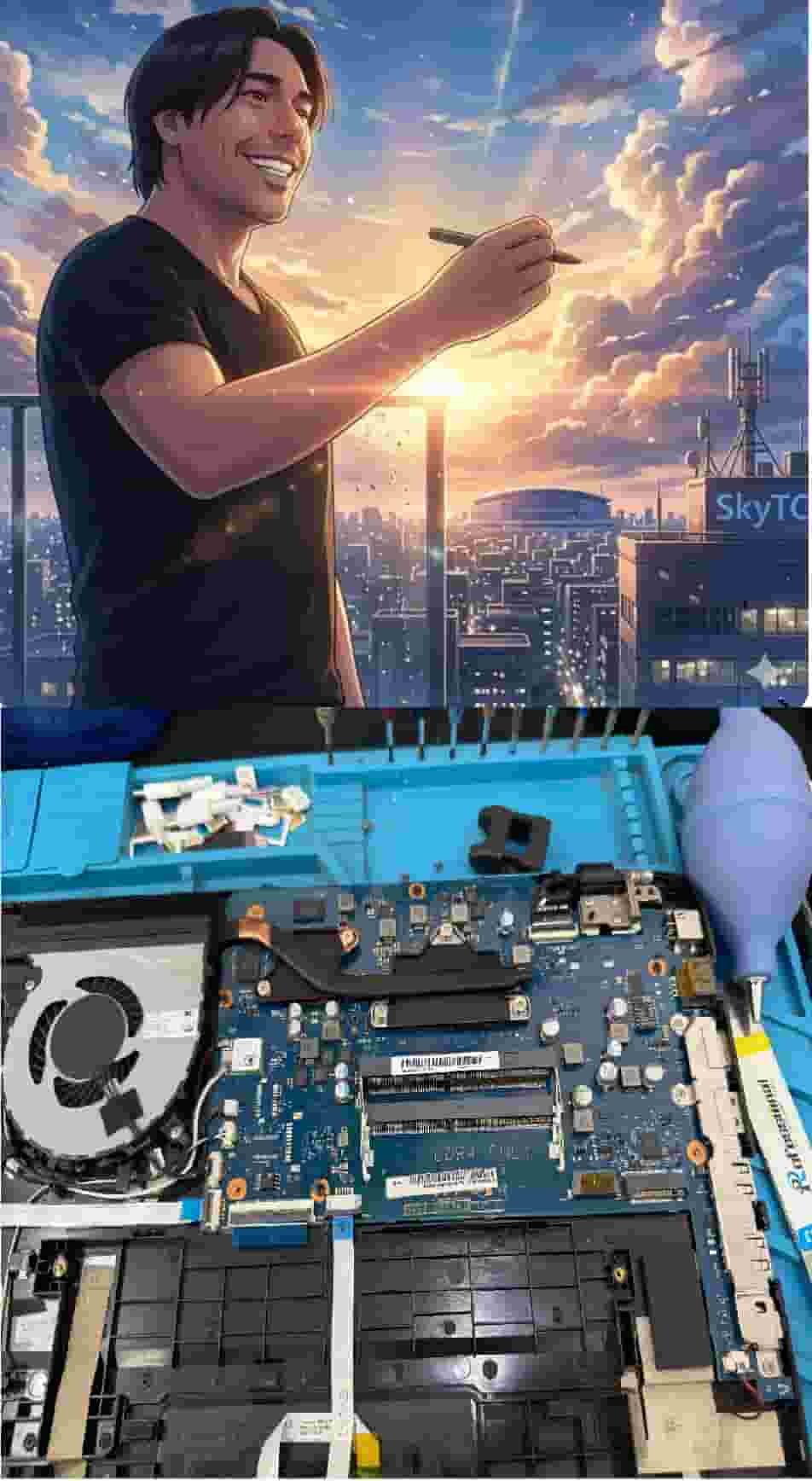
Technical Bio: Hardware & Laptops
“At SkyTC, technology is driven by engineering precision and real field experience. I am Valtersky, and I bring a unique background to the bench: from professional woodworking, the eye for structural integrity; from radiology, an absolute obsession with microscopic details.
As an ultra-endurance marathon runner, I don’t just browse store windows. I tear machines down, run intensive stress tests on thermal dissipation, and validate the actual build quality of every single component. My mission is to translate complex tech engineering and tech finances into smart decisions for your workflow.
Here, we speak straightforward, jargon-free English with the authority of someone who knows exactly what is inside the chassis.”
✨ Read also: Top Programmable Mechanical Keyboards for Software Leads