
You are pounding the pavement or grinding up a mountain trail, and your shins are throbbing. Your lower back feels like it is locked in a vise, and your knees are clicking like a grandfather clock. If you want to survive decades of high-performance output, you must learn how to calculate optimal skeletal load for runs before you permanently grind down your articular cartilage.
But most runners make the critical mistake of buying ultra-cushioned shoes or popping calcium pills, hoping their skeleton will magically absorb the abuse. As a clinical analyst with five years of field experience in clinical X-Ray and two years specialized in Computed Tomography (CT scans), I have stared directly into the skeletal ruins of broken runners.
I have analyzed stress fractures in the tibia, cortical bone thinning in the femoral neck, and early-stage osteopenia in active thirty-year-olds who thought they were healthy. Combine those diagnostic eyes with six years of competitive kickboxing and multiple mountain ultramarathons (42km+), and I have learned exactly where human structural engineering meets raw biological reality.
If you overload your bones without the proper metabolic and mechanical baseline, you are simply waiting for a catastrophic structural failure. By understanding how to measure and apply skeletal force, you stand to build ironclad bone density, eliminate joint pain, and protect your long-term mobility. Let us ditch the showroom running shop hype and look at the real data.
In 30 Seconds: The Quick Verdict
Forget the max-cushion running shoe trend—it actually increases your skeletal loading rate by dulling your proprioceptive feedback and causing you to strike the ground like an anvil.
To protect your bones, you need to calculate cumulative ground reaction force, increase your cadence to shorten your stride, and systematically track vertical loading rates.
For biological bone remodeling, skip the synthetic calcium gummies and fuel your skeletal matrix with clean, grass-fed red meat and its natural fats, which deliver the essential fat-soluble vitamins (D3 and K2) required to bind calcium to bone.
| Tracking Modality | Primary Metric Captured | The Good (Battlefield Assessment) | The Bad (Negative Point Rule) | Investment Level |
|---|---|---|---|---|
| Inertial Pods (IMU) | Vertical Oscillation & Ground Contact Time. | The Good: Highly accurate stride-by-stride biomechanical tracking on flat surfaces. | The Bad: They easily clip off on rough trails, and the calibration drifts when running through deep mud. | Budget-friendly options |
| Biomechanical Insoles | Direct Ground Reaction Force (GRF) and pressure map. | The Good: Displays exact heel-to-toe pressure distribution and impact force. | The Bad: They are thick, reduce shoe volume, and the sensory pads fail quickly when saturated with sweat. | Premium tier investment |
| GPS Watch Algorithms | Estimated Running Power (Watts). | The Good: Simple, hands-free data integration requiring no extra hardware. | The Bad: It uses a purely mathematical estimation that completely misses actual joint-level impact. | Bargain-bin accessories |
| DXA & CT Bone Scans | Cortical Bone Density & Hounsfield Units. | The Good: Direct, clinical-grade visualization of skeletal mineral density and micro-fracture risk. | The Bad: Provides zero real-time stride feedback and exposes you to minimal ionizing radiation. | High-end setups |
The Realities of the Battlefield
The running industry loves to sell the dream of pain-free longevity through proprietary cushioning tech and smart wearables that claim to optimize your running economy. These setups praise themselves on reducing peak impact force and analyzing your running gait through elegant mobile applications.
But when you drag these fancy setups onto steep, rocky downhills or technical mountain trails, the marketing narrative breaks down entirely. The major failure of max-cushion shoes is that they act like a thick mattress under your feet; they reduce your foot’s sensory awareness, causing you to strike the ground with much higher velocity to find stability.
This increases the vertical loading rate—the speed at which impact force travels up your leg—which directly trashes your knees and lower back. Similarly, cheap clip-on pods and running watch metrics are built on pristine laboratory assumptions of flat, dry pavement.
The moment you step into the real-world mud, the sensors slide, the step calibration fails, and the software starts projecting inaccurate metrics. This is why I rely on SkyTC metrics—where we combine raw biomechanics with structural skeletal load parameters to ignore the showroom gadget hype and focus on how your skeletal system actually distributes force under real stress.
The Trap of the Max-Cushion Double Down
Consider this classic user failure: An executive-level marathoner begins experiencing mild tibia shin splints. Instead of analyzing their running cadence or calculating their skeletal load, they buy the thickest, most cushioned running shoe on the market, believing the marketing promise of shock absorption.
Because the thick foam numbs the immediate pain sensation, they increase their weekly mileage, but their stride actively gets longer and lazier. Their heel strikes way out in front of their center of mass, creating a massive, unrecognized braking force with every step.
Six weeks later, during a routine run, they hear a dull pop in their lower leg; a clean, clinical CT scan reveals a deep cortical stress fracture in the tibia. They treated a structural problem with a foam band-aid, completely blinding their nervous system to the destructive loading rate that was actively shattering their bones.
Step-by-Step Clinical Protocols to Calculate Optimal Skeletal Load for Runs
To build a skeleton that can withstand mountain ultramarathons or heavy road training, you must understand Wolff’s Law: bone remodeling occurs in direct response to the mechanical demands placed upon it. If you load too lightly, your bones weaken; if you load too fast, your bones fracture. You must find the precise sweet spot.
As an analyst who has run countless bone density reconstructions, I can tell you that the cortical bone shell requires dynamic, progressive loading to stimulate osteoblast activity. If you want to systematically find your optimal threshold, you must break the calculation down into three core steps.
1. Calculate Your Ground Reaction Force (GRF) and Bodyweight Ratio
Every single step you take during a run sends a force equivalent to two and a half to three times your body weight directly up your skeletal chain. If you weigh eighty kilograms, your skeleton is absorbing over two hundred kilograms of force per foot strike. Over a ten-kilometer run, this translates to thousands of tons of cumulative load.
To calculate your baseline skeletal load, multiply your body weight by the average force multiplier of your running surface (2.5 for flat road, 3.0 for technical trail, and 4.0 for steep downhills). This gives you your Single Step Impact Force.
Next, multiply this figure by your step count per mile. If you are over-striding with a low cadence of 150 steps per minute, you are absorbing massive, violent spikes of force on a skeleton that is unprepared. To lower the loading rate without losing pace, you must increase your cadence to 175-180 steps per minute, which redistributes that massive cumulative load across smaller, highly manageable steps.
2. Monitor the Vertical Loading Rate (VLR)
Peak impact force is only half the equation; the speed at which that force is applied—the Vertical Loading Rate—is what actually shatters bone. Think of it like this: a gentle push against your chest will move you, but a rapid punch with the exact same force will crack a rib. Your skeleton reacts to impact in the exact same way.
To keep your VLR within the optimal zone without clinical lab gear, pay close attention to your running acoustics. If your foot strike sounds like a loud slap on the pavement, your vertical loading rate is unsustainably high.
You must actively transition to a midfoot strike that lands directly under your hips. This simple mechanical adjustment utilizes your calves, Achilles tendons, and quadriceps as natural shock absorbers, protecting your skeletal bones and joints from absorbing the raw, unfiltered impact.
3. Fuel Your Skeletal Matrix for Remodeling
No amount of mechanical tracking will save your joints if you lack the biological building blocks to repair the microscopic bone damage that occurs during training. Bone is not just calcium; it is a living, dynamic matrix of collagen fibers held together by mineral salts.
To repair this matrix, you need highly bioavailable proteins and fat-soluble vitamins. Clean red meat and its natural fats are the ultimate biohacking meal for skeletal longevity. Red meat provides high concentrations of glycine and proline—the precise amino acids needed to build the bone’s collagen scaffolding.
Furthermore, the natural animal fats deliver vital vitamin D3 and vitamin K2. Vitamin D3 increases calcium absorption in your gut, while vitamin K2 acts as the structural traffic controller, directing that calcium out of your arteries and locking it directly into your bones. If you are eating a low-fat diet, you are actively starving your bones of the nutrients they need to heal.
The Skeletal Longevity Action Plan
- Calculate optimal skeletal load for runs by multiplying your body weight by your surface multiplier: Determine your cumulative ground reaction force before stepping onto the road. Insider observation: A heavier runner on downhill asphalt is a recipe for a stress fracture; choose soft trails or flats when building mileage.
- Increase your running cadence to at least 175 steps per minute: Use a metronome app or watch metric to shorten your stride length. Insider observation: Shorter, quicker strides immediately decrease the peak vertical loading rate on your tibia.
- Perform the acoustic run test: Listen to the sound of your feet hitting the ground during your training sessions. Insider observation: If you sound like a flat footed horse on pavement, your mechanics are trashing your joints.
- Ditch high-stack max-cushion shoes for technical work: Transition to shoes with moderate stack heights that allow your feet to feel the ground. Insider observation: Thick foam isolates your feet from sensory feedback, which paradoxically forces you to strike the ground harder.
- Saturate your diet with grass-fed red meat and natural tallow: Provide your body with the exact lipids and proteins required to rebuild bone matrix. Insider observation: After a forty-two-kilometer mountain run, nothing speeds up bone and joint recovery like a nutrient-dense steak.
- Perform single-leg balance work on unstable surfaces: Strengthen your ankles and feet to distribute landing forces evenly. Insider observation: Poor ankle stability forces your knee to absorb lateral forces it was never designed to handle.
- Implement structural strength training twice a week: Focus on heavy, low-rep squats, deadlifts, and calf raises. Insider observation: Heavy resistance training is the single best stimulus to force osteoblasts to lay down new bone density.
- Avoid training through focal, localized bone pain: Learn to distinguish between muscular soreness and deep, aching bone pain. Insider observation: If hopping on one leg causes a sharp pain in your shin, stop running immediately and find an X-ray machine.
- Supplement with liquid trace minerals: Avoid stripped, purified tap water; use mineral-dense spring water or add magnesium drops. Insider observation: Hydration is not just water; your bone remodeling requires constant trace mineral availability.
- Run on natural surfaces whenever possible: Swap concrete pavements for dirt paths, grass, or gravel. Insider observation: Natural dirt has micro-give, which dampens the brutal ground reaction forces of hard asphalt.
- Transition to a midfoot strike pattern: Avoid reaching out with your heel; land with your foot directly under your center of gravity. Insider observation: A heel strike forces the knee to absorb the raw braking shock of your running momentum.
- Get direct sunlight exposure daily: Spend fifteen minutes outside without sunscreen to optimize natural D3 production. Insider observation: You can swallow all the calcium you want, but without D3, it will never make it into your bones.
👇 Looking for more performance cheats? Check out our field-tested tactical guides:
SkyTC Master Hub & Pillar Guides
Frequently Asked Questions
Do running shoes with carbon fiber plates protect my bones?
No. Carbon-plated shoes are designed for speed, not skeletal protection. They act as stiff levers that change your biomechanics, shifting the loading forces from your calves up to your hips and lower back, often causing severe strain.
Is running actually bad for my bone density over time?
Running is incredibly beneficial for bone density if your recovery and mechanical loads are balanced. However, if you run high volume while consuming a low-nutrient diet, your body will pull minerals from your bones to fuel other metabolic processes, causing osteopenia.
Can I use a massage gun to heal a stress fracture?
Absolutely not. Hammering a vibrating massage gun onto a suspected bone stress fracture or shin splints is a horrific idea that will worsen the structural micro-cracks. Massage guns are for soft tissue relaxation, not skeletal remodeling.
Why do trail runners have better bone density than road runners?
Trail running forces the body to move in multiple planes of motion, landing at different angles over rocks and roots. This multi-directional impact stimulates bone remodeling across the entire skeletal structure, whereas road running offers highly repetitive, single-plane impact.
Should I take calcium supplements to prevent stress fractures?
Synthetic calcium carbonate is largely a waste of money and can actively clog your arteries. Your bones do not need isolated calcium; they need a complex matrix of magnesium, phosphorus, collagen, and fat-soluble vitamins (D3/K2) best found in red meat.
How do I know if my skeletal load is too high?
If you experience localized, aching bone pain that persists even when you are resting or sleeping, your skeletal load has crossed the threshold into injury territory. Muscular soreness fades with movement; bone pain gets worse.
Are barefoot running shoes safer for joint loading?
They can be, but only if you spend months slowly building your foot strength. If you transition overnight from thick cushioned shoes to barefoot options while keeping the same weekly mileage, you will almost certainly end up with a metatarsal stress fracture.
How does systemic inflammation impact bone health?
Chronic inflammation triggers osteoclasts—the cells that break down bone tissue—to work faster than osteoblasts can rebuild it. Eating seed oils, processed sugars, and highly inflammatory foods actively drains your skeleton of its structural minerals.
Why Trust SkyTC Biohacking Curation?
At SkyTC, we treat the human body as your most valuable technology. We are not just a recommendation site; we apply a rigorous clinical and practical screening process to ensure that each recommendation optimizes your biology with safety and real-world results.
✓ Technical Expertise:
Clinical experience in Radiology and Tomography (CT scans). We analyze methods through the lens of bone health and structural integrity.
✓ Specialization:
Focus on real-world biohacking. We test every wearable and supplement at the absolute limit of effort during marathons and on the mats.
✓ Authority:
Curation based on absolute transparency, always highlighting both the positive advantages and the real drawbacks of every technology.
✓ Trust:
A curation process built directly on the professional experience of a field practitioner, speaker, and high-performance leader coach.

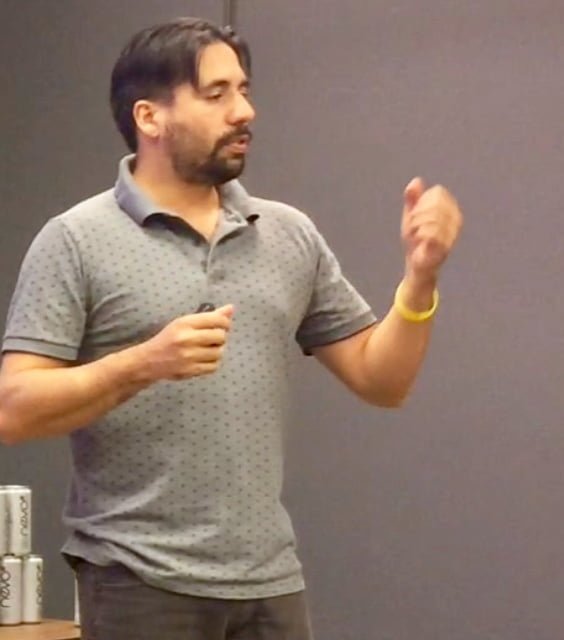
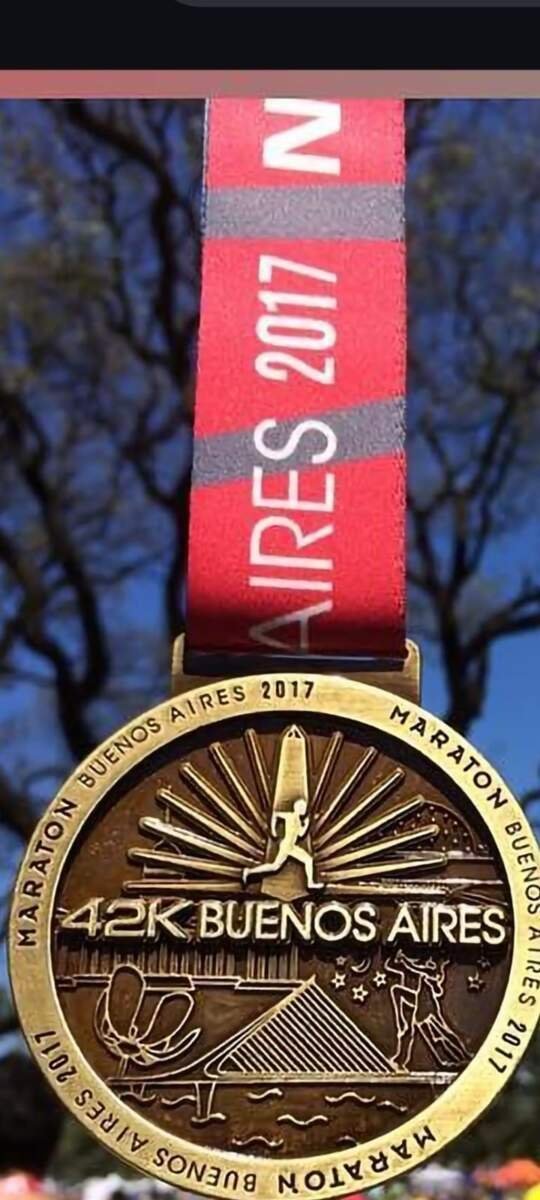

Optimizing the body demands the clinical precision of someone who operated in Radiology (Brazilian Board Certified, CRTR-SP 23595T) for years, combined with the unyielding resilience of someone who conquered multiple 42km+ mountain marathons. As an active professional, multi-pet handler, and tech benchmark researcher, at SkyTC, we bridge advanced technical science with extreme practical environments to help you biohack your active performance, optimize smart pet-tech ecosystems, and protect your structural longevit
Discover my full professional trajectory →✨ Read also: (Why Trail Running Builds Stronger Bones)
A deeply technical piece of content that complements this post — absolutely worth the read.