

Understanding how to use percussion tools for joint safety is the razor-thin line between bulletproofing your kinetic chain and literally hammering your articular cartilage into chalk dust. Walk into any endurance locker room, corporate executive gym, or mountain trail staging area, and you will see the same horror show: someone taking a high-torque motorized gun and burying a rock-hard plastic bullet directly into their patellar tendon or hip capsule.
They think they are breaking up scar tissue. In reality, they are causing periosteal contusions, triggering acute synovial inflammation, and destroying the delicate neural mechanoreceptors that keep their joints stable on technical descents. You bought into the showroom hype, paid a premium tier investment for a heavy-duty massager, and now you are using it like a pneumatic jackhammer on bare structural bone.
Look, I spent six years taking shin-to-shin kicks in the ring, logged thousands of vertical miles across mountain ultramarathons past 42km, and clocked seven years in hospital basements operating clinical X-rays and Computed Tomography (CT) scanners. I have seen high-resolution cross-sections of shattered subchondral bone, calcified bursae, and frayed tendons caused by mindless blunt trauma.
Stop treating your joints like industrial hardware. Lock down this clinical protocol today, and you will save thousands in avoidable orthopedic rehab, protect your synovial fluid from chronic degradation, and add a decade of high-output mountain running to your biological clock.
Bio-Available Fuel: The Core Cellular Summary
Let’s run the tech support counter diagnostic right now: percussion guns do not realign bones, they do not dissolve structural arthritis, and they cannot magically lengthen a calcified tendon. These motorized devices are neurological desensitizers and local vascular shuttles—nothing more, nothing less. If you vibrate an inflamed joint capsule, you are just throwing mechanical gasoline onto a cellular fire.
The lab macete is dead simple: treat your muscular engines, never your skeletal chassis. You work the muscular perimeters—the fleshy bellies of the quads, calves, glutes, and hamstrings—to reduce tensile tension pulling on the joint insertions. That is the tactical cheat code for structural preservation.
Furthermore, vibrating damaged connective tissue without feeding it bioavailable cellular fuel is completely useless. Your joint cartilage, synovial fluid, and tendon sheaths require raw amino acids and stable lipids to repair structural micro-damage. Build your biological armor from the inside out with nutrient-dense, clean red meat loaded with natural animal fats, bioavailable glycine, proline, and heme iron. Ditch the bargain-bin plant powders, drop the seed oils that inflame your arterial walls, and give your cells real ancestral substrates to rebuild the matrix.
How to Use Percussion Tools for Joint Safety: The Kinetic Perimeter Protocol
In the CT suite, whenever we ran volumetric scans of an athlete presenting with chronic joint pain, the underlying culprit was almost never the joint itself. It was chronic, hypertonic muscle shortening pulling the joint surfaces into abnormal shear loading. When your vastus lateralis contracts into a rigid knot of locked actin-myosin cross-bridges, it drags your patella laterally across the femoral condyle, eroding the subchondral cartilage.
If you take a percussive massager and ram it directly against the kneecap or the tendon insertion, you cause acute periosteal swelling. The periosteum is the dense fibrous membrane covering the surface of bones, packed with high-threshold nociceptive nerve fibers. Hitting this tissue with high stall-force percussion creates micro-hematomas that quickly calcify into painful bone spurs.
The correct method is the Kinetic Perimeter Protocol. You locate the target joint and draw an imaginary boundary line at least three inches away from any bony protrusion. If your knee hurts, you do not touch the patella, the tibial tuberosity, or the joint line. You attack the muscle belly of the rectus femoris and the vastus medialis at a glancing forty-five-degree angle.
By using sweeping, tangential strokes rather than direct vertical compaction, you stimulate Golgi tendon organs and muscle spindle fibers without compressing the underlying bone cortex. This triggers immediate neuromuscular relaxation, releasing the vice-grip pulling on your joint capsule while keeping your articular structures completely safe.
| Percussion Head Profile | Mechanical Force Profile | Joint Clearance Rating | Clinical Hazard & Real-World Wear |
|---|---|---|---|
| Air-Cushioned Silicone Head | Low Impact / Dispersed | Optimal Safety | Safe near bony transitions; silicone degrades and tears under heavy sweat exposure. |
| Dense EVA Foam Ball | Moderate / Progressive | High Safety | Standard baseline for deep tissue; collects skin oils and harbors bacterial odor over time. |
| Hard ABS Flat Head | Direct / Broad Shear | Moderate Safety | Excellent for massive muscle groups; causes painful chatter if slipped onto the iliac crest. |
| Solid Plastic Bullet Head | Extreme / Focal Point | Severe Hazard | Designed exclusively for deep muscular trigger points; will shatter fragile bursae instantly. |
| Heated Metallic Wedge | Thermal / High Penetration | Varies by Model | Improves local blood perfusion; internal electronic heater fails after repeated drops on trail rock. |
The Bare-Metal Trial: Pros, Cons, and Real-World Wear
The fitness gadget market is flooded with devices claiming to fix your movement patterns with aerospace-grade brushless motors. Let’s peel back the anodized aluminum casings and look at how these tools hold up under real athletic demands.
High-Amplitude Deep-Stroke Massagers (14mm to 16mm)
The Good: Massive stroke depth punches through dense gluteal tissue and thick quad musculature, restoring blood perfusion after a 50km mountain route.
The Bad: The high stall-force is extraordinarily unforgiving. If your hand slips on a sweat-soaked grip while working near your hip trochanter, the stroke will hammer the bone with enough force to cause deep cortical contusions and severe night pain.
Compact Micro-Percussion Tools
The Good: Highly packable, fits effortlessly into a trail running vest or flight carry-on, and operates quietly in hotel rooms or corporate offices.
The Bad: Minimal amplitude (typically under 8mm) means it provides little more than superficial vibration. To feel anything in dense tissue, users press down aggressively, stalling the low-grade motor and grinding the budget-friendly plastic gears into scrap metal.
Pneumatic Air-Cushioned Head Attachments
The Good: The hollow internal air chamber absorbs the initial shock wave, making it the tactical cheat code for working near sensitive tendon transitions without risking structural joint trauma.
The Bad: Cheaply manufactured aftermarket heads pop off their stems under high speed, and the thin rubber membrane punctures easily if tossed loose into a dirty gear bag with trail cleats and keys.
The Biomarker Reality: True Stamina Under Pressure
Showroom recovery brands love advertising Bluetooth app connectivity, optical pressure sensors, and algorithmic recovery scores designed to dazzle gadget-obsessed executives.
However, these delicate electronic ecosystems crumble the instant they are exposed to the mud, freezing temperatures, and relentless sweat of real-world endurance training.
Your smartphone companion app might generate a glowing digital summary claiming your fascia is perfectly primed, completely oblivious to the reality that your lateral collateral ligament is hot, swollen, and screaming from acute friction burn.
Hardware fails under raw athletic pressure. Digital touchscreens lock up when your fingers are numb from cold mountain ridgelines, cheap lithium cells lose half their operating voltage in sub-zero alpine basecamps, and plastic attachment stems crack after being jammed into cold gear bags.
True functional recovery cannot be tracked by a software algorithm. You gauge joint integrity through bare-metal biometrics: zero swelling upon waking, symmetrical deep squatting without pinch points, and the ability to absorb aggressive downhill trail strikes without a whisper of tendon ache. Do not trade biological vigilance for a flashy screen.
Hypothetical Failure Scenario: The Meniscus Jackhammer
Meet Robert: a 46-year-old finance director training for a 45km alpine trail run. Four weeks out from the race, his right knee begins to ache along the medial joint line during steep downhill sections. Convinced that his meniscus has “locked up with tight adhesions,” Robert buys a high-end percussion tool with a solid plastic bullet attachment.
Sitting on his living room floor, Robert sets the machine to its highest frequency and presses the bullet head directly into the soft joint space between his femur and tibia. The pain is agonizing, but he assumes the old-school adage: no pain, no gain. He grinds the machine into the delicate medial joint capsule for eight straight minutes.
The biological consequence is catastrophic. The high-frequency hammer blows violently compress the micro-vascular capillary bed of the medial meniscus, driving mechanical shear stress into the already fraying fibrocartilage. Instead of breaking up tension, he creates a severe traumatic synovitis and a localized joint effusion.
The next morning, Robert cannot bend his knee past ninety degrees. His joint capsule is swollen with excess fluid, his quadriceps have shut down via arthrogenic muscle inhibition, and his mountain season is completely over—sacrificed to a showroom gadget used with zero understanding of skeletal mechanics.
Keep exploring
If you found this useful and want to go a little deeper, these related guides explore the same ideas from different angles.
Field-Tested Tactical Guides
Explore practical guides for performance, recovery, metabolism, stress regulation and deeper sleep.
The Cut Line: Bare-Metal Execution Checklist
Master how to use percussion tools for joint safety correctly.
Expert Tip: Maintain a minimum three-inch clearance zone away from any bony landmark, patella, or joint line to prevent subchondral bruising.
Mount an air-cushioned attachment when working near tendon junctions.
Expert Tip: The internal air chamber dissipates excessive impact velocity, protecting fragile bursa sacs from localized mechanical shock waves.
Angle the tool head at forty-five degrees to muscle fibers.
Expert Tip: Glancing strokes deliver shear stress across fascial layers without transmitting compressive shock waves directly into deep bone structures.
Cap treatment time to sixty seconds per specific muscle group.
Expert Tip: Pounding the same tissue past one minute causes reactive muscular guarding, micro-vascular damage, and systemic inflammation.
Target the thickest cross-section of muscular bellies exclusively.
Expert Tip: Releasing tension at the center of the muscle belly automatically deloads the tensile strain placed on distal joint insertions.
Fuel connective tissues with clean red meat and animal fat.
Expert Tip: Tendon remodeling requires bioavailable proline, glycine, and zinc derived from ruminant meat rather than inflammatory synthetic protein bars.
Avoid using percussion tools immediately over acute, swollen injuries.
Expert Tip: Applying mechanical vibration to an actively inflamed ligament tears fragile new cellular matrices and dramatically accelerates joint effusion.
Let the weight of the motor drive tissue penetration.
Expert Tip: Leaning your full body weight into the device compresses underlying neurovascular bundles against rigid bone, causing peripheral nerve damage.
Inspect massage gun attachment stems for structural plastic cracks.
Expert Tip: Hairline fractures on budget-friendly plastic attachment shafts can shear off mid-stroke, sending high-speed broken fragments into soft tissue.
Perform dynamic joint mobility checks following every percussion session.
Expert Tip: Percussion induces temporary sensory numbness; you must gently move through active ranges of motion to re-educate your nervous system.
Power down the device immediately if focal bone pain occurs.
Expert Tip: Deep, aching pain that throbs into the bone marrow signals periosteal trauma; switch immediately to complete passive rest and ice.
Mitochondrial Breakdown: Straight Answers to Biohacking Queries
Can a massage gun fix structural knee cartilage damage or arthritis?
No. Cartilage is an aneural, avascular structure that cannot be remodeled by blunt mechanical vibration. Percussion guns merely relax the surrounding tight muscles pulling on the joint. If a brand claims their gun heals arthritis, they are lying to take your money.
Is it safe to run a percussion tool down the bony spine?
Never. Percussion on spinous processes can crack bone, traumatize spinal ligaments, and send violent shock waves directly into your central nervous system. Stick strictly to the muscular erector spinae ridges alongside the vertebrae.
Why do my joints ache more the morning after using a massage gun?
You used excessive stall-force, stayed in one spot too long, or struck the periosteum. That morning ache is inflammatory fluid rushing to repair bruised bone and traumatized connective tissue. Back off the pressure and stick to muscle bellies.
Can I use hard metallic attachments near delicate tendons?
Absolutely not. Solid metal heads have zero mechanical give. When used at high frequencies, they act like cold chisels against tendon sheaths. Save metal attachments for thick, heavily conditioned glutes, or leave them in the showroom case.
Does percussive therapy improve cellular mitochondrial recovery?
Only indirectly. By clearing local muscular tension and stimulating venous return, it allows nutrient-rich blood to reach fatigued muscle fibers. However, if overused, the resulting tissue trauma increases oxidative stress and drags down mitochondrial efficiency.
What is the single best head attachment for general athletic use?
The medium-density air-cushioned silicone head or standard EVA foam ball. They provide the optimal balance of mechanical displacement and tissue protection, minimizing the risk of accidental bone trauma during rapid post-run sessions.
Should I use percussion tools before or after a mountain ultramarathon?
Use light, high-speed, thirty-second sweeps before running to wake up neural pathways. Save deeper, slow-moving percussive work for twenty-four hours after the race, once acute cellular inflammation and muscle micro-tears have stabilized.
What should I eat to ensure my joint capsules actually heal?
Eat unadulterated red meat, rich bone marrow, and tallow. The human body requires natural saturated animal fats and collagenous proteins to synthesize synovial fluid and rebuild connective scaffolding. Chemical supplements cannot compete with biological ground truth.
Why Trust SkyTC Biohacking Curation?
At SkyTC, we treat the human body as your most valuable technology. We are not just a recommendation site; we apply a rigorous clinical and practical screening process to ensure that each recommendation optimizes your biology with safety and real-world results.
✓ Technical Expertise:
Clinical experience in Radiology and Tomography (CT scans). We analyze methods through the lens of bone health and structural integrity.
✓ Specialization:
Focus on real-world biohacking. We test every wearable and supplement at the absolute limit of effort during marathons and on the mats.
✓ Authority:
Curation based on absolute transparency, always highlighting both the positive advantages and the real drawbacks of every technology.
✓ Trust:
A curation process built directly on the professional experience of a field practitioner, speaker, and high-performance leader coach.
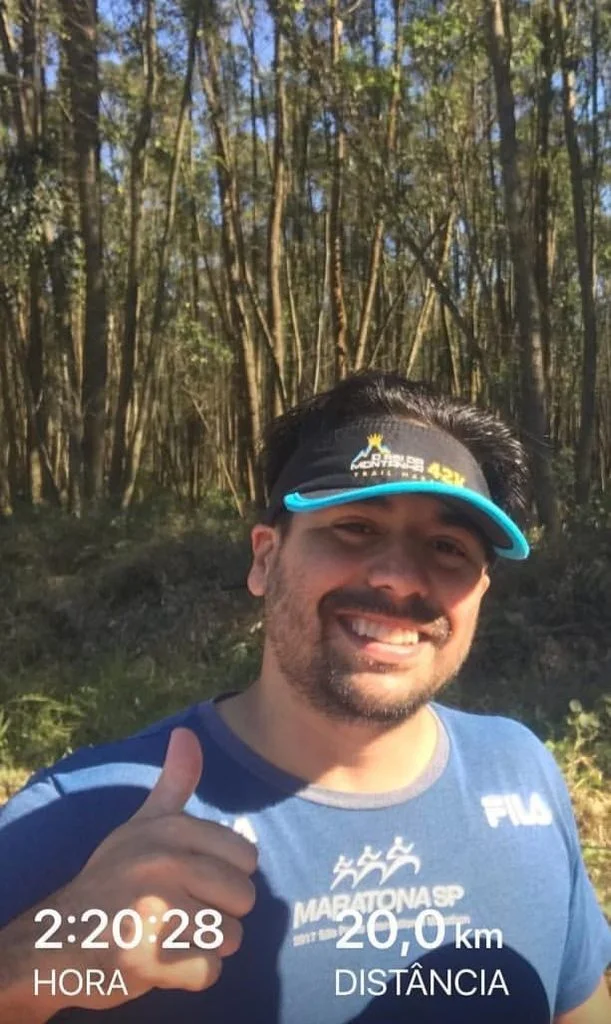
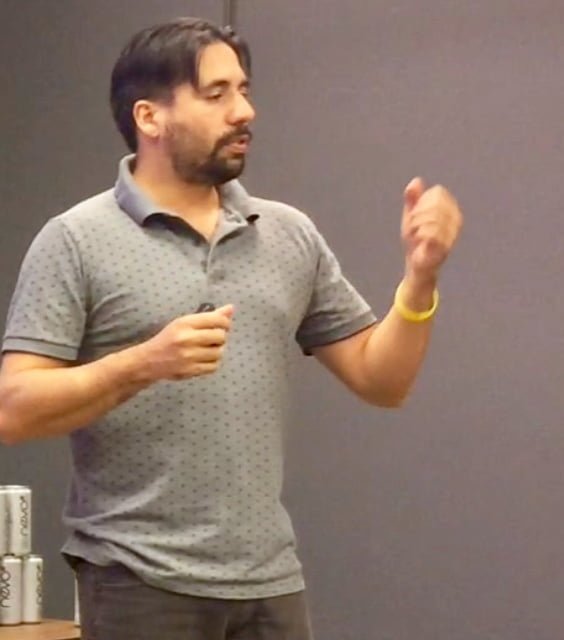
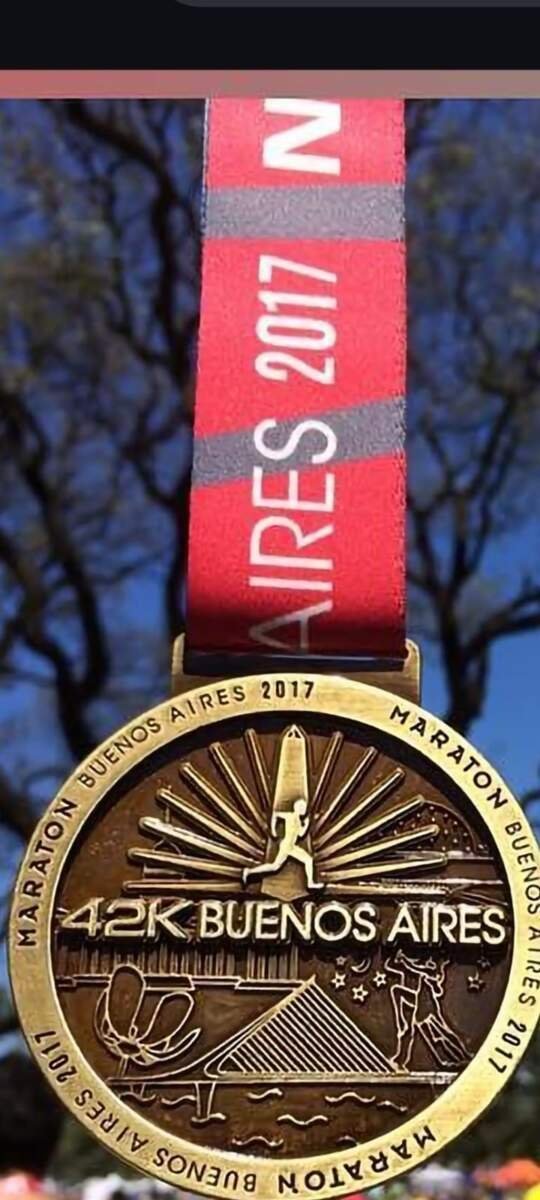

Optimizing the body demands the clinical precision of someone who operated in Radiology (Brazilian Board Certified, CRTR-SP 23595T) for years, combined with the unyielding resilience of someone who conquered multiple 42km+ mountain marathons. As an active professional, multi-pet handler, and tech benchmark researcher, at SkyTC, we bridge advanced technical science with extreme practical environments to help you biohack your active performance, optimize smart pet-tech ecosystems, and protect your structural longevity
Discover my full professional trajectory →Read also: Independent Reviews of Top Athlete Massage Guns
MITOCHONDRIAL WARNING: High-frequency brushless motors produce localized electromagnetic field spikes directly against fatigued muscle beds; prolonged daily overexposure accelerates cellular recovery drops, disrupts restorative sleep cycles, and drives systemic biomarker degradation under heavy biometric training loads.