

You tell yourself your laces are just tied too tight. That persistent, hot throb across the top of your foot near the base of your second or third toe feels like a minor tendon flare-up after a rocky technical descent. But learning how to avoid metatarsal stress fractures now is the brutal line between crushing your mountain ultra season and spending three months immobilized in a rigid orthopedic boot, watching your VO2 max and hard-earned leg drive evaporate.
Most athletes fall for showroom nonsense. You drop a premium tier investment on ultra-stiff, carbon-plated super shoes or transition overnight into bargain-bin zero-drop footwear because some internet guru told you it was natural. Then, you head out and pound twenty thousand strides into hardpack dirt. The repetitive kinetic shock shears through the paper-thin cortical walls of your metatarsal shafts until the structural bone matrix simply gives up.
Look, I spent six years taking shin-on-bone low kicks in competitive kickboxing rings, pushed through multiple 42km+ mountain ultramarathons, and clocked seven years in hospital radiology suites operating clinical X-rays and high-resolution Computed Tomography (CT) scanners. I have looked straight through the skin of hundreds of runners who thought they just had a “deep foot bruise,” only to watch the CT monitor reveal a jagged march fracture cutting clean across the metatarsal neck.
Dial in this skeletal protection protocol right now, and you will save thousands in clinical co-pays, dodge surgical fixation screws, and forge an unyielding foot strike that carries you across brutal alpine terrain for the next thirty years.
Bio-Available Fuel: The Core Cellular Summary
Let’s talk tech support counter diagnostic: your metatarsal bones are slender, weight-bearing beams engineered to disperse up to three times your body weight per stride. When mechanical strain outpaces osteoblast bone synthesis, micro-cracks form. If you keep loading that compromised bone, it snaps. It is simple mechanical engineering, not mysterious bad luck.
Forget the vibrating massage wands, compression socks, and showroom gimmicks. If you have localized dorsal swelling, pain when pressing a single finger directly onto the metatarsal shaft, or an agonizing thud when hopping on your toes, your skeletal scaffolding is failing. The lab macete is absolute: eliminate vertical ground impact immediately and let bone remodeling catch up to cellular stress.
To rebuild bone density, stop consuming seed oils and ultra-processed energy gels that trigger systemic vascular inflammation. Your osteocytes construct bone from a type-I collagen matrix mineralized with calcium, phosphorus, and zinc. Rebuild your structural armor with clean red meat and its natural fats—beef ribeyes, marrow bones, and lamb tallow. Natural saturated animal fats are the biological transport mechanism your body uses to absorb fat-soluble vitamins D3 and K2, which direct calcium straight into your cortical bone instead of your arteries.
Avoid Metatarsal Stress Fractures Now: The Forefoot Structural Breakdown
During my clinical rotations in emergency imaging, the second and third metatarsals accounted for over eighty percent of all forefoot stress fractures. Why? Anatomy. While the first metatarsal is thick and mobile, the second and third metatarsals are locked rigidly into the cuneiform bones of the midfoot. When your calf tightens or your arch collapses, those slender central bones absorb pure, unyielding bending torque.
The early warning signs do not shout; they whisper. It starts as a vague ache that shows up at kilometer twelve of a long mountain run, then disappears twenty minutes after you sit down. That is stage-one periosteal reaction. Within two weeks, it morphs into stage-two micro-damage: the top of your foot looks slightly puffy, you lose the visible definition of your extensor tendons, and slipping on a snug shoe feels like pressing on a hot stove.
Do not rely on a basic clinic X-ray taken during the first ten days of pain. In the radiology suite, we constantly had to tell frustated runners that their plain film was completely negative, despite clear clinical fractures. Why? Because an X-ray only shows a stress fracture once osteoclasts have eaten away enough dead bone to create a visible gap, or after osteoblasts have laid down a visible healing callus two to three weeks later.
If you wait for an X-ray to confirm your injury, you have already wasted weeks of critical healing time. Run the “pencil test”: take the eraser end of a pencil and press it firmly along each metatarsal shaft from the base to the knuckle. If one specific point makes you curse and pull your foot back, your bone is cracked. Period.
| Forefoot Protocol / Tool | Metatarsal Bending Torque | Field Diagnostic Value | Clinical Hazard & Real-World Wear |
|---|---|---|---|
| Max-Cushion Carbon Super Shoes | Extremely High | Zero Diagnostic Use | Rigid carbon levers shift impact away from the ankle directly into the forefoot metatarsal heads. |
| Zero-Drop Barefoot Trail Shoes | Moderate to Extreme | Zero Diagnostic Use | Transfers ground shock to the Achilles and metatarsal arches; causes rapid bone breakdown without a two-year transition. |
| Dorsal Focal Pencil Palpation | None (Zero Impact) | Immediate / High | Pinpoints localized periosteal inflammation instantly; requires zero showroom tech or clinical visits. |
| Standard Plain Film Radiography | None | Very Low (Early Stages) | False negative rate exceeds seventy percent in the first fourteen days; delays offloading protocol. |
| High-Resolution MRI / CT Scan | None | Extremely High | CT reveals cortical wall breaches; MRI maps bone marrow edema within hours of onset; premium tier investment. |
The Bare-Metal Trial: Pros, Cons, and Real-World Wear
The endurance industry loves selling footwear solutions that claim to eliminate foot fatigue forever. Let’s look at how these popular configurations actually perform under the grind of real-world trail conditions.
Max-Stack Carbon-Plated Mountain Shoes
The Good: Massive stacks of super-critical PEBA foam save your calf muscles on flat, hard-packed fire roads and preserve metabolic glycogen during long, uniform efforts.
The Bad: The curved carbon plate creates a rigid fulcrum that dramatically increases tensile bending forces on the neck of the second metatarsal. On uneven, cambered mountain singletrack, the towering stack turns your foot into an unstable lever arm, violently torquing the forefoot bones every time you hit a loose rock.
Minimalist Zero-Drop Trail Footwear
The Good: Allows your foot muscles to splay naturally, strengthens deep intrinsic foot stabilizers, and provides pristine ground tactile feedback over technical rock slabs.
The Bad: If you spend years running in traditional shoes and switch to zero-drop models without slowly remodeling your bone density, the sudden forefoot impact will shear your third metatarsal straight in half. Furthermore, thin soles provide zero puncture protection against jagged alpine scree.
Custom Rigid Carbon Fiber Foot Orthotics
The Good: Effectively immobilizes painful midfoot joints, blocks excessive pronation, and redistributes peak forefoot pressure away from inflamed metatarsal heads.
The Bad: They feel like running on solid oak boards, cost a premium tier investment, and permanently weaken your foot’s natural plantar arches by acting as an artificial crutch that robs muscles of their functional load.
The Biomarker Reality: True Stamina Under Pressure
Smart wearables, GPS watches, and recovery bands boast aerospace-grade titanium cases, multi-frequency satellite radios, and flashy readiness algorithms designed to impress tech-savvy executives.
However, these sleek digital dashboards fail completely the moment you drag them through freezing mountain mud, relentless trail dust, and true physiological bone strain.
Your multisport tracker will cheerfully display a high “Cardio Readiness” score simply because your resting pulse dropped overnight, completely unaware that your third metatarsal is harboring an active, high-grade stress reaction.
Showroom hardware buckles under harsh field realities. Heart rate optical sensors misread pulses when trail grit coats the sensor glass, silicone straps snap under heavy alpine sweat, and proprietary software suites mistake foot-compensating limping for “asymmetrical ground contact time.”
True athletic longevity relies on biological ground truth: absence of localized dorsal foot warmth, symmetrical single-leg toe raises without stabbing pain, and the ability to absorb trail impact without limping. When biological alarm bells sound, no software score can rewrite the laws of skeletal physics.
Hypothetical Failure Scenario: The Zero-Drop Calamity
Meet Greg: a 43-year-old software executive training for a 50km mountain trail race. After reading an online forum post praising natural running mechanics, Greg tosses his traditional trail shoes into the trash and buys an ultra-thin, zero-drop minimalist shoe with zero transition period.
During his first week, Greg’s calves are on fire, but he loves the rugged, purist vibe. By week three, a sharp, pinpoint ache develops on the top of his left foot right over the third metatarsal. Greg assumes it is just “lace bite” or tight extensor tendons. To keep his training volume on track, he downs 800mg of ibuprofen before his Saturday long run.
The NSAIDs silence his brain’s pain warning system while chemically shutting down the COX-2 enzymes required for osteoblastic bone deposition. At kilometer 22, while descending a fast, rocky fire road, Greg lands on his forefoot over an embedded granite rock. A loud crack reverberates through his shoe, followed by immediate, blinding agony.
Greg did not just get a hairline stress fracture; he suffered a complete, displaced transverse fracture of the third metatarsal shaft. His race season ended immediately with a mountain rescue evacuation, two stainless steel surgical pins, and eight months of agonizing physical therapy to recover from a completely preventable mistake.
Keep exploring
If you found this useful and want to go a little deeper, these related guides explore the same ideas from different angles.
Field-Tested Tactical Guides
Explore practical guides for performance, recovery, metabolism, stress regulation and deeper sleep.
The Cut Line: Bare-Metal Execution Checklist
Avoid metatarsal stress fractures now with the dorsal palpation test.
Expert Tip: Press your thumb firmly along the top of each metatarsal shaft; any sharp, breath-taking point of pain signals an immediate training shutdown.
Perform the single-leg toe hop test before every run.
Expert Tip: If bounding on your forefoot produces a deep, structural skeletal thud instead of soft springiness, your metatarsals cannot handle impact today.
Ban non-steroidal anti-inflammatory drugs during bone loading blocks.
Expert Tip: Ibuprofen and naproxen block bone-remodeling pathways, turning a manageable micro-crack into an irreversible non-union fracture.
Cycle out carbon-plated shoes for everyday trail volume.
Expert Tip: Limit stiff-plated footwear to race day; their aggressive lever action concentrates massive mechanical stress directly on the central forefoot.
Fuel structural remodeling with clean red meat and animal fats.
Expert Tip: Ruminant meat provides bioavailable zinc, phosphorus, and collagen peptides, while natural animal fat drives the absorption of bone-building vitamins.
Shift aerobic training to the pool or stationary bike immediately.
Expert Tip: Zero-impact cross-training maintains cellular mitochondrial capacity and lung volume without transmitting a single pound of force to your foot.
Inspect forefoot tread wear for extreme lateral scuffing patterns.
Expert Tip: Heavy outer-edge wear indicates severe supination, which overloads the vulnerable fifth metatarsal base and risks a devastating Jones fracture.
Demand a magnetic resonance imaging scan over early plain X-rays.
Expert Tip: Plain X-rays miss up to eighty percent of early stress reactions; an MRI flags bone marrow edema within forty-eight hours of onset.
Implement progressive seated calf raises to reinforce the Achilles complex.
Expert Tip: Stronger soleus muscles control the rate of tibial translation, preventing uncontrolled forward whip that slams the forefoot into the ground.
Trash cheap worn-out trail shoes showing collapsed forefoot cushioning.
Expert Tip: When EVA foam bottoms out, impact forces bypass the shoe entirely and transfer directly into the delicate metatarsal heads.
Reintroduce running exclusively on flat, forgiving natural grass turf.
Expert Tip: Turf dampens high-frequency kinetic vibrations and eliminates rotational torque caused by technical rocks, roots, and uneven pavement.
Mitochondrial Breakdown: Straight Answers to Biohacking Queries
Can I safely jog through mild metatarsal foot pain?
No. You cannot outsmart skeletal physics. Running on micro-cracked bone turns a simple four-week recovery into a six-month surgical nightmare. Stop running, get off your feet, and cross-train on a bike or rower until direct bone pressure is pain-free.
Why did my clinic X-ray come back completely normal?
Because plain X-rays are blind to early stress reactions. As a former clinical X-ray tech, I saw this weekly. Bone micro-cracks do not show up on film until osteoclasts widen the gap or a visible callus forms weeks later. Trust an MRI, not an early X-ray.
Are zero-drop minimalist shoes better for preventing foot fractures?
Not if you transition quickly. Minimalist shoes dramatically increase forefoot impact forces. Unless you take two years to progressively remodel your bone density and strengthen your intrinsic foot muscles, jumping into zero-drop footwear will crack your metatarsals.
Do carbon-plated shoes increase the risk of metatarsal fractures?
Yes. The rigid carbon plate acts as a stiff mechanical lever arm. Instead of your foot flexing naturally at the metatarsophalangeal joints, the plate forces the metatarsal shafts to absorb massive bending moments with every stride.
What is the single best food to rebuild cracked metatarsal bone?
Clean, nutrient-dense red meat with its natural fat. High-grade beef, tallow, and bone marrow deliver bioavailable type-I collagen amino acids, zinc, phosphorus, and fat-soluble vitamins. Synthetic plant-based powders cannot match this biological density.
How can I tell the difference between extensor tendonitis and a stress fracture?
Tendonitis hurts when you actively pull your toes up against resistance and covers a broad line across the foot. A stress fracture produces localized swelling, hurts when you tap the bone directly, and produces a deep, sickening ache at rest.
Does using a massage gun on top of the foot help recovery?
Never do this. The soft tissue on the top of the foot is paper-thin. Hammering a percussion gun directly against the metatarsal bones will bruise the periosteum, aggravate micro-fractures, and damage underlying sensory nerves.
How long does a true metatarsal stress fracture take to heal?
Expect six to eight weeks of strict non-impact recovery for the shaft of the second or third metatarsal. Fractures at the base of the fifth metatarsal (Jones fractures) take twelve weeks or longer due to notoriously poor blood supply. Never rush bone biology.
Why Trust SkyTC Biohacking Curation?
At SkyTC, we treat the human body as your most valuable technology. We are not just a recommendation site; we apply a rigorous clinical and practical screening process to ensure that each recommendation optimizes your biology with safety and real-world results.
✓ Technical Expertise:
Clinical experience in Radiology and Tomography (CT scans). We analyze methods through the lens of bone health and structural integrity.
✓ Specialization:
Focus on real-world biohacking. We test every wearable and supplement at the absolute limit of effort during marathons and on the mats.
✓ Authority:
Curation based on absolute transparency, always highlighting both the positive advantages and the real drawbacks of every technology.
✓ Trust:
A curation process built directly on the professional experience of a field practitioner, speaker, and high-performance leader coach.
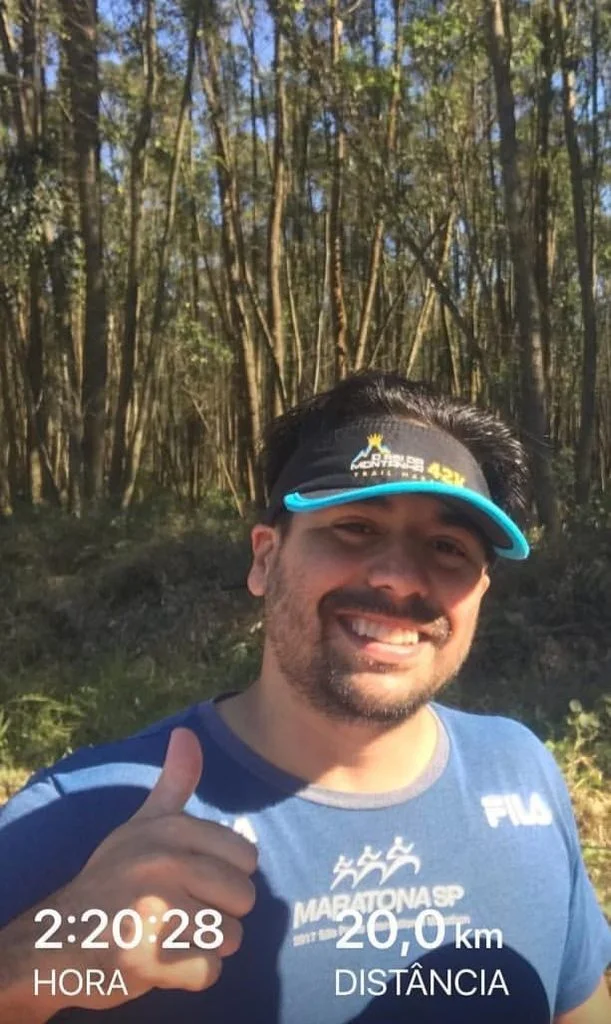



Optimizing the body demands the clinical precision of someone who operated in Radiology (Brazilian Board Certified, CRTR-SP 23595T) for years, combined with the unyielding resilience of someone who conquered multiple 42km+ mountain marathons. As an active professional, multi-pet handler, and tech benchmark researcher, at SkyTC, we bridge advanced technical science with extreme practical environments to help you biohack your active performance, optimize smart pet-tech ecosystems, and protect your structural longevity
Discover my full professional trajectory →Read also: Early Warning Signs of Tibial Fractures: Field Diagnostics and Skeletal Survival
MITOCHONDRIAL WARNING: Unchecked structural bone trauma triggers systemic inflammatory cascades, causing deep sleep cycle disruptions, elevated nighttime resting pulse, and severe cellular recovery drops under heavy training loads.