
Anyone who lives with a Shiba Inu knows you are not managing a standard family pet; you are negotiating with an independent, agile, fox-like Houdini wrapped in plush fur. Tracking down the best GPS trackers for Shiba Inus is not about buying cute lifestyle keychains; it is about deploying lightweight, high-gain telemetry that stays locked to a dog that can slip a flat collar in two seconds flat.
Most dog owners make the expensive mistake of buying a bulky, hanging tracker designed for ninety-pound Labradors or clipping a consumer Bluetooth tag to their Shiba’s collar. The moment a front door opens or a squirrel darts across a trail, that primitive hunting instinct explodes, and your Shiba will execute a high-speed sprint across suburban traffic or deep wilderness brush without ever looking back.
Standard hanging gadgets dangle like heavy pendulums, catch on trail branches, or get completely smothered by the Shiba’s dense double ruff, leaving you holding a smartphone with a dead signal while your dog vanishes over the horizon.
By locking down streamlined, escape-proof tracking hardware engineered for agile Spitz breeds, you eliminate panic-fueled search parties, avoid recurring subscription traps on dead-zone hardware, and ensure your canine acrobat stays safe on every mountain trail and off-leash perimeter.
Flash Exposure: The Canine Instinct Summary
Let us cut straight to the diagnosis at the tech support counter: a Shiba Inu has a thick, muscular neck that often equals or exceeds the circumference of their head. If you use a loose, standard flat buckle collar with a dangling tracker, your Shiba will simply back out of the collar, leaving your expensive gadget sitting alone in the grass while they run free.
You need three non-negotiable structural baselines: an ultra-lightweight housing under thirty-five grams that mounts flush to avoid neck torque, high-gain multi-GNSS satellite receivers positioned high on the neck to punch through dense undercoat fur, and seamless integration with a martingale collar or escape-proof Y-harness. If a setup lacks these engineering baselines, do not trust your dog’s life to it.
Why the Best GPS Trackers for Shiba Inus Must Beat Houdini Escape Tactics
Between traveling constantly and running field tests on all kinds of pet technology with our dedicated team at skytc, I put tracking electronics through absolute misery. While my Maltese, Murphy, stays close at heel during hotel runs, our field-testing network includes dedicated giant-breed handlers and multi-pet households across our community where high-drive hunting dogs, agile Spitz breeds, and primitive runners put gear through brutal real-world trials.
Shiba Inus present a unique biometric challenge. Their explosive acceleration, extreme flexibility, and dense double coat require hardware that delivers zero snag points. If a tracker bounces against their chest or catches on low brambles, an agile Shiba will either chew the housing to pieces or wrench their way out of the harness. You need low-profile structural engineering, not showroom gadget hype.
| Tracker Architecture | Form Factor & Snag Profile | Signal Penetration (Spitz Coat) | Live Telemetry Latency | Investment Tier Classification |
|---|---|---|---|---|
| Flush-Mounted LTE-M Smart Collars | Streamlined (Zero Hanging Snags) | High (Top-Mounted Antenna) | Real-Time (2 to 5 Seconds) | Mid-tier investment |
| Direct-Radio VHF Handheld Systems | Bulky (External Whip Antenna) | Maximum (Zero Cell Dependent) | Instant (Continuous Radio Ping) | Premium tier investment |
| Sub-GHz LoRa Mesh Modules | Compact Box (Collar Riveted) | Moderate to High | Near Real-Time (5 to 10 Seconds) | High-end setups |
| Modular Clip-On Cellular Pods | Moderate (Hanging Pendulum) | Low (Prone to Inversion) | Variable (Network Dependent) | Budget-friendly options |
| Crowdsourced Bluetooth Beacon Tags | Ultra-Light (Keyring Loop) | Zero in Wilderness | Passive (Requires Nearby Phones) | Bargain-bin accessories |
The Bare-Metal Trial: Pros, Cons, and Real-World Wear
Let us look at the honest operational balance sheet on the primary tracking platforms after months of testing with high-energy primitive breeds.
Flush-Mounted LTE-M Smart Collars: The Good: The module is built directly into the collar band, eliminating dangling snag points that catch on fences or brush when a Shiba bolts into thickets. The Bad: Cellular network dead zones in deep canyons cause tracking dropouts, and continuous two-second live tracking burns through the internal lithium cell in less than fifteen hours.
Direct-Radio VHF Handheld Systems: The Good: Completely bypasses cellular towers, broadcasting true coordinates across miles of remote wilderness even when you have zero bars on your smartphone. The Bad: The long flexible whip antenna looks absurdly oversized on a twenty-pound Shiba, and the handheld receiver demands a significant premium tier investment.
Modular Clip-On GPS Pods: The Good: Easily swappable between your daily walking harness and a specialized hiking rig without buying multiple dedicated collars. The Bad: Low-grade silicone retaining bands stretch and snap when your dog dives through dense undergrowth, leaving your expensive sensor lost in the mud.
The Wear and Tear Sheet: Jaw and Chassis Stress Tests
The consumer pet tech industry loves pushing miniature tracking gadgets packaged in delicate plastic shells. On paper, an ultra-compact tag with a magnetic charging dock looks like the tactical cheat code for small-to-medium dogs. But slap that unit onto an agile Shiba Inu, and the hard negative reality shatters the marketing brochure: thin acrylic casing cracks under the explosive centrifugal force of a full-body Shiba shake.
Furthermore, the dense undercoat of a Spitz breed acts as a physical dielectric barrier, dampening low-power radio frequency signals if the tracker slides beneath the dog’s throat. When an unweighted tracker constantly flips upside down, satellite acquisition locks drop from thirty seconds to several agonizing minutes. Magnetic charging contacts crust over with oxidation when exposed to wet grass and muddy ditches, rendering the unit unchargeable right when you need it most.
The Hypostatical Failure Scenario: The Houdini Highway Dash
Consider an urban professional walking their eighteen-month-old Shiba Inu in a busy metropolitan park. The owner clips a trendy, bargain-bin Bluetooth proximity tag to a standard flat nylon collar. A sudden loud skateboard clatter spooks the Shiba.
The dog flattens its ears, tucks its narrow skull, pulls backward with sudden explosive force, and backs completely out of the collar in a split second. The owner is left holding an empty leash and collar with the tracker attached, while the Shiba sprints full speed toward a busy multi-lane boulevard. Because the tracker was on the slipped collar—and because Bluetooth tags have zero standalone satellite telemetry—the technology provided zero defense against a life-threatening disaster.
👇 Looking for more performance cheats? Check out our field-tested tactical blueprints:
The Best GPS Dog Trackers with No Monthly Fees
Real battlefield testing: How to keep your dog 100% safe without getting trapped in expensive subscriptions.
Best Smart Litter Boxes: Honest Testing & Review
Say goodbye to the scoop. We test the internal mechanics, odor control, and safety of top smart litter boxes.
Best Smart Feeding & Interactive Toys for City Pets
How to keep your companion happy, engaged, and fed while managing a busy, away-from-home routine.
The Core Scan: Durability and Clearance Checklist
- Deploy the best GPS trackers for Shiba Inus securely.
Expert Tip: Mount the tracker directly to a martingale collar or an escape-proof, three-strap Y-harness to prevent backing-out escapes. - Keep total tracker unit weight under thirty-five grams.
Expert Tip: Excessive hardware weight causes the collar to spin continuously, dropping the GPS antenna beneath the throat where the body blocks satellite reception. - Demand IP68 waterproof ratings with fully sealed chassis housings.
Expert Tip: Shiba Inus love darting through wet brush, streams, and muddy ditches; exposed USB charging flaps will fail and short internal circuits. - Position the transceiver module strictly on top of the neck.
Expert Tip: Top-mounted antenna placement ensures an unobstructed line of sight to orbiting satellites, bypassing dense Spitz double-coat signal interference. - Configure instant geofence breach notifications with live tracking.
Expert Tip: Set automated perimeter alerts to trigger dynamic two-second live satellite pings the moment your dog exits your designated safe zone. - Clean magnetic pogo-pin charging contacts with isopropyl alcohol weekly.
Expert Tip: Removing salt and dirt buildup from brass charging pins prevents galvanic corrosion and ensures dependable battery charging cycles. - Ditch crowdsourced Bluetooth-only tags for primitive hunting breeds.
Expert Tip: Bluetooth tags depend entirely on nearby third-party smartphones and are completely useless when your dog bolts into unpopulated woods or rural terrain. - Verify multi-constellation GNSS support including GPS, GLONASS, and Galileo.
Expert Tip: Access to multiple satellite constellations speeds up initial location lock times in dense tree cover and urban high-rise canyons. - Secure clip-on tracker pods with heavy-duty zip ties or rivets.
Expert Tip: Elastic silicone retaining bands snap under brush friction; mechanical fasteners guarantee the tracker stays attached to the webbing. - Monitor cold-weather battery discharge rates during winter hikes.
Expert Tip: Sub-freezing temperatures cut lithium-ion battery capacity significantly; always ensure a hundred percent charge before outdoor trail runs. - Pair smart electronic collars with silent stamped metal ID tags.
Expert Tip: Digital hardware can run out of power; a permanently riveted stainless steel nameplate ensures instant identification if battery power drains.
The K9 Stress-Test FAQ: Clear-Cut Field Explanations
Can a Shiba Inu slip out of a collar with a GPS tracker attached?
Yes, if you use a standard flat buckle collar. Shiba Inus have thick necks and sleek heads, allowing them to back out of standard collars easily. You must integrate your GPS tracker into a limited-slip martingale collar or an escape-proof harness.
Why are Bluetooth tags useless for Shiba Inu tracking?
Bluetooth tags have a functional range of only thirty to fifty feet and require nearby smartphones running the same app. When a fast-running Shiba bolts into a ravine, forest, or open park, there are no phones around, leaving you with zero tracking capability.
Does a Shiba Inu’s thick double coat interfere with GPS signals?
Yes. Dense Spitz undercoats absorb and attenuate high-frequency radio signals. If the tracker rotates under the throat, the dog’s body and fur block satellite reception. The antenna must remain positioned on top of the neck.
How long does the battery last during active live tracking mode?
Under continuous two-to-five-second live satellite pinging, compact cellular trackers drain their battery within ten to eighteen hours. In standard standby geofence mode, battery life extends anywhere from three to seven days.
Are cellular GPS collars effective in remote mountain backcountry?
No. Cellular collars require commercial mobile tower reception to transmit coordinates to your phone. If you hike in wilderness areas without cell service, you must use a dedicated direct-radio VHF satellite tracking system.
Is a GPS tracker heavy enough to cause neck strain on a Shiba?
Only if you choose oversized models designed for large hunting breeds. A Shiba Inu requires an ultra-lightweight tracker weighing under thirty-five grams so it does not pull the collar down or interfere with natural agility.
What should I do if the tracker falls off during an escape?
Use the mobile app’s Bluetooth proximity beacon or high-intensity LED light feature to locate the dropped hardware in the brush, but ensure your dog wears a permanent riveted metal identification plate directly on their harness as a redundant backup.
Are subscription-free GPS trackers reliable for daily suburban use?
Subscription-free VHF systems are exceptionally reliable but physically bulkier. For daily suburban neighborhood security, cellular LTE-M collars offer the best combination of compact size, accurate geofencing, and rapid smartphone alerts.
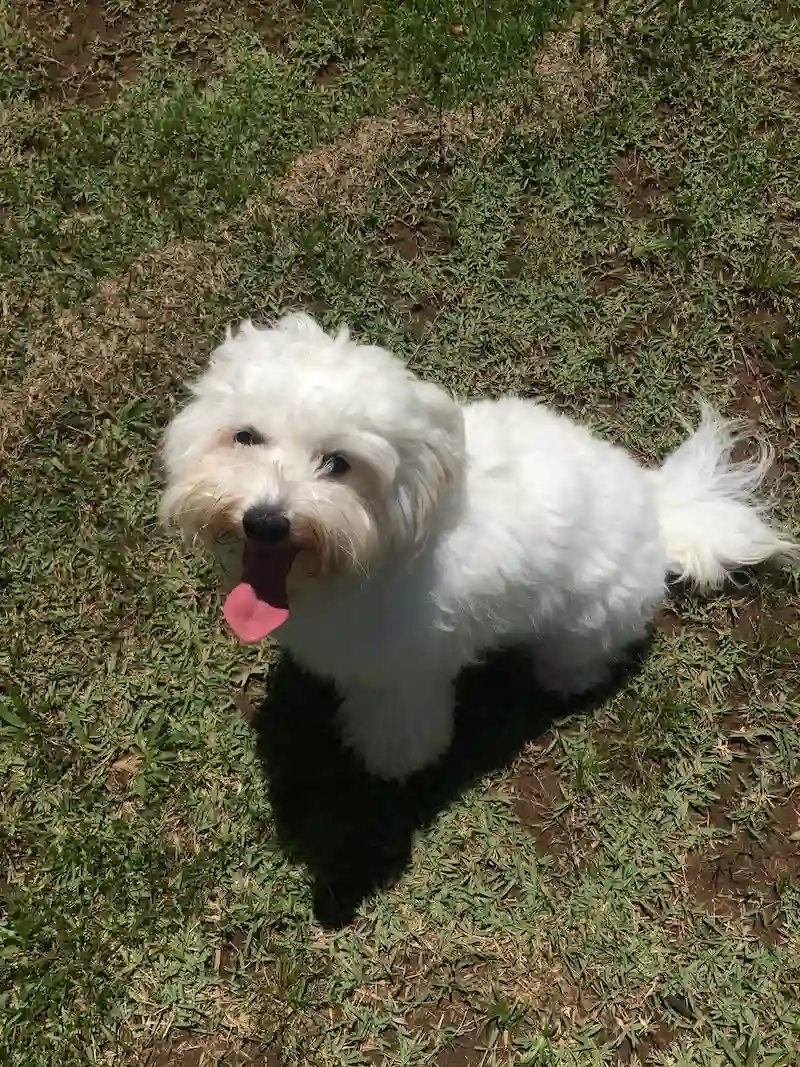 Murphy
 Valtersky
Meet Valtersky & Murphy
FOUNDER OF TEAM SKYTC
At SKYTC, Meet Valtersky & Murphy FOUNDER OF TEAM SKYTCAt SKYTC, cutting-edge pet technology meets real-world testing. We merge Murphy’s hands-on companion trials with Valtersky’s precise analysis—combining over 25 years of structural engineering background with health-tech experience.To guarantee reliability for all breeds, we collaborate with a trusted network of experienced large-breed tutors and active dog handlers who stress-test heavy-duty gear in rugged conditions. We raise the bar for review standards so your best friend gets only the safest, most functional, and highly reliable hardware on the market.
✨ Read also: Smart GPS Trackers for Akita Breeds: Heavy-Duty Field Guide for High-Prey Giants
A deeply technical piece of content that perfectly complements this post — absolutely worth the read.