
Australian Shepherds are absolute powerhouses of intelligence, agility, and sheer enthusiasm. However, that high herding drive and boundless energy mean an open gate or a rustling squirrel can turn a peaceful afternoon into a frantic search. Finding the best GPS trackers for Australian Shepherds isn’t just about picking a trendy gadget from an online shop; it is about choosing a real lifeline that holds up against an energetic, thick-coated working dog that refuses to sit still.
If you have ever experienced that heart-stopping moment when your Aussie bolts out of sight, you know the absolute panic it causes. These dogs can cover vast distances in a matter of seconds, darting through dense brush, leaping fences, and ignoring calls when their instincts kick in. Standard ID tags and basic short-range finders simply cannot keep pace with a breed built for all-day athletic endurance.
In this guide, we cut through the flashy marketing hype and break down real-world testing data. As someone named Valtersky who travels extensively with my Maltese, Murphy, alongside my dedicated team at skytc—which includes a resident pet parent and canine specialist—we put these tech wearers through brutal conditions. Here is what you need to know before spending your hard-earned money on a tracking device.
In 30 Seconds: The Raw Tech Verdict
If your Aussie is a runner, stop buying cheap short-range finders right now. They rely on nearby smartphones and are completely useless once your dog reaches an open trail or woodland area. You need a dedicated cellular-GPS hybrid device with multi-constellation satellite connectivity, high waterproof ratings, and a heavy-duty collar mount that won’t snap when brushed against dense thickets.
Gaining complete peace of mind and saving dozens of frantic searching hours comes down to choosing gear engineered for speed, distance, and harsh terrain.
Expect live-tracking battery life to take a massive hit during continuous updates—marketed multi-week battery figures only apply to lazy sleep modes, not active escapes. Buy a unit that fastens securely to a thick collar, skip gimmick features like ambient temperature sensors, and prioritize real-time location refresh rates above all else.
Performance Comparison Matrix
| Tracker Category | Signal Tech | Aussie Coat Fit | Real-Time Accuracy | Real Battery in Live Mode |
|---|---|---|---|---|
| Satellite-Cellular Hybrid | GPS + LTE-M | Excellent (with top neck mount) | High (2-5 sec updates) | 12 to 48 hours |
| Dedicated RF Tracker | Radio Frequency | Fair (bulkier transmitter clip) | Medium (direct line of sight) | 3 to 7 days |
| Bluetooth Crowd Finder | Bluetooth Mesh | Poor (easily hidden by coat) | Low (requires nearby phones) | 6 to 12 months |
| Hybrid Health & GPS | GPS + Wi-Fi | Good (universal harness mount) | High (varies by network) | 2 to 4 days |
| Budget Micro-Tracker | Legacy Cellular | Poor (flimsy mounting rubber) | Low (delayed ping intervals) | 8 to 16 hours |
Best GPS Trackers for Australian Shepherds: Specialized Tech Requirements
Australian Shepherds present unique physical and behavioral challenges for pet technology. First, their double coat is a silent tech killer. That dense, water-resistant undercoat and lush topcoat easily muffle acoustic speakers and interfere with low-power signal transmissions. If a tracker sits flush under their throat without robust collar elevation, signal attenuation can drop your tracking reliability significantly.
Second, Aussies are relentless physical operators. They do not just walk on paved sidewalks; they blast through mud, scrape past wire fences, dive into streams, and roll around in dirt. Low-grade components and bargain-bin accessories snap within days under this kind of friction. A tracker built for a lapdog sitting on a pristine sofa will fail the second an Aussie charges through a pine forest.
Finally, their acceleration curve is legendary. An Australian Shepherd can reach top speeds almost instantly. If your tracker relies on a slow five-minute ping interval to save battery, your dog could already be two miles away down a county road before you even receive the first location alert. Real-time dynamic updating is non-negotiable for high-drive herding breeds.
The Reality of the Battlefield: Marketing Promises vs. Real World Testing
Let’s drop the corporate fluff and address what actually happens when tech hits the trail. Manufacturers love showing glossy promotional videos of immaculate dogs standing on sunny mountaintops. In reality, the battlefield of pet ownership is messy, wet, and unforgiving.
During our hands-on field evaluations at skytc, our team specialist tested various wearable devices on active dogs in demanding conditions. The results were eye-opening. Rubber mounting bands dry out, crack, and tear off when exposed to UV light and thick scrubland. Decorative metallic finishes peel off after a few dips in a lake, leaving raw plastic exposed to water ingress.
Consider live-tracking performance. A hybrid satellite tracker might impress with snappy interface updates during casual walks, but it requires routine charging to prevent complete blackout during an active escape. The dynamic live-tracking hardware is fantastic because it pinpoints satellite coordinates behind thick structures, but aggressive live data pinging drains the internal battery cell within hours during an active emergency search.
Another common flaw lies in charging design. Magnetic pin connectors sound convenient, but once grit, salt, and dog sweat coat those contacts, charging becomes erratic. If you do not meticulously scrub those pins with a cloth regularly, you will place the device on its charger overnight only to wake up to a completely dead battery when you need it most. Look out for certain budget brands because they are a complete trap.
The Park Scenario: A Common Mistake with Short-Range Tags
Imagine this typical weekend scenario: You head out to a sprawling, off-leash park with your Australian Shepherd. You have attached a popular budget-friendly Bluetooth tag to their collar, feeling confident that you have a safety net. Your dog spots a flock of birds near the tree line, ignores your recall, and plunges deep into the unmapped woods beyond the park boundary.
You pull out your smartphone, open the app, and see a spinning loading wheel. Because short-range tags rely entirely on a dense network of passing smartphones to update location coordinates, the device goes completely silent in the woods. There are no passersby out there with matching phones. You are left staring at a static dot on your screen showing where your dog was ten minutes ago at the park entrance.
This mistake happens every single day to pet parents who trade true satellite capability for cheap, maintenance-free tags. Gaining true peace of mind and saving hours of desperate searching requires investment in hardware engineered for active, independent dogs.
Core Specifications Needed for Aussie Hardware
When evaluating gear for an Australian Shepherd, ignore superficial gimmicks and focus strictly on core mechanical and electronic specifications.
Multi-Constellation Satellite Engines
Look for devices that utilize multiple satellite networks simultaneously—such as GPS, GLONASS, and Galileo. A single-network receiver frequently loses signal lock under dense forest canopies or near tall suburban buildings. Multi-constellation chips acquire position locks substantially faster and maintain accuracy even when your dog is on the move under heavy cover.
Cellular Network Compatibility
Cellular trackers rely on modern low-power wide-area networks to send location data to your phone. These specialized cellular bands penetrate foliage and buildings much better than legacy cellular bands. Ensure the tracker uses modular multi-carrier connectivity so it automatically switches to whichever tower offers the strongest signal in your immediate area.
Ingress Protection Ratings
Never settle for anything less than an IP68 rating. An IP67 unit might survive a splash in a shallow puddle, but an Aussie will submerge themselves in deep mud and heavy streams. An IP68 rating guarantees protection against continuous immersion under water pressure, ensuring the delicate circuit board stays bone dry.
Heavy-Duty Structural Enclosures
Skip trackers that dangle from thin split-rings like keychain trinkets. An Australian Shepherd’s vigorous movement will cause a dangling tracker to bounce aggressively, distracting the dog and catching on branches. Opt for hardware that mounts flat against the collar strap using reinforced polycarbonate sleeves or heavy-duty woven webbing.
Insights From Our Field Testing Routine
While I spend much of my time traveling with my small Maltese, Murphy, our skytc testing protocol treats every piece of gear as if it were going onto a high-energy working animal. My colleague on the team—a dedicated pet parent and canine specialist—regularly subjects these trackers to severe physical stress tests.
We have submerged trackers in buckets of muddy water, dragged them through gravel, and tracked active dogs across hilly countryside terrains. What we found is that many high-end setups look impressive on paper, but their companion mobile apps are often cluttered with slow-loading social features and useless leaderboards that get in the way when you are trying to initiate an emergency search. Real-world utility always beats flashy software extras.
Actionable Buyer Checklist for Aussie Pet Parents
- Best GPS Trackers for Australian Shepherds selection: Verify that the device uses true active GPS combined with cellular data rather than short-range Bluetooth. Pro-tip: Check cellular coverage maps for your local hiking trails before committing to a monthly network tier investment.
- Collar Mounting System: Select a direct collar-threaded bracket instead of a dangling ring clip. Pro-tip: Threading the tracker directly onto a wide heavy-duty nylon collar prevents snagging in deep brush.
- Waterproof Integrity Check: Ensure the charging port uses a sealed silicone plug or fully encapsulated contact pad. Pro-tip: Apply a microscopic film of dielectric grease to exposed charging contacts to stop corrosion from salt air and muddy water.
- Battery Optimization Settings: Configure custom Wi-Fi safe zones around your home to preserve battery life while your dog is inside. Pro-tip: Setting up a home base station can extend battery duration from two days to over two weeks.
- Real-Time Refresh Frequency: Test the live-tracking mode in your local park to see the exact delay between location pings. Pro-tip: Anything longer than a ten-second update interval will make tracking a fast-running Aussie extremely frustrating.
- Double-Coat Clearance: Position the tracker on top of the dog’s neck rather than dangling under the throat. Pro-tip: Keeping the antenna facing upward towards the sky drastically reduces signal blockage from dense fur.
- Virtual Fence Calibration: Set up customized geofence boundaries with a minimum buffer radius of at least 150 feet. Pro-tip: Setting geofences too narrow leads to constant false escape alarms whenever your dog hangs out near the back fence line.
- Nighttime Visibility Features: Choose a unit with remote-activated high-output LED lights built directly into the housing. Pro-tip: Flashing LEDs visible from hundreds of yards away are invaluable when searching dark roads at night.
- App Emergency Readiness: Bookmark the emergency live-tracking button within the app so you can activate it without navigating menus. Pro-tip: Practice running a mock search once a month so you know the app layout cold under stress.
- Multi-Parent Access Sharing: Add secondary family members or pet sitters to your device account. Pro-tip: Having multiple phones tracking the same dog allows you to coordinate search grids if your Aussie escapes while you work away from home.
- Weight and Ergonomics Balance: Ensure the tracker weight does not exceed three percent of your dog’s total body weight. Pro-tip: For an adult Australian Shepherd, weight is rarely an issue, but physical profile thickness matters when squeezing through brush gaps.
- Hardware Resistance Review: Inspect the outer casing for impact-resistant polycarbonate construction. Pro-tip: Avoid soft rubber-only housings that tear when rubbed against rough bark.
👇 Looking for more performance cheats? Check out our field-tested tactical blueprints:
The Best GPS Dog Trackers with No Monthly Fees
Real battlefield testing: How to keep your dog 100% safe without getting trapped in expensive subscriptions.
Best Smart Litter Boxes: Honest Testing & Review
Say goodbye to the scoop. We test the internal mechanics, odor control, and safety of top smart litter boxes.
Best Smart Feeding & Interactive Toys for City Pets
How to keep your companion happy, engaged, and fed while managing a busy, away-from-home routine.
Frequently Asked Questions
Can I use a basic Bluetooth finder for my Australian Shepherd?
No. Relying on Bluetooth crowd-sourced tags for a high-drive working dog is a massive gamble. Bluetooth tags do not contain GPS receivers or cellular modems; they require a nearby smartphone running the exact same network to broadcast their position. If your Aussie runs off into a wooded area or an empty field, there are no phones around to relay the signal, rendering the device totally blind.
How does an Australian Shepherd’s double coat affect GPS signal strength?
A dense double coat can attenuate satellite signals if the tracker’s antenna is pressed tightly beneath the neck or buried under heavy fur folds. To prevent signal loss, mount the tracker high on top of the collar strap so the antenna points directly toward the open sky, clear of thick hair.
Are cellular subscription tiers required for dog GPS trackers?
Yes, for true real-time tracking across any distance, cellular-based GPS devices require an active network service connection. This built-in SIM card sends live coordinate data from the tracker to your smartphone app anywhere mobile service exists. Anyone telling you that live long-range tracking is completely fee-free is selling short-range radio gear with massive handheld antennas.
Will a GPS tracker work in remote off-grid hiking areas?
Standard cellular GPS trackers need cellular towers to send location data to your phone, even though they receive satellite signals anywhere on earth. If you frequently trek deep into wilderness areas without cellular coverage, skip standard cellular trackers and invest in dedicated offline radio frequency or direct-to-satellite handheld tracking systems.
How long does the battery actually last on dynamic live tracking?
Ignore advertised claims of month-long battery life. Those numbers are measured while the device sits motionless on a table connected to home Wi-Fi. In active live-tracking mode with fast ping intervals, most premium hardware batteries will deplete within 12 to 24 hours of continuous operation.
What is the difference between a microchip and a GPS tracker?
This is the single most common confusion in pet tech. An implanted microchip is a passive identification tag that contains only a unique ID number read by a vet scanner; it has zero battery, zero GPS capabilities, and cannot track a lost pet. A GPS tracker is an active electronic device worn on the collar that broadcasts live movement coordinates in real time.
Is audio training or remote beeping useful on an Aussie tracker?
It depends on training, but the technology itself works well when used properly. High-pitched remote buzzers or vibration motors inside the tracker can be conditioned as a secondary recall cue. However, relying on built-in speakers in high-wind outdoor environments is often ineffective because the dog cannot hear low-volume sounders over their own heavy panting and movement.
How robust do collar mounts need to be for an Aussie?
Extremely robust. Australian Shepherds will rip flimsy rubber clips to shreds within weeks of running through underbrush. Look for bolt-on polycarbonate brackets or heavy-duty nylon sleeve mounts that lock the hardware directly to a sturdy collar strap.
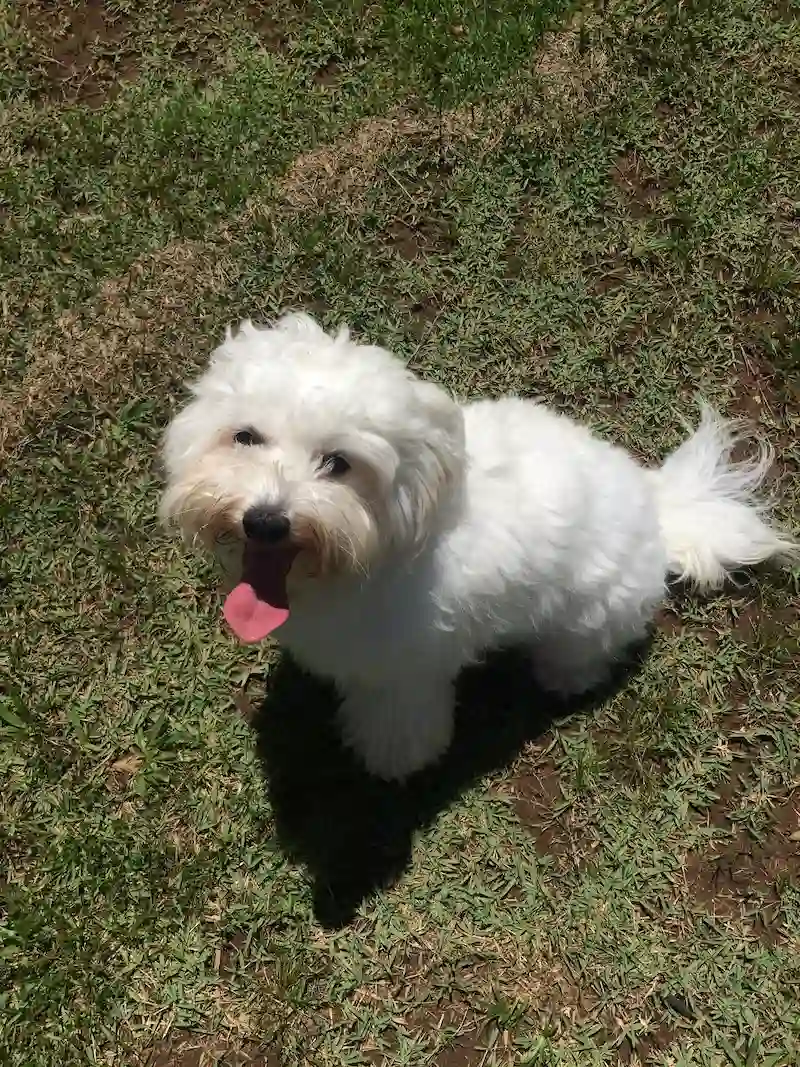 Murphy
 Valtersky
Meet Valtersky & Murphy
FOUNDER OF TEAM SKYTC
At SKYTC, cutting-edge pet technology meets real-world testing. We merge the unpredictable, hands-on testing of Murphy with Valtersky’s precise analysis—combining over 25 years of structural engineering background with health-tech experience. We raise the bar for review standards so your best friend gets only the safest, most functional, and highly reliable gear on the market.
✨ Read also: Smart GPS Collars for Boxer Breeds
A deeply technical piece of content that perfectly complements this post — absolutely worth the read.