
Every single evening, you shut down your work computer and feel that deep, nagging ache crawling up your wrists and settled right between your shoulder blades. You might think it is just a normal byproduct of sitting in an office chair all day, but the culprit is almost always sitting right beneath your fingertips. Standard staggered keyboards force your hands into awkward, angled positions that strain your tendons, which is why learning how ortholinear keyboard layouts reduce executive fatigue has become the ultimate secret weapon for high-performing professionals.
At our repair shop, Valtersky’s dedicated support team and laptop hardware specialist have watched countless brilliant executives, programmers, and designers burn out simply because their hands quit on them. I remember one consultant who came in with what he thought was a broken laptop trackpad; although his laptop was technically fine, his hands were so swollen from carpal tunnel strain that he could barely click the sensor. That was my wake-up call to start pushing people toward layouts that actually work with human anatomy instead of fighting it.
Making this single physical adjustment to your workspace will instantly eliminate that late-afternoon brain fog and physical exhaustion. You will stop wasting hours correcting typos, say goodbye to expensive physical therapy visits, and regain the absolute peace of mind that comes from a pain-free workday.
In 30 Seconds:
Look, standard keyboards are spaced out in a staggered grid because of 19th-century typewriters—not because it is comfortable. Ortholinear keyboards align the keys in a clean, straight matrix where your fingers only have to move up and down, cutting finger travel distances in half. While the learning curve will make you feel like a toddler for the first week, the physical payoff is huge: no more wrist twisting, zero shoulder strain, and no more end-of-day muscle fatigue. Buy a solid pre-built model with hot-swappable switches, stick through the transitional phase, and thank us later when your wrists stop throbbing.
The Reality of the Battlefield
Many premium ergonomic keyboards boast split designs, tenting legs, and highly customizable physical profiles. However, the hard truth is that many of these plastic clamshell ergonomic models feel incredibly cheap, take up half of your desk space, and suffer from terrible firmware bugs that disconnect right in the middle of a meeting. Many manufacturers will charge a premium tier investment for these boards; but when you peel back the rubber feet, you find cheap, low-grade soldering joints and hot-glue seals that fail the moment you carry them in a commuter bag.
Another frustrating reality is the finish on high-end keycaps included with these custom ortholinear setups. They often feature beautiful, dye-sublimated legends that look stunning on your Instagram desk setup; but under heavy daily typing, the matte texture quickly peels and rubs off into a greasy, slippery mess. Once that textured finish is gone, your fingers will slide off the small matrix keys, which completely ruins the muscle memory you spent weeks building.
Let’s talk about those fancy aluminum cases often marketed to engineers and developers. Although a solid, CNC-milled metal chassis feels like a luxury tank on your desk, it lacks any real acoustic dampening inside. This means every single keystroke echoes like a gunshot in a quiet office, which will make you the most hated person in the room unless you spend hours installing aftermarket foam pads.
The Mistake That Costs Weeks of Work
Let’s look at a classic trap that I see developers and creatives fall into when they decide to fix their posture. Meet David, a remote software architect who was suffering from serious wrist strain. He decided to search for high-end setups and ended up buying a ridiculously complex, split ortholinear board that came in a raw kit with dozens of loose capacitors, switches, and a bare circuit board. He thought that hand-soldering his own board would be a fun weekend project and would give him the ultimate custom typing experience.
He spent a premium tier investment on the parts and spent two entire nights sweating over a hot soldering iron. On Monday morning, he plugged it in, and it worked—for about two hours. While typing up a critical system design document, one cold solder joint on his spacebar gave out, sending a short circuit across the board and instantly frying the microcontroller. David had to spend the next four days typing on his laptop’s terrible built-in flat keyboard while waiting for replacement components to ship, completely tanking his project deadline.
David’s mistake wasn’t wanting a better keyboard; it was jumping into DIY assembly without knowing the structural risks. If you are a busy professional whose career relies on typing, you cannot afford to have your daily work tool behave like a temperamental hobby kit. Stick to pre-built, factory-tested hardware so you do not end up stranded in the middle of your work week.
Why Ortholinear Keyboard Layouts Reduce Executive Fatigue
To understand why this grid system works, we have to look at the mechanics of the human hand. Traditional keyboards are staggered because mechanical typewriters needed physical levers to avoid jam-ups; but modern computers do not have this limitation. When your keys are arranged in perfect vertical and horizontal columns, your fingers only move in natural, linear paths. Your hands no longer have to perform micro-twisting motions just to hit the ‘C’ or ‘M’ keys, which prevents the forearm muscle tension that leads to physical exhaustion.
Although a split layout mechanical keyboard is highly praised for keeping your shoulders open, the physical distance between the split halves can sometimes cause shoulder tension if your desk is too narrow. A compact ortholinear layout solves this by keeping all keys within easy reach of your fingers’ resting positions. Because you do not have to stretch your wrists to reach backspaces or enter keys, you conserve precious physical energy over a long eight-hour shift.
For creatives, programmers, and digital nomads, this physical efficiency directly translates into mental stamina. When you are typing on a standard staggered board, your brain is constantly executing micro-corrections for the slightly offset keys; but on a grid system, the target is always exactly where your fingers expect it to be. Once the muscle memory locks in, typing becomes an effortless extension of your thoughts rather than a physical chore.
Getting Over the Muscle Memory Cliff
I am not going to sugarcoat this: your first week on an ortholinear grid is going to be incredibly annoying [1]. You will feel like you are typing with oven mitts on. Your brain has spent decades memorizing the awkward typewriter slant, so you will constantly hit the wrong column when reaching for the bottom row. However, if you stick with it for five working days, your brain will rewire itself and the physical relief will make you never want to look at a staggered layout again.
During this transition, it is best to avoid using specialized layouts like Colemak or Dvorak unless you want to triple your frustration. Keep the standard QWERTY layout on your new grid board so you only have to train your fingers to move in straight lines, not relearn the entire alphabet. This keeps the transition period manageable and prevents you from throwing the keyboard against the wall in frustration.
Comparing Keyboard Layout Formats
Let’s compare the different layouts you can bring to your desk setup to see what fits your work style:
| Layout Format | Key Count | Portability | Physical Ergonomic Rating | Learning Curve | Value Tier |
|---|---|---|---|---|---|
| Ortholinear 40% (Planck) | 47-48 keys | High (fits in coat pocket) | Excellent; zero finger travel | High; relies heavily on layers | Budget-friendly options |
| Ortholinear 50% (Preonic) | 59-60 keys | Medium; slightly taller case | Excellent; dedicated number row | Medium; easier for beginners | Mid-Range Investment |
| Split Ortholinear | Varies by model | Low; extra cables required | Outstanding; keeps shoulders open | High; requires muscle adaptation | Premium tier investment |
| Traditional Staggered (60%) | 61-68 keys | High; very common size | Poor; forces finger twisting | None; standard muscle memory | Bargain-bin accessories to high-end |
Exec’s Ergonomic Setup Checklist
Use this daily checklist to optimize your layout transition and protect your hands:
- Implement how ortholinear keyboard layouts reduce executive fatigue principles: Position the keyboard directly in front of your typing line to keep your shoulders straight; however, remember that if your desk is too high, you will still experience shoulder tension regardless of the keyboard grid.
Pro-Tip: Lower your office chair armrests so your elbows can hang naturally at a ninety-degree angle, allowing the grid alignment to do the heavy lifting. - Choose hot-swappable switches: Opting for a hot-swappable circuit board makes replacing dead switches incredibly fast and easy; however, constant swapping can loosen the physical sockets on the motherboard if you are too rough with the puller tool.
Pro-Tip: Use a dedicated switch puller and inspect the copper pins of the switch to ensure they are perfectly straight before pushing them into the board. - Select silent or tactile switch profiles: Quiet, linear switches are excellent for long typing sessions without causing ear strain; however, they lack the satisfying physical feedback that tells your brain a keypress has officially registered.
Pro-Tip: Get a small switch-tester pack containing both quiet linear and soft tactile switches to see which type feels best on your fingers before buying a whole set. - Program the Spacebar to be split: Splitting your long spacebar into two separate keys lets you map one side to backspace or shift, reducing thumb stretching; however, finding replacement keycaps for non-standard spacebar sizes can be quite difficult.
Pro-Tip: Look for keyboard kits that use standard 2U or 1U keycaps for the thumb keys so you can easily find replacements later on. - Utilize physical tenting feet: Tenting your keyboard keeps your wrists from resting flat, which helps prevent carpal tunnel strain; although this is great for ergonomics, cheap plastic legs can easily wobble and collapse on slick glass desks.
Pro-Tip: Use heavy-duty adhesive rubber bumpers or a dedicated wooden tenting block to keep your board locked securely in place. - Leverage custom keyboard layers: Using layers allows you to access a full number pad without moving your hands away from the home row; however, memorizing three different layers can cause minor cognitive delay when you are in a rush.
Pro-Tip: Keep a printed printout of your keymap layout right next to your monitor during the first two weeks so you do not have to guess where the symbol keys are. - Invest in high-quality PBT keycaps: Textured PBT plastics are highly resistant to finger oils and maintain their grip for years; although they are incredibly durable, they tend to have a rougher surface texture that some typists find irritating.
Pro-Tip: Look for PBT keycaps with a cherry or OEM profile to ensure your fingers can transition smoothly between the rows without catching. - Add soft foam inside the keyboard case: Installing high-density foam inside your metal chassis absorbs hollow echoes and creates a pleasant, deep typing sound; however, adding too much foam can compress the internal battery or wiring harness.
Pro-Tip: Use a thin sheet of specialized neoprene or shelf liner foam to damp the sound without putting physical stress on the motherboard. - Match your wrist rest height: A padded wrist rest is excellent for supporting your hands during typing breaks; however, resting your wrists directly on the pad while actively typing can compress your carpal tunnel tendons.
Pro-Tip: Use the wrist rest only to rest your palms when you are reading, and hover your hands slightly above the keys while you are actually typing. - Enable auto-shift features in firmware: Programming your keys to input capital letters when held down slightly longer eliminates the need to stretch for the shift key; however, this feature can accidentally trigger caps when you are typing at extremely high speeds.
Pro-Tip: Adjust the debounce and hold-delay timers in your keyboard configurator software to perfectly match your natural typing cadence.
👇 Looking for more performance cheats? Check out our field-tested tactical blueprints:
Guides for Your Next Workspace
Professional Laptops
The definitive blueprint to selecting high-performance, enterprise-grade workstations engineered to scale your productivity.
Budget Tech Tools
Practical strategies and low-cost digital tools engineered to maximize office performance without breaking your budget.
Power User Gadgets
Advanced hardware, desk automation tools, and elite tech ecosystems built to completely eliminate workflow bottlenecks.
Frequently Asked Questions
Will an ortholinear keyboard instantly fix my carpal tunnel?
No. It is a tool, not a miracle cure. It aligns your fingers in straight columns to stop you from twisting your wrists, which drastically cuts down on tendon strain. But if you keep typing with awful posture or resting your wrists on hard desk edges, you are still going to hurt.
Are expensive custom luxury keycaps worth the money?
Heck no, they are a total rip-off. Many custom keycap sets cost more than a high-end keyboard itself simply because they have fancy colors. Buy a basic, durable set of PBT keycaps. Your fingers do not care what color the keys are when you are trying to hit a deadline.
Is a 40% layout too small for real work?
It depends on what you do. If you are an accountant punching numbers all day, a 40% board is a nightmare because you have to use layered keys for every single digit. But for writers and programmers, it keeps your hands glued to the home row, which is amazing for muscle memory.
Can I game on an ortholinear keyboard?
Yes, you can, but it is not ideal for games that require quick diagonal movements on the WASD keys. Because the grid is perfectly straight, your muscle memory for moving sideways will feel slightly off initially. If you are a casual gamer, it is fine; for competitive pros, stick to staggered.
Why are split ortholinear keyboards so expensive?
Because they require two separate circuit boards, two cases, and a connecting cable. Plus, it is a niche market, so manufacturers jack up the price. Unless you really need your hands wide apart to relieve shoulder pain, a single-chassis grid board will save you a fortune.
Do I need to learn a new layout like Dvorak to use one?
Please do not do that to yourself. Changing both the physical key placement and the alphabetical layout at the same time is a recipe for a massive headache. Stick to standard QWERTY on your new grid board. Re-aligning your fingers to straight columns is more than enough of a challenge.
Should I buy a cheap DIY keyboard kit?
No, unless you love the smell of burning solder and want to risk ruining your hardware. DIY kits are for hobbyists who enjoy tinkering. If you need a reliable daily work tool that won’t die on you in the middle of a major project, spend the money on a pre-built, factory-tested board.
Are tactile switches better than clicky switches for work?
Yes, unless you want your coworkers to throw your keyboard out of the window. Clicky switches have a loud, high-pitched mechanical sound that is incredibly annoying in an office environment. Tactile switches give you that same satisfying bump feeling without the deafening racket.
Why Trust SKYTC Curated Gear?
At SKYTC, we simplify technology for you. We aren’t just another deals site; we are hardware experts obsessively focused on elite performance.
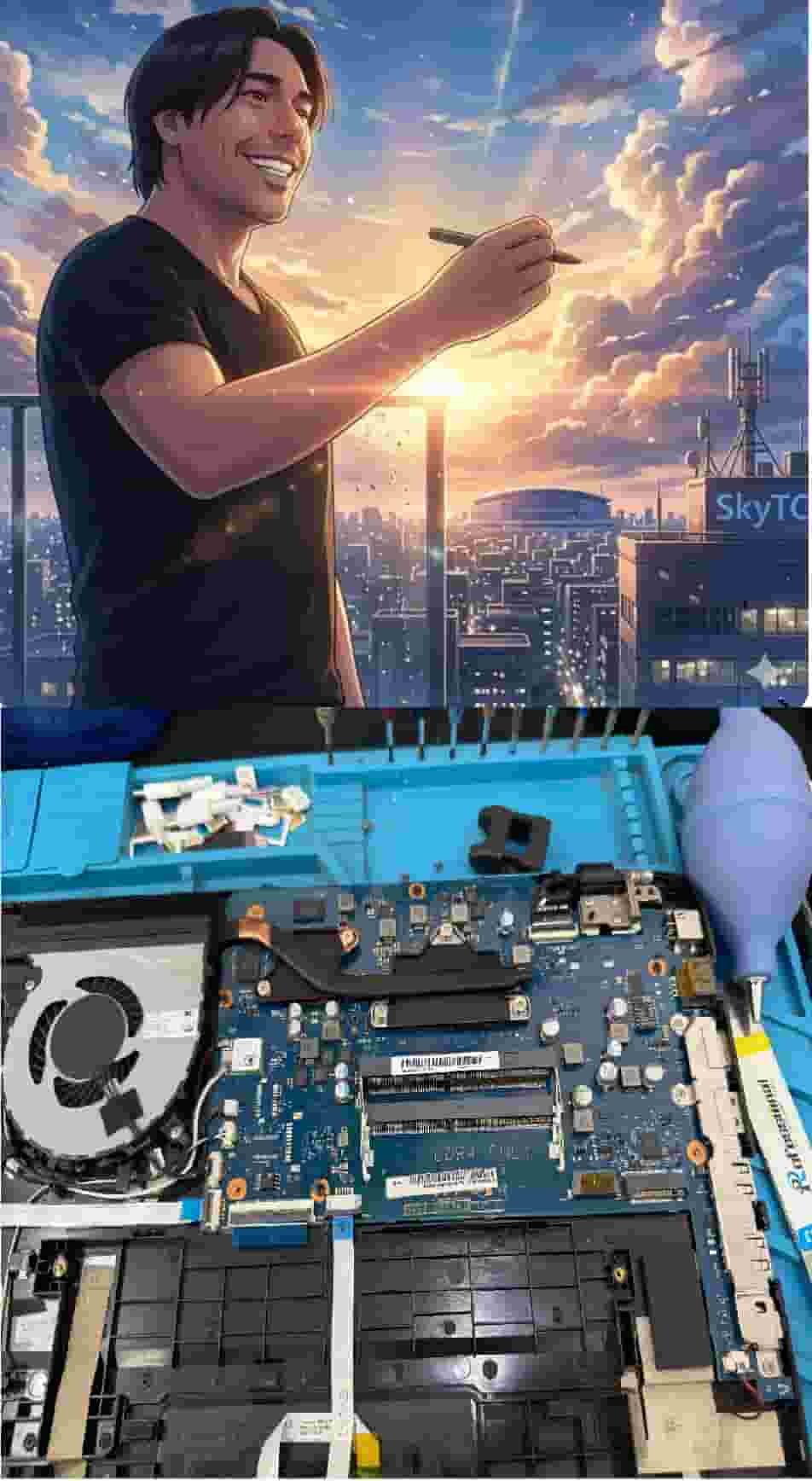
Technical Bio: Hardware & Laptops
“At SkyTC, technology is driven by engineering precision and real field experience. I am Valtersky, and I bring a unique background to the bench: from professional woodworking, the eye for structural integrity; from radiology, an absolute obsession with microscopic details.
As an ultra-endurance marathon runner, I don’t just browse store windows. I tear machines down, run intensive stress tests on thermal dissipation, and validate the actual build quality of every single component. My mission is to translate complex tech engineering and tech finances into smart decisions for your workflow.
Here, we speak straightforward, jargon-free English with the authority of someone who knows exactly what is inside the chassis.”
✨ Read also: Top Full Size Custom Mechanical Keyboards for Day Traders
Content that perfectly complements this guide — highly recommended reading.