
If you are putting in serious weekly mileage on the asphalt or climbing vertical mountain trails, you probably think you are building an indestructible athletic engine. The brutal, clinical reality is that you might actually be dissolving your own structural foundation from the inside out; to fix running bone density loss naturally, you must stop relying on low-impact repetitive cardio and blind faith in synthetic vitamins.
As a clinical analyst who spent 5 years looking at skeletal frames under X-ray and 2 years reading high-resolution Computed Tomography (CT) scans, I have seen the literal microarchitectural decay of bone tissue in athletes who look perfectly healthy on the outside. When you run 50 miles a week in a caloric deficit, your body doesn’t care about your marathon finish time—it treats your bone matrix as a calcium bank, raiding it to maintain blood pH and nerve transmission.
By implementing field-tested mechanical loading and biological nutrition, you will save thousands of dollars on diagnostic MRIs, avoid the nightmare of a sudden tibia stress fracture, and preserve your joints so you can continue crushing mountain trails well into your 60s without structural failure.
In 30 Seconds: The Quick-Verdict
Running alone does not build dense bones—it causes repetitive micro-wear. To stop systemic bone resorption, you must apply heavy axial loads (lifting heavy weights) and supply your body with the biological raw materials it needs to remodel. Skip the chalky calcium supplements that clog your arteries and prioritize clean red meat with its natural fats to drive structural recovery. Keep your shoes minimally cushioned for some runs to allow mechanical impact to signal osteogenesis.
How to Fix Running Bone Density Loss Naturally: The Biological Mechanics
Under a CT scan, healthy cortical bone looks like a thick, dense concrete wall, while trabecular bone resembles a highly organized, tight honeycomb. In runners suffering from bone density loss, that honeycomb looks like a building after an earthquake—thin, fractured, and full of hollow structural voids.
The problem is a biological process called remodelation, governed by osteoblasts (bone-builders) and osteoclasts (bone-chewers). When you engage in high-volume endurance running, you trigger continuous, low-amplitude vibration. This does not provide a strong enough mechanical signal to stimulate osteoblast activity, but it does trigger systemic inflammation and cortisol production.
Worse, many endurance athletes fall into Relative Energy Deficiency in Sport (RED-S). When your energy intake does not match your energy expenditure, your endocrine system shuts down non-essential functions. Estrogen and testosterone plummet. Since these hormones are the primary guardians of your bone matrix, their absence signals the osteoclasts to go on a feeding frenzy, stripping calcium directly from your shins, hips, and spine.
| Strategy | Clinical Mechanism | Skeletal Target | Resource Cost | The Battlefield Catch |
|---|---|---|---|---|
| Heavy Barbell Squats | Axial loading triggers fluid flow in canaliculi, activating osteoblasts. | Lumbar Spine & Femoral Neck | Low (Gym access) | High risk of spinal injury if core stability is compromised. |
| High-Impact Plyometrics | Rapid rate of force development shocks cortical bone matrix. | Tibia, Fibula & Calcaneus | None (Bodyweight) | Can easily flare up patellar tendinopathy if introduced too fast. |
| Red Meat & Natural Fats | High-density protein, zinc, and fats optimize endocrine environment. | Systemic Skeletal Matrix | Medium (Quality meat) | Must avoid cheap industrial cuts that drive systemic inflammation. |
| Calcium Carbonate Pills | Passive intestinal absorption (very low rate without co-factors). | None (largely excreted) | Low (Over-the-counter) | Zero osteoblast activation; high risk of arterial calcification. |
Battlefield Assessments: The Good vs. The Hard Truth
1. Heavy Barbell Loading (Axial Compression)
The Good: Triggers the highest osteogenic index by forcing the femur and spine to adapt to crushing mechanical loads.
The Bad: If your form is sloppy or your core is weak, you will herniate a lumbar disc before your osteoblasts can even pack a single milligram of calcium.
2. Plyometric Drop Jumps
The Good: Generates high-rate pressure waves that mimic kickboxing impact, shocking the bone matrix into rapid remodeling.
The Bad: If your Achilles tendons or knee cartilage are already inflamed from trail running, jumping off a 24-inch box will tear you apart.
3. Red Meat and Natural Fats Meta
The Good: Delivers highly bioavailable Vitamin D3, K2, zinc, and saturated fats required to synthesize bone-building steroid hormones naturally.
The Bad: If you buy cheap, factory-farmed meat pumped with hormones, you are loading your body with inflammatory omega-6s instead of clean recovery fuel.
4. Standard Calcium Pills (The Showroom Trap)
The Good: Cheap and widely available at any grocery store counter.
The Bad: Calcium carbonate has terrible bioavailability; without K2 and D3, it bypasses your bones completely and deposits inside your arterial walls, accelerating cardiovascular stiffness.
👇 Looking for more performance cheats? Check out our field-tested tactical guides:
SkyTC Master Hub & Pillar Guides
The Realities of the Battlefield
The modern athletic gear industry is obsessed with comfort, but comfort is the absolute enemy of skeletal durability. We see premium running brands marketing maximalist, super-cushioned carbon-plated shoes that promise to save your joints from impact. Indeed, they reduce muscular fatigue during long-distance efforts by absorbing the kinetic energy of each foot strike. But there is a massive catch: they strip away the natural mechanical loading required to stimulate bone-building osteoblast activity, leaving your feet and lower legs shockingly fragile.
We also see high-end smart scales promising to track your skeletal weight. But their bioelectrical impedance analysis is notoriously unreliable, fluctuating wildly based on your hydration status rather than actual bone mineral density, leading you to believe your bones are safe when they are actively demineralizing.
Furthermore, sweat-wicking synthetic compression gear is designed to dry rapidly under harsh outdoor conditions. However, many cheap straps on heart rate monitors or GPS watches scratch and chafe the skin when dried sweat crystallizes into salt, creating open sores that invite systemic infection, which in turn spikes cortisol and halts the bone-remodeling process entirely.
Hypothetical Failure Scenario: Marc’s Road to the Cast
Let’s look at Marc, a 38-year-old high-pressure executive and dedicated trail runner. Marc runs 55 miles a week, preparing for a technical mountain ultra. To keep his weight down and stay “lean,” he follows a low-fat, high-carbohydrate diet, avoiding red meat because of outdated mainstream nutrition advice. He relies on maximalist, ultra-cushioned shoes to “protect his knees” and takes a standard synthetic calcium supplement every morning with his coffee.
Marc ignores the subtle, dull ache in his groin and lower shin, assuming it’s just normal training fatigue. One afternoon, while stepping off a tree root at mile 12, his femur neck undergoes a micro-fracture, sending him crashing to the dirt. He ends up in my CT scanner, where we find his bone density is equivalent to that of a sedentary 70-year-old.
His mistake was simple: he created a perfect storm of chronic low energy availability, zero axial heavy loading, and zero fat-soluble vitamins (D3/K2) to transport minerals into his bones. His highly cushioned shoes silenced the body’s warning system, while his low-fat diet starved his endocrine system of the cholesterol needed to produce testosterone and estrogen.
The Field Guide to Natural Bone Reclamation
To rebuild your skeletal frame, you must combine structural engineering principles with aggressive clinical nutrition. Follow this exact roadmap:
- Fix running bone density loss naturally by introducing heavy, multi-joint lifts (deadlifts and squats) at 80%+ of your 1-rep max twice a week. Insider observation: Bone only remodels when subjected to loads exceeding 4 times your body weight; running alone never reaches this threshold.
- Incorporate 10 to 20 drop jumps off a sturdy 12-inch box onto a flat surface twice a week. Insider observation: The high rate of impact force is what signals the osteoblasts to harden the tibial cortex.
- Transition to a minimalist or low-stack shoe for short recovery walks or warm-ups. Insider observation: This forces the intrinsic muscles of your foot to fire, transmitting raw mechanical stress directly to your metatarsals.
- Base your recovery nutrition around clean red meat, including ribeye, bison, or grass-fed beef with its natural fats. Insider observation: The saturated fats and natural cholesterol in red meat are the literal building blocks of steroid hormones that prevent bone resorption.
- Ditch standard calcium carbonate pills immediately. Insider observation: They are highly unabsorbable chalk that will settle in your arteries; use whole-food mineral sources instead.
- Supplement with a high-dose liquid Vitamin D3 and K2 (MK-7) complex daily. Insider observation: Vitamin D3 absorbs calcium from your gut, but K2 acts as the GPS, ensuring that calcium deposits in your bones and not your blood vessels.
- Track your morning heart rate variability (HRV) to monitor systemic nervous system fatigue. Insider observation: A chronically low HRV indicates high cortisol, which blocks bone mineralization.
- Ensure your daily caloric intake never drops below 45 kcal per kilogram of fat-free mass per day. Insider observation: Going below this threshold triggers RED-S, shutting down bone-protective sex hormones within days.
- Consume at least 10 grams of dietary collagen or bone broth 30 minutes before your heavy loading sessions. Insider observation: This primes the organic collagen matrix of your bones to absorb the minerals you feed it.
- Expose your skin to direct, unfiltered sunlight for 15 minutes daily without sunscreen. Insider observation: Natural UV exposure triggers cutaneous synthesis of active Vitamin D, which is far superior to synthetic chemical drops.
- Avoid consuming phosphoric acid, commonly found in dark diet sodas. Insider observation: Phosphoric acid binds to calcium in your digestive tract, flushing your bone-building blocks down the toilet.
- Maintain a consistent sleep window of 8 hours, utilizing blacked-out rooms. Insider observation: Growth hormone peaks during deep stage 3 sleep, which is when the absolute majority of skeletal remodeling occurs.
No-Nonsense Skeletal Recovery FAQ
1. Can I fix my bone density while continuing to run 50+ miles a week?
Only if you balance the metabolic books. If you are running high mileage, you must aggressively over-feed clean calories, lift heavy twice a week, and ensure your endocrine markers are optimal. If you run in a chronic deficit, your bones will continue to dissolve, period.
2. Are smart scales accurate for tracking bone mass?
Absolutely not. They use weak electrical currents that are easily fooled by how much water you drank or how much salt you ate. They are a showroom gimmick. If you want real skeletal metrics, get a clinical DEXA scan or a quantitative CT scan.
3. Why shouldn’t I just take a daily calcium pill?
Because calcium carbonate is basically ground-up chalk. Without Vitamin D3 to absorb it and Vitamin K2 to direct it to your skeletal frame, that calcium floats around your blood, hardens your arteries, and forms painful kidney stones.
4. Will running on soft grass instead of concrete prevent bone loss?
No. Running on soft surfaces actually reduces the mechanical impact even further, which means less osteogenic stimulation. While grass might temporarily spare inflamed joints, it does absolutely nothing to signal your body to build denser bones.
5. Is a plant-based diet bad for a runner’s bone health?
It is highly inefficient. Plant-derived calcium and minerals are bound to phytates and oxalates, which drastically lower their bioavailability. To get the same bone-building nutrients, you have to over-consume carbohydrates, whereas clean red meat provides highly bioavailable zinc, iron, and fats in a single, clean package.
6. How long does it take to naturally rebuild bone density?
Bone is slow-growing tissue. Unlike muscle, which adapts in weeks, a complete cycle of bone remodeling takes about 4 to 6 months. You need at least half a year of consistent axial loading and nutritional saturation to see measurable changes on a scan.
7. Are ultra-cushioned carbon-plated shoes causing my stress fractures?
Indirectly, yes. They absorb the natural ground reaction forces that your bones rely on as a signal to grow stronger. When you pair that lack of signal with high volume, your muscles stay fresh enough to let you over-train, while your bones remain weak and unconditioned.
8. Should I do high-rep, light-weight lifting for my bones?
No, that is a complete waste of your gym time. Light-weight, high-rep training mimics the repetitive endurance stimulus you already get from running. To trigger osteogenesis, your bones require massive, brief, heavy mechanical stress. Think squats at 85% of your max, not 15-pound dumbbell curls.
Why Trust SkyTC Biohacking Curation?
At SkyTC, we treat the human body as your most valuable technology. We are not just a recommendation site; we apply a rigorous clinical and practical screening process to ensure that each recommendation optimizes your biology with safety and real-world results.
✓ Technical Expertise:
Clinical experience in Radiology and Tomography (CT scans). We analyze methods through the lens of bone health and structural integrity.
✓ Specialization:
Focus on real-world biohacking. We test every wearable and supplement at the absolute limit of effort during marathons and on the mats.
✓ Authority:
Curation based on absolute transparency, always highlighting both the positive advantages and the real drawbacks of every technology.
✓ Trust:
A curation process built directly on the professional experience of a field practitioner, speaker, and high-performance leader coach.

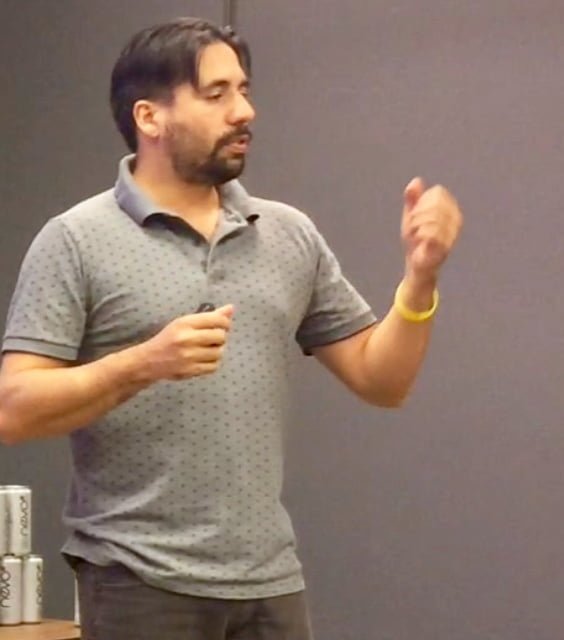


Optimizing the body demands the clinical precision of someone who operated in Radiology (Brazilian Board Certified, CRTR-SP 23595T) for years, combined with the unyielding resilience of someone who conquered multiple 42km+ mountain marathons. As an active professional, multi-pet handler, and tech benchmark researcher, at SkyTC, we bridge advanced technical science with extreme practical environments to help you biohack your active performance, optimize smart pet-tech ecosystems, and protect your structural longevit
Discover my full professional trajectory →✨ Read also: How to Track Runner Bone Mass at Home: The Non-Clinical Skeletal Audit
> A deeply technical piece of content that perfectly complements this post — absolutely worth the read.