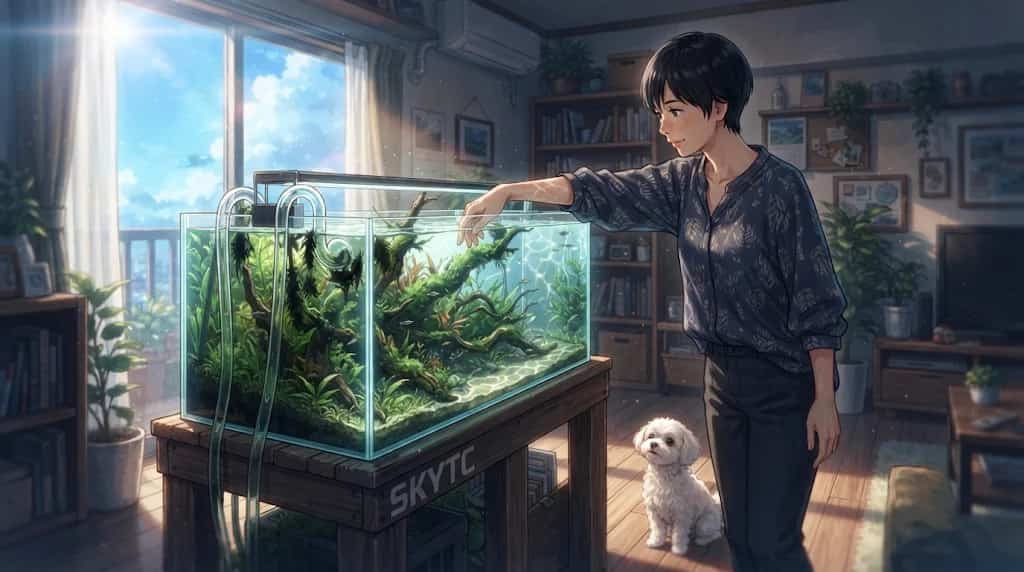
Scraping green film off the front glass only to watch it grow back thicker forty-eight hours later feels like mopping a floor during a rainstorm. Fighting aquarium algae with store-bought poison bottles only burns fish fins while leaving the real lighting and nutrient imbalance wide open.
I am Marcia Okabe, an eight-year goldfish keeper and professional seamstress maintaining a 100-gallon (400-liter) heavy-bioload display alongside the skytc team. Just like matching fabric grain before cutting a clean pattern or pacing a long-distance run, natural algae control comes down to balancing light energy against nutrient export.
Once you dial in photoperiod duration, goldfish-safe botanical competition, and clean substrate circulation, the glass stays clear on its own. You stop dumping cash into chemical gimmicks, keep your water crystal sharp, and give heavy-waste fish an oxygen-rich environment.
The Water Parameter Verdict: The Direct Tank Summary
Algae blooms are never a cleaning failure; they are an imbalance between excessive PAR lighting, stagnant flow zones, and unexported nitrate and phosphate waste. Cap your programmable LED photoperiod at 6 to 7 hours daily, block direct window sunlight, and siphon compacted substrate debris weekly.
Pair large 50-percent water changes with tough, goldfish-safe plants like Anubias, Java Fern, and floating Hornwort to starve opportunistic algae naturally without risking chemical burns.
Natural Algae Control & Lighting Gear: Technical Comparison
| Control Method / Gear | Target Algae Type | Lighting / Nutrient Spec | Heavy-Bioload Fit | Resource / Gear Tier |
|---|---|---|---|---|
| Programmable PAR LED | Green spot, hair, & dust algae | Adjustable spectrum & timer | Essential photoperiod control | Budget-friendly to high-end setups |
| Goldfish-Safe Plants | Free-floating green water & fuzz | Direct NH4 & NO3 uptake | Must withstand grazing mouths | Costing a fraction of chemical cycles |
| Nerite Snails | Soft glass film & brown diatoms | Continuous mechanical grazing | Safe if larger than goldfish mouths | Budget-friendly biological crew |
| Shallow Fine Sand | Cyanobacteria & trapped detritus | Prevents deep waste sinking | Needs weekly surface stirring | Low-cost natural substrate |
| Bottled Algaecides | Temporary symptom masking | Unreported chemical toxicity | Dangerous oxygen crash risk | Low-grade recurring trap |
The Tank-Side Trial: Pros, Cons, and Real-World Wear
Dimmable Full-Spectrum LED Fixtures:
The Good: Letting you throttle peak PAR output down to 40 or 50 percent stops green spot algae cold while still keeping Anubias leaves deep green.
The Bad: Budget non-dimmable clip lights blast cheap blue and white diodes at full throttle, frying low-tech leaves and coating driftwood in hair algae within ten days.
Goldfish-Safe Rhizome & Floating Plants:
The Good: Tying Java Fern and Anubias barteri onto hardscape rocks while letting Hornwort float pulls dissolved nitrogen straight out of heavy-bioload water.
The Bad: Hungry fancy goldfish rip soft stem plants to shreds overnight, and burying rhizomes under gravel rots the plant base into ammonia mush.
Fine Pool-Filter Sand vs. Coarse Gravel:
The Good: Tight sand grains keep uneaten pellets and goldfish feces sitting on top where strong filter flow sweeps waste toward the intake strainer.
The Bad: Stacking sand deeper than two inches without weekly stirring creates substrate compaction, trapping rotting organics that feed foul blue-green cyanobacteria sheets.
The Wet-Bench Trial: Real Pump, Media, and Parameter Degradation
Liquid chemical algaecides clear murky green blooms overnight and look impressive inside store aisles, however, killing millions of algal cells simultaneously dumps massive decaying biomass into your sponges, crashing dissolved oxygen and suffocating livestock by dawn.
Selling tiny common plecos as “tank janitors” solves glass film for two weeks, but those fish grow over eighteen inches long and excrete thick ropes of waste that spike nitrates faster than three adult goldfish combined.
Ultra-fine disposable polishing pads trap floating green algae spores for a day or two, yet rapid algal clogging chokes weak hang-on-back impellers, slashing hydraulic GPH turnover and creating dead zones where black beard algae anchors.
Cheap “plant-ready” hood lights illuminate dark living rooms brightly right out of the carton, nevertheless erratic spectral peaks without built-in timer ramps push uncontrolled photosynthetic energy straight into stubborn staghorn fuzz.
The Sunlit Window & “Algae-Eater” Mistake
Picture placing a brand-new 40-gallon goldfish tank right beside a sunny bay window, leaving the aquarium LED running fourteen hours a day, and tossing in extra floating flakes because the fish beg every time someone walks past.
Within three weeks, the tank turns thick pea-soup green, so the owner dumps in a bottle of liquid algae remover and buys two baby plecos. By midnight, dying algae strips oxygen from the water column while rotting debris jams the filter impeller, wiping out the entire tank before breakfast.
Smarter Guides for a Healthier Aquarium
Practical aquarium guides for cleaner water, healthier fish, better filtration, and long-term tank stability.
Eliminate Aquarium Algae Naturally
A practical field guide to controlling aquarium algae naturally while building a healthier and more balanced aquatic environment.
Master Aquarium Water Chemistry and Bio
Learn how to manage water chemistry, biological filtration, and heavy bioload conditions for a more stable aquarium.
Care for Fancy Goldfish in Large Tanks
A detailed guide to creating the right environment, care routine, and tank conditions for fancy goldfish.
Ultimate Guide to Goldfish Tank Filtration
Understand filtration options, flow, media, and maintenance strategies for keeping goldfish tanks clean and stable.
Maintain a 100 Gallon Goldfish Tank
A practical maintenance system for managing a large goldfish aquarium, including cleaning, water changes, and routine care.
Feed Goldfish for Maximum Lifespan
Learn how feeding frequency, food quality, portions, and routine can support healthier and longer-lived goldfish.
Stop Aquarium Algae Naturally: 11 Non-Negotiable Bench Rules
Diagnose aquarium algae triggers before scrubbing glass.
Scraping visible growth without fixing excess PAR intensity and dissolved nitrates guarantees a thicker green rebound within forty-eight hours.
Cap daily LED photoperiod at six to seven hours.
Extended twelve-hour lighting overwhelms slow coldwater plants and hands surplus photosynthetic energy straight to opportunistic hair algae.
Block direct sunlight from hitting display glass.
Unfiltered window rays deliver uncontrolled UV and red-spectrum spikes that turn heavy-bioload water into floating green soup.
Plant fast-growing hornwort alongside tough Anubias species.
Floating hornwort strips surplus nitrates from the water column while thick Anubias leaves resist goldfish grazing. Tie rhizomes onto rockwork rather than burying them.
Stir fine sand substrates during weekly siphoning.
Untouched sand compacts tightly around decaying feces, releasing anaerobic pockets that feed slick blue-green cyanobacteria mats.
Eliminate dead flow zones with proper circulation.
Stagnant corners trap rotting organic mulch and fluctuating CO2 levels that directly trigger stubborn black beard algae on hardscape.
Siphon decaying plant leaves immediately upon spotting.
Melting foliage leaks ammonia and soluble phosphates back into the water column, feeding aggressive staghorn blooms along filter tubes.
Dilute nitrates weekly through fifty-percent water changes.
Heavy-bioload goldfish pump out steady nitrogen and phosphate loads that bio-media cannot export. Fresh water resets dissolved organics fast.
Rinse clogged mechanical sponges in siphoned tank water.
Choked foam slashes pump GPH and reduces surface aeration while preserving nitrifying colonies when squeezed gently in bucket water.
Adjust dimmer intensity instead of shutting lights off completely.
Total multi-day blackouts stress rooted plants and halt nutrient uptake; cutting PAR output in half starves algae gradually.
Avoid chemical algaecides inside stocked heavy-bioload systems.
Copper and glutaraldehyde treatments burn sensitive gill tissue and trigger sudden oxygen crashes as dead algae decomposes all at once.
The Goldfish Ecology: Straight Answers to Filtration & Care Queries
Should I buy a common pleco to clean my algae?
No. Common plecos turn into giant armored waste machines that starve for wood fiber, harass goldfish slime coats at night, and create triple the bioload they ever eat.
Are chemical algaecide liquids safe for goldfish?
Skip them completely. They poison aquatic plants, irritate delicate gill filaments, and cause massive bacterial blooms when dead algae rots simultaneously.
What plants can actually survive hungry fancy goldfish?
Stick to tough, bitter-tasting species like Anubias, Java Fern, Bolbitis, and fast-growing Hornwort. Skip delicate carpeting plants unless you enjoy buying expensive salad.
Does leaving my aquarium light off for three days kill algae forever?
A blackout knocks back floating green water temporarily, nothing more. If you turn the same overpowered light back on for ten hours afterward, the algae returns before the weekend.
Why is fuzzy black beard algae growing on my filter outflow?
Black beard algae loves oscillating CO2, heavy organic waste, and direct high flow. Scrub the nozzle with hydrogen peroxide outside the tank, lower light intensity, and clean your canister sponges.
How do I get rid of brown diatom dust in a new tank?
Brown diatoms feed on fresh silicates leaching from new sand and uncycled glass. Wipe them off during weekly water changes; they vanish naturally once biological filtration matures.
Can UV sterilizers fix green pea-soup water naturally?
Yes, an inline UV sterilizer clears free-floating green water algae within seventy-two hours without adding chemicals. Just remember it only zaps floating cells passing the bulb—not hair algae glued to rocks.
Does overfeeding cause more algae than excess lighting?
Excess light pulls the trigger, while excess food loads the gun. Cut feeding down to what your fish finish in two minutes once daily and keep your PAR schedule tight.
🛡️ │ WHY TRUST SKYTC GOLDFISH CARE CURATION?
At SKYTC, we hold aquatic ecosystem biology and biological parameter handling to a rigorous standard. We are not an automated affiliate review engine; we apply hands-on tests and serious filtration engineering workflows to ensure every recommendation guarantees the health and maximum lifespan of your fish with absolute safety.
✓ Engineering:
Structural experience backed by heavy-duty filtration math, continuous hydraulic turnover metrics, and robust mechanical support for large-scale coldwater systems.
✓ Expertise:
Focuse on preventative biological husbandry and premium nutrition. Thoroughly auditing biological media, sinking feeds, and elements that completely neutralize ammonia spikes.
✓ Authority:
Curation signed by real keepers running a balanced 100-gallon display ecosystem for over 8 years, pairing daily practical benchwork with direct wholesale breeder insights.
✓ Trust:
Product selections built on unfiltered transparency—exposing actual electrical draws, heat dissipation issues, and hidden costs before any Amazon recommendations.
📸 Our Journey in the Real World
From daily living room tank turn rates to macro-scale breeding setups.
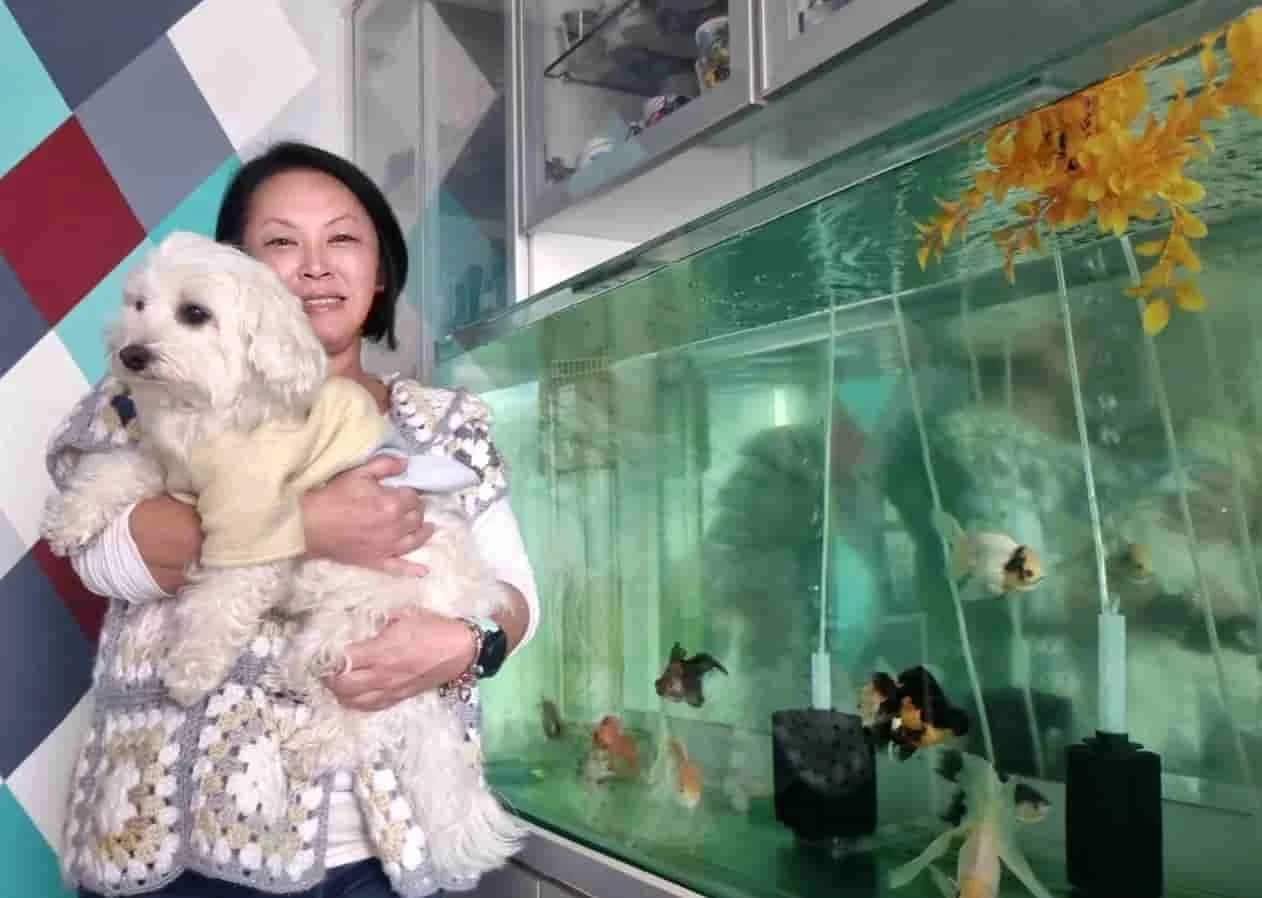
🏠 The 100G Lab
Where we torture test every hardware option, pellet line, and filter layout live.

🏃♀️ Grit & Eye
Marathon endurance meets the precise, millimeter structural focus of a seamstress.
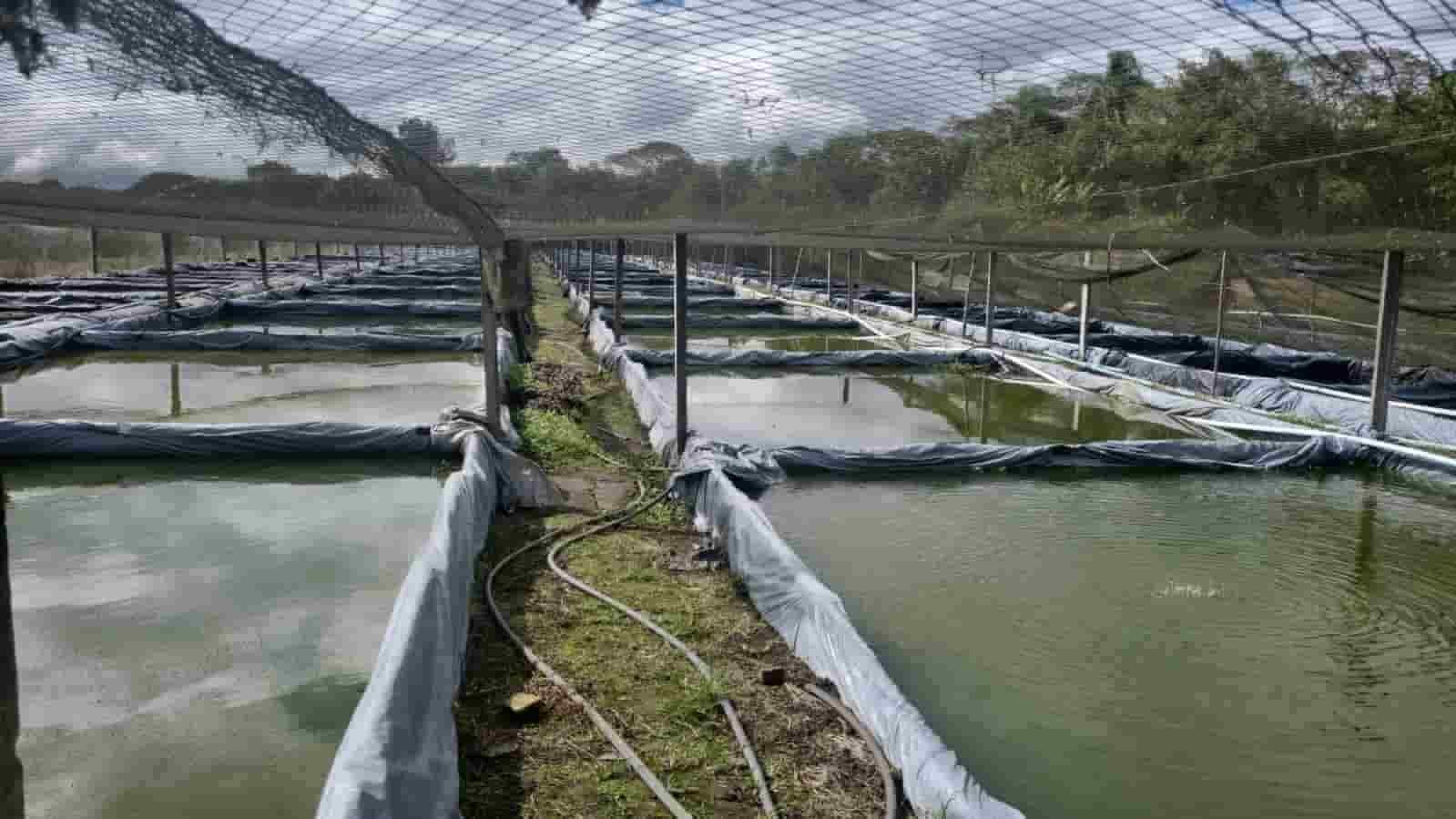
🐳 Monster Vats
Analyzing massive continuous turnovers inside large open-air mud farm vats.
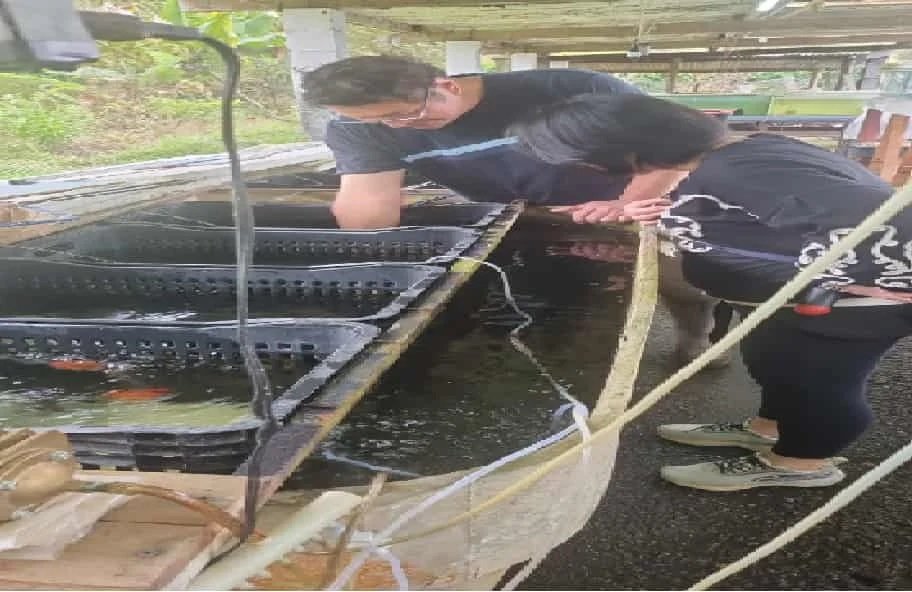
🤝 True Alliances
Working hand-in-hand with regional facility operations to target elite fancy bloodlines.

How to Eliminate Aquarium Algae Naturally: Field Guide
Scraping green film off the front glass only to watch it grow back thicker forty-eight hours later feels like mopping a floor during a rainstorm. Fighting aquarium algae with store-bought poison bottles only burns fish fins while leaving the real lighting and nutrient imbalance wide open. I am Marcia Okabe, an eight-year goldfish keeper and…
Why Black Beard Algae Grows on Filter Outflows First
You scrub the glass spotless on Sunday, yet stubborn tufts of black beard algae sprout right along your filter outflow nozzle by Wednesday. It looks like wet charcoal Velcro glued to the plastic, laughing off every sponge and razor blade you own. I am Marcia Okabe, an eight-year goldfish keeper and professional seamstress maintaining a…