
You pull on your trail shoes for a 20-mile mountain run, but deep inside your shins and femoral shafts, a quiet biological disaster is unfolding. Most endurance athletes and busy executives assume that logging high weekly mileage automatically builds dense, unbreakable bones. Then a routine DEXA scan reveals osteopenia, or a persistent deep ache turns into a catastrophic stress fracture that barks at you with every step. You need to learn how to stop endurance running bone loss safely before repetitive ground impact degrades your skeletal frame beyond repair.
Endurance running without proper structural countermeasures is inherently catabolic. The human body is brutally efficient: if your energy availability drops or your hormone signaling fails, it will strip minerals and collagen from your skeletal storage tanks to fuel cardio output.
During my 6 years of ring warfare as a competitive kickboxer and through logging multiple mountain ultramarathons over 42km, I have subjected my skeletal frame to violent impact forces. Later, spending 5 years as a clinical X-Ray technician and 2 years specialized in Computed Tomography (CT scans), I visually diagnosed thousands of human skeletons. On high-resolution diagnostic monitors, I saw the truth daily: paper-thin cortical bone walls, hollowed-out trabecular meshes, and micro-stress cracks in middle-aged runners who thought high cardio volume equaled structural health.
Protecting your internal scaffolding requires cutting through greenwashed nutrition fluff and biohacking gimmicks. Rebuilding your skeletal density will save you thousands on orthopedic rehab, prevent career-ending stress fractures, and keep your frame absorbing mountain trail shock well into your sixties and seventies. Let us break down the exact field mechanics required to lock down your bone mass.
30-Second Field Summary: How to Stop Endurance Running Bone Loss Safely
Cut straight to the verdict: high-volume cardio without heavy axial mechanical loading and high-fat animal nutrition is a recipe for bone density loss. Running provides low-magnitude, repetitive linear impact that rapidly desensitizes bone-building osteocytes while elevating cortisol, which strips minerals from your frame. To reverse this, force bone osteogenesis using heavy, multi-joint resistance movements like squats and deadlifts twice a week. Throw out low-grade chalky calcium carbonated pills and low-fat plant diets that tank your testosterone and estrogen. Saturate your biology with clean red meat and natural animal fats packed with fat-soluble Vitamins D3 and K2, bio-available phosphorus, and collagen precursors. Bottom line: If you do not signal mechanical demand with heavy loads and fuel your marrow with real animal fats, your body will harvest your bones for fuel.
Endurance Bone Preservation Protocols Compared
To understand how to protect your frame, we must analyze common bone health strategies used by endurance athletes. The table below evaluates these protocols against structural engineering standards.
| Preservation Protocol | Primary Biological Mechanism | Osteogenic Loading Signal | Endocrine System Impact | Long-Term Structural Utility |
|---|---|---|---|---|
| Heavy Axial Resistance Lifting | High-magnitude mechanical strain on cortical wall | Extreme (Triggers rapid osteoblast activity) | Anabolic (Boosts testosterone & GH) | Tactical cheat code for permanent bone density |
| High-Volume Trail Running Only | Repetitive low-magnitude ground reaction shock | Low (Osteocytes desensitize after 20 mins) | Catabolic (Elevates chronic cortisol) | Net bone loss if unbuffered by strength work |
| Synthetic Calcium Carbonate Supplements | Elevates serum calcium levels artificially | Zero mechanical strain signal | Neutral (Potential soft tissue calcification) | Bargain-bin trap; poor bone integration |
| Clean Red Meat & Animal Fat Protocol | Supplies Type I collagen, cholesterol, D3/K2 | Nutritional foundation for bone matrix | Supports gonadal steroid production | Essential structural nutrient matrix |
| Low-Energy Availability / Vegan Diets | Caloric deficit with low-fat intake | Zero benefit | Severely suppresses thyroid & sex hormones | Accelerates osteopenia and stress fractures |
Battlefield Assessment of Bone Preservation Strategies
Before buying into trendy bone supplements or high-tech fitness gadgets, analyze how these methods hold up under real-world endurance conditions.
Setup 1: Heavy Multi-Joint Strength Training (Squats & Deadlifts)
The Good: Places high-magnitude compressive force directly along the femoral shaft and spine, forcing osteocytes to lay down dense new mineral matrix.
The Bad: Requires proper gym equipment, strict movement discipline, and temporary muscle soreness that runners often complain interferes with their cardio mileage.
Setup 2: Synthetic Calcium & Vitamin D Gummies
The Good: Easy to swallow, cheap to buy at any local supermarket.
The Bad: Made with low-grade components like calcium carbonate that absorb poorly, often depositing in vascular tissue while doing zero to rebuild structural collagen inside the bone matrix.
Setup 3: Whole-Food Carnivore & Saturated Lipid Matrix
The Good: Delivers bio-available calcium, phosphorus, glycine, and saturated animal fats that optimize steroid hormone production, repairing bone marrow and collagen scaffolding.
The Bad: Requires turning your back on popular low-fat sports nutrition guidelines and committing to cooking real animal foods daily.
The Realities of the Battlefield
In the endurance running community, equipment brands and sports dietitians sell colorful gels, plush maximalist shoes, and calcium-fortified plant milks as complete health solutions. High-cushion shoes look comfortable on asphalt. BUT
Soft foam dampens ground feel, encouraging runners to stay out for hours longer while chronic cortisol strips minerals from their bones without triggering a strong enough mechanical load signal to stimulate new bone growth.
During my years operating CT diagnostic scanners, I examined middle-aged mountain runners who presented with persistent groin or shin pain. Their scans frequently revealed severe trabecular micro-fractures in the femoral neck. They were running 60 miles a week on low-fat, high-carbohydrate diets, believing their high cardio volume made their skeletons indestructible. In reality, their low energy availability and depleted sex hormones turned their bones into brittle honeycomb structure.
Furthermore, relying on synthetic calcium pills without fat-soluble vitamins is a dangerous failure. Bone is not just a block of chalk; it is an active organic collagen matrix coated in hydroxyapatite crystals. If you do not consume natural animal fats rich in Vitamin K2 and D3, your body cannot direct dietary minerals into the bone matrix, leaving your skeleton fragile under lateral trail torque.
How to Stop Endurance Running Bone Loss Safely Through Bio-Mechanical Signals
Reversing skeletal degradation requires understanding the law of bone remodeling (Wolff’s Law). To stop endurance running bone loss safely, you must send high-magnitude, dynamic strain signals to your osteocytes while providing the metabolic raw materials required to rebuild the bone matrix.
Running long distances creates repetitive, low-magnitude forces. Within the first 10 to 20 minutes of a run, your bone cells become desensitized to that specific mechanical stimulus. Continuing to run for another two hours provides zero additional bone-building signal while exponentially increasing systemic inflammation and cortisol. Cortisol actively inhibits osteoblasts (bone-building cells) and stimulates osteoclasts (bone-resorbing cells).
To trigger real bone adaptation, you need high-magnitude, multi-directional force vectors. Squatting heavy weights, performing plyometric box jumps, or sprinting up steep inclines creates massive compressive and bending forces. These intense signals deform the bone tissue microscopically, generating fluid flow within the canaliculi network that alerts your osteocytes to immediately reinforce the structural wall.
Nutritionally, your skeletal frame requires complete animal protein and natural lipids. Clean red meat supplies dense Type I collagen amino acid building blocks (glycine, proline) along with highly bio-available phosphorus and heme iron. Natural animal fats—like tallow, butter, and marrow—provide the essential cholesterol backbone for testosterone, estrogen, and progesterone synthesis. These gonadal hormones are the primary biochemical regulators that suppress bone breakdown and protect your skeletal mass.
The Low-Fat Ultramarathoner: A Failure Scenario
Consider the case of a 43-year-old executive training for a 100km mountain trail event. He runs 70 miles a week, sleeps 6 hours a night, and adheres to a low-fat, high-carb plant diet supplemented with bargain-bin calcium tablets. He avoids red meat and animal fats out of fear of outdated cholesterol myths.
Over several months, his body enters a state of Relative Energy Deficiency in Sport (RED-S). His morning testosterone drops to hypogonadal levels, and his chronic cortisol spikes from relentless cardio volume. Because his diet lacks saturated animal fats, his body cannot synthesize sufficient steroid hormones to maintain bone mineral density.
During a training run on a technical rocky trail, his foot lands on an off-camber stone. His bone tissue, lacking both collagen elasticity and dense mineral cross-linking, snaps along the fibular shaft. CT scans reveal deep multi-site stress fractures and advanced osteopenia—a classic structural collapse caused by high cardio volume paired with a low-fat, nutrient-deficient diet.
👇 Looking for more performance cheats? Check out our field-tested tactical guides:
SkyTC Master Hub & Pillar Guides
Field Checklist to Preserve Bone Mass
- Stop endurance running bone loss safely by adding heavy axial squats twice weekly.
Expert Tip: Load your spine and femur with heavy compound lifts at eighty percent of your one-rep max to trigger high-magnitude osteoblast activation. - Saturate your diet with clean red meat and natural animal fats daily.
Expert Tip: Red meat and animal fats supply bio-available minerals, Type I collagen precursors, and cholesterol needed for bone-protecting sex hormones. - Eliminate bargain-bin synthetic calcium carbonate supplements completely.
Expert Tip: Cheap calcium pills absorb poorly and risk calcifying arterial walls; obtain your minerals from real animal food matrices and bone broths instead. - Supplement with natural Vitamin K2 and D3 sourced alongside lipids.
Expert Tip: Vitamin K2 activates osteocalcin, ensuring calcium deposits directly into your bone matrix rather than soft vascular tissue. - Incorporate multidirectional plyometric jumps into your warm-up routine.
Expert Tip: Perform ten high-intensity broad jumps or box jumps before runs to shock osteocytes with novel force vectors that linear running cannot provide. - Avoid chronic low-energy availability state during high-mileage training blocks.
Expert Tip: Fuel your energy expenditure adequately; chronic energy deficits suppress thyroid function and accelerate bone resorption rates rapidly. - Get a baseline DEXA scan with structural bone strain consultation.
Expert Tip: Monitor your bone mineral density numbers every eighteen months to catch silent osteopenia long before stress fractures manifest on the trail. - Prioritize eight hours of sleep to manage systemic cortisol levels.
Expert Tip: Elevated night-time cortisol halts osteoblast repair work and significantly increases skeletal mineral leaching during rest periods. - Ditch low-fat dietary regimes that tank your natural steroid hormone output.
Expert Tip: Saturated animal fats are essential for maintaining healthy testosterone and estrogen levels, the primary chemical defenders of bone density. - Limit continuous linear cardio sessions to under ninety minutes when unbuffered.
Expert Tip: Beyond ninety minutes, bone desensitization peaks while catabolic hormone markers climb sharply; split long sessions or add strength breaks. - Consume real bone marrow and collagen-dense connective tissue cuts.
Expert Tip: Slow-cooked shanks and bone marrow supply essential glycosaminoglycans and structural peptides that keep the organic bone scaffolding resilient.
Dynamic No-Nonsense FAQ
Does running on soft trails instead of pavement prevent bone loss?
No. Soft trails reduce peak surface impact slightly, but they do not alter the metabolic or hormonal drivers of bone loss. If you are in a caloric deficit with low sex hormones and high cortisol, running on dirt will strip your bone density just as fast as running on asphalt.
Can synthetic calcium supplements replace real dietary animal minerals?
No. Synthetic calcium pills, especially cheap calcium carbonate, are a waste of money. They lack the essential protein matrix, phosphorus ratios, and fat-soluble vitamins found in real animal foods, often causing GI distress or vascular calcification instead of bone density.
Why are natural animal fats crucial for protecting an athlete’s bones?
Natural animal fats provide the saturated fatty acids and cholesterol required by your endocrine system to synthesize testosterone, estrogen, and Vitamin D3. Without adequate steroid hormones, your body cannot maintain bone mineral density, leading directly to osteopenia.
How does heavy weightlifting help runners build stronger bones?
Weightlifting places heavy compressive loads along your long bones. This mechanical strain bends the bone tissue on a microscopic level, creating fluid movement inside the bone cells that signals osteoblasts to lay down fresh collagen and mineral crystals.
Can low-fat plant-based diets support high-volume trail running safely?
Rarely over long timeframes. Low-fat plant diets usually lack bio-available heme iron, preformed Vitamin D3/K2, complete collagen amino acids, and saturated lipids needed for hormone production. This frequently leads to low energy availability, hormonal collapse, and stress fractures.
What is the first symptom of impending bone loss in endurance runners?
Deep, aching bone pain that lingers long after a run finishes, particularly in the shins, hip, or foot. Unlike muscle soreness which fades with light movement, bone strain throbs at rest and hurts under localized point pressure.
How long does it take to reverse osteopenia caused by excessive cardio?
Bone remodeling is a slow biological process. With heavy resistance training, elevated animal fat intake, and optimized hormone levels, it typically takes twelve to eighteen months to show measurable density improvements on a DEXA scan.
Do high-cushion maximalist shoes help protect against stress fractures?
No. Soft maximalist shoes alter your running mechanics, often leading to longer stride lengths and heavier heel strikes. The cushioning dampens skin feedback, allowing you to run longer while the underlying bone tissue absorbs unbuffered internal shock loads.
Why Trust SkyTC Biohacking Curation?
At SkyTC, we treat the human body as your most valuable technology. We are not just a recommendation site; we apply a rigorous clinical and practical screening process to ensure that each recommendation optimizes your biology with safety and real-world results.
✓ Technical Expertise:
Clinical experience in Radiology and Tomography (CT scans). We analyze methods through the lens of bone health and structural integrity.
✓ Specialization:
Focus on real-world biohacking. We test every wearable and supplement at the absolute limit of effort during marathons and on the mats.
✓ Authority:
Curation based on absolute transparency, always highlighting both the positive advantages and the real drawbacks of every technology.
✓ Trust:
A curation process built directly on the professional experience of a field practitioner, speaker, and high-performance leader coach.

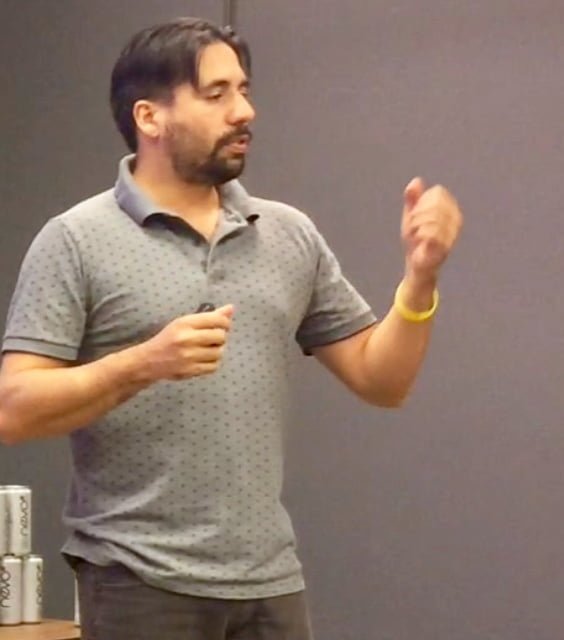


Optimizing the body demands the clinical precision of someone who operated in Radiology (Brazilian Board Certified, CRTR-SP 23595T) for years, combined with the unyielding resilience of someone who conquered multiple 42km+ mountain marathons. As an active professional, multi-pet handler, and tech benchmark researcher, at SkyTC, we bridge advanced technical science with extreme practical environments to help you biohack your active performance, optimize smart pet-tech ecosystems, and protect your structural longevit
Discover my full professional trajectory →✨ Read also: The Role of Collagen in Bone Elasticity: Why Rigid Bones Break and Flexible Skeletons Endure
> A deeply technical piece of content that perfectly complements this post — absolutely worth the read.