

To prevent shin stress fractures on trails, you have to stop pretending that localized, razor-sharp tibial bone pain is just ordinary muscle tightness that a cheap foam roller can cure. When you are hammering technical mountain descents or logging thirty-plus weekly miles on rocky dirt paths, your tibia absorbs thousands of repetitive bending cycles. The running industry loves selling you high-stack foam shoes and colorful compression bands, but those showroom gimmicks will not stop a micro-crack from tearing through your cortical bone if your mechanics and cellular repair are broken.
Nothing crushes an ultra-training block faster than that deep, persistent ache in your lower leg that suddenly turns into a stabbing, pinpoint agony every time your foot strikes a rock. You tell yourself it is just shin splints, pop synthetic pain pills, and keep grinding until you cannot even walk down your own stairs without clutching the railing. You end up sidelined for months in a rigid walking boot, watching your hard-won mountain conditioning evaporate into thin air.
The tactical cheat code is not lying on your couch taking synthetic calcium gummies; it is mastering force dissipation, managing bone strain rate, and feeding your skeletal architecture the exact animal lipids and proteins it requires to remineralize. By implementing this clinical protocol, you will save months of agonizing rehab time, dodge expensive diagnostic imaging bills, and construct a bulletproof lower leg that eats rocky alpine downhills for breakfast.
Bio-Available Fuel: The Core Cellular Summary
Here is the straight counter talk from the diagnostic trenches: a stress fracture is an architectural remodeling mismatch, not bad trail luck. Under Wolff’s Law, mechanical impact triggers osteoclasts to bore out micro-damaged bone matrix, while osteoblasts lay down new osteoid behind them. The fatal flaw? Osteoclasts resorb damaged bone in two to three weeks, but osteoblasts take up to twelve weeks to complete mineralization. If you ramp up trail mileage too fast, you run on a hollowed-out skeletal framework that eventually snaps.
Ditch the low-grade calf sleeves that only warm your skin while doing nothing to dampen tibial vibration. Shift your mechanics immediately: increase your cadence by five to ten percent, land with your foot squarely underneath your center of mass, and kill the excessive heel braking on steep descents. Fuel this physical remodeling with clean red meat and its natural fats—delivering the dense hydroxyproline, bioavailable zinc, and fat-soluble vitamins required to lay down dense cortical bone rather than fragile fibrous filler.
Biomechanical Mechanics: Prevent Shin Stress Fractures on Trails
During my five years working as a clinical X-ray technician and two years analyzing computed tomography scans, I examined thousands of fractured lower extremities. Early stress reactions are completely invisible on standard plain-film X-rays; by the time a visible “dreaded black line” appears across the anterior cortex of your tibia, you are already dealing with a catastrophic structural failure. CT scans reveal what the naked eye misses: cortical bone thinning, micro-trabecular micro-fractures, and periosteal edema screaming under mechanical overload.
In competitive kickboxing, if you check a heavy shin kick with an unconditioned leg, the bone bends and fractures; you harden shins through controlled, progressive micro-impact that allows the bone to calcify denser over years, not weeks. Mountain trail running places an identical structural demand on your skeleton. When you hurtle down a twenty percent grade, every foot strike delivers a bending moment to the tibia, bowing the bone backward like an archer’s bow.
If your cadence drops below one hundred seventy steps per minute, your stride over-extends, turning your heel into a hard brake that magnifies this bending moment exponentially. Your deep posterior compartment muscles—the soleus and tibialis posterior—are supposed to contract eccentrically to brace the tibia against this torque. But when those muscles fatigue after twenty miles of elevation changes, that shock transfers directly into the periosteum and bone cortex.
You cannot rebuild mineralized bone tissue with cheap seed oils and processed protein bars. Bone is fifty percent protein by volume, reinforced with mineral crystals. Clean red meat packed with natural saturated fat provides the bioavailable amino acids, dietary cholesterol, and fat-soluble vitamins D3 and K2 necessary for osteocalcin activation. Without real animal fats to transport minerals into the skeletal matrix, your osteoblasts cannot lay down the mineral scaffolding required to withstand brutal trail impact.
| Gear & Strategy Option | Tibial Bending Stress Reduction | Cadence Impact | Durability Under Trail Stress | Real-World Skeletal Protection |
|---|---|---|---|---|
| High-Cadence Midfoot Stride | Extremely High | Locks at 175-185 SPM | Lifetime Adaptation | Elite Tier |
| Carbon Trekking Poles | High (15-20% Axial Offload) | Maintains Rhythm | High (Requires Care) | High Performance |
| Maximalist Cushion Shoes | Low (Muffles Proprioception) | Induces Overstriding | Foam Degrades Fast | Bargain-Bin Trap |
| Calf Compression Sleeves | Negligible | Zero Impact | Varies by Model | Low-Grade Utility |
| Rigid Carbon-Plated Racers | Negative (Increases Lever Arm) | Forces Fast Rebound | Poor on Rocks | High Risk on Trails |
The Bare-Metal Trial: Pros, Cons, and Real-World Wear
High-Cadence Midfoot Mechanics:
The Good: Completely removes the destructive anterior braking vector, letting your calves, Achilles tendons, and glutes catch the load dynamically.
The Bad: It torches your calves and Achilles tendons during the first four weeks of adaptation, leaving you walking like a stiff robot until your tissues condition.
Carbon Trekking Poles:
The Good: Shaves tons of cumulative skeletal impact on long descents by recruiting your latissimus dorsi and core to catch downward momentum.
The Bad: Premium tier investments will snap instantly if you wedge the tip between two granite rocks while descending at high speed.
Maximalist High-Stack Trail Shoes:
The Good: Shields the soles of your feet from sharp, jagged limestone rocks on long mountain ultramarathons.
The Bad: The massive foam stack creates a sensory disconnect between your foot and the earth, encouraging you to reach with your leg and hammer your tibia with every step.
Over-the-Counter Calf Sleeves:
The Good: Keeps lower leg musculature warm in freezing mountain weather and prevents trail briars from cutting up your skin.
The Bad: Creates a false sense of security while offering zero structural support against the multi-thousand-pound bending forces tearing at your tibia.
The Biomarker Reality: True Stamina Under Pressure
Outdoor brands love showing sleek technical gear surviving postcard-perfect mountain ridgelines. But take that showroom gear out into real-world backcountry mud, freezing creek crossings, and twenty-mile alpine descents, and the marketing fantasy collapses. Foam compounds in modern trail shoes compress and die within three hundred miles, hardening unevenly and dumping destructive rotational torque directly onto your lower leg.
Cheap aluminum trekking poles rattle loose at the flick-locks under hard downhill strikes, suddenly collapsing when you need them to catch a fall. When your gear fails or masks critical impact signals, your nervous system cannot calibrate muscular tension. This failure cascades directly into your skeletal frame, accelerating localized bone fatigue and spiking inflammatory biomarkers across your entire kinetic chain.
Hypothetical Failure Scenario
Consider a forty-year-old executive training for his first fifty-kilometer trail race. After reading glowing reviews, he purchases a pair of maximalist, pillow-soft trail shoes and signs up for a training plan that doubles his weekly descent volume within a month. He notices a dull, throbbing ache along the inner edge of his lower left shin after every hard downhill session.
Instead of addressing his heavy heel-braking stride and giving his bone remodeling cycle time to catch up, he buys compression sleeves and swallows high doses of anti-inflammatory pills before every long run. Six weeks into the block, while charging down a steep gravel descent, a sudden, blinding pain fires through his lower leg like an electric current. He cannot bear weight, has to be assisted off the mountain, and spends the next twelve weeks in a boot with an anterior cortical stress fracture that ruins his entire season.
Keep exploring
If you found this useful and want to go a little deeper, these related guides explore the same ideas from different angles.
Field-Tested Tactical Guides
Explore practical guides for performance, recovery, metabolism, stress regulation and deeper sleep.
The Cut Line: Bare-Metal Execution Checklist
- Prevent shin stress fractures on trails with dialed cadence.
Expert Tip: Keep your stride rate above one hundred seventy-five steps per minute on flat trails and downhill sections to prevent your foot from landing ahead of your knee. - Eliminate aggressive heel-strike braking on technical trail descents.
Expert Tip: Landing flat on your midfoot with a softly flexed knee converts bone-bending impact into harmless elastic energy handled by your muscular spring system. - Fuel your skeletal architecture with clean red meat and fat.
Expert Tip: Bone remodeling requires dense dietary collagen, animal-based saturated fats, and zinc to synthesize the structural matrix that binds calcium ions securely. - Enforce a strict ten percent weekly mileage progression limit.
Expert Tip: Osteoclasts break down damaged bone within two weeks, but osteoblasts require months to mineralize new bone, making rapid volume spikes a bone failure trap. - Ditch ultra-cushioned shoes that destroy natural ground feedback.
Expert Tip: Excessive midsole foam blinds your plantar mechanoreceptors, tricking your brain into stomping down harder and multiplying tibial shockwaves. - Strengthen the soleus muscle with heavy seated calf raises.
Expert Tip: The soleus directly attaches to the posterior tibia and acts as a biological tension wire, pulling backward to counteract destructive forward bending loads. - Deploy carbon trekking poles during technical alpine descent workouts.
Expert Tip: Planting poles downhill transfers fifteen to twenty percent of downward kinetic force through your shoulder girdle, saving your shins from massive impact spikes. - Stop masking lower leg bone pain with synthetic NSAIDs.
Expert Tip: Anti-inflammatory drugs blunt prostaglandin signaling, directly shutting down osteoblast recruitment and delaying real skeletal repair indefinitely. - Perform the single-leg hop test to identify early reactions.
Expert Tip: If you cannot hop on one foot three times without sharp, localized tibial bone pain, stop running immediately and order a high-resolution MRI. - Introduce controlled barefoot walking on natural grass surfaces.
Expert Tip: Short bouts of un-cushioned loading fire intrinsic foot stabilizers and trigger clean, low-intensity osteogenic adaptation across the lower kinetic chain. - Incorporate weekly high-fat bone broth for connective tissue repair.
Expert Tip: Slow-simmered animal marrow and connective tissues provide bioavailable glycine and proline, crucial for rebuilding the periosteal sheath surrounding the bone.
Mitochondrial Breakdown: Straight Answers to Biohacking Queries
Can I run through what feels like minor shin splints?
Never run through focal, pinpoint bone pain. Shin splints are soft tissue inflammation; a stress fracture is a cracking structural pillar. If you push through it, the bone will snap.
Do compression calf sleeves protect against tibial stress fractures?
No. Compression sleeves do nothing more than increase skin temperature and provide mild sensory feedback. They cannot alter the mechanical bending moment tearing your tibia apart.
Why do ordinary X-rays miss early trail stress fractures?
X-rays only detect changes when over thirty percent of bone mineral density is already lost. Early micro-cracks and bone marrow edema require a dedicated MRI or high-resolution CT scan.
Does running on softer dirt trails completely prevent bone fractures?
No. Soft dirt reduces surface hardness, but technical trails demand intense braking, twisting, and lateral stability. Poor downhill mechanics on dirt will break a bone just as fast as concrete.
Should I take calcium and vitamin D supplements to fix my shins?
Chalky calcium pills are useless if not bound properly. Eat clean red meat, egg yolks, and natural animal fats to get bioavailable minerals packaged with natural vitamin K2 and D3.
How long does a tibial stress fracture take to fully heal?
Eight to twelve weeks of strict mechanical offloading minimum. Cortical bone remodeling is a slow biological process; rush it, and you will restart the clock from day zero.
Can high-stack super shoes cause shin stress fractures on trails?
Yes. High-stack shoes with rigid carbon plates act as long lever arms that increase rotational torque around the ankle, transmitting uncontrolled shear force directly into the tibia.
What is the single best exercise to bulletproof shins for mountain running?
Heavy seated calf raises combined with tibialis anterior raises. They fortify the muscular brace that grips the tibia, stopping the bone from flexing under downward trail impact.
Why Trust SkyTC Biohacking Curation?
At SkyTC, we treat the human body as your most valuable technology. We are not just a recommendation site; we apply a rigorous clinical and practical screening process to ensure that each recommendation optimizes your biology with safety and real-world results.
✓ Technical Expertise:
Clinical experience in Radiology and Tomography (CT scans). We analyze methods through the lens of bone health and structural integrity.
✓ Specialization:
Focus on real-world biohacking. We test every wearable and supplement at the absolute limit of effort during marathons and on the mats.
✓ Authority:
Curation based on absolute transparency, always highlighting both the positive advantages and the real drawbacks of every technology.
✓ Trust:
A curation process built directly on the professional experience of a field practitioner, speaker, and high-performance leader coach.
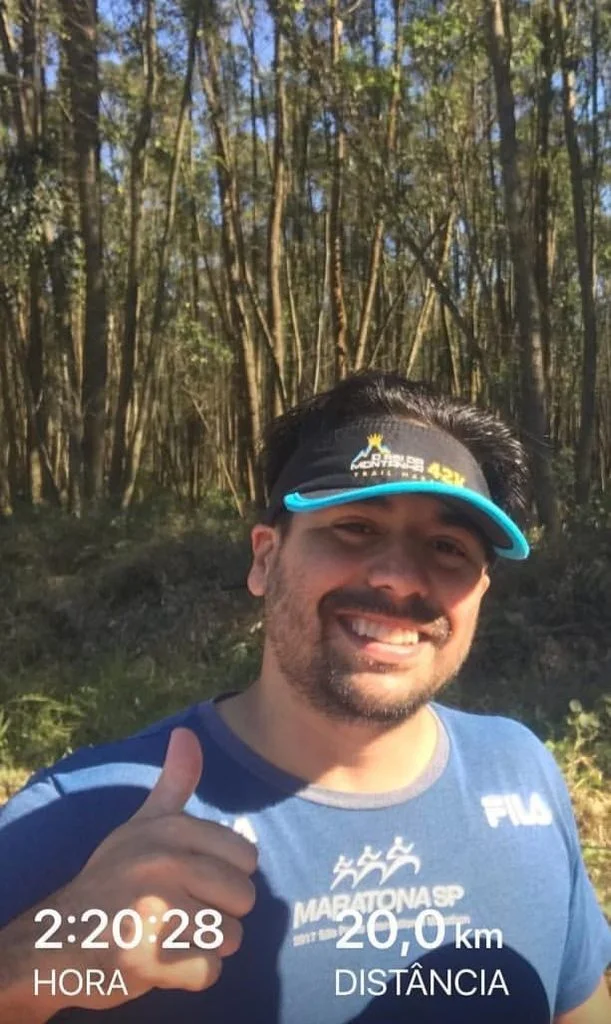



Optimizing the body demands the clinical precision of someone who operated in Radiology (Brazilian Board Certified, CRTR-SP 23595T) for years, combined with the unyielding resilience of someone who conquered multiple 42km+ mountain marathons. As an active professional, multi-pet handler, and tech benchmark researcher, at SkyTC, we bridge advanced technical science with extreme practical environments to help you biohack your active performance, optimize smart pet-tech ecosystems, and protect your structural longevity
Discover my full professional trajectory →Read also: How Walking Weights Alter Bone Density: Real Skeletal Loading vs Joint Traps
RAW MITOCHONDRIAL WARNING: Chronic bone inflammation and unmanaged microstrain trigger systemic biomarker degradation, creating severe nocturnal sleep cycle disruptions and crashing your cellular recovery reserves before the next training block.