
You’re descending a brutal, rock-littered mountain switchback five miles into a steep trail run, landing hard on stone ledges and steep wooden steps, when suddenly a sharp, grating burn ignites behind your kneecap. You try to shorten your stride or lean back, but every single downward impact sends a sickening shockwave straight into your joint socket. Understanding why technical trail steps stress knee cartilage is the ultimate line of defense between conquering mountain summits for decades and sitting on the sidelines with irreversible patellofemoral osteoarthritis.
During my 5 years as a clinical X-Ray Technician and 2 years running Computed Tomography (CT scans) on injured athletes, I’ve examined hundreds of knee cross-sections showing shredded hyaline cartilage and focal patellar defects. Trail runners constantly destroy their knees because they assume soft maximalist shoe foam or lightweight compression sleeves will absorb high-velocity downhill impacts.
Having logged 6 years in the kickboxing ring absorbing heavy joint trauma and fighting through grueling 42km+ mountain ultramarathons, I know that your joints don’t care about marketing promises; they respond strictly to kinetic force vectors and muscular shock absorption. Mastering downhill biomechanics and building structural muscular armor saves you thousands in joint surgery costs, protects your cartilage from irreversible wear, and buys you a lifetime of pain-free mountain endurance.
30-Second Summary: The Brutal Technical Verdict
Technical trail steps force your quadriceps into high-velocity eccentric contractions while subjecting the patellofemoral joint to shear forces exceeding seven times your total body weight. Soft, high-stack running shoes aggravate this issue by increasing ankle instability and transferring torsional strain directly into the knee capsule. The tactical cheat code isn’t buying expensive neoprene sleeves or soft plush footwear; it’s training heavy eccentric knee extension, mastering a forward-hinged short-stride descent, and fueling hyaline tissue repair with collagen-dense red meat and natural animal fats. Stop relying on cushioned gimmicks, build real kinetic braking power, and protect your cartilage before your next diagnostic MRI shows bone-on-bone friction.
Trail Downhill Modalities: Joint Load vs. Structural Longevity
| Gear / Technique Modality | Patellofemoral Shear Force | Eccentric Load Absorption | Joint Longevity Yield | Battlefield Assessment |
|---|---|---|---|---|
| Short-Stride Hinge + Trekking Poles | Low (Distributed to Hips/Poles) | High (Active Muscular Braking) | 9.7 / 10 | The Good: Drastically reduces peak impact forces on knee cartilage. The Bad: Requires strict discipline and slows down your downhill descent speed initially. |
| Heavy Eccentric Quad & VMO Training | Controlled | Maximum (Active Muscle Shield) | 9.5 / 10 | The Good: Strengthens the patellar tendon and builds bulletproof muscular armor around the knee. The Bad: Requires intense weight-room dedication; improper form will irritate the patellar tendon. |
| High-Stack Ultra-Plush Trail Shoes | Uncontrolled High Shear | Low (Passive Foam Compression) | 3.0 / 10 | The Good: Provides soft, cushioned impact feel on flat dirt trails. The Bad: High stack height increases lever arm distance, twisting the knee joint on uneven rocks and tearing cartilage. |
| Bargain-Bin Neoprene Sleeves & Straps | Unchanged | Zero | 2.5 / 10 | The Good: Keeps the skin warm and provides mild proprioceptive feedback. The Bad: Fails to absorb mechanical impact; gives a false sense of security while cartilage gets crushed. |
| Rigid Carbon-Plated Trail Shoes | High Rigid Impact | Very Low | 4.0 / 10 | The Good: Increases propulsion efficiency on flat non-technical fire roads. The Bad: Stiff plates transfer harsh impact vibration straight into the articular cartilage on steep, technical drops. |
Biomechanical Breakdown: Why Technical Trail Steps Stress Knee Cartilage at a Diagnostic Level
When dropping down a steep flight of technical wooden or stone steps, your lead leg acts as a biological hydraulic brake. As your foot strikes the step below, your quadriceps muscle lengthens under extreme tension—a process known as an eccentric contraction. This action pulls the back of your kneecap (patella) firmly against the femoral groove, driving immense compressive forces into the thin, slippery layer of hyaline cartilage covering the bone.
On steep mountain gradients, peak ground reaction forces can reach up to seven to eight times your total body mass. If you land with an extended, straight leg (heel striking down a step), the kinetic impact bypasses your shock-absorbing quadriceps and fires directly into the patellofemoral joint space. On CT scans and specialized joint MRIs, this repetitive shear force appears as severe cartilage fraying, subchondral bone bruising, and painful joint space narrowing.
Furthermore, technical steps are rarely flat or uniform. Wet roots, loose shale, and uneven wooden risers force the ankle to roll unpredictably, sending rotational torque up through the tibia into the knee hinge. Hyaline cartilage is built to withstand straight linear compression, but it wears away rapidly under high-load rotational shear forces.
Repairing damaged joint tissue requires the correct biological substrates. Cartilage lacks a direct blood supply and relies entirely on synovial fluid movement and metabolic diffusion to receive nutrients. Consuming nutrient-dense clean red meat and its natural fats provides high concentrations of bio-available glycine, proline, hydroxyproline, and natural collagen precursors essential for chondrocyte cell health and synovial fluid lubrication.
Relying on processed, low-protein diets or synthetic sugar-laden hydration gels starves your connective tissue of structural building blocks. Pairing heavy eccentric strength training with rich animal proteins ensures your body has the structural raw materials needed to rebuild joint matrix proteins and protect articular surfaces against brutal trail impacts.
The Realities of the Battlefield: Why Soft Shoes and Showroom Gadgets Fail on Mountain Trails
Footwear manufacturers aggressively market maximalist, ultra-plush trail shoes with massive foam stack heights, claiming that softer midsoles protect your joints from steep downhill drops. Runners purchase these high-end setups under the false impression that floating on foam will eliminate knee strain. Marketing departments sell comfort, but field physics paints a drastically different, brutal picture.
Ultra-plush foam shoes dampen initial foot-strike vibration, BUT their extreme stack height drastically destabilizes the ankle joint, creating a long lever arm that twists the knee capsule violently every time you land on an uneven step. This instability forces the kneecap to track out of its alignment groove, grinding away articular cartilage while doing zero to reduce peak eccentric muscle loading.
Bargain-bin neoprene knee sleeves and cheap elastic IT-band straps suffer from identical battlefield failures. They soak up sweat, lose elasticity after three mountain runs, slip down your calves during steep descents, and offer absolute zero structural impact dissipation. You cannot fix severe mechanical shear forces with a thin piece of stretch fabric; your joints require active muscular braking power and disciplined foot-strike mechanics.
👇 Looking for more performance cheats? Check out our field-tested tactical guides:
SkyTC Master Hub & Pillar Guides
Hypothetical Failure Scenario: The Anatomy of a Mountain Downhill Collapse
Consider “Runner C,” a 38-year-old high-pressure executive training for a 50km mountain ultramarathon. He buys a pair of maximalist plush trail shoes and cheap elastic knee sleeves, thinking they will shield his legs. He spends all his training time building uphill aerobic stamina while ignoring downhill strength mechanics and skipping weight-room leg workouts completely.
On race day, twenty kilometers in, he hits a technical two-kilometer descent featuring jagged stone steps. He lands hard on his heels with a straight knee, leaning backward to slow himself down. By kilometer twenty-three, a blinding, razor-sharp pain grips his retropatellar cartilage, making it impossible to bend his leg without screaming. He is forced to abandon the race, resulting in a costly medical evacuation, an expensive MRI scan revealing acute patellar cartilage tearing, and six months of painful rehabilitation. His fundamental error? Relying on soft shoe foam instead of building strong eccentric muscular brakes.
Actionable Joint Shield Checklist
- Why technical trail steps stress knee cartilage requires immediate action: shorten your stride length on steep descents to convert vertical impact force into horizontal forward momentum.
- Maintain a slight forward torso hinge over your hips down steep steps to keep your center of gravity directly over your feet rather than leaning backward on your heels.
- Incorporate heavy eccentric step-downs on a raised wooden box twice a week to condition your vastus medialis obliquus (VMO) for high-impact braking.
- Use lightweight dual carbon trekking poles on technical downhills to divert up to twenty percent of peak ground reaction forces away from your knees into your upper body.
- Ditch ultra-plush trail shoes with dangerously high stack heights in favor of moderate-stack footwear that maintains ankle stability and ground connection.
- Fuel your connective tissue recovery with clean red meat and natural saturated fats to supply essential collagen amino acids for cartilage maintenance.
- Execute weighted single-leg Bulgarian split squats to build deep patellofemoral tracking control and eliminate side-to-side joint wobbles.
- Replace cheap elastic knee sleeves with targeted quadriceps and hamstring soft-tissue mobility work using a dense foam roller.
- Land on your midfoot with a bent knee on every step down, avoiding straight-leg heel strikes that transfer shock straight into bone.
- Cadence control is crucial; aim for a rapid foot turnover on descents rather than taking massive, high-impact leaping bounds.
- Avoid relying on non-steroidal anti-inflammatory drugs (NSAIDs) before trail runs, as they mask joint damage and inhibit natural cartilage repair processes.
- Schedule dedicated recovery days following steep mountain sessions to give chondrocytes time to repair micro-structural tissue strain.
Dynamic No-Nonsense FAQ
Why do my knees hurt worse going downhill than going uphill?
Going uphill requires concentric muscle contractions, which generate high metabolic fatigue but low structural joint impact. Downhill stepping forces your quadriceps into eccentric lengthening under massive impact loads, driving high shear forces directly into patellofemoral cartilage.
Do maximalist cushioned trail shoes protect knee cartilage?
No. Soft foam creates a comfortable cushion underfoot, but high stack heights destabilize the ankle on uneven terrain. This instability twists the knee, forcing the kneecap out of alignment and increasing patellofemoral cartilage grinding.
Can torn knee cartilage ever heal on its own?
Hyaline cartilage lacks a direct blood supply, giving it extremely limited self-healing capacity. However, you can halt further degradation and eliminate pain by strengthening surrounding muscles, improving downhill biomechanics, and optimizing joint fluid nutrition.
Are trekking poles actually effective for knee protection?
Yes, absolutely. Independent biomechanical data proves that using dual trekking poles on steep mountain descents redistributes massive amounts of kinetic force into your shoulders and core, significantly lowering peak compressive loads on knee cartilage.
How does eating red meat support cartilage health in endurance runners?
Red meat provides bio-available glycine, proline, and essential collagen precursors that support synovial fluid production and connective tissue structure. Unlike plant proteins, red meat delivers high nutrient density without inflammatory anti-nutrients.
Will wearing a neoprene knee brace fix my downhill joint pain?
No. Neoprene sleeves provide mild skin warmth and mental comfort, but they possess zero mechanical structural capacity to absorb multi-hundred-pound impact forces. Relying on them without building eccentric quad strength is a recipe for joint failure.
What is the single biggest form mistake runners make on technical steps?
Leaning backward and heel-striking with a straight knee. Leaning back acts as a plow, forcing your kneecap to take the full brunt of your momentum. Leaning slightly forward with bent knees lets your muscles absorb the impact instead.
How often should trail runners perform eccentric leg strength workouts?
Two times per week is the ideal frequency. Focus on slow, controlled, multi-second lowering phases on exercises like step-downs, single-leg squats, and leg presses to build unbreakable muscular braking power.
Why Trust SkyTC Biohacking Curation?
At SkyTC, we treat the human body as your most valuable technology. We are not just a recommendation site; we apply a rigorous clinical and practical screening process to ensure that each recommendation optimizes your biology with safety and real-world results.
✓ Technical Expertise:
Clinical experience in Radiology and Tomography (CT scans). We analyze methods through the lens of bone health and structural integrity.
✓ Specialization:
Focus on real-world biohacking. We test every wearable and supplement at the absolute limit of effort during marathons and on the mats.
✓ Authority:
Curation based on absolute transparency, always highlighting both the positive advantages and the real drawbacks of every technology.
✓ Trust:
A curation process built directly on the professional experience of a field practitioner, speaker, and high-performance leader coach.
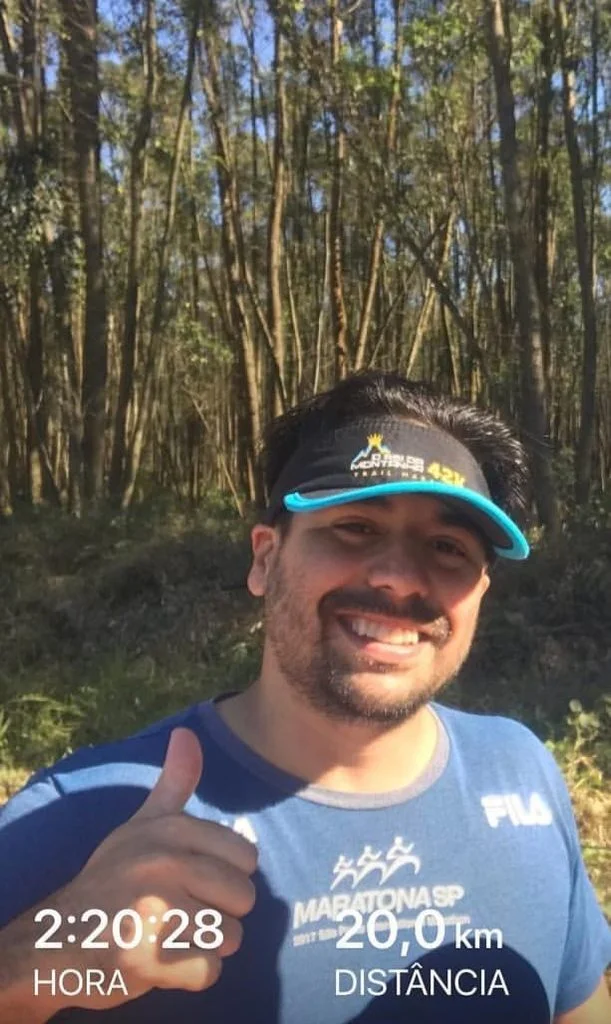



Optimizing the body demands the clinical precision of someone who operated in Radiology (Brazilian Board Certified, CRTR-SP 23595T) for years, combined with the unyielding resilience of someone who conquered multiple 42km+ mountain marathons. At SkyTC, we bridge advanced technical science with extreme practical environments to help you biohack your active performance and structural longevity.
Discover my full professional trajectory →✨ Read also: Fix Patellar Grinding Using Independent Data: The Clinical Joint Longevity Protocol
> A deeply technical piece of content that perfectly complements this post — absolutely worth the read.