
You crossed the finish line of your mountain race, but the victory feels hollow because walking down a simple flight of stairs now feels like someone is driving a rusted screwdriver directly under your kneecap. That dull, grinding burn behind the patella—known in clinics as patellofemoral pain syndrome—is the ultimate buzzkill for trail runners. Learning how to stop runner’s knee after mountain races is not about swallowing handfuls of ibuprofen; it requires rebuilding the structural mechanics of your joints.
Most runners try to fix this with generic compression sleeves or by resting until the acute inflammation settles, only to have the pain flare up again on the very next steep descent. As a former clinical X-Ray and CT technician who has examined thousands of three-dimensional joint scans, I can tell you that resting a tracking issue is completely useless. You cannot heal a mechanical misalignment with pure laziness.
In my years of pounding the dirt as an ultra-runner (completing multiple 42km+ mountain races) and absorbing ring impact during 6 years of kickboxing, I have developed a field-tested system to bulletproof the knee. This guide strips away the retail showroom garbage and delivers the precise biochemical and structural overrides you need to restore your joints, preserve your training consistency, and protect your long-term athletic longevity.
In 30 Seconds: The Quick Verdict
Runner’s knee is a tracking and structural load problem, not an inflammatory disease. If you want to stop the grinding patellar pain after steep mountain descents, you must immediately build vastus medialis obliquus (VMO) strength through backward sled pulls, leverage shock-absorbing carbon trekking poles, and correct downhill posture by landing with a bent knee directly under your center of mass. For internal joint healing, abandon synthetic NSAIDs and consume clean, pasture-raised red meat and its natural connective fats to rebuild the worn-out cartilage matrix and synovial fluid pathways.
Before you run to the nearest retail shop to buy a colorful rolls of athletic tape or another generic compression sleeve, look at the cold, hard science of what actually happens under your kneecap during a mountain descent.
| Intervention | Biomechanical Impact | Recovery/Protection Rating | Real-world Downsides |
|---|---|---|---|
| Neoprene Knee Braces | Provides mild warmth and sensory feedback; zero mechanical tracking correction. | Abysmal | Weakens the stabilizer muscles over time; creates a false sense of security. |
| Backward Sled Pulls | Forces massive, low-impact blood flow directly to the VMO muscle and patellar tendon. | Exceptional | Requires access to a heavy sled, grassy field, or gym space. |
| Carbon Trekking Poles | Disperses up to 20-25% of downhill impact forces away from the lower limbs. | Excellent | Varies by model; cheap carbon poles snap instantly in rocky singletrack. |
| Kinesiology Taping | Mechanically cues patellar tracking and improves localized lymphatic drainage. | Moderate | Adhesive peels off immediately in wet, muddy, or sweaty mountain conditions. |
| Slant Board Squats | Isolates the patellar tendon and quads through a deep eccentric load. | High | Can trigger acute inflammation if implemented too early in the post-race recovery phase. |
The Biomechanical Mechanics of How to Stop Runner’s Knee After Mountain Races
To understand why your knees grind like a pepper mill after a mountain race, you have to look at the skeletal architecture. As a CT scan analyst, I have studied hundreds of patellas under three-dimensional reconstructions. The patella (your kneecap) is essentially a floating shield suspended inside your quadriceps tendon.
During a normal stride, the patella tracks vertically inside a narrow bony channel at the bottom of your femur called the trochlear groove. However, during steep, technical mountain descents, the sheer eccentric force of every step forces your quadriceps to contract violently while lengthening to brake your descent.
If you have even a millimeter of muscular imbalance between your inner quad (the vastus medialis obliquus, or VMO) and your outer quad/IT band, the patella gets yanked off-course. It begins scraping against the lateral ridge of the femur, grinding down the protective hyaline cartilage and triggering a severe, throbbing inflammatory response.
The Downhill Shearing Force Trap
Downhill running is an eccentric loading nightmare. When you land on a steep slope, your foot strikes far ahead of your center of gravity, acting like a brake. This braking action sends a high-velocity shockwave straight up your tibia and into the patellofemoral joint space.
If you do not have the muscular capacity to absorb this force through your hips and glutes, your knee joint takes the full brunt of the impact. The friction within the joint cavity increases, boiling the synovial fluid and stripping away the delicate cartilage layer that keeps your stride smooth.
The Good: Eccentric landing mechanics slow you down so you don’t tumble down the mountain face.
The Bad: Over-striding and landing with a locked heel turns your kneecap into a grinding wheel, destroying articular cartilage within hours.
This structural damage cannot be repaired by synthetic anti-inflammatories or resting on a couch eating highly processed carbohydrates. Cartilage is an organic matrix comprised of collagen and proteoglycans. To rebuild this worn-out tissue, you must leverage my dietary calibration meta.
Your joints require high-quality amino acids and fat-soluble vitamins to produce thick, lubricating synovial fluid and lay down new collagen scaffolding. Eating clean, grass-fed red meat and its natural fats provides the absolute best source of bioavailable zinc, phosphorus, glycine, and proline.
The natural animal fats contain fat-soluble vitamins like D3 and K2, which act as metabolic triggers to ensure calcium and key minerals are deposited back into your skeletal frame instead of calcifying soft tissues. Skip the useless vegan collagen powders; feed your joints real, ancestral animal fats and slow-simmered beef bone broth to recover properly.
The Realities of the Battlefield: Why Standard Knee Braces Fail in the Mountains
Many trail running brands praise soft neoprene sleeves and elastic knee straps as the ultimate tactical gear for high-altitude descents. They claim these sleeves compress the joint, increase localized blood flow, and provide instant lateral patellar stabilization.
But the cold, hard reality is this: a cheap $20 elastic sleeve from Amazon cannot override the physics of a 15% downhill mountain grade on a fatigued body. Under real-world mud, sweat, and rocky trail conditions, these sleeves slip down your leg, retain sweat that causes painful chafing, and completely fail to correct the mechanical tracking of your patella. Relying on passive gear to fix an active muscle imbalance is a dangerous illusion that eventually leads to chronic joint degeneration and irreversible cartilage wear.
Furthermore, standard neoprene braces act like a crutch. They signal to your nervous system that the joint is supported, which actually dampens the firing of your stabilizing glute and hip muscles. Once you take the brace off, your knee is even more vulnerable to lateral shearing forces than before.
The Fast-Track Descent Trap: A Typical Trail Runner Failure
Let us look at a classic, real-world failure scenario that I witness constantly on the ultra trail circuit. Meet Robert, a highly motivated runner training for his first 50km mountain ultra. During his long weekend training runs, he starts feeling a sharp, burning ache right under his kneecap on the descents.
Rather than fixing his biomechanics, Robert buys a pair of cheap, bulky neoprene knee braces online, slips them on, and downs 800mg of ibuprofen before his next big mountain race. The anti-inflammatories mask the pain, allowing him to slam down technical descents with a terrible, over-striding heel strike posture.
By mile 22, the ibuprofen wears off, and his quadriceps are completely fried. Without active muscle stabilization, his kneecap grinds sideways against his femur with every single step. He hobbles across the finish line in agony, and the next morning, his knees are so swollen they look like grapefruits. Robert ended up with severe chondromalacia patellae and a micro-tear in his patellar tendon, sidelining him for six months—all because he chose a showroom band-aid over raw structural engineering.
The Field-Tested Knee Hardening Checklist
Use this technical blueprint to eliminate patellar tracking issues and build bulletproof joints for the steepest mountain terrain:
- 1. How to stop runner’s knee after mountain races starts with building a rock-solid vastus medialis obliquus (VMO) muscle through backward sled pulls.
Insider Observation: Pulling a heavy sled backward forces your inner quad to fire concentrically, flushing the knee joint with healing blood flow without joint-crushing eccentric stress. - 2. Utilize high-quality carbon fiber trekking poles on all steep mountain descents.
Insider Observation: Do not buy cheap aluminum poles that flex under load; carbon fiber absorbs the high-frequency vibration before it travels up your arms. - 3. Practice active downhill running posture by keeping your knees slightly bent and landing with your feet directly under your hips.
Insider Observation: Over-striding and locking your knee straight down a hill acts like a hammer striking your cartilage; keep your stride short, quick, and light. - 4. Eat clean, grass-fed red meat and its natural fats to supply your joints with the essential raw building blocks of collagen.
Insider Observation: The glycine and proline found in ancestral cuts of meat are the exact amino acids needed to rebuild the micro-fissures in your patellar cartilage. - 5. Integrate eccentric slant board squats into your strength routine twice a week.
Insider Observation: Lowering yourself slowly on a 25-degree slant board isolates the patellar tendon, forcing the tissue to lay down new, parallel-aligned collagen fibers. - 6. Foam roll your lateral quadriceps and IT band instead of directly rolling over the painful knee joint.
Insider Observation: The knee is simply the victim; the tight outer quad is the criminal pulling the kneecap out of its track. - 7. Avoid taking NSAIDs like ibuprofen before or during a race.
Insider Observation: Anti-inflammatories shut down your body’s natural healing cascade and mask structural damage, leading to potential tissue failure. - 8. Supplement with high-quality glucosamine, chondroitin, and MSM.
Insider Observation: Look for clinical-grade formulations that actively support joint fluid viscosity rather than cheap supermarket tablets filled with binders. - 9. Ensure your running shoes have adequate toe-box room to allow your big toe to splay naturally.
Insider Observation: If your big toe is compressed, your foot pronates excessively, which forces your tibia to rotate inward and drags the patella out of alignment. - 10. Strengthen your gluteus medius with lateral band walks and single-leg hip bridges.
Insider Observation: A weak hip allows your femur to collapse inward during downhill landing, destroying any hope of proper patellar tracking. - 11. Apply kinesiology tape over the lateral patella using a tension-strip method to cue proper tracking during long runs.
Insider Observation: The tape does not hold the bone in place; it sends a sensory signal to your brain to fire the VMO muscle. - 12. Take a slow-simmered beef bone broth daily to naturally lubricate your joint spaces with hyaluronic acid.
Insider Observation: Real, gelatinous bone broth thickens your synovial fluid, turning your knee joints into high-performance hydraulic shock absorbers.
👇 Looking for more performance cheats? Check out our field-tested tactical guides:
SkyTC Master Hub & Pillar Guides
No-Nonsense Runner’s Knee FAQ
Should I wear a knee brace on my downhill trail runs?
Absolutely not. Bulk neoprene braces are a total trap. They do not fix the structural muscular imbalances causing the tracking issue, and they actively train your glute and hip stabilizer muscles to shut down, making your joints weaker over time.
Is runner’s knee caused by a lack of cartilage?
Not initially. It is caused by patellar misalignment grinding down the healthy cartilage you do have. If you ignore the mechanics, yes, you will wear the cartilage down to the bone, but the root cause is poor muscular tracking and terrible descending posture.
Will stretching my hamstrings cure my runner’s knee?
No. Stretching loose hamstrings won’t do a thing if your outer quads and IT bands are dragging your kneecap out of the trochlear groove. Focus on building VMO strength with backward sled pulls and releasing tension in your lateral quad muscles.
How long does it take to recover from patellofemoral pain after a race?
If you keep popping ibuprofen and running on it, it can easily sideline you for six months. If you actively fix your VMO strength, address your downhill mechanics, and feed your joints a rich animal-fat matrix, you can see dramatic relief in three to four weeks.
Can I run through the pain of runner’s knee?
If it is a dull, warming ache (below a 3/10 on the pain scale), you can do light, flat running while fixing your mechanics. If it is a sharp, stabbing pain that alters your running gait, stop immediately; running with an altered stride will only trigger a secondary injury elsewhere.
Why do my knees hurt worse walking down stairs than running?
Walking down stairs requires a slow, controlled, single-leg eccentric loading of your quadriceps. This places the absolute maximum amount of compressive, bone-on-bone force directly behind your patella, forcing the inflamed tissues underneath to scream.
Does ice help heal runner’s knee?
No. Ice is a temporary anesthetic that numbs pain, but it constricts local blood vessels and stalls the lymphatic system. Your cartilage has zero direct blood supply; it relies on movement and clean lymphatic drainage to bring in healing nutrients and clear waste.
Are carbon trekking poles really worth the expensive price tag?
Yes, every single penny. High-quality carbon poles transfer up to 25% of the devastating downhill impact forces away from your lower joints. If you are running ultra-distances in the mountains, they are mandatory structural survival gear.
Why Trust SkyTC Biohacking Curation?
At SkyTC, we treat the human body as your most valuable technology. We are not just a recommendation site; we apply a rigorous clinical and practical screening process to ensure that each recommendation optimizes your biology with safety and real-world results.
✓ Technical Expertise:
Clinical experience in Radiology and Tomography (CT scans). We analyze methods through the lens of bone health and structural integrity.
✓ Specialization:
Focus on real-world biohacking. We test every wearable and supplement at the absolute limit of effort during marathons and on the mats.
✓ Authority:
Curation based on absolute transparency, always highlighting both the positive advantages and the real drawbacks of every technology.
✓ Trust:
A curation process built directly on the professional experience of a field practitioner, speaker, and high-performance leader coach.
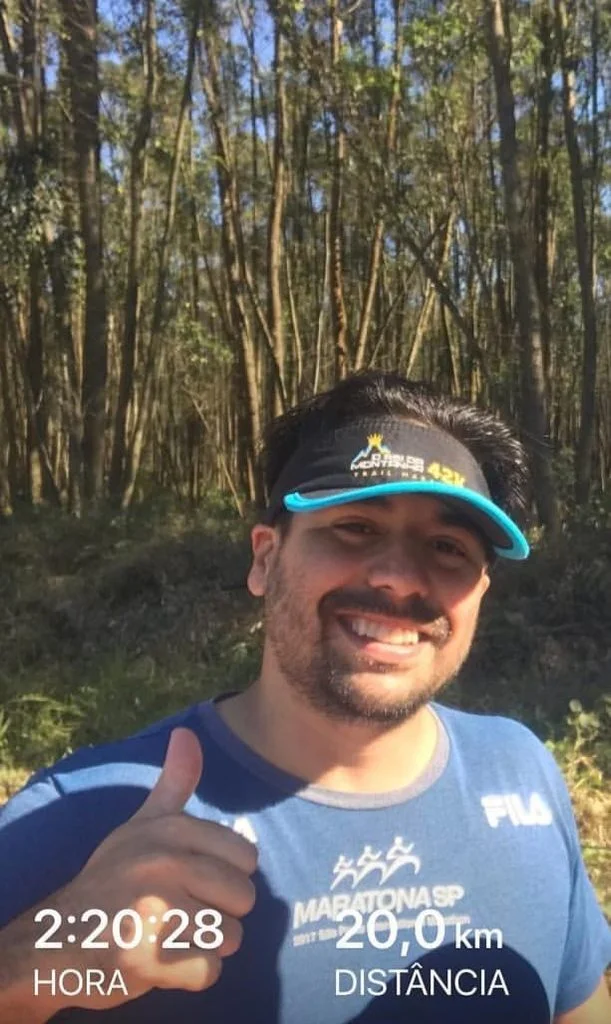
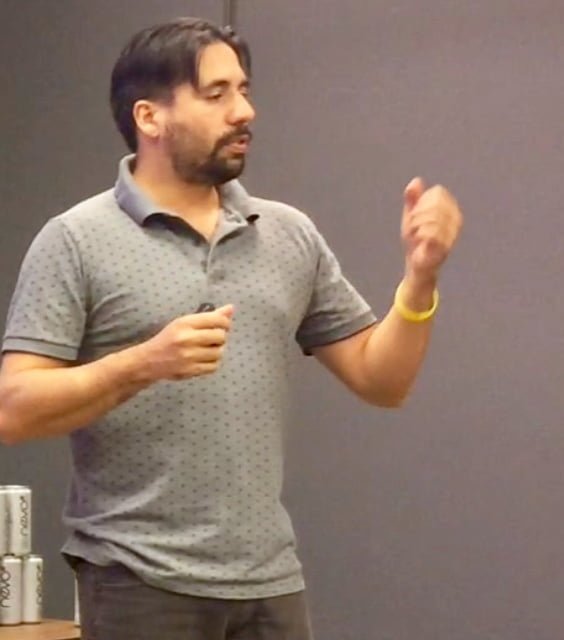
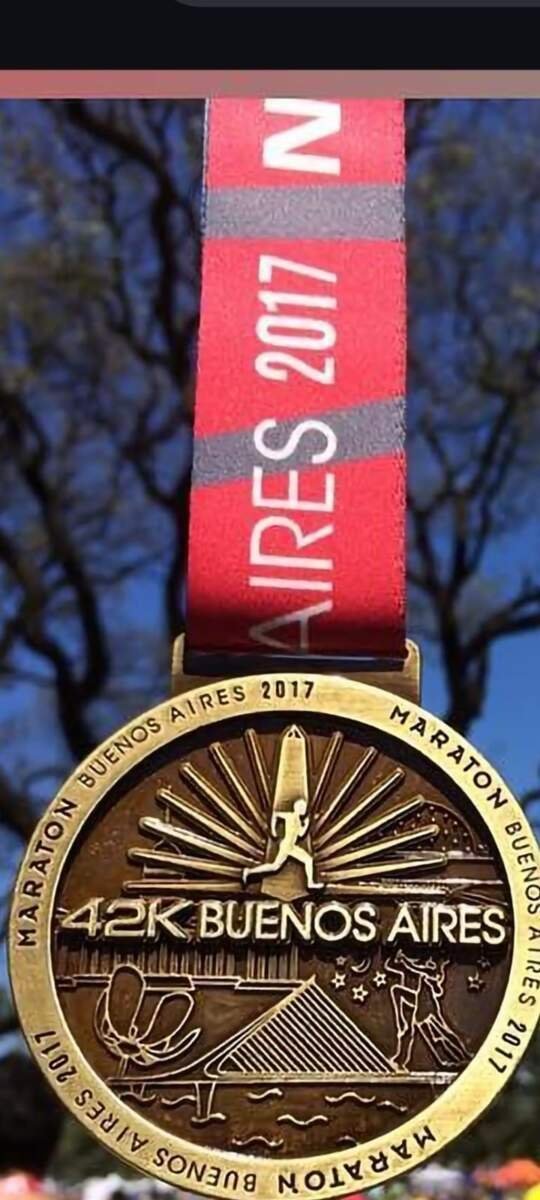
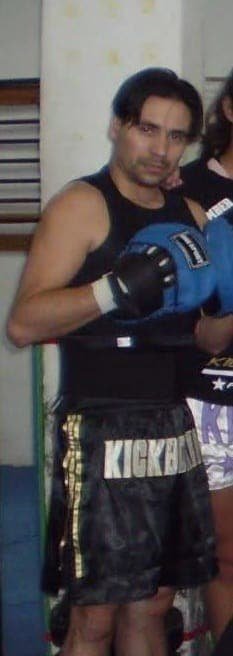
Optimizing the body demands the clinical precision of someone who operated in Radiology (Brazilian Board Certified, CRTR-SP 23595T) for years, combined with the unyielding resilience of someone who conquered multiple 42km+ mountain marathons. As an active professional, multi-pet handler, and tech benchmark researcher, at SkyTC, we bridge advanced technical science with extreme practical environments to help you biohack your active performance, optimize smart pet-tech ecosystems, and protect your structural longevit
Discover my full professional trajectory →✨ Read also: Patellar Tendon Recovery Hacks for Ultra Runners: Bulletproof Knees
A deeply technical piece of content that perfectly complements this post — absolutely worth the read.